

- 2027 Dongfeng Forthing Xinghai V9 Debuts With a Stronger Value Formula
- A Price Cut With a Clear Purpose
- Built Around Family Priorities
- Full-Size Presence for Family and Business Use
- The Second Row Gets the Real Investment
- Space Efficiency Makes the Third Row More Useful
- Snapdragon 8295P Brings the Cabin Up to Date
- Dual Screens and a More Complete Entertainment Setup
- Parking Tech for a Very Large MPV
- Safety Becomes Part of the Luxury Argument
- A PHEV Setup Built for Daily Use and Long Trips
- Cartea Editor’s Verdict
2027 Dongfeng Forthing Xinghai V9 Debuts With a Stronger Value Formula
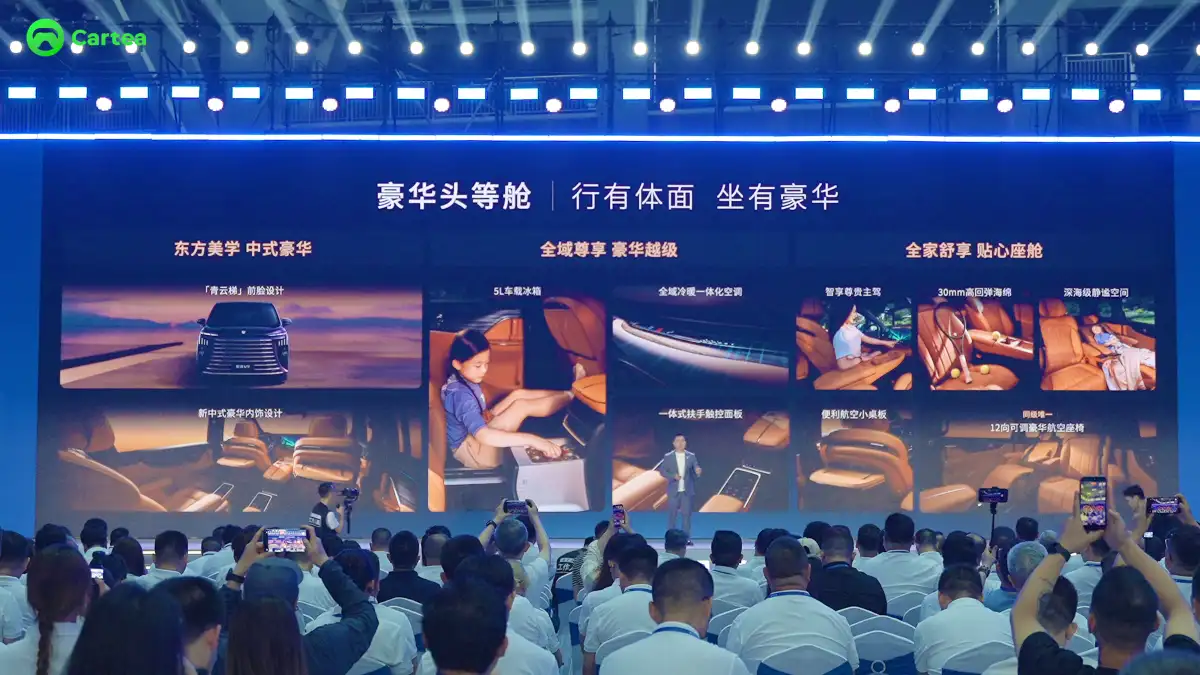
DongfengBahrain DongfengEgypt DongfengKSA DongfengKuwait DongfengOman DongfengQatar DongfengUAE DongfengForthingUAE ForthingEgypt ForthingKuwait ForthingBahrain ForthingKSA ForthingOman ForthingQatar Forthing has officially introduced the 2027 Xinghai V9, giving its plug-in hybrid MPV a sharper position in one of China’s fastest-growing family vehicle segments. The new model debuted on June 7 during Dongfeng Liuzhou Motor’s 10th annual “67 Brand Customer Day”, arriving with more than 20 upgrades across comfort, space, intelligence, safety and range.
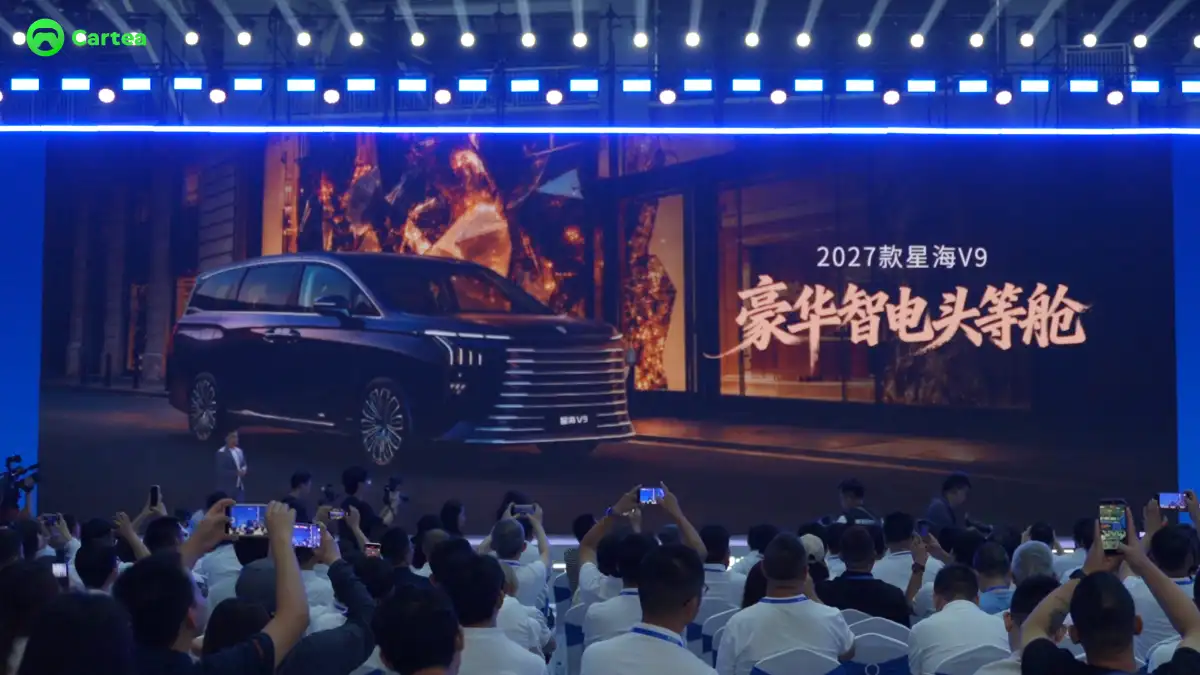
The update is not only about equipment. The biggest message is pricing. The 2027 Xinghai V9 is being offered in three 200 km plug-in hybrid variants. The 200 km Comfort starts at ¥179,900, or approximately AED 97,500, with a trade-in price of around AED 92,100. The 200 km Exclusive is priced at ¥206,900, or approximately AED 112,200, with a trade-in price of around AED 106,700. The 200 km Premium is priced at ¥229,900, or approximately AED 124,600, with a trade-in price of around AED 119,200.
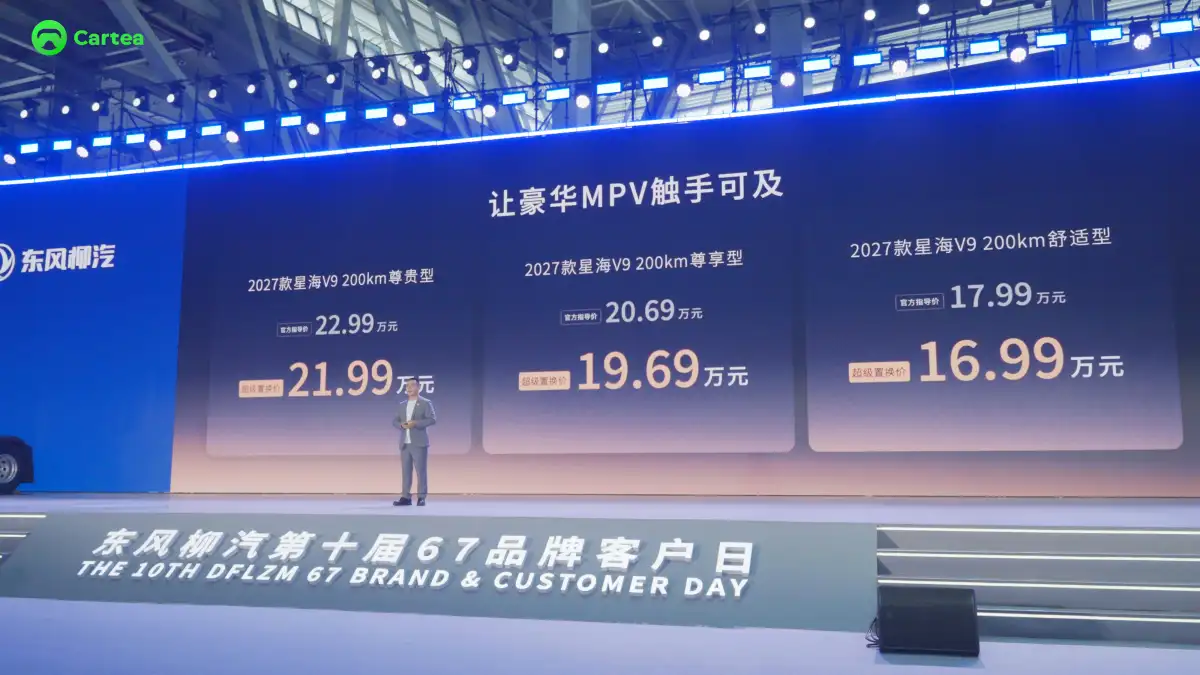
These are direct currency conversions from China pricing, not UAE showroom prices. Still, they give GCC readers useful context. If a large plug-in hybrid MPV with captain seats, long electric range and AI cockpit technology can be priced this aggressively in China, it shows how quickly the new energy family-car segment is changing.
A Price Cut With a Clear Purpose
The 2027 Xinghai V9 is entering a market where the MPV is no longer just a business shuttle or airport-transfer vehicle. In China, the new energy MPV has become a major battlefield for family and executive buyers, with models such as the Buick GL8 PHEV, Denza D9UAE DENZA D9, VoyahBahrain VoyahEgypt VoyahKSA VoyahKuwait VoyahOman VoyahQatar VoyahUAE Voyah Dreamer and WEY Gaoshan pushing the category into more premium territory.
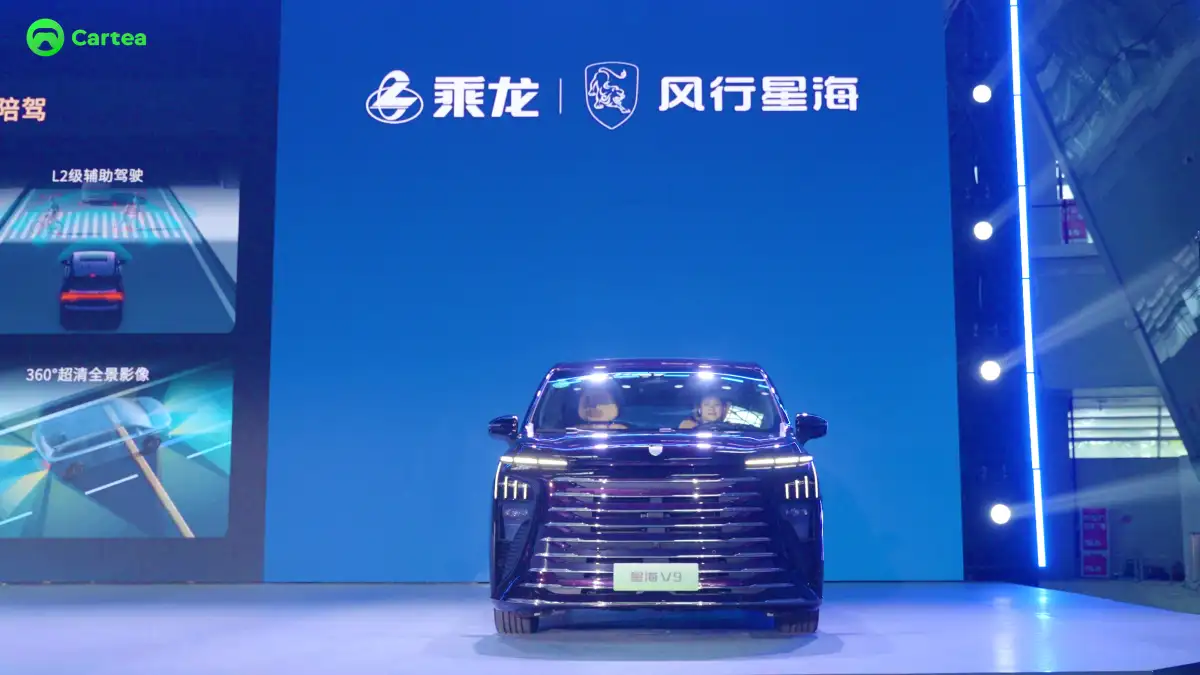
Dongfeng Forthing’s answer is direct: give buyers more equipment while reducing the price barrier. The 200 km Exclusive trim drops from ¥239,900 to ¥206,900, while the 200 km Premium moves down from ¥259,900 to ¥229,900. That is a cut of ¥30,000, or roughly AED 16,300, on each of these two variants.
For GCC buyers watching the Chinese market, this matters because it reflects a wider trend. Chinese brands are not only fighting with price. They are using price cuts to make high-end comfort, hybrid efficiency and smart-cabin technology available to more families.
Built Around Family Priorities
The 2027 Xinghai V9 update is clearly aimed at practical users, not only spec-sheet readers. Family MPV buyers care about a different set of questions than sedan or SUV buyers. They want to know whether the second row is genuinely comfortable, whether adults can use the third row, whether the cabin is easy for children and older passengers, and whether the car can handle daily school runs, weekend trips and long-distance travel without range anxiety.
That is why Dongfeng Forthing has focused the new model around five core areas: luxury, interior space, intelligence, safety and range. For a GCC audience, these priorities feel familiar. A family vehicle here needs strong air-conditioning, comfortable rear seating, real luggage space, relaxed highway manners and enough flexibility for school, work, airport runs and road trips between emirates.
Full-Size Presence for Family and Business Use
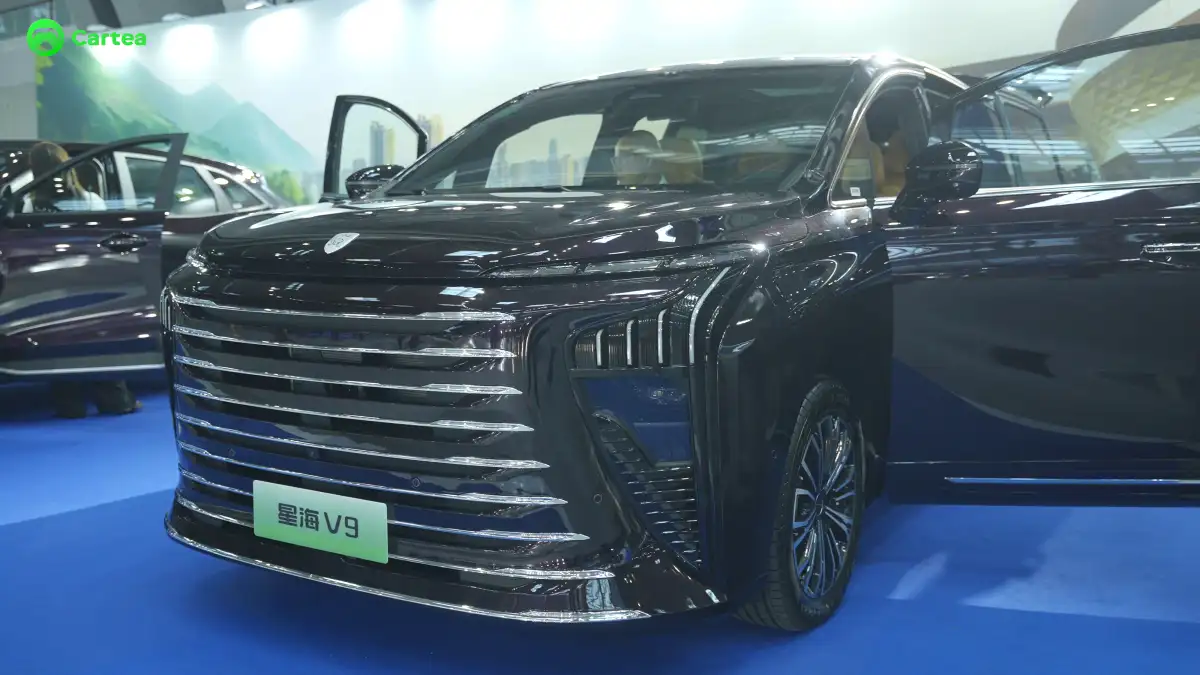
The Xinghai V9 measures 5,230 mm in length, 1,920 mm in width and 1,820 mm in height, with a 3,018 mm wheelbase. That puts it firmly in full-size MPV territory and gives it the road presence expected from a vehicle designed for both family and business use.
Visually, the 2027 model keeps a formal luxury-MPV character rather than chasing an overly futuristic design. The large frameless front grille gives it a strong face, while the full-width rear light treatment stretches the visual width of the body. It looks more dignified than aggressive, which may help it appeal to buyers who want one vehicle that can serve family life during the week and executive transport when needed.
In GCC terms, this type of design approach makes sense. Many buyers in the region still prefer vehicles with presence, proportion and a sense of status. The Xinghai V9 does not try to look like a concept car. It tries to look substantial.
The Second Row Gets the Real Investment
In any serious MPV, the second row is the most important part of the vehicle. This is where the Xinghai V9 receives some of its most meaningful upgrades.
The 2027 model introduces upgraded luxury captain seats with 12-way power adjustment, heating, ventilation, massage, power leg rests and a one-touch Zero-G recline function. It also adds a boss button, foldable aviation-style tray tables and touchscreen controls integrated into the armrests.
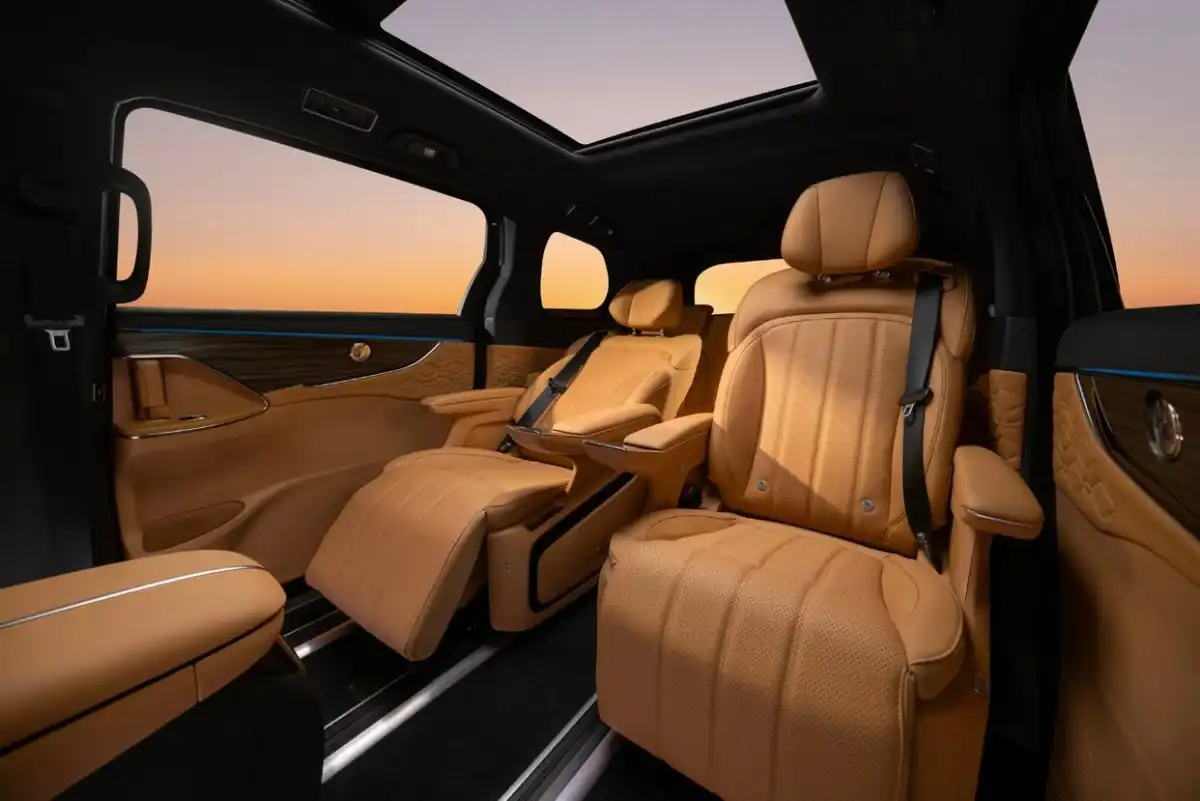
These features are not just for show. For families, they make longer drives easier for children, parents and elderly passengers. For business users, they create a more complete rear-cabin experience. In the GCC, where large families and chauffeur-driven use cases are common, this kind of second-row comfort can be more important than outright performance.
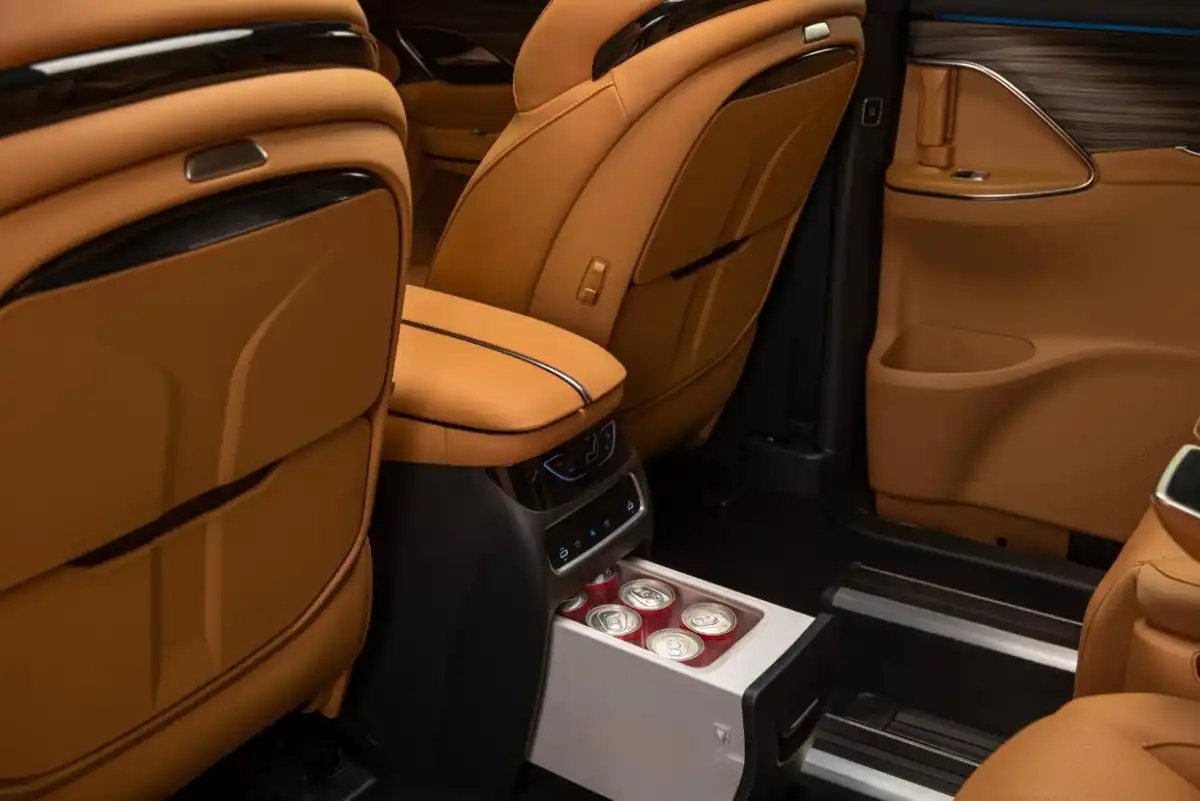
The new model also adds a 5L onboard refrigerator with heating and cooling functions. In daily life, that means cold drinks during summer, warm items when needed, and extra convenience for family trips. It is the type of feature that sounds like a luxury detail but can become genuinely useful in hot-weather markets.
Space Efficiency Makes the Third Row More Useful
MPVs are judged by how well they use space, and Dongfeng Forthing is making that a central part of the Xinghai V9’s pitch. The company claims an 85.2% space efficiency rating, along with a 220 mm-wide centre aisle.
That matters because many three-row vehicles look large from the outside but compromise heavily in the third row. The Xinghai V9 is designed to make access easier even when all seats are in use, which is important for families with children, elderly relatives or multiple passengers moving in and out throughout the day.
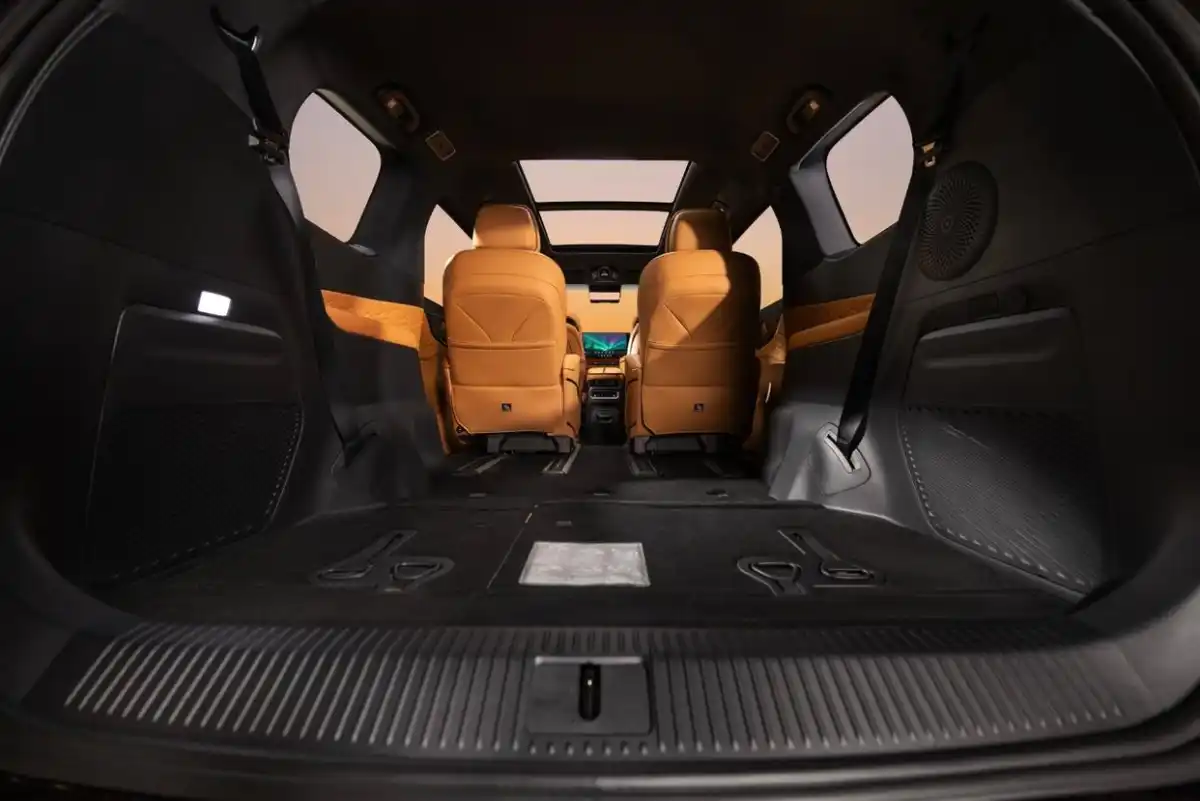
The third row also uses a 4/6 split-folding stow-away design, giving the cabin more flexibility. It can be used for passengers, folded for luggage, or opened up for leisure and camping-style use. Boot capacity stands at 593 litres in standard configuration and expands to 2,792 litres with the seats arranged for maximum cargo space.
For GCC users, that flexibility is valuable. A proper family MPV needs to handle school bags, strollers, shopping, travel luggage, sports equipment and weekend gear without forcing constant compromises.
Snapdragon 8295P Brings the Cabin Up to Date
One of the most important technology upgrades is the move to Qualcomm’s Snapdragon 8295P cockpit chip. In modern Chinese new energy vehicles, the cabin experience has become a major part of competitiveness, and Dongfeng Forthing is clearly trying to close the gap with newer rivals.
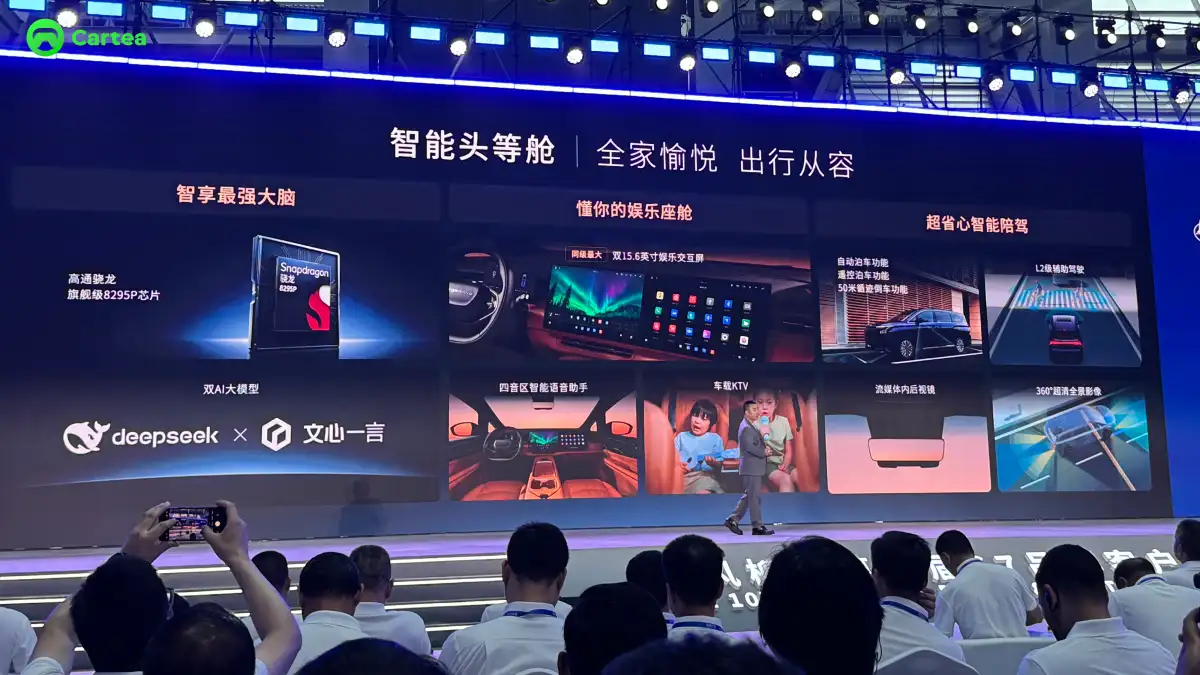
The 8295P platform is designed to improve system response, multitasking and voice interaction. The Xinghai V9 also integrates two AI models, Baidu’s ERNIE Bot and DeepSeek, allowing features such as AI Q&A, trip planning, image generation and more natural in-car conversation.
For family users, these features may not be the only reason to buy the car, but they change the atmosphere inside the vehicle. A modern MPV is no longer just a large cabin with seats. It is expected to operate as a mobile living room, entertainment space and connected travel assistant.
Dual Screens and a More Complete Entertainment Setup
The infotainment upgrade continues with a 15.6-inch central touchscreen and a 15.6-inch passenger entertainment display. Together, they create a dual-screen cabin layout that fits current expectations in China’s new energy vehicle market.
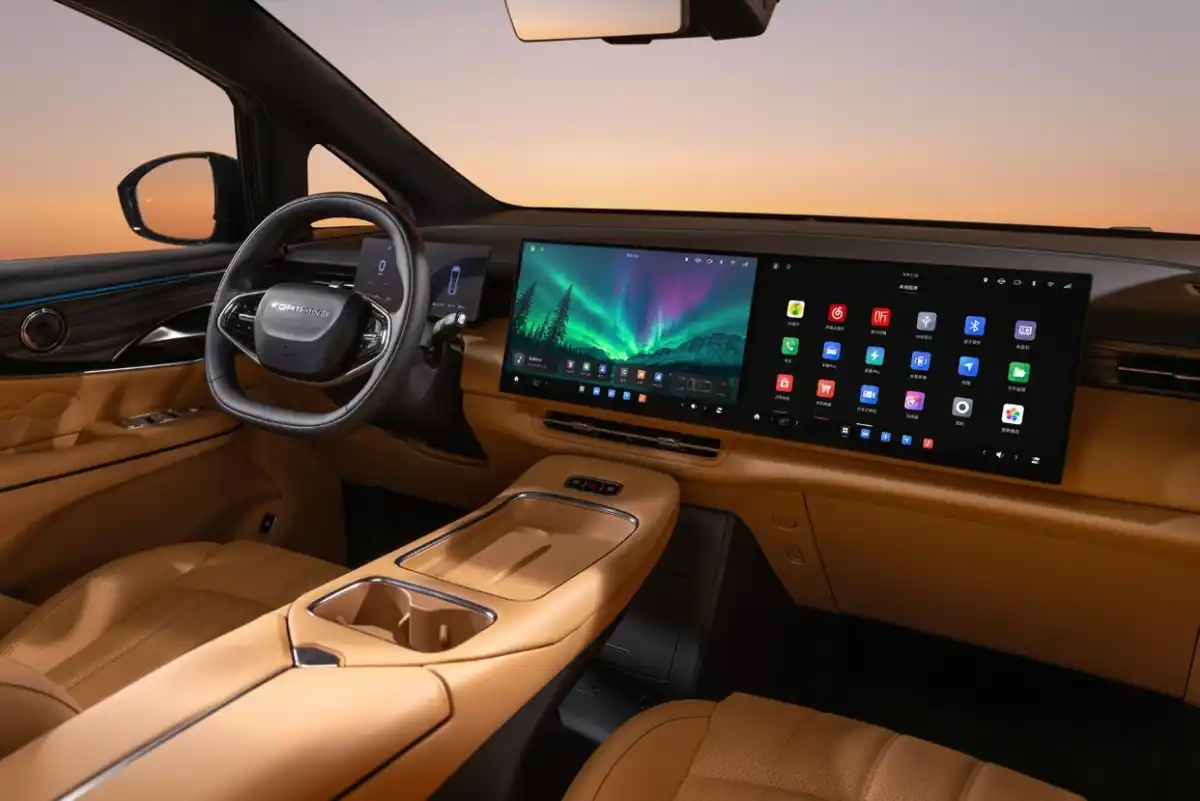
The system supports four-zone voice control, voiceprint recognition, AutoNavi navigation, smartphone integration, online streaming and in-car karaoke. Some of these features may sound market-specific, but the wider idea is relevant globally: passengers expect more control, more entertainment and more digital convenience, especially in a vehicle built for long family journeys.
In the GCC, where families often spend long hours on highways or in urban traffic, rear and passenger entertainment can be more than a bonus. It can become part of what makes a large family vehicle easier to live with.
Parking Tech for a Very Large MPV
Large MPVs are comfortable once they are moving, but parking remains one of their biggest daily challenges. Dongfeng Forthing has addressed this with automatic parking assist, remote parking and 50-metre reversing assist.
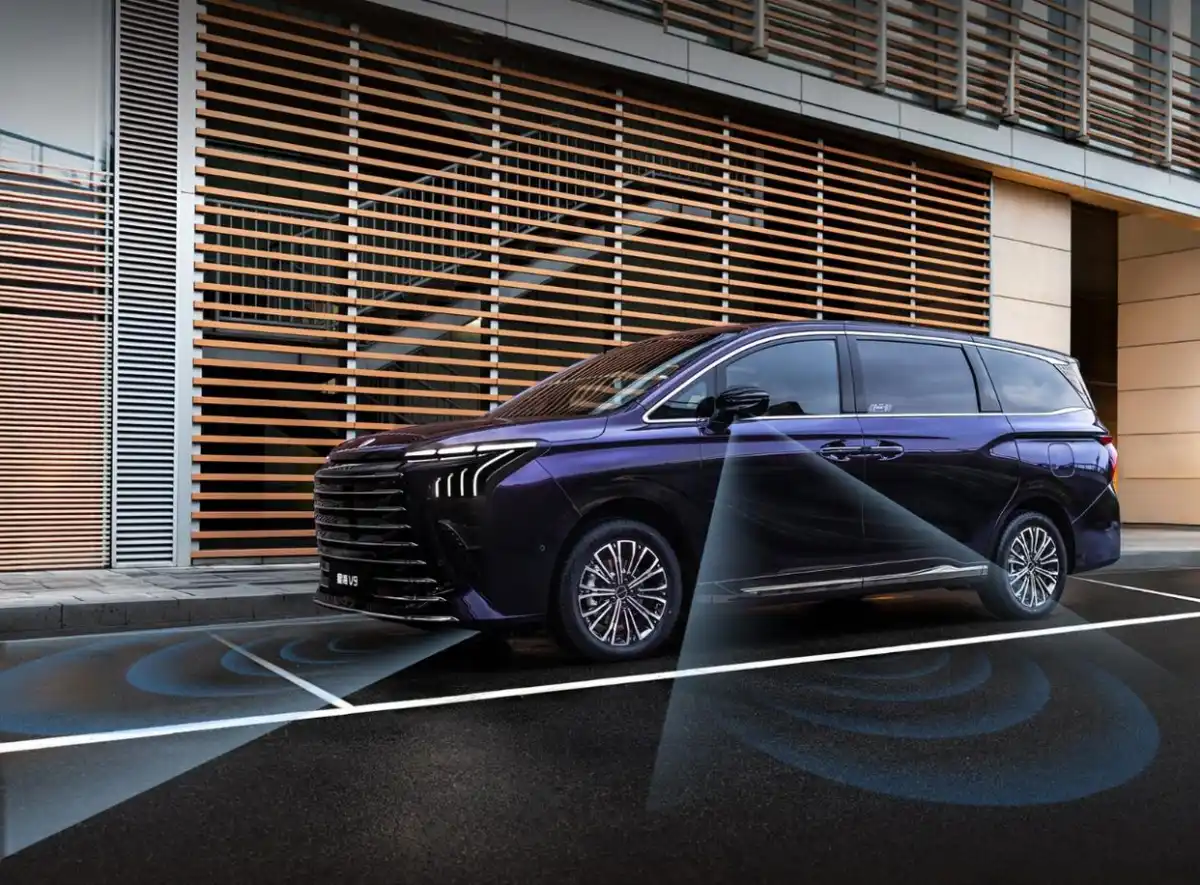
The system is designed to cover more than 100 parking scenarios, including tight spaces and difficult manoeuvres. For a vehicle over 5.2 metres long, this is not a small detail. It directly affects how confidently a driver can use the car in malls, apartment buildings, hotels and narrow urban parking spaces.
That point is especially relevant in Gulf cities, where large vehicles are popular but parking space is not always generous. A family MPV must feel manageable, not intimidating.
Safety Becomes Part of the Luxury Argument
The 2027 Xinghai V9 also adds a stronger safety package. Active systems include blind spot detection, door open warning, rear cross traffic alert, rear collision warning, lane change assist and intelligent high beam control.
Structurally, the vehicle uses more than 70% high-strength steel, with hot-formed steel accounting for 20.5%. It also gets Armor Battery 3.0 and Sentry Mode, reinforcing both driving and parked-vehicle security.
For a family MPV, this type of safety story is more important than headline acceleration. Buyers in this segment want reassurance. They want to know that the vehicle protects passengers in daily driving, low-speed urban situations, highway lane changes and parking environments.
A PHEV Setup Built for Daily Use and Long Trips
The Xinghai V9 is powered by Dongfeng’s Mach Hybrid system and offers a 200 km CLTC pure electric range, a 1,300 km CLTC combined range and 5.27 L/100 km fuel consumption in charge-sustaining mode. It also supports fast charging from 0 to 80% in 18 minutes.
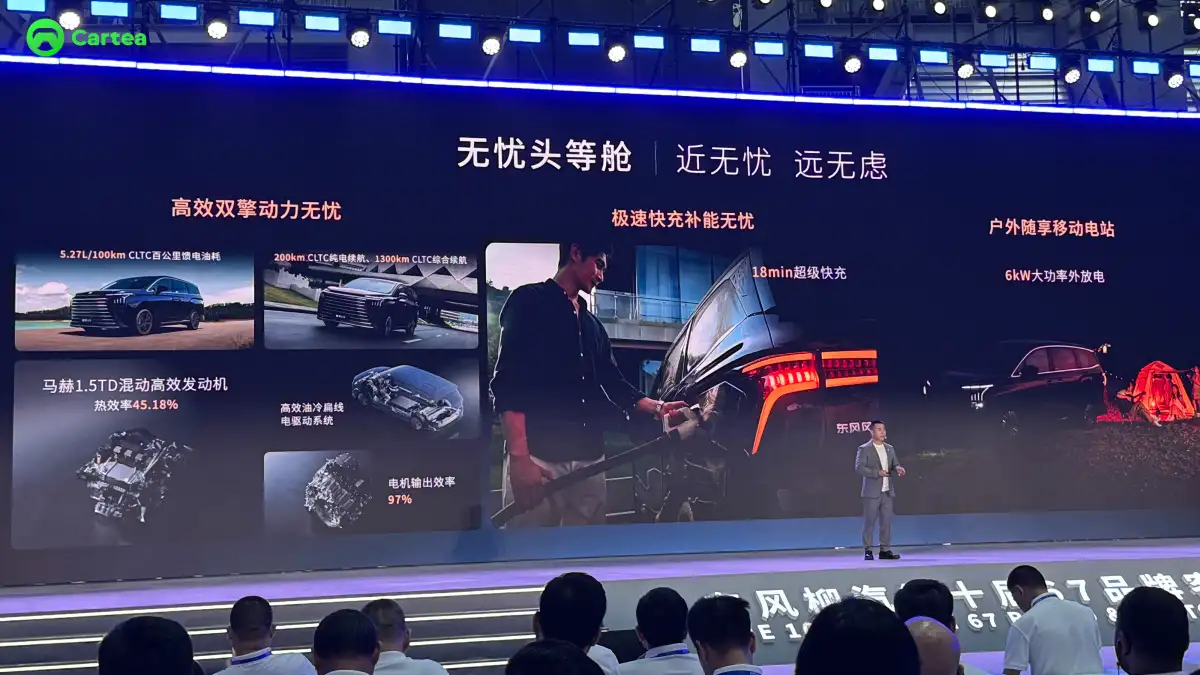
This is the formula that makes plug-in hybrid MPVs attractive. For daily urban use, many families could rely mostly on electric driving. For longer road trips, the petrol-hybrid system removes the pressure of charging stops.
In the GCC, this balance is particularly relevant. Full EVs are gaining attention, but many families still want the security of long range, quick refuelling and easy intercity travel. A PHEV MPV offers a middle ground: lower daily fuel use without asking buyers to fully change their driving habits.
Cartea Editor’s Verdict
The 2027 Dongfeng Forthing Xinghai V9 is not trying to win attention through one dramatic feature. Its strength is the way it brings together the things family MPV buyers actually use: second-row comfort, third-row flexibility, practical luggage space, easier parking, stronger safety and long-range plug-in hybrid efficiency.
The aggressive pricing makes the update more important. By cutting prices while adding more than 20 upgrades, Dongfeng Forthing is turning the Xinghai V9 into a stronger value proposition in a very competitive segment.
For GCC readers, the model also offers a useful preview of where Chinese family vehicles are heading. The future of the MPV is not just about size. It is about how intelligently that size is used, how comfortable the rear cabin feels, and how well the powertrain fits real family life.
Bottom line: the 2027 Xinghai V9 is not only a large MPV. It is a more complete, more intelligent and more practical interpretation of what a new energy family mover can be.