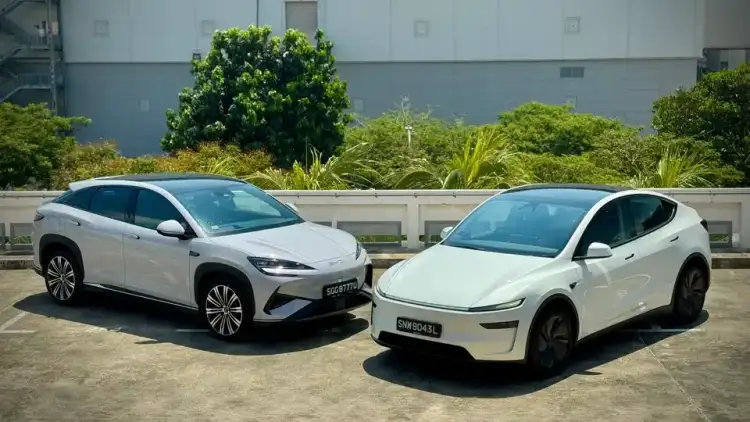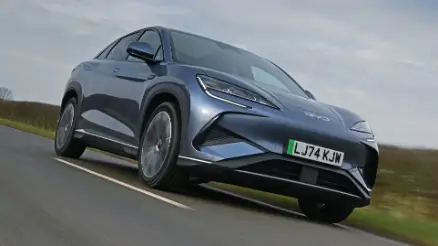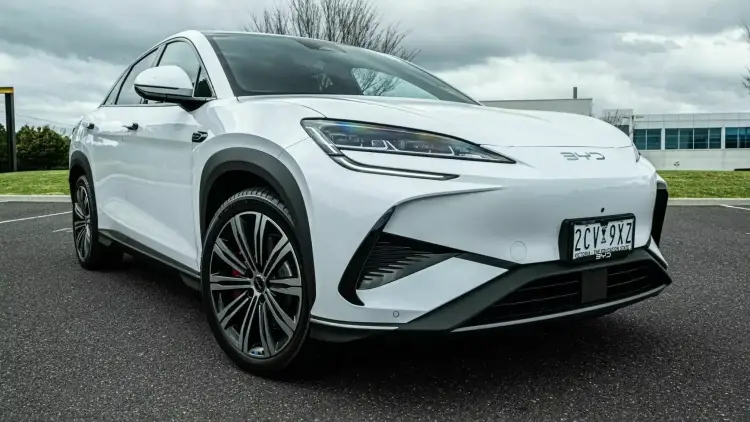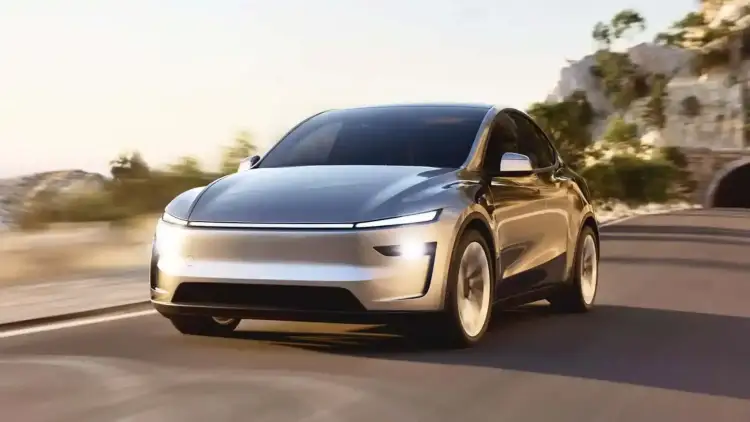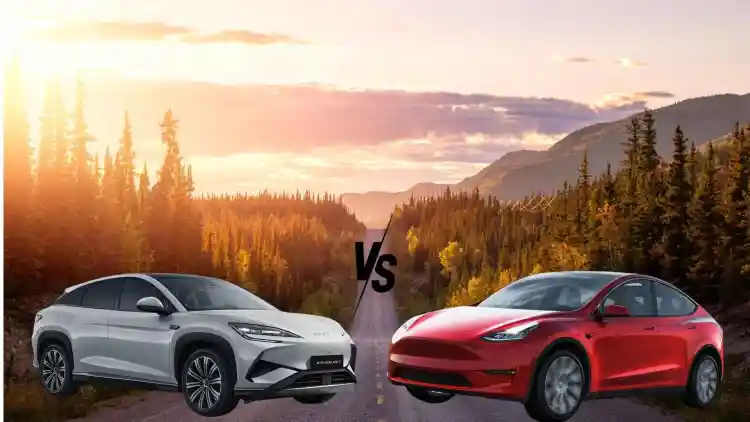

- BYD Sealion 7 vs Tesla Model Y 2026: Technology, Software, and Smart Features Compared
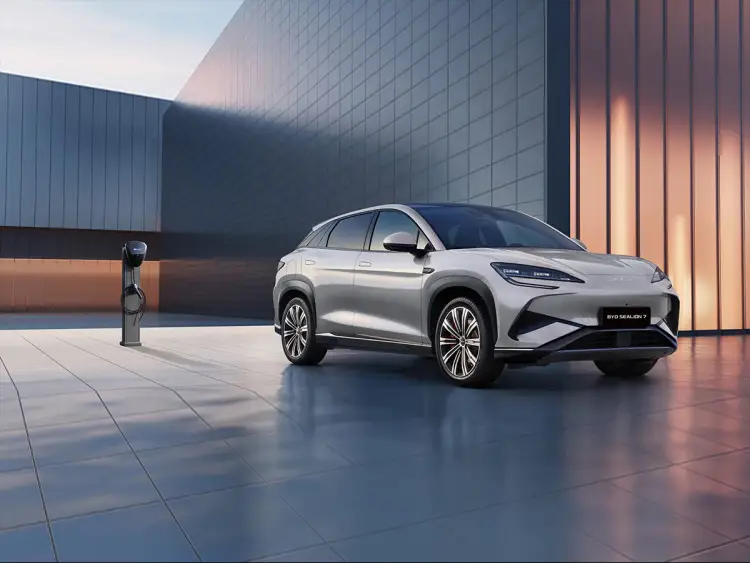
- BYD Sealion 7
- Tesla Model Y
- BYD Sealion 7 vs Tesla Model Y: Technology & Software Comparison
- Car Market in the Middle East 2026
BYD Sealion 7 vs Tesla Model Y 2026: Technology, Software, and Smart Features Compared
The BYD Sealion 7 and Tesla Model Y are not just electric SUVs — they are rolling computers. This comparison goes beyond range and charging to examine the technology that defines the ownership experience: autonomous driving capability, infotainment systems, OTA update frequency, smart cabin features, and software ecosystem maturity.
Updated July 2026. Data verified against manufacturer specifications, third-party market research, and Cartea market data for UAE.
Which has better autonomous driving: BYD Sealion 7 or Tesla Model Y?
Tesla leads in autonomous driving with Full Self-Driving (FSD) capability, leveraging years of fleet data and neural network training. Tesla Autopilot includes Navigate on Autopilot, Auto Lane Change, and Smart Summon. The BYD Sealion 7 features DiPilot advanced driver assistance with adaptive cruise control, lane keeping, and automatic emergency braking, but does not yet match Tesla's FSD feature set. However, DiPilot is specifically calibrated for Middle East road conditions, including roundabout handling and desert highway scenarios. For cutting-edge autonomy: Tesla. For regional adaptation: BYD.
How do the infotainment systems compare?
Tesla Model Y features a 15-inch touchscreen with a responsive custom Linux-based OS, streaming services, games, and a built-in web browser. The BYD Sealion 7 features a 15.6-inch rotating touchscreen (can switch between portrait and landscape) running BYD's DiLink system with Android app support, Apple CarPlay, and wireless phone charging. Tesla's interface is smoother and more polished, but BYD's rotating screen is more versatile for navigation (portrait) and media (landscape). BYD also includes a 10.25-inch digital instrument cluster; Tesla relies solely on the center screen.
Which car gets more OTA updates?
Tesla is the industry leader in OTA updates, releasing new features every 4-8 weeks — including games, UI redesigns, range improvements, and new Autopilot features. BYD Sealion 7 receives OTA updates less frequently (approximately every 2-3 months) but has improved significantly in 2026, adding features like customized driving modes, enhanced voice control, and battery management optimizations. Tesla's update ecosystem is more mature, but BYD's updates tend to be more stability-focused and less experimental.
Which has better smart cabin features?
BYD Sealion 7 offers smart cabin features that Tesla lacks: voice control with natural language processing (supports Arabic and English), facial recognition driver profiling, NFC phone-as-key (works even with dead phone battery), and intelligent air purification with PM2.5 monitoring. Tesla counters with its Dog Mode, Camp Mode, Sentry Mode, and climate control via app. For cabin tech versatility and regional language support: BYD. For software ecosystem and quirky features: Tesla.
| Model | Body Style | Starting Price (AED) | Key Tech Feature |
|---|---|---|---|
| BYD Sealion 7 | Sedan | 172,900 AED | Rotating screen + DiPilot + Arabic voice |
| Tesla Model Y | SUV | 165,000 AED | FSD + Supercharger integration + OTA leader |
BYD Sealion 7
Starting Price: 172,900 AED
Body Style: Sedan
Tesla Model Y
Starting Price: 165,000 AED
Body Style: SUV
BYD Sealion 7 vs Tesla Model Y: Technology & Software Comparison
| Technology Feature | BYD Sealion 7 | Tesla Model Y |
|---|---|---|
| Infotainment Screen | 15.6" rotating (portrait/landscape) | 15" fixed landscape |
| Instrument Cluster | 10.25" digital | None (center screen only) |
| OS Platform | DiLink (Android-based) | Tesla custom Linux |
| Apple CarPlay / Android Auto | Yes (wireless) | No |
| Voice Control | Yes (Arabic + English) | Yes (English primarily) |
| Autonomous Driving | DiPilot (L2+) | Autopilot / FSD (L2-L3) |
| Adaptive Cruise | Yes (stop-and-go) | Yes (Traffic-Aware) |
| Lane Keeping | Yes | Yes (Auto Steer) |
| Auto Lane Change | Yes | Yes (FSD package) |
| Auto Park | Yes (remote control) | Yes (Smart Summon) |
| OTA Update Frequency | ~Every 2-3 months | ~Every 4-8 weeks |
| Phone-as-Key | NFC (works dead phone) | Bluetooth (app-based) |
| Facial Recognition | Yes | No |
| Air Quality System | PM2.5 + HEPA filter | HEPA filter (Bioweapon mode) |
| Special Modes | Camping, VTOL output | Dog Mode, Camp, Sentry |
| App Remote Control | Climate, lock, locate | Climate, lock, locate, summon |
Tech Verdict: Tesla wins on autonomous driving maturity, OTA frequency, and software polish. BYD wins on screen versatility, Arabic language support, phone-as-key practicality, and regional road adaptation. For tech enthusiasts: Tesla. For practical smart features in the Middle East: BYD Sealion 7.
Car Market in the Middle East 2026
The Middle East car market continues to evolve rapidly, with Chinese brands gaining significant market share across all GCC countries. Cartea provides verified pricing and specifications across all markets in the region.