
- The Idea of a Coffee-Powered Volkswagen
- Benefits of Coffee-Based Fuel
- Challenges Still Standing
- Fossil Fuel vs Coffee-Biofuel
- What Does This Mean for The Future of Cars?
- Why Volkswagen is Leading This Concept
- What the Future Could Look Like
In a world driven by rapid innovation, traditional fuel is no longer the only heartbeat powering automotive evolution. Climate change, rising energy costs, and growing environmental awareness have pushed carmakers into a race to find alternative energy sources. While most manufacturers focus on electric and hydrogen propulsion, a surprising trend has surfaced — a car that runs on coffee.
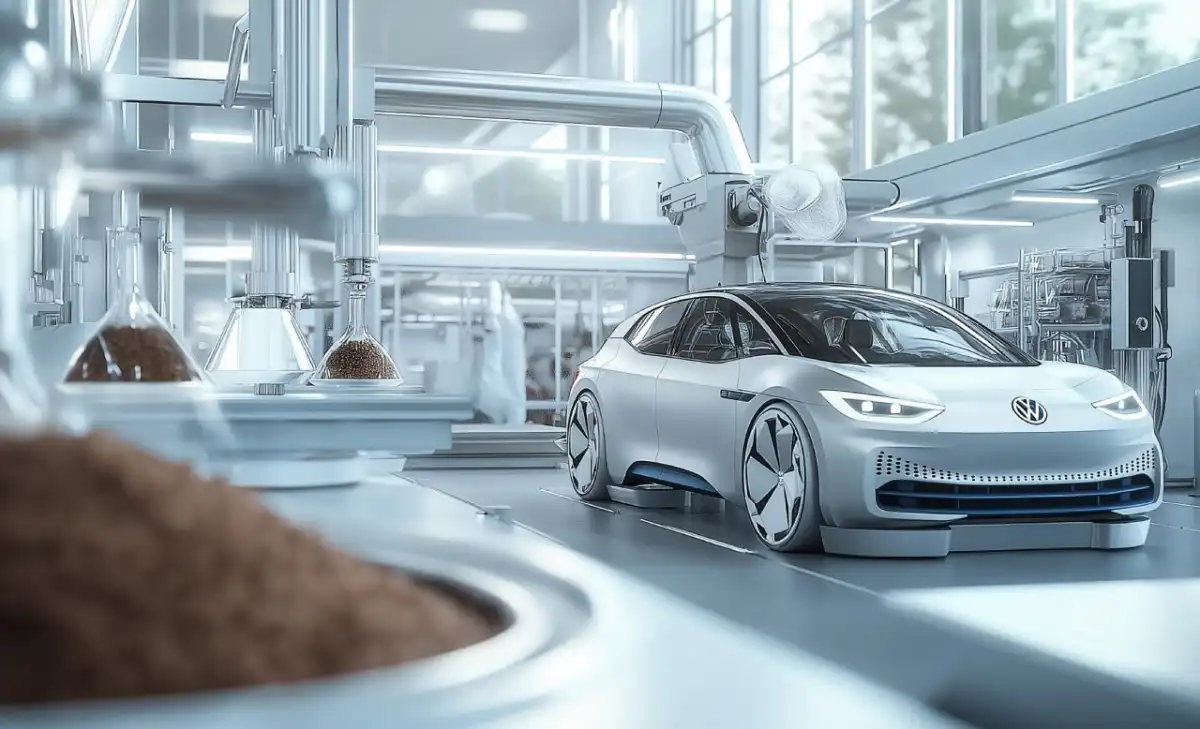
It sounds like a joke at first glance, but the truth is fascinating. Companies like Volkswagen have begun exploring and testing the idea of using coffee waste as a biofuel, in addition to integrating coffee-derived materials into car interiors. What seems like a bold concept could be a major milestone in the future of renewable automotive energy.
Why Coffee?
Over 2 billion cups of coffee are consumed daily worldwide, creating massive organic waste.
Instead of being thrown away, these leftovers can be processed into Biofuel.
Coffee grounds contain natural oils — ideal for producing Biodiesel.
It reduces landfill waste and aligns with sustainable economy models.
In short, coffee waste is not just trash — it is a potential goldmine of renewable energy.
The Idea of a Coffee-Powered Volkswagen
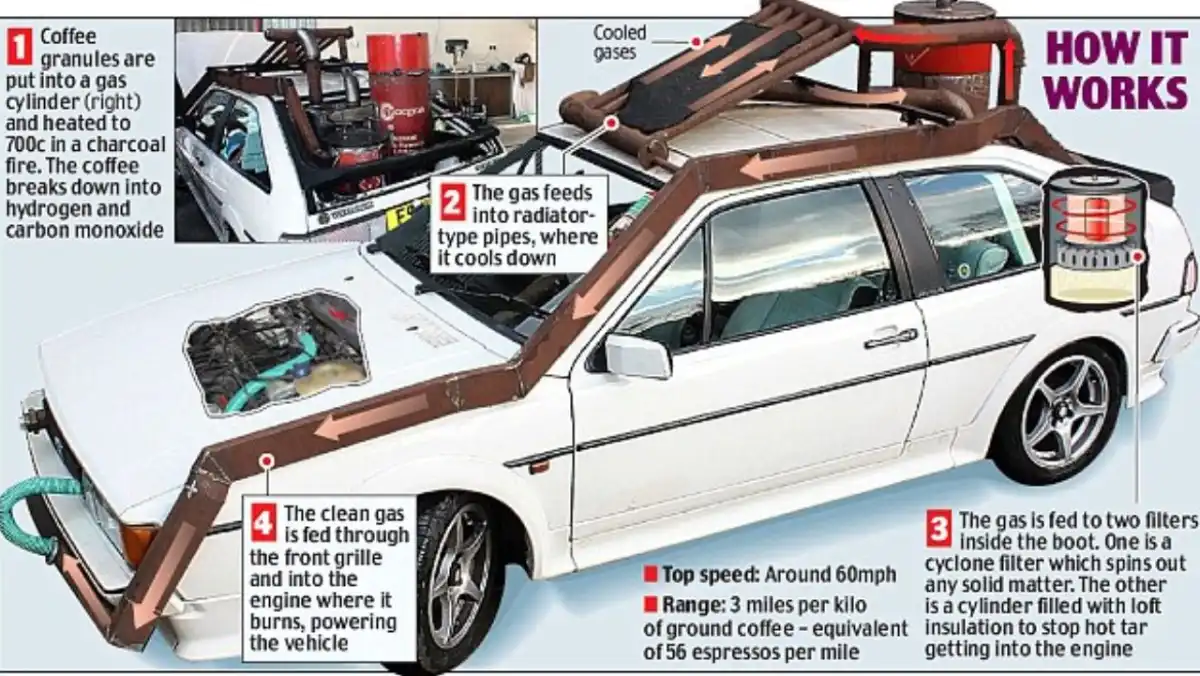
The underlying concept is converting used coffee grounds into biofuel that can power modified or hybrid engines. In a real scenario, a driver could fill a tank with coffee-based biodiesel just like with traditional diesel.
But fuel is only part of the story — Volkswagen is also developing interior materials made from compressed coffee waste, meaning it could be used to produce:
Door insulation
Seat cushioning and foams
Dashboard panels
Interior decorative trims
This direction solves two problems at once:
reducing waste + creating sustainable car components.
Benefits of Coffee-Based Fuel
Lower emissions than fossil diesel
Renewable and widely available source
Encourages recycling and circular manufacturing
Production costs could drop as technology scales
Reduces dependence on petroleum-based fuels
Enhances carmaker sustainability strategies
With the world shifting toward green energy, coffee looks surprisingly promising.
Challenges Still Standing
We are not yet at a stage where coffee-powered cars are commercially available. Key hurdles include:
High production cost at early development stages
Engines may require adaptation for full compatibility
Mass industrial production needs infrastructure investment
Processing and storage require specialized systems
However, keep in mind — electric and hydrogen vehicles also started as unrealistic ideas.
Progress today forms the foundation of tomorrow.
Fossil Fuel vs Coffee-Biofuel
This table highlights how coffee-biofuel could shift the energy landscape if development continues.
What Does This Mean for The Future of Cars?
If Coffee-Powered Mobility Programs succeed, the next decade could witness a transformation similar to the rise of EVs. Imagine:
Fuel stations offering coffee bio-diesel pumps
Cafés becoming suppliers for energy rather than waste centers
Cities with cleaner air because fewer fossil fuels are burnt
Cars advertised with the phrase "Powered by Coffee"
What feels futuristic today may become a norm as investment expands.
Why Volkswagen is Leading This Concept
Volkswagen is one of the world’s largest automakers with advanced facilities capable of large-scale experimentation. The company has made sustainability and emission-neutral mobility a major objective.
Research indicates that using coffee-based interior materials is already in advanced stages, while full biofuel propulsion remains under development — but absolutely feasible.
What the Future Could Look Like
If the concept evolves, we may soon witness:
Hybrid Coffee-Fuel + Electric powertrains
Factories purchasing coffee waste in bulk
New green industries emerging around coffee recycling
Eco-friendly cars with interiors made from organic waste material
It is a technological story where a daily habit could reshape transportation — blending the world’s most consumed beverage with one of its most polluting industries.
Coffee is no longer just a morning ritual — it could become a fuel powering engines and replacing plastic-based car components. Volkswagen’s experiment may unlock an entirely new era of renewable automotive energy. The technology is young, but the future looks exciting. One day, filling your tank might come with a new phrase:
Top it up with espresso fuel!