

- What Kind Of “Radiation” Are We Talking About?
- Study Design: How Did The Researchers Test?
- What Did The Numbers Show?
- Where Are The Highest Readings Inside The Cabin?
- The Surprise Finding: Heated Seats
- Does Charging Change The Picture?
- How Do EVs Compare To Conventional Cars?
- What About People With Implanted Medical Devices?
- Why Is Fear Of “EV Radiation” So Persistent?
- What Should EV Drivers Actually Worry About?
As electric cars spread across the world’s roads, a new set of concerns has emerged beyond range, batteries and pricing. One of the most common questions is whether sitting above a large battery pack, surrounded by electric motors and high‑voltage cabling, might expose occupants to harmful levels of radiation or electromagnetic fields.
Conversations in cafés and WhatsApp groups often amplify these worries and turn them into modern myths. A recent study by Germany’s ADAC auto club, conducted for the Federal Office for Radiation Protection, now puts real numbers behind the debate and offers science‑based answers instead of speculation.
What Kind Of “Radiation” Are We Talking About?
Before looking at the study’s findings, it is crucial to clarify one point:
This is not about ionizing radiation (like X‑rays or gamma rays) that can damage DNA and is associated with cancer.
It is about low‑frequency electromagnetic fields linked to electric current flowing through cables, motors and battery packs—sometimes labelled “electrosmog.”
These fields are around us all the time:
In engines, alternators and electronic systems of conventional cars.
In home appliances such as microwaves, computers, phones and even household wiring.
So the real question is not “Are there fields?” but “Do the levels in EVs exceed accepted safety limits?”
Study Design: How Did The Researchers Test?
The German study was designed to mimic realistic use conditions as closely as possible:
Eleven battery‑electric cars from different brands were selected, along with a smaller number of plug‑in hybrids and one conventional combustion model for comparison.
Engineers placed ten electromagnetic probes in a seat dummy positioned at various seating locations—such as the driver’s seat and front passenger seat—to measure differences in exposure across the body.
Measurements were taken while the vehicles were being driven in real‑world conditions and while they were being charged, using both slower AC charging and faster DC charging.
The goal was straightforward: to see how high the magnetic field strengths become in the worst realistic scenarios, and to check whether any approach the thresholds scientists consider risky.
What Did The Numbers Show?
The central conclusion of the study can be summed up in one line:
Exposure to electromagnetic fields inside electric cars—while driving or charging—remained well below recommended safety limits.
More detail:
Short, sharp peaks in field strength were observed during hard acceleration, strong braking or when specific electrical components were switched on, but these spikes were brief and not continuous.
When the researchers calculated the electric fields and current densities that would actually be induced in human tissue, all values stayed comfortably within the relevant health guidelines.
In other words, from a scientific standpoint the study did not reveal any realistic in‑car scenario that would bring occupants close to levels considered dangerous for nerve cells, tissues or implanted medical devices such as pacemakers.
Where Are The Highest Readings Inside The Cabin?
One interesting aspect of the study is how field strength is distributed within the cabin. The highest readings did not appear near the head or chest as many might assume:
The strongest measurements were usually recorded in the footwell area, where high‑voltage components and cabling are routed close to the occupant’s feet.
By contrast, levels around the head and torso were very low, often close to the general background field found in any modern vehicle.
So the driver is not sitting in a “beam” of radiation directed at the brain, as some alarmist content suggests. Most of the extra field, where present, is confined to the lower part of the cabin, away from critical organs.
The Surprise Finding: Heated Seats
One of the most surprising results was that some of the strongest electromagnetic readings did not come from the battery or drive unit at all, but from a feature many of us use without a second thought:
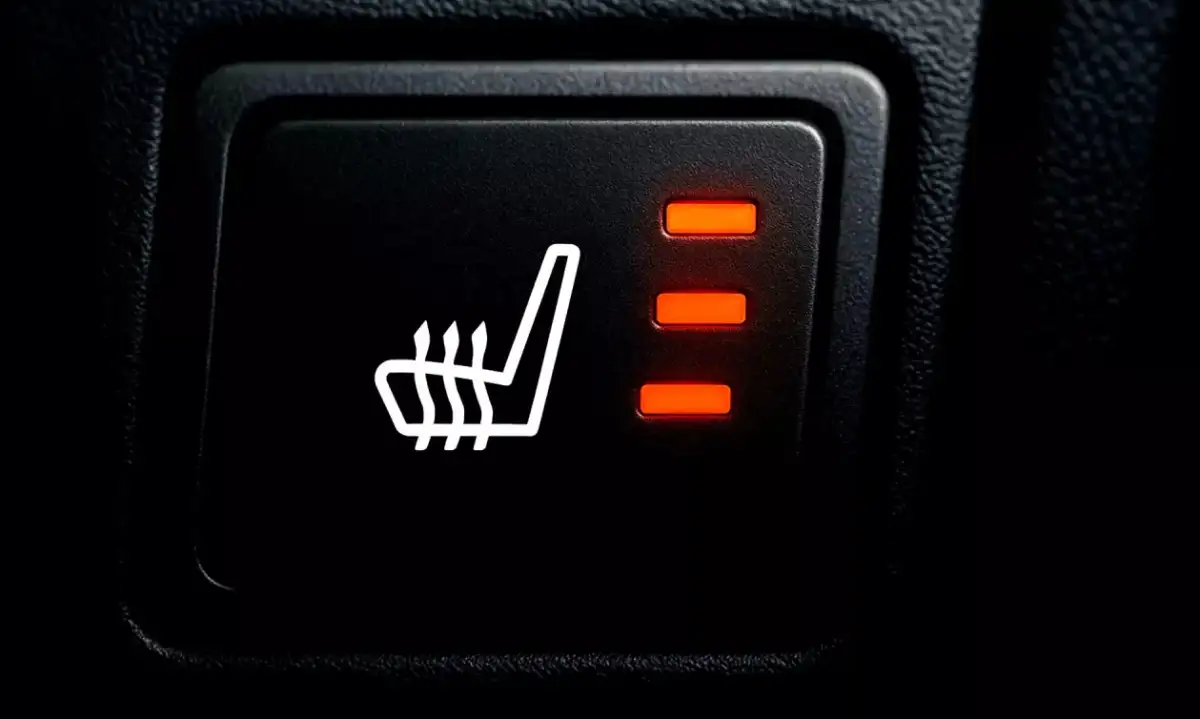
Seat heaters.
The measurements showed that heated seats can generate relatively noticeable electromagnetic fields:
This was true not only in the electric cars, but also in the plug‑in hybrids and the combustion‑engine vehicle included in the study.
Even so, the values remained well below levels considered medically problematic, with a comfortable safety margin still in place.
The key takeaway is that having electromagnetic fields around you is not unique to EVs. Every modern vehicle filled with electrical equipment—from heaters to fans and chargers—creates some level of field.
Does Charging Change The Picture?
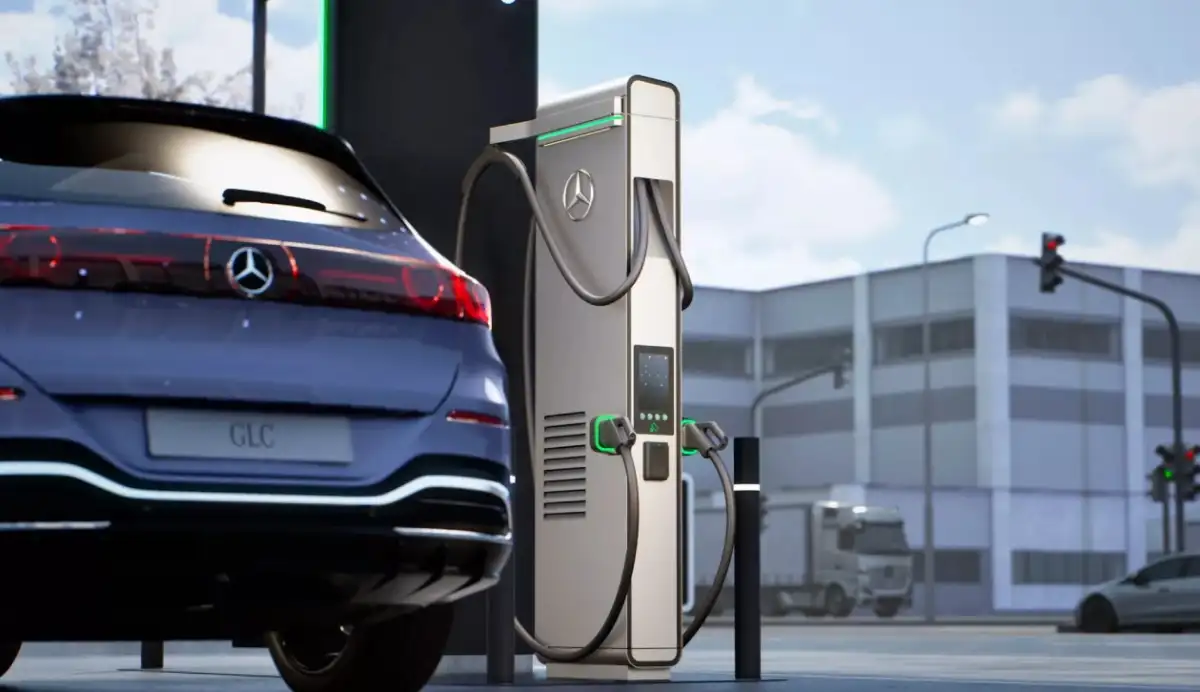
Some drivers worry that plugging in their car—especially at a rapid charger—might create a kind of “radiation hotspot.” The study addressed this directly:
At the beginning of an AC charging session, stronger fields were indeed detected around the plug, particularly at the moment the session started.
But even these elevated readings stayed within accepted safety limits, and in any case most drivers do not stand pressed up against the plug for long periods.
Interestingly, DC fast charging, despite delivering more power, produced weaker measured fields than slower AC charging under the test conditions.
Overall, charging does not fundamentally change the risk profile; there is no sudden electromagnetic “blast” that makes an EV more dangerous while it is plugged in than while it is being driven.
How Do EVs Compare To Conventional Cars?
A key point in the ADAC report is that electric cars did not come out worse than traditional combustion vehicles. In fact:
In some cases, the “electrosmog” levels inside EVs were lower than in comparable gasoline or diesel models.
Conventional cars already contain multiple sources of electromagnetic fields, from alternators and ignition systems to fans, pumps and control units.
That means the old question “Are electric cars more dangerous, electromagnetically, than normal cars?” can reasonably be flipped:
Given these findings, some EVs may actually be “quieter” in electromagnetic terms than the combustion cars we have been happily driving for decades without concern.
What About People With Implanted Medical Devices?
Another sensitive issue is whether these fields pose a risk to people with pacemakers or other implanted medical equipment.
The study did not record any scenario in which values in the chest or head region came close to interference thresholds for such devices under current standards.
Even so, it is still wise for anyone with an implant to consult their physician—especially if they spend many hours per day in a car or work around high‑voltage systems. This is no different from the standard advice about mobile phones, airport scanners or high‑voltage power lines.
Why Is Fear Of “EV Radiation” So Persistent?
Despite the reassuring data, fear of electromagnetic exposure from EVs remains common. Several factors help explain this:
Electromagnetic fields are invisible, which makes them easy to mythologize and exaggerate.
Many people do not distinguish between different types of radiation and assume anything called “radiation” is as dangerous as nuclear sources or hospital X‑ray machines.
Every new technology—mobiles, Wi‑Fi, telecom towers—has historically triggered waves of anxiety before scientific evidence calmed things down.
This is exactly where independent, methodologically sound studies are needed, to separate genuine risk from unfounded worry and to prevent misinformation from spreading unchecked.
What Should EV Drivers Actually Worry About?
If “being cooked by the battery” does not stack up as a realistic concern, what should safety‑conscious EV owners really focus on? More down‑to‑earth issues:
Installing a certified home charger and having it wired by a qualified electrician, to avoid overheating, short circuits or fire hazards.
Following the manufacturer’s recommendations on charging practices and never tampering with high‑voltage components.
Paying attention to the same traditional safety factors that dominate crash statistics: speed, distraction, seatbelt use, tyre and brake maintenance.
In short, the biggest risks on the road are still human driving behaviour and basic maintenance—not invisible electromagnetic fields from the drivetrain.
The German study that examined electromagnetic exposure in a fleet of electric, hybrid and conventional cars arrives at a clear result:
There is no evidence that modern electric cars expose drivers or passengers to harmful levels of electromagnetic radiation. In many comparisons, they are no worse—and sometimes better—than combustion vehicles.
Even where short‑lived peaks appeared under hard acceleration, harsh braking or component activation, the values stayed well below the thresholds set by international health guidelines.
In the near term, worrying that “sitting on a battery will irradiate you” is not supported by current data. Over the longer term, research will continue as EV adoption grows, but for now it appears that the real safety priorities on the road remain the same as ever: how we drive, not what powers the car.