
- Kia EV3 2026: The small electric crossover that wants to be your first family EV
- Exterior design inspired by EV9, in a city‑friendly size
- Key exterior design highlights
- Practical proportions: small enough for the city, big enough for a family
- The EV3 cabin: a clean, modern lounge with dual screens
- Main interior elements
- Electric powertrain: comfortable daily range and easy charging
- Expected performance and range characteristics
- Charging and ease of use
- Drive modes and energy recovery
- Connectivity and safety: compact size, big feature set
- Expected safety systems
- Connectivity and tech comfort
- Where the Kia EV3 fits in Kia’s range and in the market
Kia EV3 2026 is designed to be a “smart gateway” into the world of electric cars, but in the form of a compact crossover that suits both the city and small families. Instead of being an experimental model or a second car in the household, the EV3 aims to become a primary daily vehicle, combining distinctive design, modern technology, and lower running costs compared to traditional petrol cars.
Kia EV3 2026: The small electric crossover that wants to be your first family EV
Through its EV family that started with the sporty EV6 and the large luxury EV9, Kia is now building a more market‑realistic layer with the 2026 EV3, aimed at a wider customer base. The idea is simple: offer an electric car with balanced dimensions and a price expected to be lower than the larger models, while preserving a futuristic design identity and technology that doesn’t make the owner feel they chose a “basic” or stripped‑down car.
Exterior design inspired by EV9, in a city‑friendly size
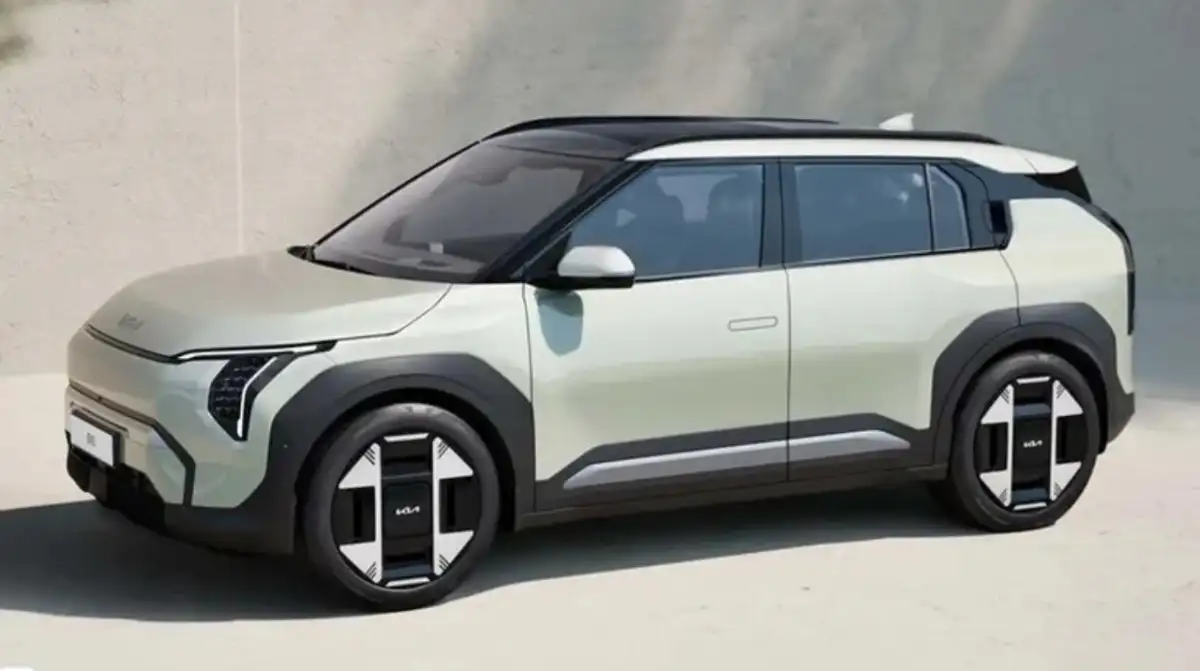
The Kia EV3 adopts the “Opposites United” design language that has become a signature of Kia’s modern EVs. The exterior lines blend sharpness and smoothness, with a clear balance between practicality and a futuristic look.
Key exterior design highlights
A nearly closed front fascia that expresses its electric nature, with thin LED lighting units and distinctive DRL graphics that give it a strong identity at first glance.
A gently sloping roofline towards the rear that preserves the crossover look without sacrificing headroom for second‑row passengers.
Pronounced shoulders and strong wheel arches with dynamically styled wheels, likely in the 18–19‑inch range on higher trims, giving the car a presence that exceeds its actual footprint.
In this way, the EV3 looks like a scaled‑down EV9, giving owners the feeling of belonging to the same design family even if they choose the smaller model.
Pra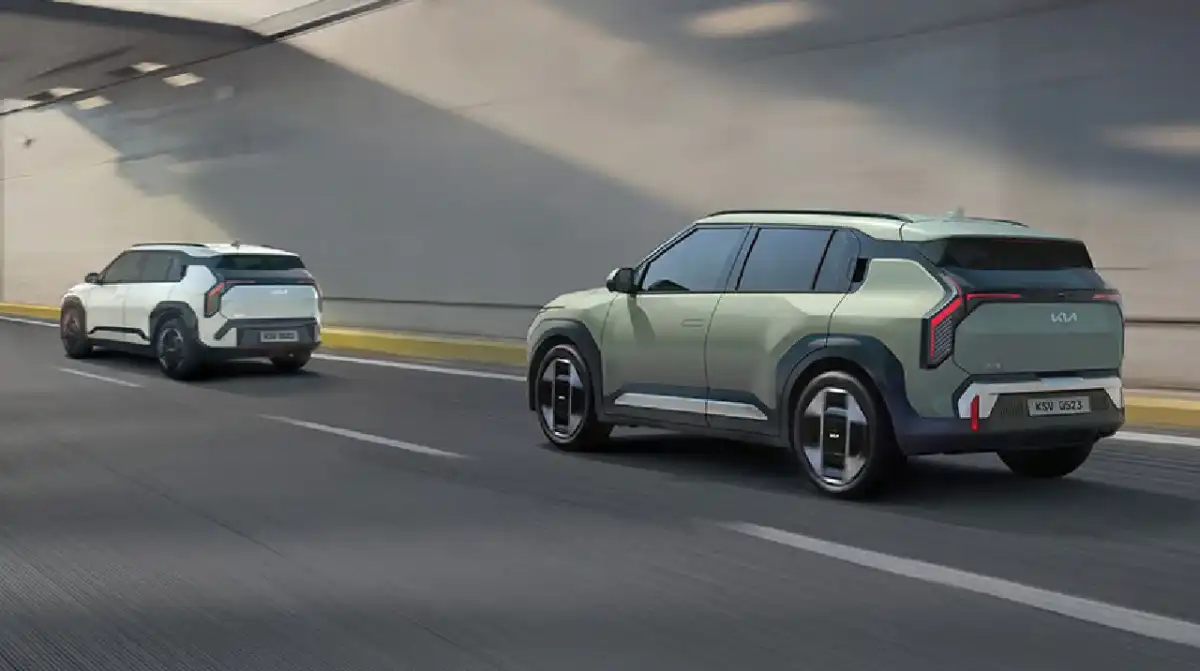 ctical proportions: small enough for the city, big enough for a family
The EV3 sits in a middle ground between a small hatchback and a compact SUV, which allows it to:
Be easy to drive and park in crowded city streets and mall parking structures.
Still offer a cabin able to comfortably accommodate a small family (four occupants in comfort), with enough cargo space for daily errands and weekend trips.
The idea is not to build a “tiny” car, but to optimise space usage by taking advantage of an EV‑specific platform that allows better packaging of mechanical components and a floor‑mounted battery, freeing up more volume for occupants.
The EV3 cabin: a clean, modern lounge with dual screens
Inside, Kia aims to make the EV3 an extension of the experience offered by its larger EVs, with a clear and easy‑to‑understand digital interface for drivers who may be switching from a conventional car to an EV for the first time.
Main interior elements
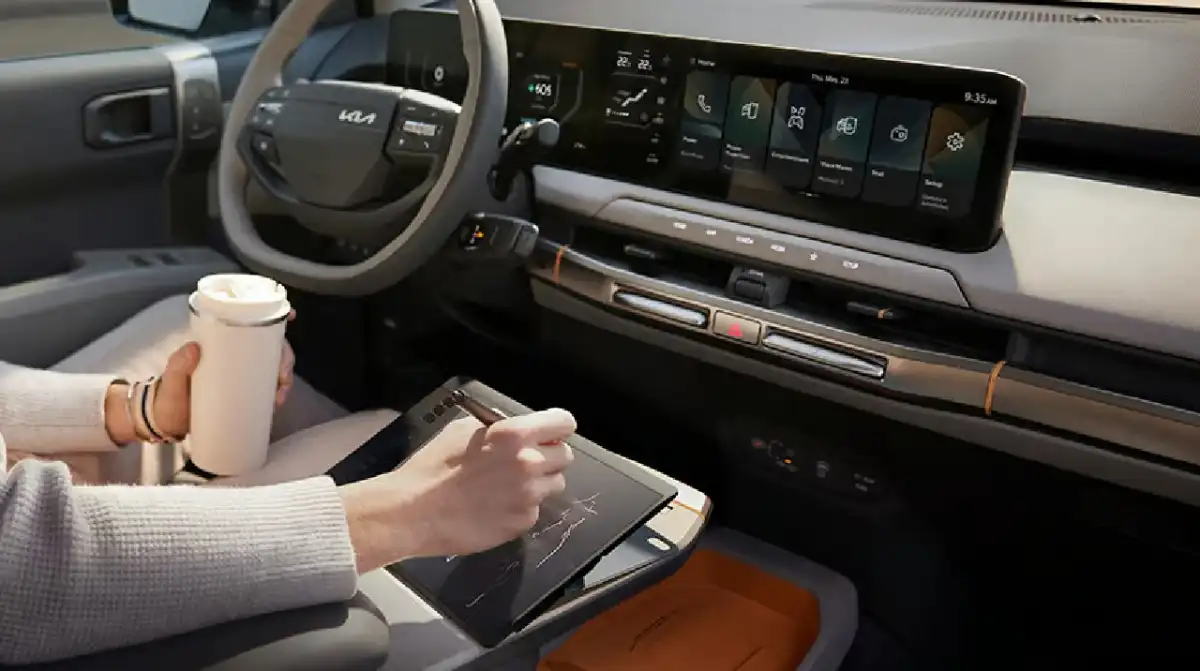
Two wide screens integrated almost seamlessly: a digital instrument cluster in front of the driver and a larger central infotainment screen for media and vehicle functions.
A clean dashboard with a limited number of physical buttons, relying more on touch controls and voice commands.
Soft‑touch materials in the main contact areas, with some recycled or eco‑friendly materials used in trim details to reinforce the car’s environmental character.
The front seats are shaped to provide a mix of support and comfort, with options such as heating and possibly ventilation on higher trims, while the rear seats can be folded partially or fully to increase cargo flexibility when larger items need to be carried.
Electric powertrain: comfortable daily range and easy charging
As a compact electric vehicle, the EV3 is primarily focused on daily city and suburban use, with enough range to handle inter‑city trips when needed. It is expected to be offered with different battery options to match various usage patterns.
Expected performance and range characteristics
A base version with a single electric motor driving the front wheels, offering enough acceleration for city driving and highway merging without chasing headline performance figures at the expense of price or range.
A mid‑capacity battery that comfortably covers typical urban use (commuting, school runs, errands), with the ability to charge overnight at home or at a workplace charger.
The possibility of a longer‑range or higher‑power version (or even dual‑motor all‑wheel drive) in some markets for those who want more distance or stronger performance.
Charging and ease of use
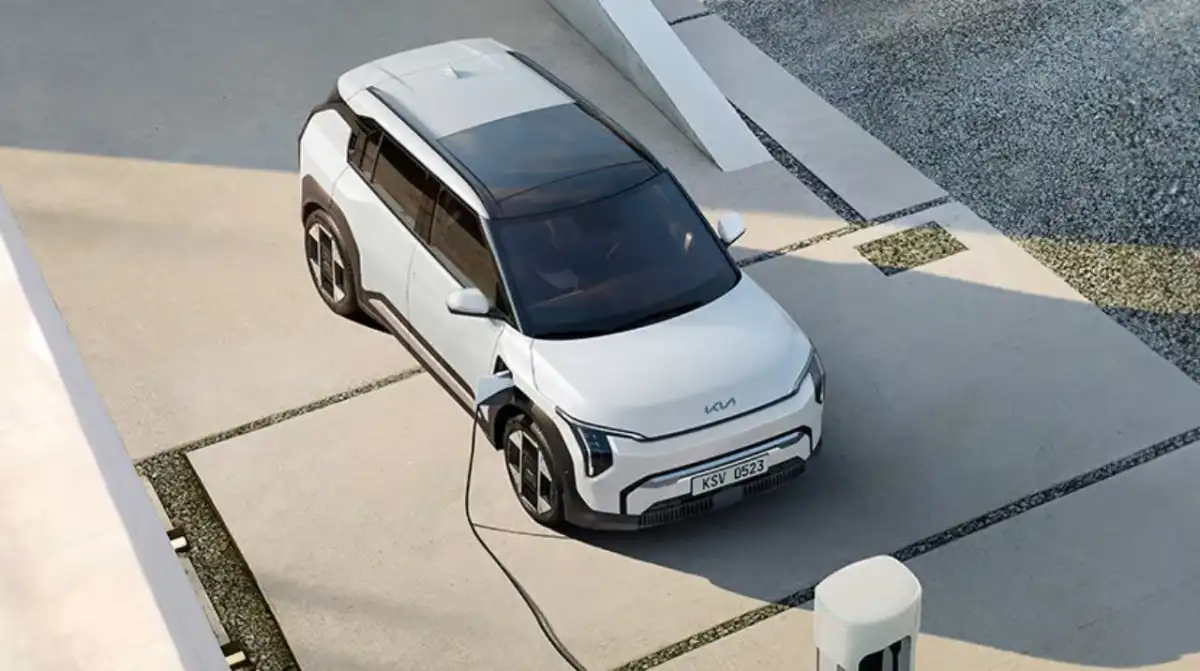
Support for AC charging via a home wallbox or public AC chargers, making overnight top‑ups practical and simple.
Support for DC fast charging at suitable stations, allowing the battery to go from a low state of charge to around 80% in a reasonably short time, useful on inter‑city trips or during longer shopping stops.
These attributes make the EV3 a suitable daily driver without excessive range anxiety, especially for owners who can install a home charger or have regular access to charging points.
Drive modes and energy recovery
Like other Kia EVs, the EV3 is naturally expected to offer several drive modes:
Eco mode to minimise energy consumption and prioritise range.
Normal mode for balanced everyday driving.
Sport mode for sharper throttle response when quick overtakes or highway merges are needed.
In addition, different levels of regenerative braking are likely, with the option of a one‑pedal driving mode that slows the car significantly when the driver lifts off the accelerator. This adds comfort in stop‑start traffic and reduces brake wear.
Connectivity and safety: compact size, big feature set
Despite its compact dimensions, the EV3 is not intended to feel like a “basic” car in terms of technology. Kia is likely to equip it with a broad suite of safety and driver‑assistance systems similar to those found in its larger models.
Expected safety systems
Adaptive cruise control to reduce fatigue on long highway drives.
Lane‑keeping assist with steering support to help prevent unintentional lane departure.
Blind‑spot monitoring with alerts when changing lanes.
Automatic emergency braking with pedestrian (and possibly cyclist) detection.
Rear parking sensors and a high‑resolution reversing camera, with the possibility of a 360‑degree camera system on higher trims.
Connectivity and tech comfort
Apple CarPlay and Android Auto support (very likely wireless on upper trims), for seamless smartphone integration.
A companion app allowing remote control of selected functions, such as scheduling charging, pre‑conditioning the cabin, and checking door and battery status.
Together, these features make the EV3 a natural choice for a tech‑savvy generation that uses the smartphone as a central hub in daily life and expects the car to fit into that ecosystem.
Where the Kia EV3 fits in Kia’s range and in the market
Within Kia’s own lineup:
The EV3 sits below the EV6 as a smaller, more city‑oriented and budget‑friendly option.
It is lighter and simpler than the EV9, which targets large families and luxury‑SUV buyers.
It can be viewed as the “entry point” into Kia’s EV world, with the possibility for owners to move up to larger models later if they need more space or performance.
In the wider market, the EV3 competes with:
Other compact electric crossovers from Chinese, European, Japanese and Korean brands targeting similar size and price segments.
Small petrol and hybrid crossovers and hatchbacks, where it aims to convince buyers that switching to electric now makes sense in terms of running costs and technology.
What Kia is betting on with the EV3 is a combination of: distinctive design, quiet and responsive electric driving, and a level of technology that makes the owner feel they’ve bought a “car of today and tomorrow” rather than just a compliance EV.