
- UAE Car Market 2026: Chinese vs Japanese vs Korean Share Breakdown
- UAE Car Market Share by Origin: 2026 Breakdown
- Market Share by Segment: Who Wins Where?
- Chinese Brands Challenging the Establishment
- Haval H6
- BYD Song Plus
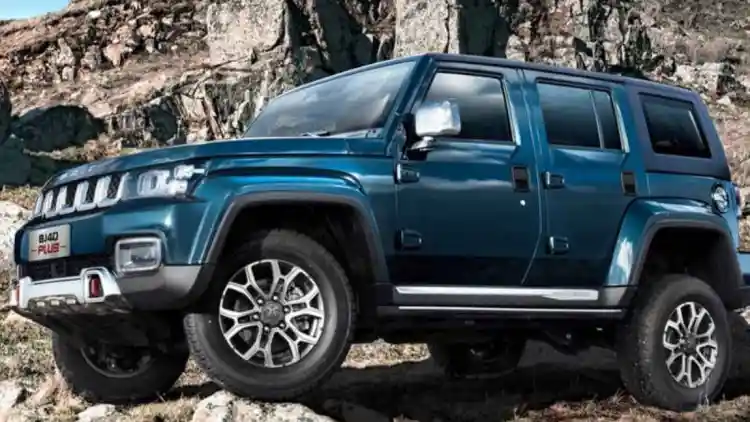
- Tank 300
- Competitive Positioning: Chinese vs Japanese vs Korean
- Frequently Asked Questions
UAE Car Market 2026: Chinese vs Japanese vs Korean Share Breakdown
The UAE car market in 2026 is a three-way battle between Chinese, Japanese and Korean brands. This comparative analysis breaks down market share by origin, reveals which segments each group dominates, and forecasts where the market is heading. Chinese brands are closing the gap with Japanese leaders fast, while Korean brands face pressure from both sides.
Updated August 2026.
| Model | Body Style | Starting Price | Best For |
|---|---|---|---|
| Haval H6 | SUV | 75,000 AED | Top Chinese family SUV in UAE |
| BYD Song Plus | SUV | 124,900 AED | Top Chinese PHEV in UAE |
| MG ZS | SUV | 58,000 AED | Top Chinese budget SUV in UAE |
| Tank 300 | SUV | 119,900 AED | Top Chinese off-road SUV in UAE |
| Geely Monjaro | SUV | 124,000 AED | Top Chinese premium SUV in UAE |
UAE Car Market Share by Origin: 2026 Breakdown
| Origin | Market Share | Est. Annual Units | YoY Change | Top Brand |
|---|---|---|---|---|
| Japanese | 32% | ~140,800 | -3% | Toyota |
| Chinese | 28% | ~123,200 | +12% | BYD |
| Korean | 18% | ~79,200 | -2% | Hyundai |
| American | 10% | ~44,000 | +1% | Ford |
| European | 9% | ~39,600 | 0% | Mercedes |
| Other | 3% | ~13,200 | 0% | Various |
Market Share by Segment: Who Wins Where?
| Segment | Chinese Leader | Japanese Leader | Korean Leader | Chinese Share |
|---|---|---|---|---|
| Budget SUV | MG ZS | Nissan Kicks | Kia Seltos | 55% |
| Mid-size SUV | Haval H6 | Toyota RAV4 | Hyundai Tucson | 30% |
| Off-road SUV | Tank 300 | Toyota Land Cruiser | - | 20% |
| Electric SUV | BYD Atto 3 | Toyota bZ4X | Hyundai Ioniq 5 | 45% |
| Compact Sedan | MG 5 | Toyota Corolla | Hyundai Elantra | 25% |
| Luxury Sedan | Hongqi H9 | Lexus ES | Genesis G80 | 8% |
| Pickup | BYD Shark 6 | Toyota Hilux | - | 5% |
Chinese Brands Challenging the Establishment
Haval H6
Starting Price: 75,000 AED
Body Style: SUV
The UAE's best-value mid-size family SUV, combining a 204 hp 2.0L turbo, a cavernous cabin and an extensive safety suite. The H6 offers the space and features of SUVs costing 30,000 AED more.
Key Highlights
- 2.0L turbo with 204 hp and 320 Nm
- 7-speed DCT, available AWD
- 560 L boot expanding to 1,485 L
- 7 airbags, AEB, 360 camera
- 7-year / 200,000 km warranty
Best for: Families who want maximum SUV space and features per dirham.
BYD Song Plus
Starting Price: 124,900 AED
Body Style: SUV
A plug-in hybrid SUV pairing a 1.5L engine with an electric motor for 235 hp and over 100 km of pure-electric range. The Blade Battery adds heat stability for Gulf summers, while the cabin rivals models costing twice as much.
Key Highlights
- 1.5L DM-i PHEV with 235 hp combined output
- 100+ km pure-electric range, 1,000+ km combined
- Blade Battery tested at 50C for Gulf summers
- L2 ADAS with adaptive cruise and lane centring
- 8-year / 160,000 km battery warranty
Best for: Families and commuters who want low running costs without giving up SUV space.
Tank 300
Starting Price: 119,900 AED
Body Style: SUV
A body-on-frame off-road SUV with a 2.0L turbo producing 224 hp, 9 terrain modes and front+rear diff locks. The Tank 300 rivals the Toyota Land Cruiser Prado for off-road capability at roughly half the price.
Key Highlights
- 2.0L turbo with 224 hp, 8-speed auto
- 9 terrain modes incl. Sand mode
- Front + rear diff locks, 700mm wading
- Body-on-frame off-road architecture
- 5-year / 150,000 km warranty
Best for: Desert drivers who want serious off-road ability without Land Cruiser money.
Competitive Positioning: Chinese vs Japanese vs Korean
- Price: Chinese cars are 20-30% cheaper than Japanese and 10-20% cheaper than Korean equivalents, giving them a decisive edge in the budget and mid-range segments.
- Warranty: Chinese brands offer 5-8 year warranties vs 3-5 years for Japanese and 5 years for Korean brands, reducing ownership risk.
- EV technology: Chinese brands lead in affordable EVs (BYD, MG, XPeng), while Japanese EVs remain limited and expensive, and Korean EVs are priced higher.
- Brand trust: Japanese brands still command the highest trust and resale value, but the gap is narrowing as Chinese brands build track records.
- Features: Chinese cars offer more standard tech and safety features per dirham than either Japanese or Korean rivals, especially in the sub-130,000 AED range.
Frequently Asked Questions
How does Chinese car market share compare to Japanese and Korean in the UAE?
In 2026, Japanese brands hold 32% of the UAE market, Chinese brands 28%, and Korean brands 18%. Chinese share is growing at 12% per year, while Japanese and Korean shares are declining slightly.
Are Chinese cars cheaper than Japanese and Korean cars in the UAE?
Yes. Chinese cars are typically 20-30% cheaper than comparable Japanese models and 10-20% cheaper than Korean equivalents. For example, the Haval H6 (75,000 AED) undercuts the Toyota RAV4 by approximately 30,000 AED.
Which segments do Chinese cars dominate in the UAE?
Chinese cars dominate the budget SUV segment (55% share) and the affordable electric SUV segment (45% share). They are also strong in mid-size SUVs (30%) and compact sedans (25%).
Do Japanese cars still have better resale value than Chinese cars in the UAE?
Yes, but the gap is narrowing. Japanese cars retain 55-70% after 3 years, while the best Chinese cars (Tank 300) retain 62%. Average Chinese retention is 45-55%, approaching Korean levels.
Will Chinese cars overtake Japanese cars in the UAE market?
Based on current trends, Chinese cars could overtake Japanese brands in the UAE by 2028-2029. Chinese share is growing 12% annually while Japanese share declines 3% annually. However, Japanese brands retain strong loyalty in the luxury and off-road segments.