

- i-HEV Intelligent Dual-Engine: Revaluing HEV in the New Energy Landscape
- Haohan-S Super Electric Hybrid and Leishen AI Electric Hybrid 2.0: A Technological Assault on Large-Displacement Engines
- Full-Domain AI 2.0: From “Functional Intelligence” to “Vehicle as Brain”
- Zeekr: Technology-Led Luxury and a Technological Offensive into Global Markets
- Methanol Hybrids and Solid-State Batteries: A Diverse Portfolio of Forward-Looking Energy
- Flyme Auto and the Smart Cockpit: Human-Vehicle Interaction with Emotional Warmth
- Global Expansion Strategy: From 640,000 to 750,000 — Geely‘s Worldwide Ambition
- Conclusion: One Geely, All-Round Leadership
On April 13, 2026, in Hangzhou, GeelyUAE GeelyKSA GeelyKuwait GeelyQatar GeelyOman GeelyBahrain GeelyEgypt Geely officially unveiled its next-generation i-HEV intelligent dual-engine hybrid technology under the theme “World Hybrid, China Power.” This launch marks a major milestone in Geely’s transition from “software-defined cars” to “AI-defined cars”. Yang Xueliang, Senior Vice President of Geely Holding Group, noted that the automotive industry is undergoing profound change — future cars will no longer be just transportation, but also serve as intelligent mobile terminals, real-time data carriers and gateways to diverse ecosystems. The i-HEV system targets global-leading fuel economy, aiming to comprehensively surpass current mainstream Japanese hybrid technologies. From Leishen AI Electric Hybrid to i-HEV intelligent dual-engine, from methanol hybrids to Haohan-S super electric hybrid, and to the full-domain AI 2.0 technology system, Geely is accelerating toward its “One Geely, All-Round Leadership 2030” goal with a complete energy matrix and intelligent deployment.
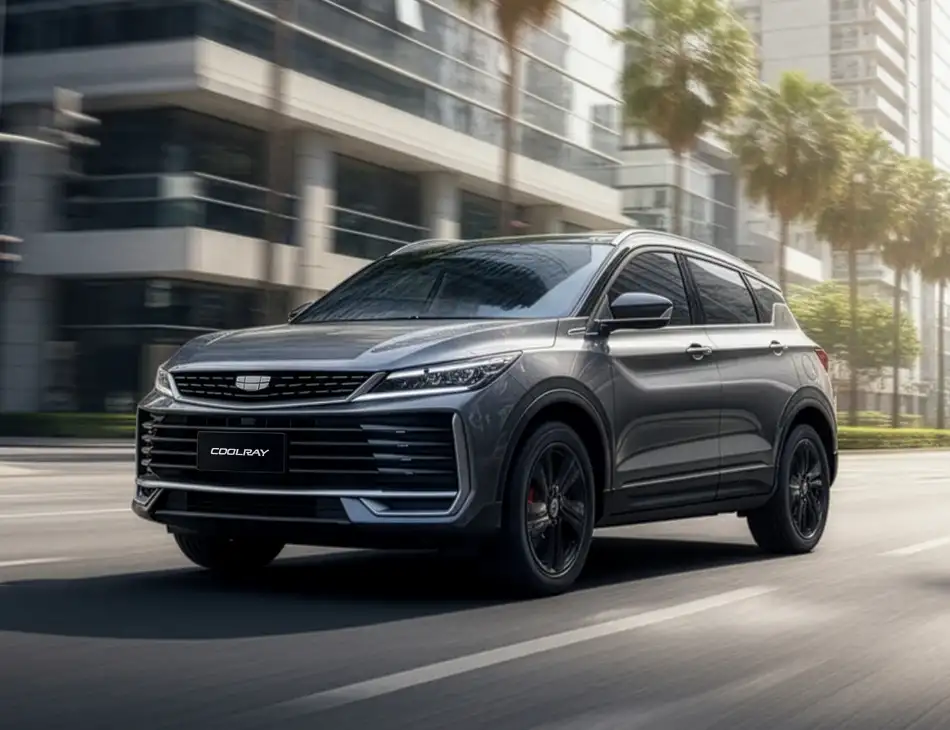 i-HEV Intelligent Dual-Engine: Revaluing HEV in the New Energy Landscape
A report from CMB International Securities noted that against the backdrop of declining new energy subsidies, the halving of purchase tax for pure EVs, higher PHEV range standards and rising raw material costs, non-plug-in HEVs — which require no external charging — are gaining renewed value. HEVs offer driving habits similar to traditional gasoline cars, delivering significantly lower fuel consumption at a price only slightly above gasoline vehicles — precisely addressing the pain points of users who are unable or unwilling to switch to plug-in hybrids. Geely‘s new-generation i-HEV intelligent dual-engine technology, with its superior balance of low fuel consumption and strong power, powerful scale-driven cost advantages, more mature architecture and more advanced intelligent capabilities, poses a “dimensionality reduction strike” against Japanese hybrid brands, with plans to expand to overseas markets.
On the technical front, i-HEV incorporates “AI Cloud Power” to integrate AI algorithms into the entire energy management process, targeting fuel consumption as low as 3 liters per 100 km. Geely will also roll out four to five all-new hybrid models, forming an HEV product matrix spanning multiple price segments and powertrain types. CMB International Securities maintains Geely Auto as its top recommendation, expecting the new HEV technology launch, ramp-up of high-end luxury vehicles and strong overseas growth to serve as sustained stock catalysts.
Haohan-S Super Electric Hybrid and Leishen AI Electric Hybrid 2.0: A Technological Assault on Large-Displacement Engines
ZeekrBahrain ZeekrEgypt ZeekrKSA ZeekrKuwait ZeekrOman ZeekrQatar ZeekrUAE Zeekr, Geely’s premium intelligent electric brand, is breaking into the traditional luxury sector with “forward R&D.” The Haohan-S super electric hybrid architecture developed by Zeekr integrates cutting-edge technologies including a 900V high-voltage architecture, a three-motor megawatt electric drive, 6C ultra-fast charging, a 70 kWh large battery and a dedicated 2.0T engine, forming a “super pure electric + super hybrid + super extended-range” tripartite energy system. Leveraging Geely‘s full-domain AI technologies, Zeekr has developed a “three-engine, twelve-mode” intelligent powertrain system that comprehensively outperforms traditional large-displacement vehicles in handling, performance and efficiency.
On the Geely Galaxy brand front, the production thermal efficiency of the Leishen AI Electric Hybrid 2.0 system has reached 47.26%. Paired with an 11-in-1 dedicated hybrid electric drive and new drag reduction technology that boosts overall electric drive efficiency to 93.1%, and combined with Xingrui AI Cloud Power 2.0, the system achieves fuel consumption as low as 3.15 L/100 km in battery-depleted mode and a CLTC combined range of 1,575 km. The PHEV version consumes just 3.8 L/100 km when the battery is depleted, while the pure electric version consumes 11.2 kWh/100 km — significantly reducing operating costs compared to traditional gasoline vehicles. Notably, the Aegis short-blade cells in the Galaxy Starship 7 EM-i achieve an energy density of 173 Wh/kg, charging from 30% to 80% in just 15 minutes, while the new 29.8 kWh Aegis Golden Brick cell enables 200 km of pure electric range. Combined with the Qianli Haohan H3 intelligent driving solution and the Galaxy Flyme Auto smart cockpit, the Starship 7 delivers “premium features at a mainstream price” in the 100,000–150,000 yuan segment.
Full-Domain AI 2.0: From “Functional Intelligence” to “Vehicle as Brain”
Geely officially unveiled its Full-Domain AI 2.0 technology system at CES 2026. At its core is the WAM (World Action Model), a unified intelligent brain designed to bridge previously siloed domains — including autonomous driving, the smart cockpit and the chassis — enabling cross-domain collaborative decision-making and equipping vehicles with “human-like” judgment and action capabilities.
The Xingrui AI Large Model serves as the computational foundation of this system — a hybrid model architecture comprising a cloud-based hundred-billion-parameter model and on-device models, covering multimodal large models, comprehensive intent-understanding models and end-to-end voice large models. The Eva intelligent assistant has evolved from a traditional voice assistant into a “hyper-realistic emotional agent” capable of cross-device and cross-domain task invocation. Based on the Xingrui AI Large Model and dynamic memory technology, Eva supports wake-free interaction, contextual understanding and proactive services, and has already entered mass production in the Galaxy M9. Geely has also partnered with DeepSeek, deeply integrating general-purpose large model capabilities into its in-vehicle systems through distillation training.
In the autonomous driving domain, Geely officially launched the “Qianli Haohan G-ASD” (Geely Afari Smart Driving) system in January 2026. For the Lynk & Co 900Bahrain Lynk & Co 900Egypt Lynk & Co 900KSA Lynk & Co 900Kuwait Lynk & Co 900Oman Lynk & Co 900Qatar Lynk & Co 900UAE Lynk & Co 900 with the Qianli Haohan H7 configuration, the core D2D (door-to-door) navigation-assisted driving feature has been officially rolled out. With a single activation, the vehicle autonomously navigates the entire journey from the starting parking spot to the destination spot — whether traversing multi-level parking garages, navigating roundabouts, or identifying and passing through highway toll gates and parking lot barriers — achieving seamless, silky transitions. On the hardware front, Zeekr is already equipped with the ADCU Max chip delivering 750 TOPS of computing power, while Geely’s next-generation 7nm cockpit chip, “Star One,” developed in partnership with SiEngine, will enter large-scale vehicle deployment in 2026. Subject to regulatory approval, Geely will also roll out highway L3 and urban L4 features and initiate Robotaxi trial operations.
Zeekr: Technology-Led Luxury and a Technological Offensive into Global Markets
As the core practice of Geely‘s brand elevation strategy, Zeekr is reshaping the position of Chinese brands in the luxury market. Zeekr has delivered nearly 720,000 vehicles cumulatively, with 77,000 units delivered in the first quarter of 2026 — an 86% year-on-year increase. Among them, the Zeekr 9X has been the best-selling large SUV in the 500,000 yuan price segment for four consecutive months, with an average transaction price exceeding 530,000 yuan and over 80% of customers coming from traditional luxury brands. The Zeekr 8X received more than 30,000 orders within 48 hours of opening pre-sales, fully validating that Zeekr’s “technology-led luxury” has gained broad recognition from global users and broken the pricing logic of traditional luxury brands.
On the battery technology front, Zeekr’s 800V ultra-fast charging second-generation Golden Brick battery adopts a fully self-developed lithium-ion acceleration technology, reducing low-temperature overall impedance by 36% and increasing conductivity by 40%. Based on the Haohan architecture‘s full-domain 800V platform, it is compatible with 800V Zeekr Charging V2/V3 stations, achieving a maximum charging power of 500 kW and a charging rate of up to 4.5C — adding over 500 km of range in 15 minutes of charging. Zeekr has also released four “Winter Expedition” technologies to tackle low-temperature challenges: the Nine-Source Heat Pump, Fast-Heating Frost-Free Air Conditioning, the 800V second-generation Golden Brick battery and the 800V extreme-cold liquid-cooled fast charger. The Nine-Source Heat Pump operates across a wide temperature range from -40°C to 50°C through deep integration of four waste heat sources, two residual heat sources and three auxiliary heat sources, saving over 1,800 watts per hour — equivalent to an additional 10 km of range. The Fast-Heating Frost-Free Air Conditioning can warm the cabin from -20°C to 20°C in just 10 minutes after 12 hours of stationary exposure.
Methanol Hybrids and Solid-State Batteries: A Diverse Portfolio of Forward-Looking Energy
On the diversified energy front, Geely has opened a new pathway to low-carbon mobility with its fifth-generation methanol hybrid technology. New models featuring the fifth-generation methanol hybrid technology have entered mass production, with claimed operating costs as low as 0.2 yuan per kilometer and a target of 60% coverage for the methanol refueling network. Li Shufu, Chairman of Geely Holding Group, shared the progress of methanol vehicle development at the China EV100 Forum — from the MIIT’s methanol vehicle pilot program launched in 2012 to relevant guidance issued by the CPC Central Committee and the State Council in 2024, the methanol technology pathway has gradually matured.
In the solid-state battery domain, Geely will complete the first production pack rollout of its all-solid-state battery in 2026, followed by vehicle integration and verification — a key step toward next-generation battery technology.
Flyme Auto and the Smart Cockpit: Human-Vehicle Interaction with Emotional Warmth
Building on the deep integration between Geely and Xingji Meizu, the Flyme Auto smart cockpit system is being widely deployed across Geely Galaxy, Lynk & CoUAE Lynk & CoKSA Lynk & CoKuwait Lynk & CoOman Lynk & CoBahrain Lynk & CoEgypt Lynk & CoQatar Lynk & Co and other brands. The 2026 Geely Galaxy E5 features multiple upgrades to its Galaxy Flyme Auto system, including the addition of a green-wave navigation feature to the onboard AutoNavi map, an upgraded HUD display, and a new car wash mode that closes all windows with a single touch. Lynk & Co plans to push the LYNK Flyme Auto 2.2.0 update in the second quarter, adding a soft switch for vehicle-finding mode, a one-button SR interface control for driving/parking integration, and nine types of scenario warnings plus lane-level navigation display on AutoNavi maps.
The all-new Lynk & Co 08 EM-P is equipped with the NVIDIA Thor chip, delivering 700 TOPS of computing power. Mid-to-high trims feature the Qianli Haohan H7 intelligent driving solution, with future OTA updates unlocking D2D door-to-door navigation-assisted driving, HPA memory parking, and active safety features including AES emergency steering assist, G-AES general obstacle emergency steering assist and more. The new system deeply integrates AI technologies, delivering more human-like interaction and an AI assistant with contextual understanding — offering users an emotionally richer, more engaging cockpit experience.
Global Expansion Strategy: From 640,000 to 750,000 — Geely‘s Worldwide Ambition
In 2026, Geely has deepened its global expansion strategy to become “product-oriented,” advancing adaptability development and localized operations in key markets to build systematic local capabilities and transition from “Made in China” to “Global Brand”. The 2026 export sales target is 640,000 units, representing over 50% year-on-year growth, with an internal target set even higher at 750,000 units. In the first two months of 2026, Geely recorded 112,000 units in exports, exceeding the target pace. In the first quarter, Geely‘s total exports exceeded 200,000 units, up 126% year-on-year. Geely will focus on expanding into Europe, Eastern Europe, ASEAN, as well as Latin America, the Middle East and Central Asia. CEO Gan Jiayue stated that in 2026, the Group will prioritize resource allocation to international business, continuously deepen localized product strategies while pushing the supply chain overseas.
Notably, Geely’s Middle East business is dominated by Saudi Arabia, where the market remains stable and has relatively little impact on Geely‘s overall operations. This stability holds significant importance for Geely’s long-term cultivation of the Middle East as a core market. In terms of sales mix, Zeekr delivered 29,318 vehicles in March 2026, up 90% year-on-year; Lynk & Co delivered 25,426 vehicles, up 1%; and plug-in hybrid vehicle sales grew 70% year-on-year.
Conclusion: One Geely, All-Round Leadership
From i-HEV intelligent dual-engine challenging Japanese hybrids, to Leishen AI Electric Hybrid 2.0 setting a new industry benchmark with 47.26% thermal efficiency, from Haohan-S charging at traditional large-displacement engines with its 900V architecture, to Zeekr rewriting the rules of the premium market with technology-led luxury, from Full-Domain AI 2.0 giving vehicles a “human-like” brain, to forward-looking deployments in methanol hybrids and solid-state batteries — Geely has built an unprecedented technology roadmap in 2026. Returning to the Middle East story we have discussed repeatedly, as traditional V6/V8 large-displacement SUVs face Chinese new energy challengers driven by technology, Geely‘s technology matrix provides a complete and systematic answer: technological evolution has matured enough for HEVs, PHEVs, extended-range vehicles, pure EVs and even methanol hybrids to form a cohesive force across power, efficiency, intelligence and cost — comprehensively challenging the “ceiling” of physical laws. Whether on the red dunes of Saudi Arabia, the city streets of Europe, or any market around the world that aspires to a high-quality mobility experience, Geely’s “multi-energy technology roadmap” is sailing toward a broader future with an all-round leading posture.