

- Fiat’s Return To The Supermini Arena
- Powertrain Lineup: From Petrol To Electric
- Exterior Design: Blending Past And Future
- A Playful, More Practical Cabin Than The Price Suggests
- Materials And Atmosphere
- The “Pill‑Shaped” Digital Cockpit
- Everyday Comfort And Usability
- Interior Space
- On The Road: Light In The City, Adequate On The Highway
- Steering And Suspension
- The Mild‑Hybrid 1.2 Turbo In Action
- Safety And Driver Assistance: The Good And The Missing
- Pricing And Rivals In Europe (Example: Greece)
- Budget Done Smart – And With Personality
Fiat’s Return To The Supermini Arena
For many years, Fiat dominated Europe’s A‑segment with the 500 and Panda duo. But since the Punto left the B‑segment in 2018, there has been a clear gap in the brand’s lineup. That gap began to close in 2024 with the arrival of the Grande Panda, an affordable supermini that walks the line between hatchback and crossover. It sits on Stellantis’ Smart Car architecture, shared with the Citroën C3 and some versions of the C3 Aircross and Opel Frontera.
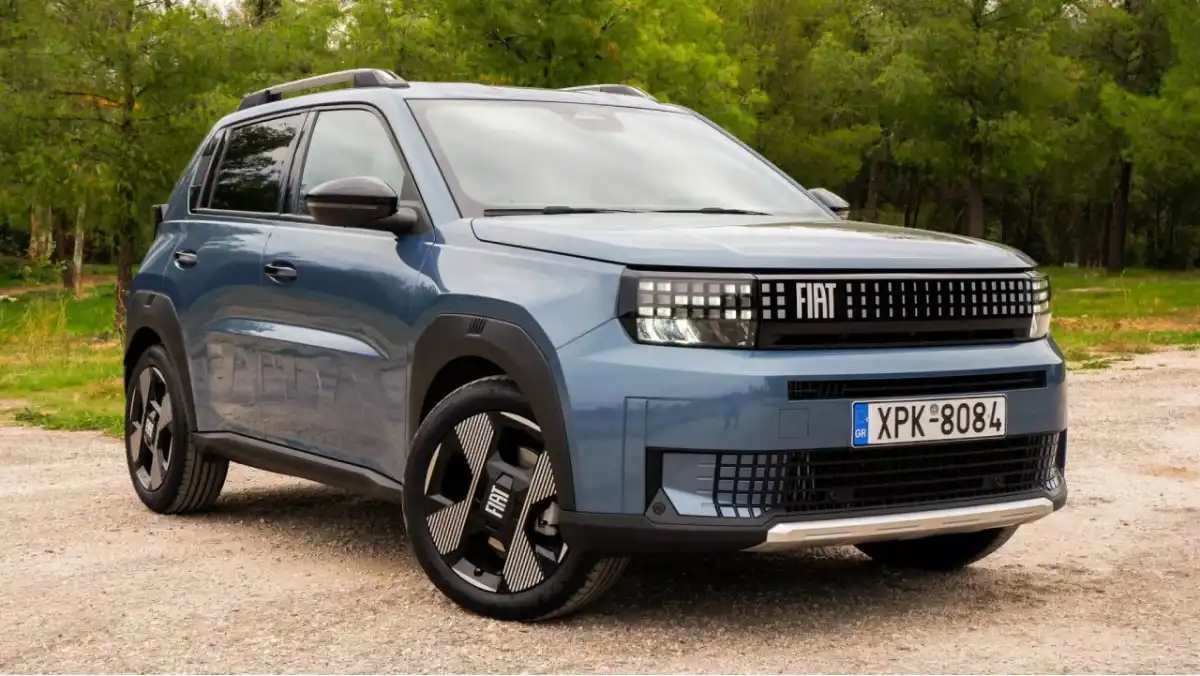
With a length of roughly 3,999 mm, the Grande Panda goes head‑to‑head with the Dacia Sandero Stepway, Citroën C3 and similar crossover‑flavored hatchbacks. Its bet is on clever, characterful design and emotional cues that revive the spirit of the original 1980s Panda in a modern way.
Powertrain Lineup: From Petrol To Electric
Like most small models in the Stellantis family, the Grande Panda is offered with three main powertrain flavors:
A non‑electrified petrol engine with a manual gearbox.
A mild‑hybrid setup with a 1.2‑liter turbo three‑cylinder and a 6‑speed eDCT automatic – the focus of this review.
A fully electric version aimed at buyers who want zero‑emissions city driving.
For now, all versions are front‑wheel drive, but Fiat plans to introduce an all‑wheel‑drive variant later, to please fans of the classic Panda 4×4 personality.
The test car is the 2025 Fiat Grande Panda Hybrid in the range‑topping La Prima trim, finished in Lago Blue, with the mild‑hybrid 1.2‑liter turbo triple.
Exterior Design: Blending Past And Future
Fiat’s design team has delivered one of the most distinctive‑looking budget cars on the market:
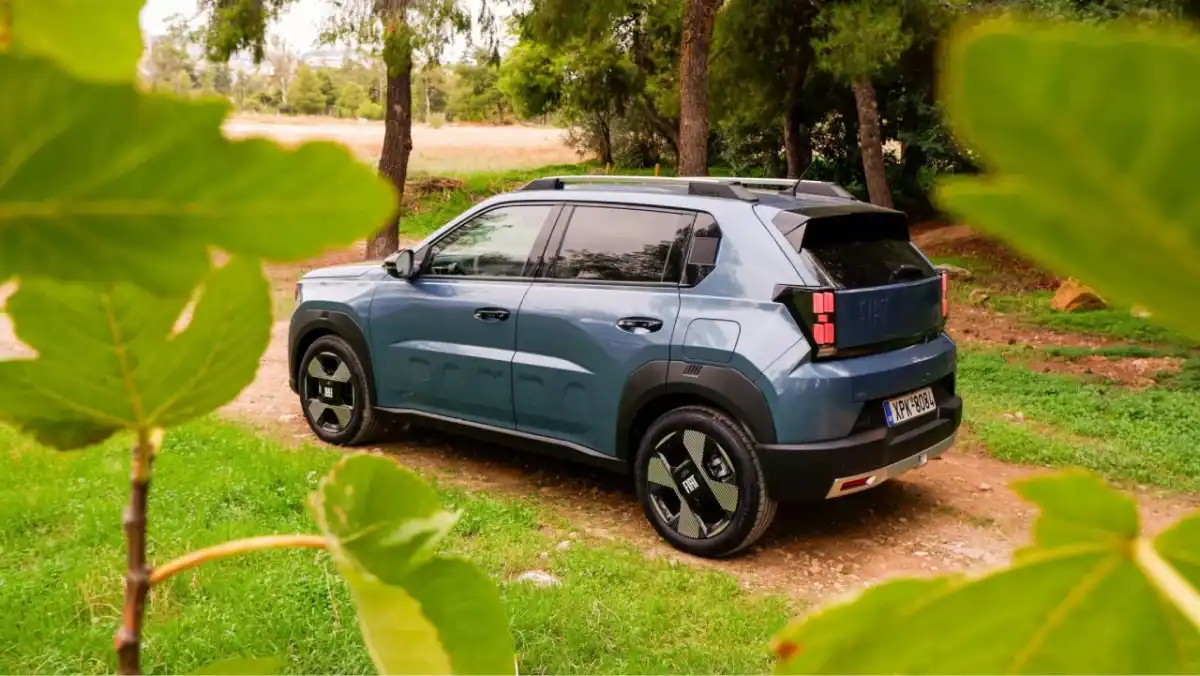
A relatively boxy body with noticeable ground clearance and plastic cladding around the wheel arches gives the car a practical, appealing crossover stance.
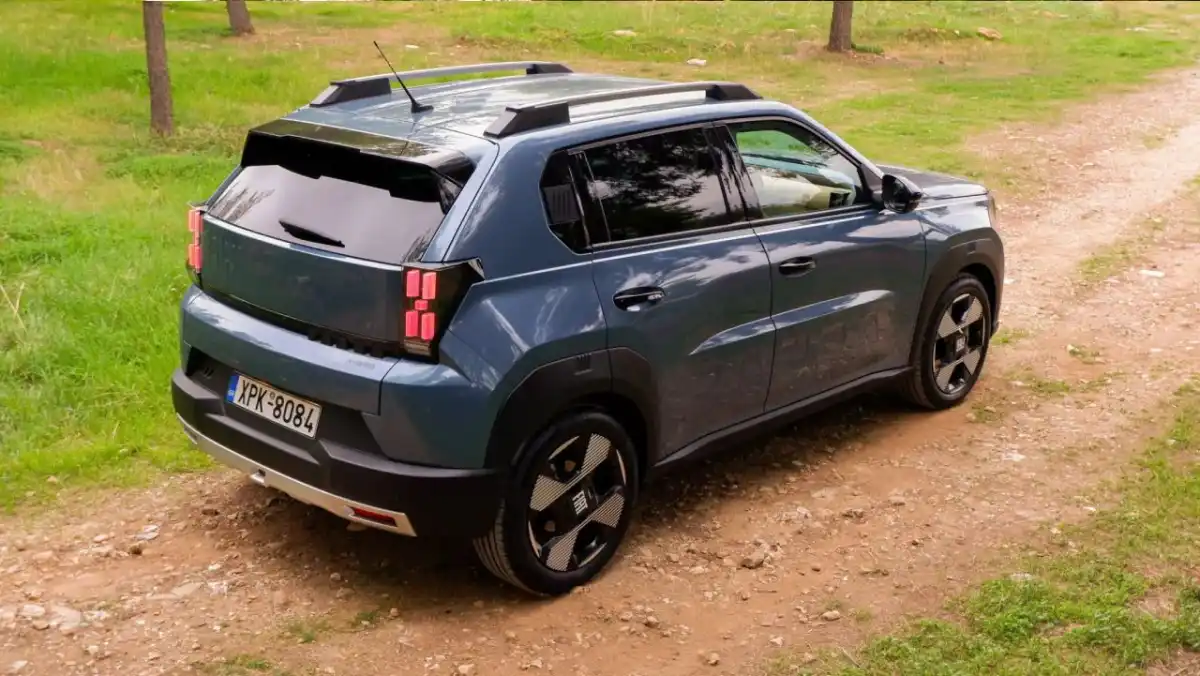
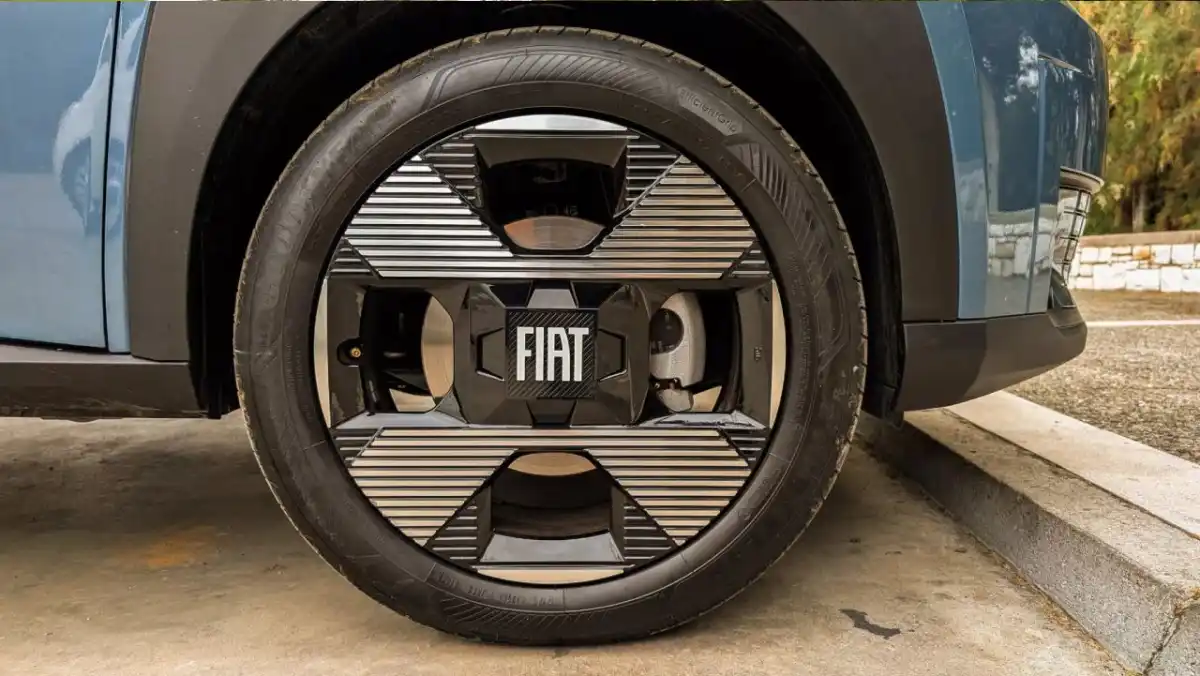
Aluminum‑style front and rear skid plates and 17‑inch alloy wheels (standard on La Prima) underline its slightly adventurous character.
Pixel‑style LED headlights and taillights echo the window pattern of Fiat’s historic Lingotto factory in Turin – a neat nod to the brand’s roots.
There are plenty of little design easter eggs: the “Panda” script engraved along the doors and rendered in 3D on the tailgate, plus the old striped Fiat badge making a comeback on the fenders, C‑pillars and rear bumper. Out on the street, the car drew a lot of attention, with many people instantly recognizing it as a Fiat – proof that good design can be the best marketing tool even when the car rides on shared underpinnings.
A Playful, More Practical Cabin Than The Price Suggests
Materials And Atmosphere
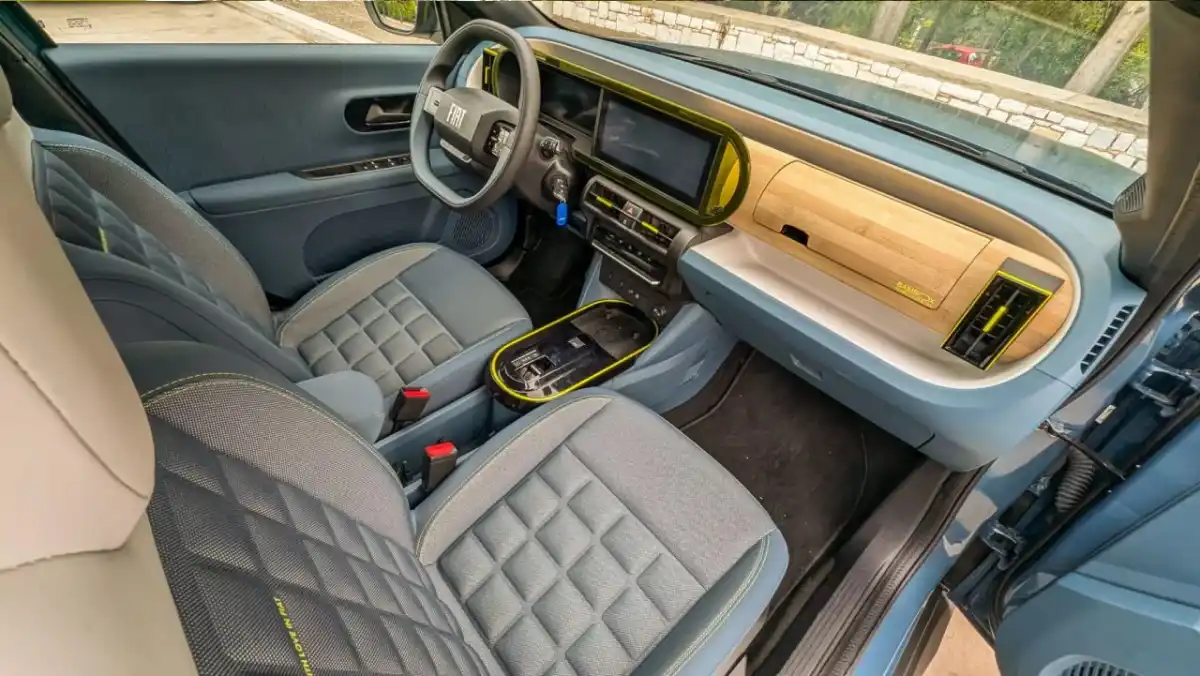
Although most of the interior surfaces are hard plastic, Fiat uses sustainable materials and smart color choices to avoid any “cheap” feeling:
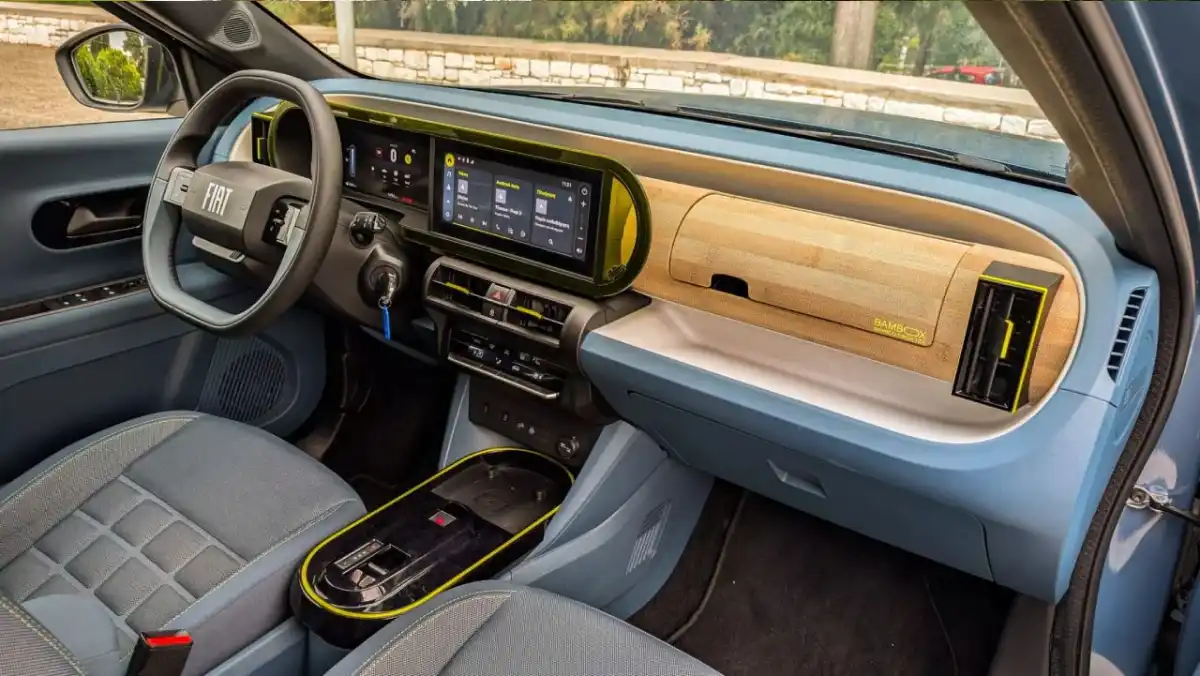
The dashboard features bamboo‑fiber trim (exclusive to La Prima), giving off a breezy Mediterranean vibe, as if you are always headed to the beach.
Bright, cheerful colors throughout the cabin make it feel visually larger and more welcoming.
The “Pill‑Shaped” Digital Cockpit
One of the defining interior elements is the pill‑shaped module that houses the cluster and infotainment screen:
Its shape is inspired by the oval test track on the roof of the Lingotto factory, complete with a miniature first‑gen Panda inside a yellow‑tinted transparent strip.
The setup combines a 10‑inch digital instrument cluster with a 10.25‑inch infotainment display. In the basic Pop trim, the infotainment screen is replaced by a smartphone holder to keep costs down.
Everyday Comfort And Usability
The seats are comfortable, with a modern design and decent support, suitable for typical city and suburban driving.
Physical climate‑control knobs and buttons on the center console make A/C adjustments simple and safe while on the move.
The main downside is the glossy black plastic on the center console, which easily collects scratches and fingerprints and hurts perceived quality.
On the practicality front, the Grande Panda offers plenty of storage spaces, although the open dashboard shelf would benefit from a rubberized lining to stop small items sliding around in every corner.
Interior Space
Despite its compact footprint (under 4 meters long), the car makes efficient use of space:
It comfortably seats four adults and can carry five on shorter trips.
Rear legroom and headroom are very respectable for a B‑segment car.
The luggage compartment offers about 412 liters of space, which is a strong figure for a crossover‑style supermini.
On The Road: Light In The City, Adequate On The Highway
The Grande Panda sits on Stellantis’ Smart Car platform – an economical architecture originally developed for emerging markets such as India and South America. It differs from the CMP/eCMP platform used by some of the group’s other small hatchbacks and SUVs.
Steering And Suspension
Steering is ultra‑light at standstill and low speeds, clearly reminiscent of Fiat’s old “City” mode, making parking and tight maneuvers effortless.
As speed rises, the steering gains some weight, yet it keeps that agile, easy‑to‑place character in urban environments and narrow streets.
The suspension delivers a good compromise between comfort and agility; the “budget platform” character only really shows up over big potholes and harsh bumps, where refinement lags behind more expensive rivals.
The Mild‑Hybrid 1.2 Turbo In Action
The 1.2‑liter turbo three‑cylinder mild‑hybrid powertrain paired with the 6‑speed eDCT makes for a convincing package:
Combined output is around 109 hp and 205 Nm, with a 0–100 km/h time of about 10 seconds and a top speed of roughly 160 km/h.
The integrated electric motor helps the car pull away smoothly and fills in the gaps between gear changes, especially at low speeds.
The biggest benefits over the non‑electrified petrol version are noticeably lower fuel consumption and a quieter overall drive.
The small 0.9 kWh battery doesn’t deliver “full‑hybrid” levels of impact like a Toyota Yaris Hybrid, but it does raise the overall refinement and makes the car feel more mature than a basic petrol‑only supermini.
On the highway, the Grande Panda feels like a clear step up from the smaller, much older Pandina, with wind and tire noise present but not disturbing on long trips.
Safety And Driver Assistance: The Good And The Missing
A couple of downsides emerged during testing:
The constant alerts from safety systems such as the speed limit warning can become annoying. You can switch them off via a center‑console button, but you have to repeat this every time you restart the car.
Advanced driver‑assistance features like adaptive cruise control are missing, even on the top‑spec La Prima trim – a noticeable omission in a 2025‑model car.
That said, the Grande Panda still offers a solid set of basic safety systems expected in this segment, making it suitable for urban use and light family duties.
Pricing And Rivals In Europe (Example: Greece)
In Greece, where the test was conducted, the Grande Panda is very competitive on price:
Grande Panda Pop (petrol/manual): From about €16,990, making it one of the cheapest B‑segment options, only slightly more expensive than the Dacia Sandero Stepway (~€16,890) and a bit cheaper than the closely related Citroën C3 (~€17,300).
Mild‑hybrid automatic version: Starts at around €21,077, a sensible point for the extra efficiency and convenience it offers.
La Prima Hybrid (test car): Priced at roughly €24,677, with full equipment and a strong visual identity.
La Prima EV: The most expensive variant at about €28,877 before any incentives.
Beyond the Sandero Stepway and Citroën C3, the Grande Panda faces indirect rivals at similar prices, including the Seat Ibiza and Skoda Fabia (in petrol form), plus the Kia Stonic as a small SUV alternative. For buyers needing more space, the Citroën C3 Aircross looks like a bargain, and the more rugged Dacia Duster starting at about €20,500 is also a compelling option.
Budget Done Smart – And With Personality
The Grande Panda is exactly the kind of car Fiat needs to bolster its image and presence in Europe:
A realistic price point that puts a new car within reach of buyers who might otherwise choose used.
Clear everyday practicality, with a relatively roomy cabin and a useful boot for a small family or city use.
A strong, characterful design identity that helps it stand out in a sea of small hatchbacks and crossovers, while still feeling unmistakably like a Fiat despite sharing hardware with Citroën.
Yes, its budget roots show in the cabin materials and in high‑speed refinement, but in an urban environment it really shines – feeling comfortable, cheerful and easy to drive. The mild‑hybrid version hits the “golden middle” of the lineup, sitting between the cheapest petrol/manual model and the more niche full‑electric variant, which makes it the most logical choice for most buyers.