

- The Squeal That Changes Your Plans For The Day
- Why Do Some Shops Recommend Changing All The Pads Together?
- When Is Replacing Just One Axle (Front Or Rear) Enough?
- How Do You Know It’s Time To Replace Brake Pads At All?
- The 80% Rule And Typical Pad Lifespan
- Why Driving On Worn Pads Is A Real Safety Risk
- Practical Tips For Deciding Between Two And Four Pads
- When To Replace Two Pads And When To Replace Four
- Balancing Safety And Budget
It’s normal for brake pads to wear out over time, but one question confuses a lot of drivers: do you always have to replace all four pads at the same time, or is it enough to change just the front or rear set when needed? The truth is that changing a full set isn’t a scam, but it’s also not mandatory in every situation. The correct decision depends on wear patterns and the condition of each axle, with safety always taking priority over saving money.
The Squeal That Changes Your Plans For The Day
You roll up to a traffic light, press the brake pedal, and suddenly hear a sharp squeal that reminds you your braking system wants attention now. You go to the shop and the technician tells you that you need new pads on all four wheels. That’s when the doubt starts: is that really necessary, or can you just change the front or rear pads and be done with it?
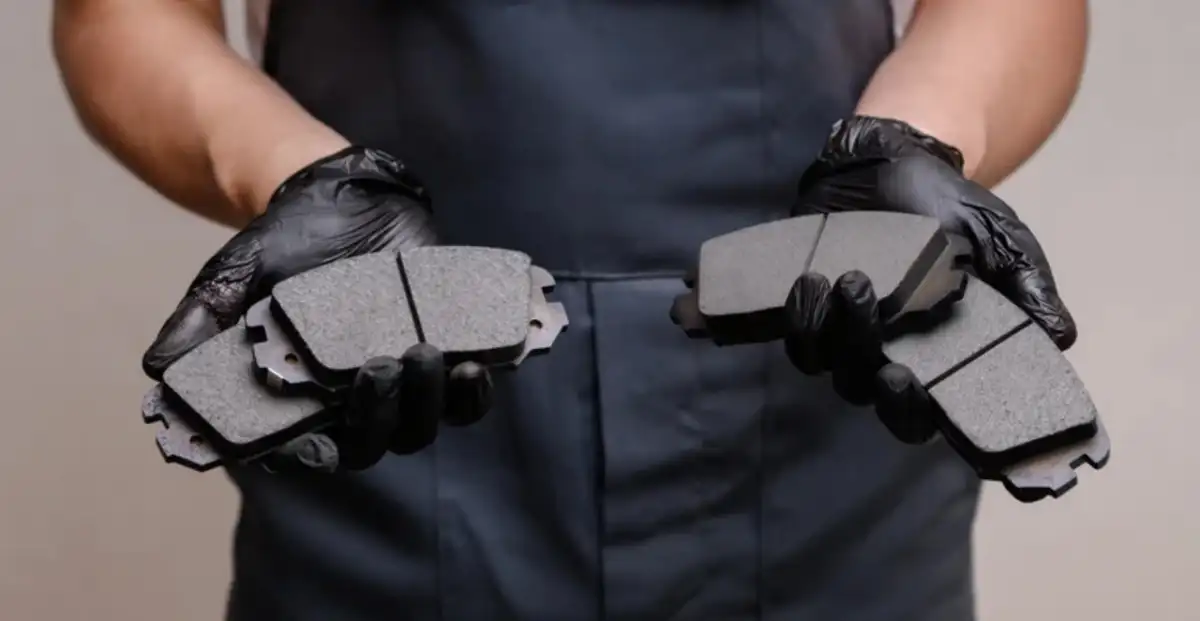
Disc brakes are simple in principle: hydraulic pressure pushes two pads against a rotor, friction slows the wheel and the car stops safely. But those small friction blocks do a huge amount of work every day. That’s why many shops recommend changing pads as a complete set – to keep braking balanced, wear consistent and avoid differences in performance between the axles.
However, replacing all four pads is not always a “sacred rule.” In many cars, the front pads wear out much faster than the rears because weight transfers forward under braking. That means in many cases it’s perfectly fine to change just the front pair or just the rear pair, as long as some basic rules are respected.
Why Do Some Shops Recommend Changing All The Pads Together?
There are logical reasons why some garages prefer to replace the entire set at once, and it’s not always about inflating the bill. Key reasons include:
Balanced braking between front and rear
Having pads of similar age and condition on all four corners helps distribute braking forces more evenly, which improves stability and straight‑line behavior under hard braking.Consistent wear patterns
Starting a new “cycle” for all pads at the same time means they will wear at a similar rate, making it easier to monitor their condition and plan the next replacement as a single job.Fewer workshop visits over time
Doing everything now can mean you won’t need to go back soon for another pad change, instead of replacing the front today and the rear a few months later – useful for drivers who prefer peace of mind over short‑term savings.Maximum braking performance
A car with fresh, evenly matched pads on every wheel will generally stop shorter and respond more predictably than one with a mix of new and worn pads, which is why many professional shops push for full‑set replacements.
When Is Replacing Just One Axle (Front Or Rear) Enough?
There is nothing in standard service practices that says you must always replace all four pads together. On most modern cars:
The front brakes do most of the work because weight shifts forward under braking.
As a result, the front pads usually wear out much faster than the rears, so the fronts may be near the limit while the rears still have plenty of life left.
In that situation:
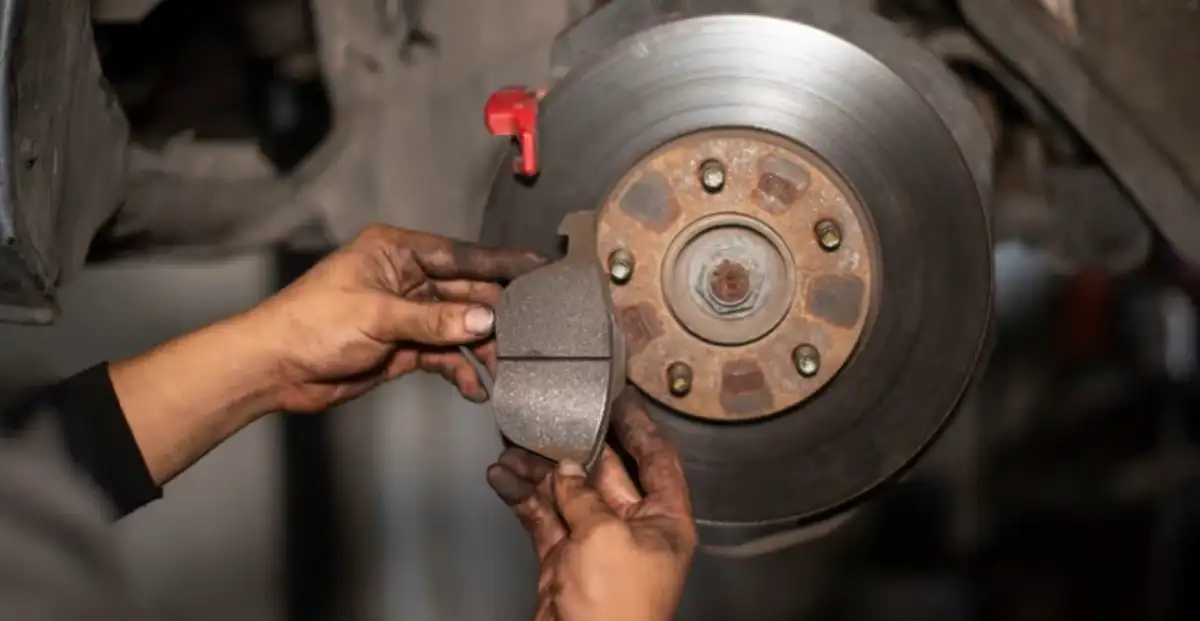
It is absolutely fine to replace only the front pads if the rear pads are still in good condition, and the same is true in reverse if the rears are worn and the fronts are healthy.
The critical rule is that you must always replace pads in pairs per axle (left and right together). Changing only one pad on the same axle and leaving the other old can cause uneven braking that pulls the car to one side under hard stops – something you definitely do not want.
So, if the rear pads still have plenty of material and only the fronts are worn, you can safely replace just the front pair and avoid unnecessary cost, as long as the diagnosis is accurate and both pads on that axle are replaced together.
How Do You Know It’s Time To Replace Brake Pads At All?
Before arguing about “two pads or four,” you first need to answer a more basic question: do the pads actually need replacing yet? Several clear warning signs can help:
Unusual noises under braking
Persistent squealing or high‑pitched screeching often means the pads are near the end of their life or their wear indicators are touching the rotor. Grinding noises can indicate metal‑on‑metal contact.Longer stopping distances
If the car takes noticeably longer to stop than it used to – without any change in driving style – worn pads or rotors may be to blame.Vibrations in the pedal or steering wheel
Shuddering while braking can indicate warped rotors or uneven pad wear.Brake warning light on the dash
Some cars use pad wear sensors that trigger a dashboard warning when the friction material reaches its minimum safe thickness.
The 80% Rule And Typical Pad Lifespan
Many garages follow an informal “80% rule”:
When only about 20% of the friction material is left on the pad, it’s considered time to replace them before they begin to damage the rotors.
In mileage terms, most pads last somewhere between 30,000 and 70,000 km, depending on compound and driving style:
Organic pads often last around 30,000–40,000 km.
Ceramic pads can typically go 50,000–70,000 km or more under gentle driving.
Aggressive driving, heavy loads and stop‑and‑go city traffic tend to push pad life toward the lower end of those ranges.
Why Driving On Worn Pads Is A Real Safety Risk
Ignoring worn pads doesn’t just mean extra noise – it opens the door to more serious issues:
Overheating the braking system
Thin pads cannot absorb and dissipate heat as effectively. That can overheat the pad and rotor, leading to glazing, where surfaces become smooth and shiny and friction drops.Longer stopping distances
Reduced friction means the car needs more distance to stop, which can be critical in an emergency.Metal‑on‑metal damage
Once the friction layer is completely gone, the metal backing plate digs into the rotor. At that point, a simple pad job can turn into a much more expensive repair involving new rotors and possibly calipers.
The core message: whether you choose to replace two pads or four, driving with worn pads is never an acceptable option. Safety always comes first.
Practical Tips For Deciding Between Two And Four Pads
When you visit a workshop, you can use these points as a quick checklist:
Ask the technician to physically show you the pad thickness on all four wheels (front and rear) before you approve any work.
If the front pads are clearly worn and the rears still have plenty of material, replacing just the front pair is usually fine.
If both front and rear pads are close to the wear limit, then it makes sense to replace all four together.
Always ensure that both pads on the same axle are replaced as a pair; never accept a job where only one pad on an axle is changed.
When To Replace Two Pads And When To Replace Four
Balancing Safety And Budget
Replacing all four brake pads is not “overkill” by definition. In many situations – especially when wear is similar front and rear or when you want to start a fresh maintenance cycle – doing a full set makes sense and can save hassle later. But replacing just one axle’s pads (front or rear) is also technically correct and completely safe when the other axle’s pads still have plenty of life and each axle is renewed as a matched pair.
The decisive factor is always accurate diagnosis and respect for basic safety principles: don’t postpone pad replacement when they’re worn, don’t replace only one pad per axle, and balance what your car truly needs against what the shop is recommending. In the world of brakes, short‑sighted savings can easily turn into a big bill – or a dangerous situation – later on.