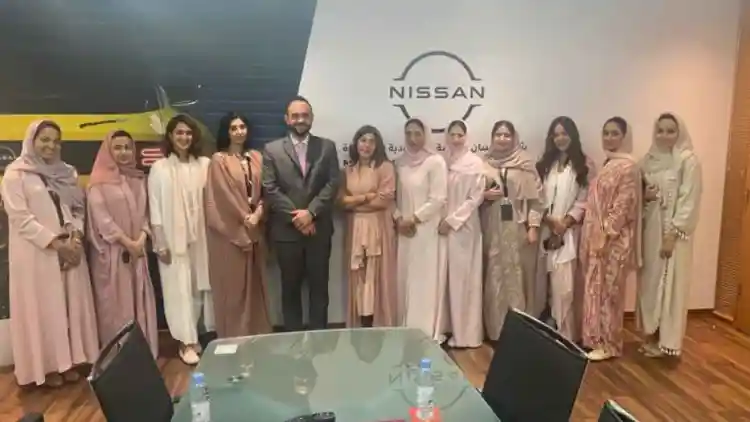

- An industry in transition… and women moving to the forefront
- An inspiring fable: from spectator seat to driver’s seat
- Her achievements in the automotive sector: initiatives, numbers, and real impact
- 1. Leading strategic initiatives that change the game
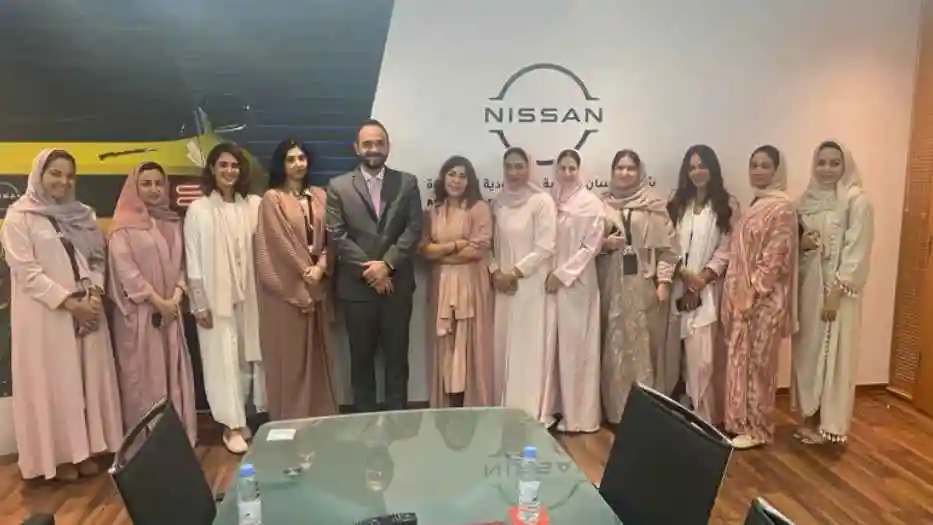
- 2. Empowering women inside the industry
- 3. Shaping the sector’s vision of the future
- Why Hatoon Bushnaq earned “Woman of the Year in the Automotive Sector”
- Influence on the next generation: from personal story to wider movement
- Her vision for the future of automotive
- From title to legacy
The automotive sector is moving at unprecedented speed toward electrification, digitization, and smart mobility services, and many leaders are helping shape that future. Among them, only a few have truly changed the rules of the game in terms of women’s empowerment and redefining leadership in the region. In this landscape, Hatoon Bushnaq has emerged as a front‑row name, honored as “Woman of the Year in the Automotive Sector” not only for her professional achievements, but also for what she represents as a symbol of a new era in this industry.
Her journey began with hesitant steps in a field long viewed as a male‑dominated world, and evolved into leading strategic initiatives and advisory boards. Hatoon’s story has become an inspiring chapter in the wider transformation currently reshaping the automotive industry in our region.

An industry in transition… and women moving to the forefront
The auto sector is undergoing a radical shift: from traditional engines to electric power, from simple showrooms to fully digital experiences, and from “owning a car” to “mobility as a service”.
Governments in the region are adopting ambitious visions to diversify the economy and attract investment into automotive, logistics, and smart mobility.
In this context, women’s participation is no longer a marginal “nice to have”, but a core element in building capability and leading complex projects.
Against this backdrop, a woman reaching a leadership role in the automotive sector is no longer just a social headline; it has become a sign of the industry’s maturity and its readiness to embrace diverse perspectives and a more inclusive leadership style.
An inspiring fable: from spectator seat to driver’s seat
Hatoon Bushnaq’s trajectory can be told as a symbolic fable that carries a lot of reality within it:
In the beginning, she stood at the edges of the automotive world, watching showrooms, events, and races from a distance, wondering whether there was truly a place for a woman behind the scenes of this industry – not just behind the steering wheel.
When she got her first chance to join an organization working in automotive or mobility, the road was far from easy. She faced implicit doubts about whether she could handle a “tough world” full of numbers, sales targets, and technical issues.
Instead of accepting these stereotypes, she turned every project she took part in into a new “letter of credentials”, proving that women’s presence is not decorative, but a practical value that can be measured in performance, results, and impact.
Over the years, the question shifted from “Can a woman lead in this sector?” to “How can we replicate and scale Hatoon Bushnaq’s experience for a whole generation of female leaders?”.
Her achievements in the automotive sector: initiatives, numbers, and real impact
1. Leading strategic initiatives that change the game
Overseeing programs and projects that improved customer experience, whether in showrooms or within digital ecosystems around the car.
Driving initiatives linked to the shift toward electric vehicles, charging infrastructure, or new business models in mobility.
Working on integration projects that connect automotive with technology, smart cities, and logistics services.
The impact of such initiatives shows up in:
Growth in sales or customer satisfaction.
Gains in operational efficiency.
A stronger perception of her organization as innovative and future‑ready.
2. Empowering women inside the industry
Designing or supporting tailored training programs to attract young women into roles in sales, marketing, after‑sales, or even technical jobs.
Opening opportunities for women in front‑line roles: sales consultants, showroom managers, service‑center engineers and supervisors.
Backing awareness campaigns at universities and schools to present automotive as a real career option, not just a “male” domain.
The outcome:
A visible rise in the share of women in roles historically dominated by men.
New female role models emerging across the industry, inspired by Hatoon and others like her.
3. Shaping the sector’s vision of the future
Contributing to public discussions about the future of mobility, EVs, digitalization, and sustainability.
Helping to shape or support policies that encourage innovation, localization, and the development of local talent.
Highlighting the need for women to play a central role in decision‑making bodies, not just appear as symbolic figures.
Why Hatoon Bushnaq earned “Woman of the Year in the Automotive Sector”
Such a title is rarely given as a courtesy; it rests on clear criteria, including:
Professional impact
Leading initiatives with measurable results in business development, customer experience, or expanded services.
Societal impact
Inspiring a new generation of women to enter the automotive world with confidence.
Helping reshape the stereotype that this sector is a closed space for men only.
Future vision
Holding a well‑defined view of mobility’s future and how the sector can align with global shifts in technology and sustainability.
Taken together, these dimensions turn the award from an individual prize into a collective acknowledgment that women can and should stand in the front row of a complex and vital industry like automotive.
Influence on the next generation: from personal story to wider movement
Female students in engineering, business, and tech fields see in her story proof that success in non‑traditional sectors is possible.
Her presence at events and educational programs makes her a tangible, approachable role model rather than a distant face on a magazine cover.
Her repeated messages about hard work, continuous learning, and not fearing “new territory” help build a different professional culture among young talent.
In this sense, Hatoon’s story is no longer just a successful CV; it has become part of a broader narrative about women’s empowerment in a rapidly changing economy.
Her vision for the future of automotive
From her interventions and positions (which you can refine with your own sourced details), her vision can be summarized in several themes:
Cars are no longer just products, but part of an intelligent mobility ecosystem that includes apps, data, and integrated services.
The shift to electrification and sustainability is not a marketing option but an economic and environmental necessity for long‑term success.
Empowering women and local talent is not merely a corporate social‑responsibility checkbox; it is a strategic pillar for competitiveness in a tight market.
Hatoon believes that the next generation of leaders – men and women alike – must understand cars from a wider angle: technology, data, customer experience, and sustainability.
From title to legacy
The “Woman of the Year in the Automotive Sector” title might be summed up in a press release or an award ceremony, but for Hatoon Bushnaq it is only a milestone along a longer road. She has traveled from being a spectator of the automotive world to one of its decision‑makers.
Stories like hers do not stop at the individual level. They become a professional and inspirational legacy that opens the door for dozens, and eventually hundreds, of women who decide that the driver’s seat – in both the literal and leadership sense – is where their ambitions rightfully belong in the automotive industry.