
- From Spectator Seat to Decision-Making Seat
- Who Is Hatoun Bushnaq? A Career at the Core of the Auto Industry
- The “Woman of the Year” Award: What Does It Really Mean?
- How Did Hatoun Help Evolve Nissan’s Image in Saudi Arabia?
- Saudi Women and the Auto Sector: A Before‑and‑After Context
- Bushnaq’s Strengths as an Automotive Leader
- What Does This Award Signal to Other Auto Companies?
- An Award for a Woman—or for an Entire Era?
From Spectator Seat to Decision-Making Seat
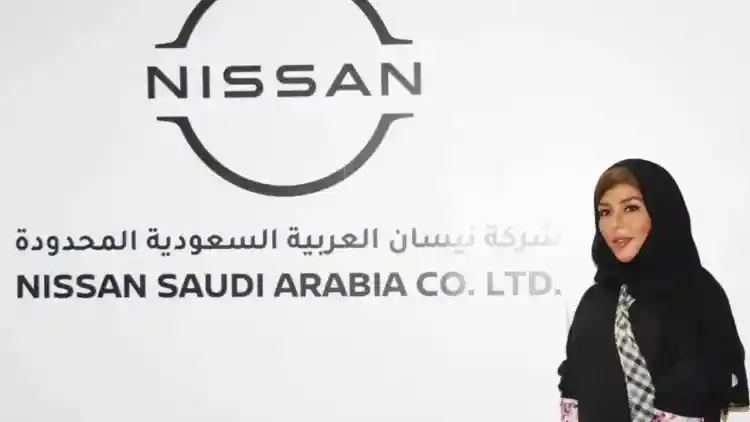
Only a few years ago, Saudi women’s presence in the automotive sector was largely limited to the role of consumer or spectator in a world mostly run and made by men. Today, the picture is steadily changing: women are appearing on awards stages, and Saudi names are leading on management, marketing, and communications at major global brands.
At the heart of this shift stands Hatoun Bushnaq as one of the most inspiring stories: General Manager of Corporate Communications at Nissan Saudi Arabia and recipient of the “Woman of the Year in the Automotive Sector” title—living proof that this industry is not a male monopoly and that success paths are wide open for expertise, talent, and vision.
Who Is Hatoun Bushnaq? A Career at the Core of the Auto Industry
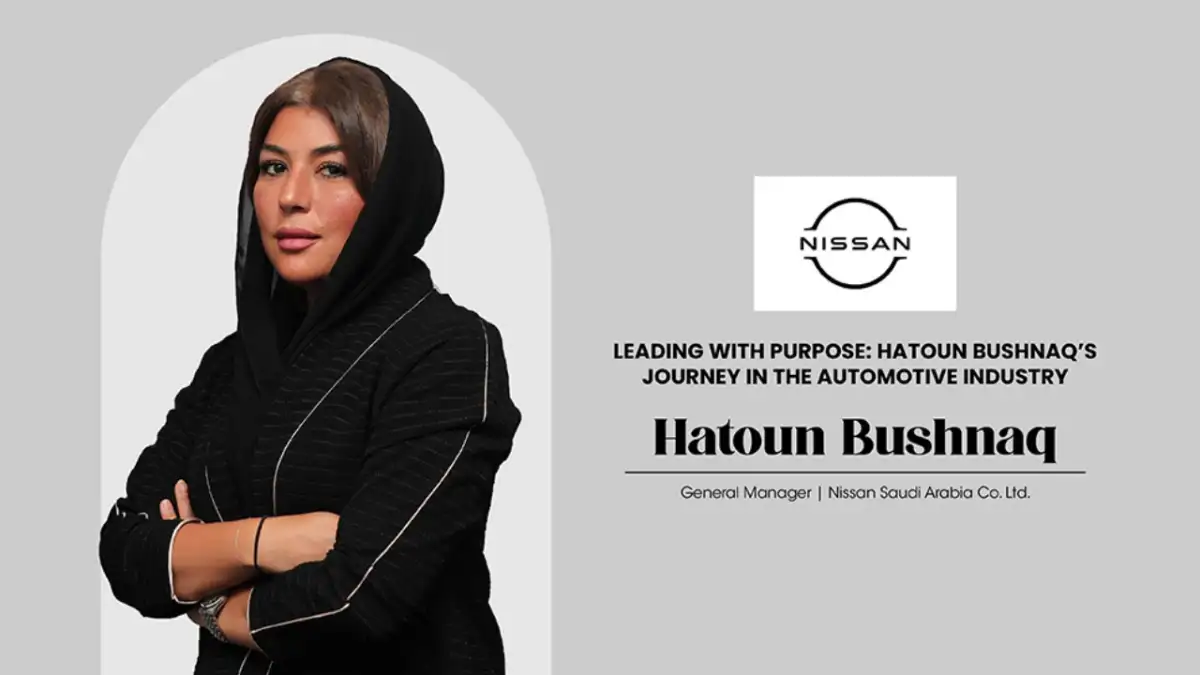
Hatoun Bushnaq is far more than a media face for Nissan in Saudi Arabia. She is one of the executive leaders working behind the scenes to shape the brand’s image in the local and regional market.
With an academic and professional background that blends analytical understanding and communications craft, she rose within the auto sector to become General Manager of Corporate Communications and Public Relations at Nissan Saudi Arabia, where she leads critical files such as:
Building the brand’s corporate reputation in the Kingdom and the wider region.
Managing engagement with media, business partners, and relevant public entities.
Leading the company’s awareness and social programs—especially those focused on women and youth.
Representing the brand at specialist automotive, marketing, and communications forums and events.
In this trajectory, Hatoun has become an influential voice defining Nissan’s relationship with Saudi society and a model of Saudi female leadership working at the heart of the automotive industry—not on its margins.
The “Woman of the Year” Award: What Does It Really Mean?
When someone is announced as “Woman of the Year in the Automotive Sector,” it might seem at first like a routine personal honor in an awards gala. In Hatoun Bushnaq’s case, the title carries a broader significance that can be unpacked on several levels:
An official acknowledgment of Saudi women’s role in a sector historically dominated by men.
A confirmation that corporate communications leaders can be real partners in brand success—not merely a “support function.”
A message to young female talent: the auto sector is not beyond your aspirations—it’s an open arena for creativity and leadership.
So, this award is not just a plaque or a certificate; it’s a barometer of the maturity of the ecosystem conferring it, and a sign of readiness to embrace a new narrative that treats diversity as added value—not cosmetic exception.
How Did Hatoun Help Evolve Nissan’s Image in Saudi Arabia?
Corporate communications is like weaving invisible threads between what a company does and how people feel about it. In that context, several focus areas stand out where Hatoun has played a primary role for Nissan Saudi Arabia:
Social and humanitarian campaigns
Steering awareness initiatives connected to health and community—such as breast cancer awareness activities for employees and women partners.
Highlighting themes that resonate with Saudi women, linking the brand’s message to human values beyond simply “selling cars.”
Field experiences and showcases
Helping deliver on‑ground events that deepen customer connection to the brand, such as driving experiences in heritage and tourism destinations.
Positioning Nissan as part of a travel and discovery experience—not just a means of transport from A to B.
Tying the brand to Vision 2030
Aligning Nissan’s messaging in the Kingdom with Vision 2030 priorities—especially women’s empowerment, national talent development, and new‑sector growth.
Spotlighting Saudi success stories within the company itself, turning Nissan Saudi Arabia into a talent incubator—not just a sales branch.
Through these roles, it’s no surprise that Hatoun is associated with strategic communications decisions rather than one‑off media appearances.
Saudi Women and the Auto Sector: A Before‑and‑After Context
To deepen the editorial value, it helps to place Hatoun’s story within the broader context of Saudi women’s role in automotive:
Before 2018:
Saudi women were officially barred from driving, and their presence in the auto sector was minimal—limited to light marketing or back‑office admin roles, if any.
The industry’s public image centered on dealerships, service centers, and showrooms—spaces perceived as overwhelmingly male.
After driving permission:
A surge in female drivers opened an entirely new consumer segment for global brands—women as drivers, not only passengers.
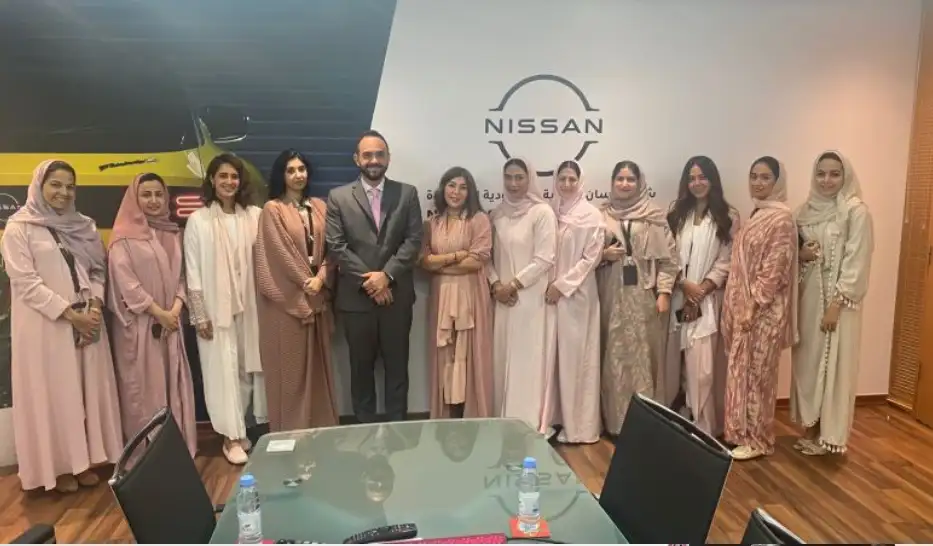
Saudi women began entering sales, customer care, marketing, and even senior leadership at automotive companies.
Honors and initiatives emerged celebrating women shaping the industry—mirroring a wider empowerment wave in sectors that were once closed.
Hatoun Bushnaq’s “Woman of the Year” award thus becomes a chapter in a longer story of national transformation—not an isolated event.
Bushnaq’s Strengths as an Automotive Leader
From an editorial perspective, it helps to frame Hatoun’s strengths almost like “feature highlights,” but in a human, professional register:
Deep expertise in corporate communications and public relations, with the ability to craft consistent messaging that reflects brand identity.
Dual fluency in Saudi local context and the language of global brands—making her an ideal bridge between HQ and the domestic market.
Clear executive presence in events and boardrooms, representing the company with media, authorities, and the public.
Strong commitment to diversity and inclusion, and a track record of turning D&I from slogans into internal programs and initiatives.
A knack for leveraging individual success stories—including her own—to build a positive narrative around Saudi women’s role in modern industries.
These strengths can be presented to readers as “differentiators” that make Hatoun a figure to watch—not just a name in an awards press release.
What Does This Award Signal to Other Auto Companies?
A success story like Hatoun Bushnaq’s carries implicit messages to the rest of the market:
Any company that neglects Saudi female talent today is leaving half its human potential untapped in a rapidly changing market.
Anyone who treats corporate communications as “secondary” may discover their brand image lags two steps behind competitors.
Any strategy not aligned with Vision 2030—women’s empowerment and youth development—will fall out of sync with the Kingdom’s transformation rhythm.
In that sense, the award reads like a gentle alarm bell for the industry: investing in local female leadership is not just social responsibility—it’s smart business.
An Award for a Woman—or for an Entire Era?
Look closely, and it becomes clear that Hatoun Bushnaq’s “Woman of the Year in the Automotive Sector” title celebrates more than one person. It encapsulates an era in Saudi Arabia where women move from the recipient’s row to the decision‑maker’s platform, from “exception” to “new normal.”
Hatoun’s story is rich editorial material for automotive media because it connects the world of products (cars) with the world of people (leaders and teams). It opens a fresh window onto a sector long covered only through specs and figures. Today, a Saudi woman’s name adds an important human dimension to the industry—arguably more meaningful than any extra horsepower under the hood.