
- Exterior Design: Mixing Presence, Luxury and Tech
- Interior Focus: Comfort, Space and Screens
- Powertrain Strategy: Full Electric or Range‑Extended Hybrid?
- Tech and Driver Assistance: Huawei’s Fingerprints
- Why Test the AITO 9 in the UAE Before the 2026 Launch?
- Competitive Positioning in the GCC
- What the AITO 9 Is Expected to Offer
- What the AITO 9 Means for the Gulf Market
As Chinese car brands gain ground in Gulf markets, the conversation has clearly shifted from “cheap alternatives” to genuinely premium, tech‑heavy contenders. One of the most interesting names now entering this arena is AITO, closely associated with Huawei on the technology side. The sighting of the AITO 9, the brand’s flagship SUV, on UAE roads ahead of its expected 2026 launch is a strong signal that the region is about to welcome a serious new player in the full‑size luxury SUV segment.
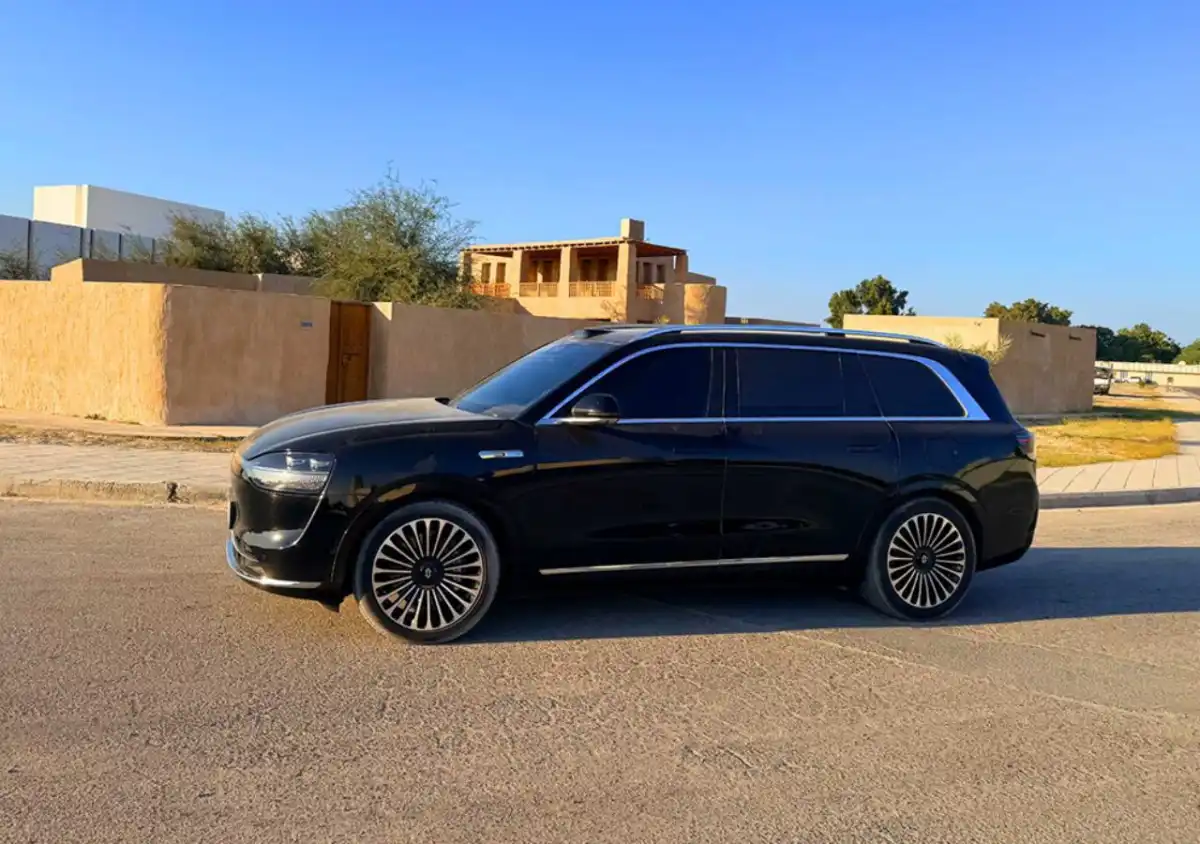
Seeing what appears to be a near‑production or test mule AITO 9 driving in the Emirates suggests the brand is already validating the car in real‑world Gulf conditions: extreme heat, long‑distance highway cruising and sustained high‑speed driving. This early presence strongly implies that the launch plan is well underway, and that competition with German, Japanese and Korean luxury SUVs will intensify noticeably as we move into 2026.
Exterior Design: Mixing Presence, Luxury and Tech
At first glance, it is obvious that AITO wants the 9 to play in the same league as the established giants of the full‑size SUV world. The design language looks modern, confident and clearly premium.
Expected design highlights include:
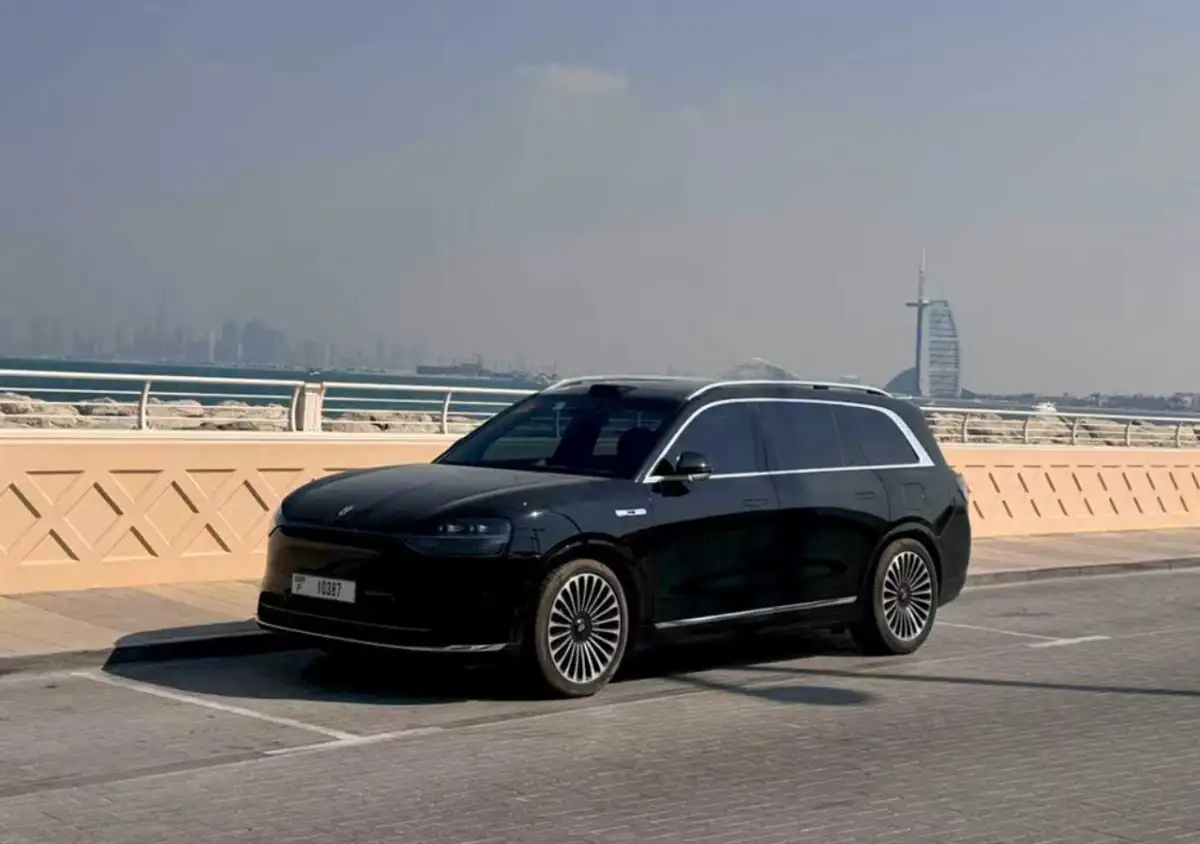
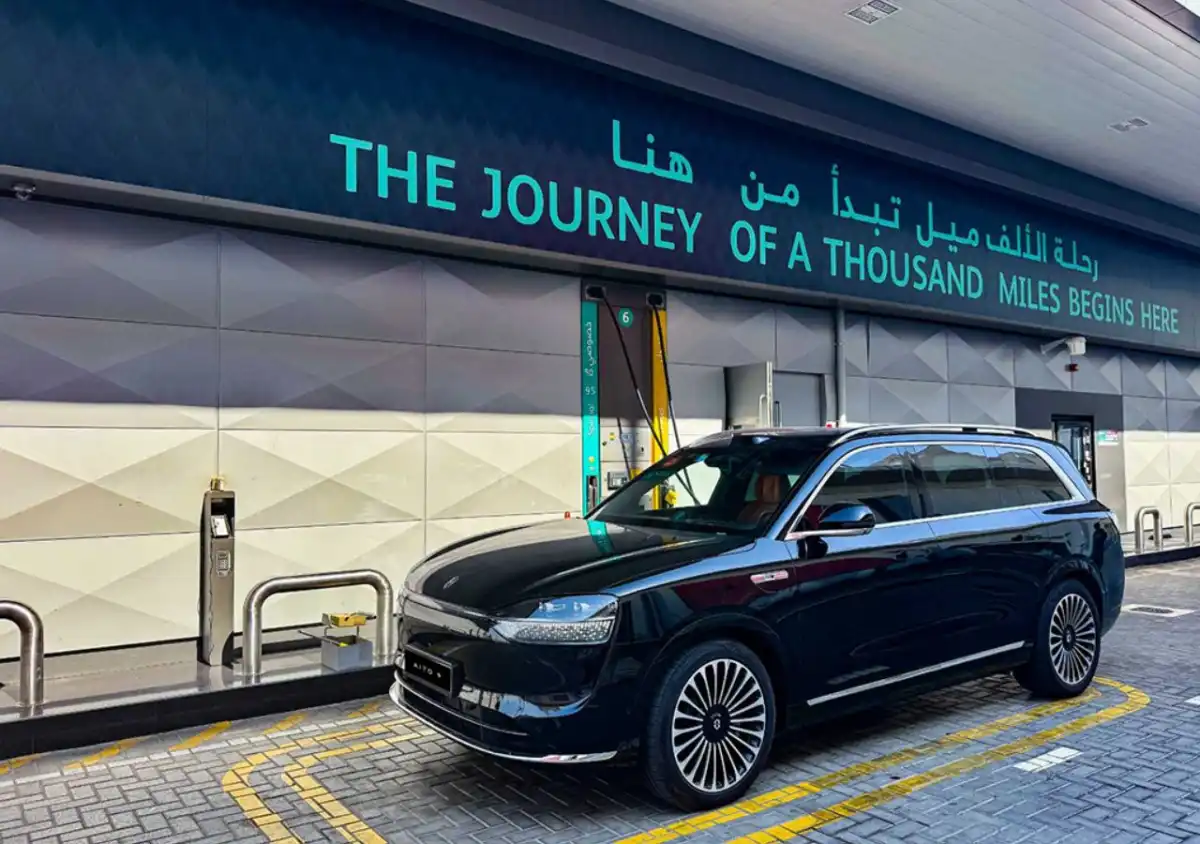
A sophisticated front fascia with a clean grille and slim LED signature lighting stretching across the width of the car, giving it a tech‑forward appearance.
Main headlamps set slightly lower in the bumper, potentially using advanced LED or matrix technology to underline its luxury status.
Smooth side surfacing combined with pronounced shoulders, creating a planted, stable stance on the road.
Large alloy wheels – likely in the 20‑ to 22‑inch range on top trims – with aerodynamic or multi‑spoke designs that reinforce its role as a high‑end highway cruiser.
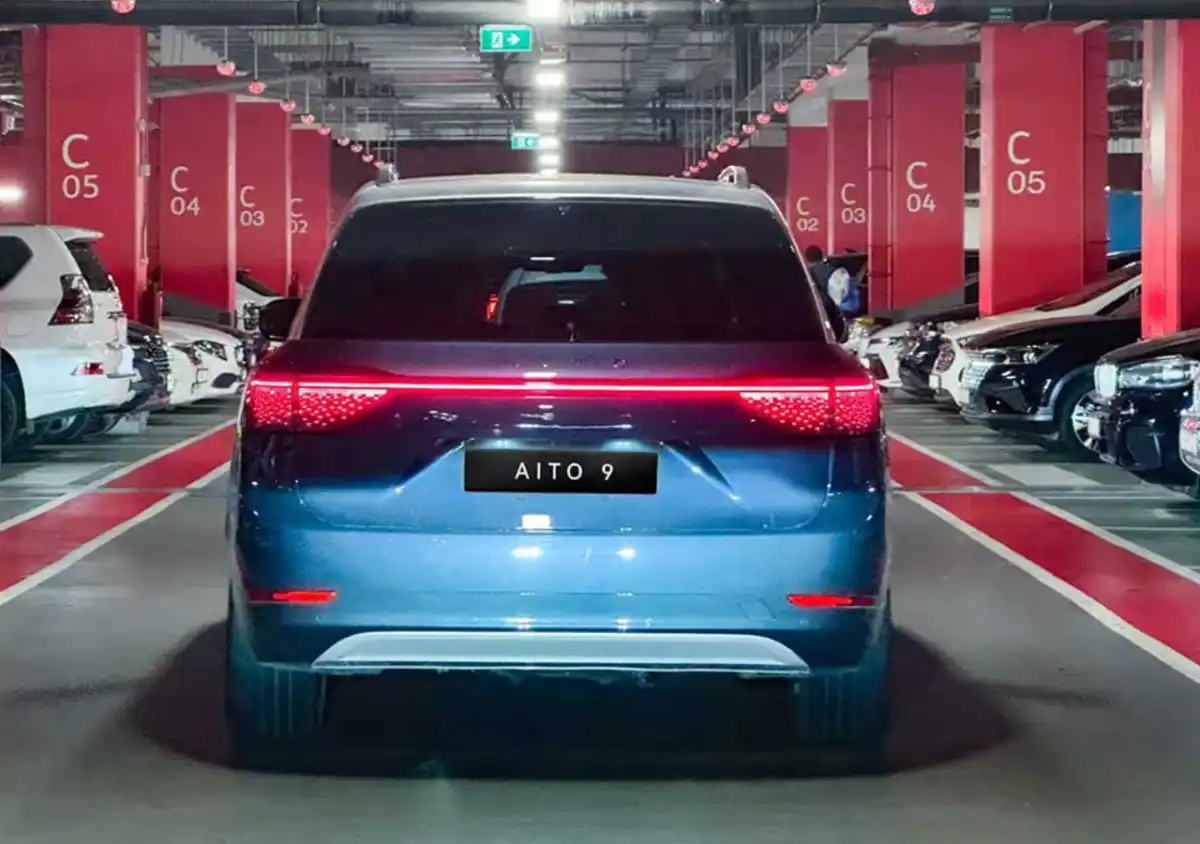
At the rear, a full‑width light bar is a safe bet, in line with current premium SUV trends, with the AITO script proudly displayed in the center and a subtle roof spoiler adding a hint of sportiness without going overboard. Collectively, these cues position the AITO 9 to rival the likes of the BMW X7, Mercedes‑Benz GLS and upcoming flagship SUVs from Chinese premium brands.
Interior Focus: Comfort, Space and Screens
Although full interior shots are still limited, AITO’s past models and its partnership with Huawei offer strong hints about what to expect inside the 9.
Key interior expectations include:
A large central touchscreen running a smart, tablet‑like operating system with smooth graphics and quick response times.
A fully digital instrument cluster that displays driving information, driver‑assist status and battery data for electrified versions.
High‑grade materials such as soft leather, open‑pore wood or brushed metal trims, along with configurable ambient lighting.
Front and rear seats with extensive electric adjustment, heating and ventilation, and memory functions for prime comfort on long Gulf drives.
For markets like the UAE and Saudi Arabia, three rows of seating are almost mandatory. The AITO 9 is therefore likely to be offered with 6‑ or 7‑seat layouts, allowing it to serve both as a family flagship and a business‑class shuttle for VIPs and executives.
Powertrain Strategy: Full Electric or Range‑Extended Hybrid?
Based on current trends among leading Chinese brands, the AITO 9 will almost certainly follow a dual strategy, offering one – or both – of the following setups depending on the market:
Battery‑electric (BEV) versions
Large battery packs capable of delivering competitive real‑world range suitable for daily use and intercity trips.
Single‑motor or dual‑motor configurations (rear‑wheel drive or all‑wheel drive) with strong torque and brisk acceleration.
The instant response and smoothness expected from modern EVs, making it appealing to drivers who prioritize refinement and performance.
Range‑extended hybrid versions
A small petrol engine acting primarily as a generator to recharge the battery, with the electric motor doing most of the driving.
This layout directly addresses range anxiety in markets where public charging networks are still developing outside major cities.
This dual approach allows the AITO 9 to deliver the best of both worlds: EV‑like smoothness and torque, with the reassurance of conventional refueling where charging infrastructure is limited or inconsistent.
Tech and Driver Assistance: Huawei’s Fingerprints
Because AITO taps into Huawei’s software and hardware ecosystems in many models, it is logical to expect a very strong technology package in the 9. Likely features include:
Adaptive cruise control with stop‑and‑go capability for heavy traffic.
Lane‑keeping assist with active steering intervention for semi‑autonomous cruising.
Forward and rear collision warnings with automatic emergency braking.
A 360‑degree camera system with 3D surround view, indispensable for parking a large SUV in tight urban spaces.
An online navigation suite with real‑time traffic, cloud‑based updates and deep integration with Huawei’s services and voice control.
In a market where customers are already familiar with advanced systems in German and Japanese luxury SUVs, such a feature set is essential for AITO to be taken seriously as a premium contender rather than just a value alternative.
Why Test the AITO 9 in the UAE Before the 2026 Launch?
The decision to run the AITO 9 on UAE roads ahead of its official debut is clearly strategic, for several reasons:
Harsh climate validation – Extreme heat, dust and long‑distance high‑speed use are perfect for testing air‑conditioning systems, cooling circuits and battery thermal management.
High‑quality road network – Smooth, well‑maintained highways help engineers evaluate ride comfort, high‑speed stability and noise insulation.
Marketing advantage – The UAE is a highly visible stage. Spotting camouflaged or pre‑production cars there generates organic buzz on social media and among car enthusiasts across the GCC.
Early sightings are also part of a modern “soft launch” strategy: hint at the product, let the market talk, then follow up with official details, regional debuts and structured media drives.
Competitive Positioning in the GCC
Once officially launched, the AITO 9 is expected to target multiple layers of competition in the Gulf:
Traditional luxury SUVs with combustion engines
BMW X7
Mercedes‑Benz GLS
Audi Q7/Q8
Lexus LX and the latest GX
Emerging electric and hybrid luxury SUVs
Mercedes EQE SUV and other EQ models
BMW iX and upcoming i‑badged SUVs
High‑end Chinese EVs and EREVs from brands such as BYD, Li Auto and NIO as they expand into the region
The AITO 9’s edge will likely lie in a combination of aggressive value, a very rich feature list and a thoroughly modern design. If pricing undercuts European rivals while offering equal or superior tech, it could quickly become a compelling option for tech‑savvy buyers who are open to Chinese brands.
What the AITO 9 Is Expected to Offer
Once full specifications are officially published, this snapshot can easily be updated with concrete figures for range, power output, battery capacity and regional pricing for UAE and Saudi variants.
What the AITO 9 Means for the Gulf Market
The arrival of the AITO 9 in 2026 will mark another step in the evolution of Chinese brands from “disruptive outsiders” to core players in the premium segment. The conversation is no longer about basic cars at low prices; it is about whether a Chinese luxury SUV can genuinely rival, and sometimes surpass, long‑established German and Japanese benchmarks.
If AITO manages to back the 9 with competitive pricing, strong warranty packages and professional after‑sales support, the model could accelerate a broader shift in buyer attitudes. Within a few years, it would not be surprising to see the AITO 9 become a regular sight on GCC roads, parked next to the very European flagships it was designed to challenge.