

- First: Types of automotive glass – and why they resist breaking
- Second: How to tell what glass your car actually has
- Third: Why breaking a window from inside is much harder than from outside
- Fourth: The Achilles’ heel of tempered glass – and the right escape tools
- Fifth: Why you shouldn’t trust headrests and social‑media hacks
- Sixth: Laminated side glass – a far tougher challenge
- Seventh: Risk levels, prevention, and smart preparation
Picture this: your car is trapped in fast‑moving flood water, the doors won’t open because of pressure, the electrics are dead, and the side window is the only way out. Many people assume they can punch or kick the glass and escape, but modern automotive glass and the cramped cabin make that far more difficult than it looks on screen. This article explains what your car’s glass is actually designed to do, why breaking it from the inside is so hard, and how to prepare properly instead of relying on viral “tips.”

First: Types of automotive glass – and why they resist breaking
Tempered glass
Commonly used for many side windows and rear windows in older or simpler models.
When it breaks, it shatters into small pebble‑like pieces that are less likely to cause deep cuts, but it takes a concentrated impact to fracture it.
Laminated glass
Always used for windshields and increasingly used for side windows in newer vehicles for better security, rollover safety and sound insulation.
Built as two layers of glass with a vinyl interlayer (often PVB), so it cracks but stays in one sheet instead of exploding into pieces, making it very difficult to open a person‑sized escape hole.
What this means in an emergency
If your side window is tempered, it is theoretically breakable from the inside with the right tool and technique.
If it is laminated, smashing your way fully through from the inside is very difficult without specialist cutting tools, time and strength you usually don’t have in a real emergency.
Second: How to tell what glass your car actually has
Reading the corner etching
Most windows have a small marking in one corner with maker and spec codes.
Codes including “Tempered” or starting with “T” indicate tempered glass.
Markings including “Laminated” or starting with “L” indicate laminated glass.
Checking the glass edge
Looking down at the edge of the glass from above, laminated glass often shows distinct layers.
Tempered glass usually appears as a single, uniform thickness with no visible sandwich.
If you still aren’t sure
Owner’s manuals and manufacturer spec sheets can list glass types by position.
Some motoring organisations and brand technical info sites publish lists of models and which windows are laminated or tempered.
Third: Why breaking a window from inside is much harder than from outside
Limited movement inside the cabin
In a crash or submersion, you’re wedged between seat, steering wheel, door and belt, with very little room to swing an arm or leg effectively.
You can’t wind up like you would with a rock or bat from outside, so the impact energy is far lower than people assume.
Common “weapons” are almost useless
Keys, phones, drink bottles, loose metal objects or your bare fists rarely deliver enough focused force to fracture tempered glass from the inside.
Crash damage, a stuck seatbelt or injuries can further weaken your ability to generate a clean, strong strike.
The glass is engineered to withstand abuse
Automotive glass is designed to survive gravel hits, door slams and daily abuse, so random blows with broad contact areas are exactly what it’s meant to resist.
Fourth: The Achilles’ heel of tempered glass – and the right escape tools
How tempered glass actually fails
Tempered glass is vulnerable to a sharp, concentrated impact, especially near corners or along the edge.
A wide, flat impact in the middle (punch, elbow, shoe) spreads the force and often does nothing.
Dedicated car‑escape tools
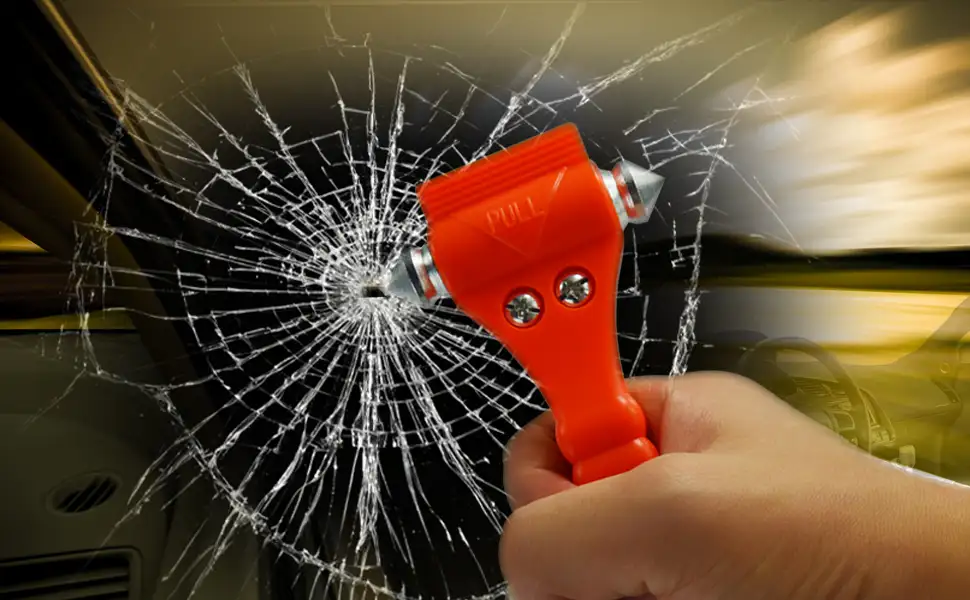
Purpose‑built escape tools are small devices designed to focus force into a tiny area of the glass:
Mini hammers with hardened, pointed metal tips.
Spring‑loaded punches that fire a metal pin into the glass when you press them against it.
Used correctly on a corner of tempered glass, these can shatter a side window into pebbles with one or several quick strikes.
Not all tools are equal
Independent tests have shown cheap or poorly designed escape tools can fail even on standard tempered glass, and virtually all basic punches and hammers are ineffective against laminated side glass.
Some professional‑grade rescue tools include a serrated blade to saw through the vinyl interlayer once the laminated glass is cracked, but this requires time, strength and practice—more suited to rescue crews than trapped occupants.
Positioning the tool matters
The tool needs to be within easy reach of the driver (and ideally front passenger), not buried in a glovebox or trunk.
Common mounting spots: door pocket, lower dash area, or a clip on the center console within instant reach.
Fifth: Why you shouldn’t trust headrests and social‑media hacks
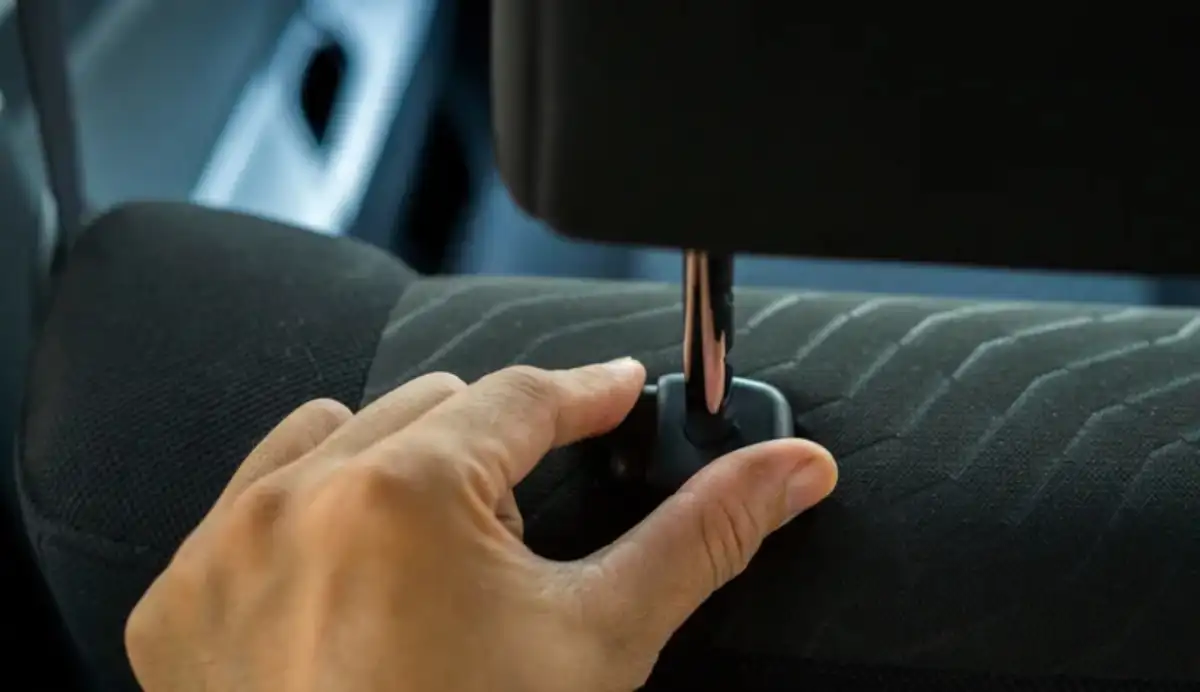
Headrests aren’t designed as glass breakers
The metal posts of a headrest don’t provide a clean, sharp point with good leverage, and they are awkward to aim in tight space.
Regulations require an intentional, separate action to remove headrests, so just getting one out under stress can be confusing and time‑consuming.
The problem with viral “life‑saving tricks”
Trying to detach a headrest, find the right angle and then hit the glass correctly can burn critical seconds or minutes in a real emergency.
Techniques that look easy in edited videos become much harder when water is rushing in and visibility, grip and mobility are compromised.
Sixth: Laminated side glass – a far tougher challenge
Why more cars use laminated side windows
Carmakers increasingly fit laminated glass in side windows for theft resistance, better sound insulation and to help keep occupants inside during rollovers.
In an impact, the glass may web with cracks but stays largely in one piece, which is great for safety but bad for a fast escape route.
Realistic options if your side glass is laminated
Simple spring punches or glass hammers will crack but not clear laminated glass; you’re often left with a crazed but intact sheet.
High‑end rescue tools with saw blades can slowly cut the plastic interlayer after cracking the glass, but this is hard work and slow for an untrained person.
In vehicles with laminated side glass, it becomes especially important to know alternative exits in advance:
Roof openings or sunroofs (if still functional).
Opposite doors if pressure is lower on one side.
Rear hatch or tailgate in some body styles.
Seventh: Risk levels, prevention, and smart preparation
How likely is a water‑submersion scenario?
Crashes involving fully submerged vehicles are a tiny fraction of total accidents, but when they do occur, the consequences can be severe.
Driving into floodwater or fast‑moving streams is one of the biggest risk multipliers, and most safety agencies urge drivers not to enter unknown‑depth water at all.
Practical preparation steps
Find out what type of glass your side windows use and decide whether a basic punch is enough Real safety starts long before the emergency
Breaking a car window from inside is not a dramatic one‑punch stunt—it’s a demanding task that depends on glass type, cabin space, tools and remaining time.
Relying on bare hands, random objects or a headrest is little more than wishful thinking, whereas knowing your glass, carrying a proper escape tool in reach and avoiding floodwater in the first place are the measures that genuinely shift the odds in your favour.