
- 0% Charge Does Not Always Mean “Completely Dead”
- First: The Difference Between the Traction Battery and the 12‑Volt Battery
- Second: Access Scenarios When the Battery Shows 0% Charge
- 1. Main battery at 0% and 12‑volt battery healthy
- 2. Main battery at 0% and 12‑volt battery weak or flat
- 3. Models with flush door handles or fully electric doors
- Third: Opening the Trunk at 0% Charge
- Fourth: What Happens to Smart Entry Systems?
- Fifth: Tips to Avoid Being Locked Out at 0% Charge
- Can You Unlock the Car in Each Case?
- 0% Charge Does Not Mean 0 Control
In most modern electric cars, you can still unlock the vehicle even if the driving range shows 0% charge, because the locking and unlocking systems rely on a separate 12‑volt battery that is independent from the main high‑voltage traction battery. However, there are exceptions and critical scenarios, which this article explains in detail.
0% Charge Does Not Always Mean “Completely Dead”
As electric vehicles become mainstream around the world, a recurring question keeps coming up among new owners: what exactly happens when the battery drops to zero, and can you even open the car, switch on the lights, or access the trunk in that situation?
Many people imagine that reaching 0% means every single system in the car shuts down, but the reality is more nuanced. In most models, some basic systems continue to operate for a while, while the drive system is disabled. This is where understanding the difference between the high‑voltage traction battery and the traditional 12‑volt battery becomes crucial, and how that difference affects locks, safety and access to the vehicle.
First: The Difference Between the Traction Battery and the 12‑Volt Battery
To know whether you can unlock your car at 0% charge, you first need to understand the components of the electrical system:
High‑voltage traction battery
This is the large lithium‑ion pack responsible for driving the car and powering the electric motor.
Its state of charge is what you see on the cluster screen, and when it reaches 0%, the car stops moving to protect the battery.
12‑volt low‑voltage battery
Similar to the one in conventional cars, it powers systems such as central locking, lights, infotainment and control modules.
It is kept charged via a DC‑DC converter from the high‑voltage battery while the car is in use, but it can discharge independently if the car is left parked for a long time or if there is a fault.
The key takeaway: even if the traction battery is at 0% in terms of driving range, the 12‑volt battery can often still power the locks and remote unlocking for some time.
Second: Access Scenarios When the Battery Shows 0% Charge
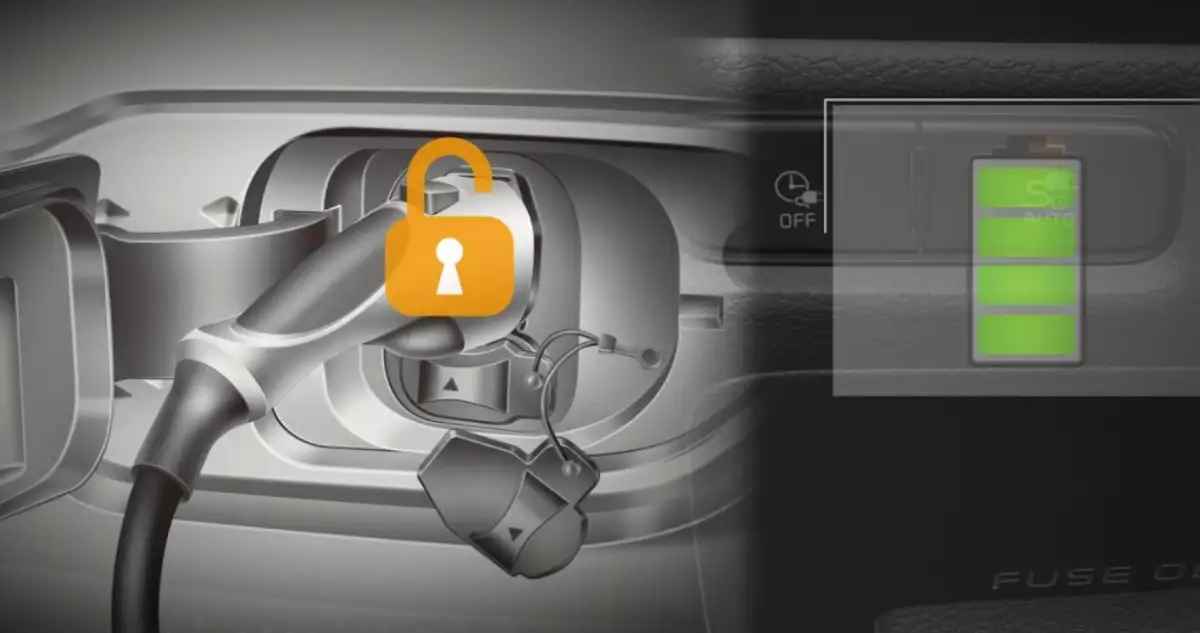
1. Main battery at 0% and 12‑volt battery healthy
In this scenario, the car cannot move because the driving range is exhausted, but basic systems still work:
You can unlock the car with the smart key (keyless entry) or a conventional remote.
Electric door locks and central locking function normally.
Interior and exterior lights can operate for a limited period.
In many models, you can also switch the car to “ON” without being able to drive it, to view information or use certain auxiliary systems, but the drive unit remains disabled until you recharge.
2. Main battery at 0% and 12‑volt battery weak or flat
If the car has been standing for a long time without being driven, or in very hot or very cold conditions, the 12‑volt battery can also run down. This is when things become more complicated:
The remote may not work, and the central locking may not respond.
The car can appear completely “dead”: no lights, no screens, no sounds.
In this situation, access works like this:
Use the physical metal key hidden inside most smart keys to unlock the driver’s door manually.
Once inside, you can connect a charger or booster pack to the 12‑volt jump points (often in the front or rear, depending on the design) to re‑energize the electronics.
As soon as 12‑volt power is restored, locks and lights come back to life, but you still need to charge the main traction battery before you can drive.
3. Models with flush door handles or fully electric doors
Some modern EVs use flush, pop‑out or button‑type electronic door handles instead of traditional mechanical ones, as seen on some Tesla and other models:
When the 12‑volt battery is weak, these electric handles or touch buttons may stop working, making it appear impossible to open the doors.
For this reason, manufacturers usually provide a hidden mechanical release for the driver’s door, either under a small cover or in the door edge, accessed with the metal key blade.
It is important for owners to check their user manual to know where this emergency point is located before an incident happens, because finding it in a stressful situation is much harder.
Third: Opening the Trunk at 0% Charge
Accessing the luggage compartment follows a similar logic:
In most cars, if the 12‑volt battery is healthy, you can open the trunk via the external switch or remote, even when the traction battery is at 0%.
If 12‑volt power is lost, many vehicles offer a mechanical emergency release inside the trunk area, reachable from inside the cabin after folding the rear seats, but this still requires that you first manage to open a door.
In some EVs, the 12‑volt battery is located in the front “frunk”, so you may need to open the front hood manually from inside the cabin or via a mechanical cable release to get access to the jump points.
Fourth: What Happens to Smart Entry Systems?
Keyless entry systems rely on communication between the key fob and antennas in the car, all of which operate on 12‑volt power. Therefore:
If the traction battery is empty but the 12‑volt battery is fine, the keyless entry system usually continues to work as normal, allowing you to approach with the key and unlock by touch.
If the 12‑volt battery is weak, you may need to hold the key near a specific emergency detection area (some models require you to place it near the steering column or door handle) or use the metal key blade instead.
It is always useful to read the “emergency start and entry” section in the owner’s manual, because each manufacturer chooses a different location for the backup key detection point when either the fob battery or the 12‑volt system is low.
Fifth: Tips to Avoid Being Locked Out at 0% Charge
Do not leave your EV unused for very long periods
Even if the traction battery is reasonably charged, the 12‑volt battery can slowly discharge over time because of standby systems and parasitic drains.Avoid frequently running the traction battery down to critical zero
Repeatedly reaching 0% is not ideal for battery health and can create awkward scenarios if it coincides with a weak 12‑volt battery.Know where your metal key insert is and keep it accessible
In emergencies, this key is your first line of access, especially in cars with hidden or fully electric door handles.Read the “safety and emergency” chapter in your manual
You will usually find instructions there on how to open doors and the trunk manually, and where the 12‑volt jump‑start points are located.Consider carrying a small portable booster pack
A compact 12‑volt booster can wake up a flat low‑voltage battery and is extremely useful on trips or for cars parked outside.
Can You Unlock the Car in Each Case?
0% Charge Does Not Mean 0 Control
In summary, “0% charge” in an EV refers mainly to the traction battery and the inability to drive, not necessarily to a complete shutdown of every system. In most cases, you can still open the car, get inside and even switch on some lights, although you will not be able to move the vehicle until you recharge. The real problem starts when the 12‑volt battery is also weak, and that is where the difference shows between a prepared owner who knows how to use manual access points and an unprepared one who feels like the car has turned into a sealed box.
With a bit of prior knowledge and planning, you can handle these situations confidently, and “0% charge” becomes just a temporary stop on the way to a safer, more informed EV ownership experience.