

- A tire’s journey after its life on your car
- First: How do tires actually become roads?
- Second: Practical and environmental benefits of rubberized asphalt
- Third: Where rubberized asphalt shines – and where it doesn’t
- Fourth: Technical and economic challenges before widespread adoption
- Fifth: What does this mean for future roads in hot‑weather regions?
A tire’s journey after its life on your car
When the tread on your car’s tire is worn out, its story doesn’t have to end in a landfill; it can be reborn as part of a new road carrying thousands of vehicles every day.
Recycling tires isn’t just about swings and garden planters—by grinding them up and blending them into asphalt, they become “rubberized asphalt,” a road surface that is starting to spread in several regions thanks to its environmental and practical benefits.
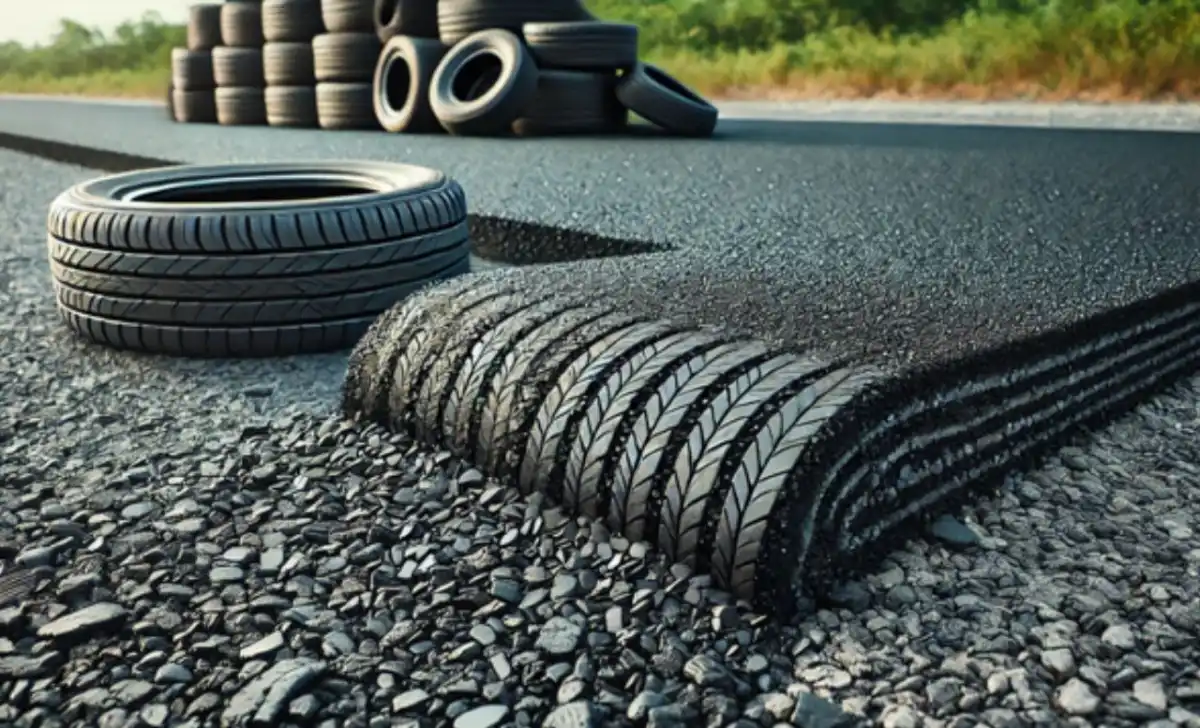
First: How do tires actually become roads?
Basic recycling steps
Collecting worn‑out tires from service centres, fuel stations and waste sites.
Removing internal steel components from the tire carcass.
Cutting the tire into strips and then grinding it into rubber granules of various sizes, known as crumb rubber.
Mixing the crumb rubber with asphalt binder at controlled ratios to create rubberized asphalt.
Regions leading the way
Several southern U.S. states—such as Arizona, California, Florida, Georgia and Texas—have adopted rubberized asphalt in research projects and real‑world road sections.
California, for example, requires a portion of its road projects to use recycled tire rubber, while Georgia’s “The Ray,” an 18‑mile stretch of Interstate 85, serves as a test bed that combines rubberized asphalt with technologies like solar charging and V2X communications.
Second: Practical and environmental benefits of rubberized asphalt
Longer pavement life and less maintenance
In hot climates, rubber maintains flexibility, helping the surface resist cracking caused by expansion and contraction cycles.
Studies and field data in warm regions indicate that rubberized asphalt can extend pavement life by up to around 50% compared with traditional mixes, meaning longer intervals between full resurfacing jobs.
Lower traffic noise
The rubber layer acts as a sound‑absorbing medium, soaking up part of the noise created where tires meet the road.
Measurements in places like Arizona have shown reductions of roughly 3–4 decibels in neighbourhoods near urban freeways surfaced with rubberized asphalt—enough to make a noticeable difference for residents.
Helping with urban heat build‑up
Conventional dark pavements can absorb large amounts of solar heat by day and release it at night, worsening the urban heat‑island effect.
Rubberized asphalt tends to absorb less heat and re‑radiate less at night, which can slightly reduce overnight temperatures in dense, hot cities.
Keeping millions of tires out of landfills
Using large volumes of scrap tires in road projects directly reduces the number of tires stockpiled or landfilled, cutting the environmental risks associated with long‑term storage or open burning.
Third: Where rubberized asphalt shines – and where it doesn’t
Hot climates: its natural playground
In desert or hot regions—southern U.S. states, parts of Australia, or the Gulf—rubberized asphalt performs particularly well because rubber’s properties suit higher temperatures.
Roads in these areas suffer intense thermal stress; traditional asphalt can crack or rut quickly, while rubber modification helps maintain cohesion and flexibility.
Cold climates: a serious limitation
In cold environments, the same rubber that stays flexible in heat can become harder and more brittle, especially under freeze–thaw cycles.
This can make rubberized surfaces more prone to cracking than conventional mixes, which is why adoption has been limited in colder northern regions.
Conclusion: the right tool for the right job
Rubberized asphalt is not a universal solution; its success depends on climate, traffic loading and project context.
Road designers need to choose surface types based on technical and climatic studies, not just recycling goals alone.
Fourth: Technical and economic challenges before widespread adoption
Production cost and plant requirements
Producing rubberized asphalt requires specialised equipment to heat and blend crumb rubber into asphalt at controlled temperatures, increasing capital costs for mixing plants.
Per‑ton costs may be higher than standard asphalt in some markets, but can be offset over time by lower maintenance and longer service life.
Need for clear specifications and standards
National or local standards are needed for rubber content, mixing procedures, layer thicknesses and performance criteria to avoid quality inconsistencies between projects.
Without consistent specifications, early failures on some stretches could unfairly damage the reputation of the technology.
Training and acceptance
Many contractors and engineers are deeply familiar with conventional asphalt but may be hesitant to switch to a newer blend on major projects.
Wider adoption depends on sharing successful case studies and providing training on rubberized mix design, construction techniques and quality control.
Fifth: What does this mean for future roads in hot‑weather regions?
A strong opportunity for Gulf and other hot markets
With long, intense summers, cities in the Gulf and other hot regions could benefit from rubberized asphalt through fewer cracks, less noise and better surface durability.
Recycling locally discarded tires into local road projects also offers a combined environmental and economic win, reducing waste and reliance on virgin materials.
A direct link back to the automotive world
For drivers, there’s a neat full‑circle story: the tires they replace today may come back tomorrow as part of the road surface they drive on.
Quieter, smoother and more durable roads feed back into the driving experience, influencing comfort, fuel use and even long‑term wear on vehicles.