
- Why the Toyota Land Cruiser Is a Prime Target
- The Changing Nature of Vehicle Theft
- Toyota’s New Anti-Theft Philosophy: Layered Defense
- Advanced Engine Immobilizer Systems
- Smart Key Encryption and Digital Protection
- The Return of Mechanical Steering Wheel Locks
- Visual Deterrence as a Security Tool
- Owner-Activated Security Practices
- Land Cruiser Anti-Theft Measures
- Impact on Land Cruiser Owners
- Market Impact and Brand Strategy
- Why This Matters in the Middle East
- Future Directions in Vehicle Security
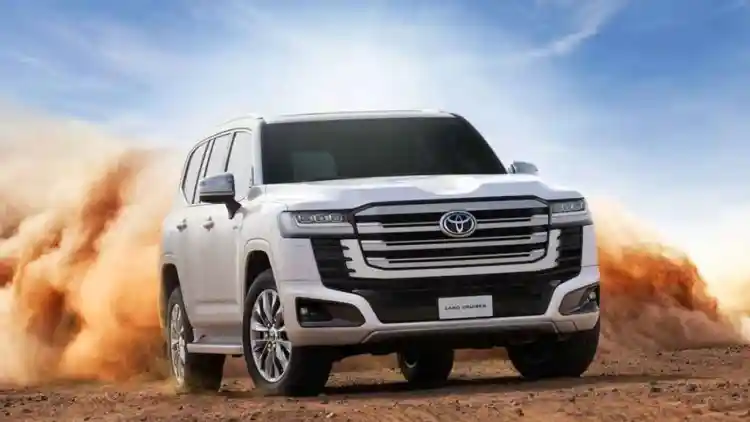
Few vehicles enjoy the global reputation of the Toyota Land Cruiser. For decades, it has been synonymous with durability, off-road dominance, and long-term reliability. In the Middle East, Australia, and parts of Africa, the Land Cruiser is more than a vehicle—it is a cultural icon.
However, this popularity comes with a downside. In recent years, the Land Cruiser has become one of the most targeted SUVs by professional car theft networks worldwide. High resale values, strong export demand, and sophisticated theft techniques have pushed Toyota to rethink how vehicle security should evolve in 2026.
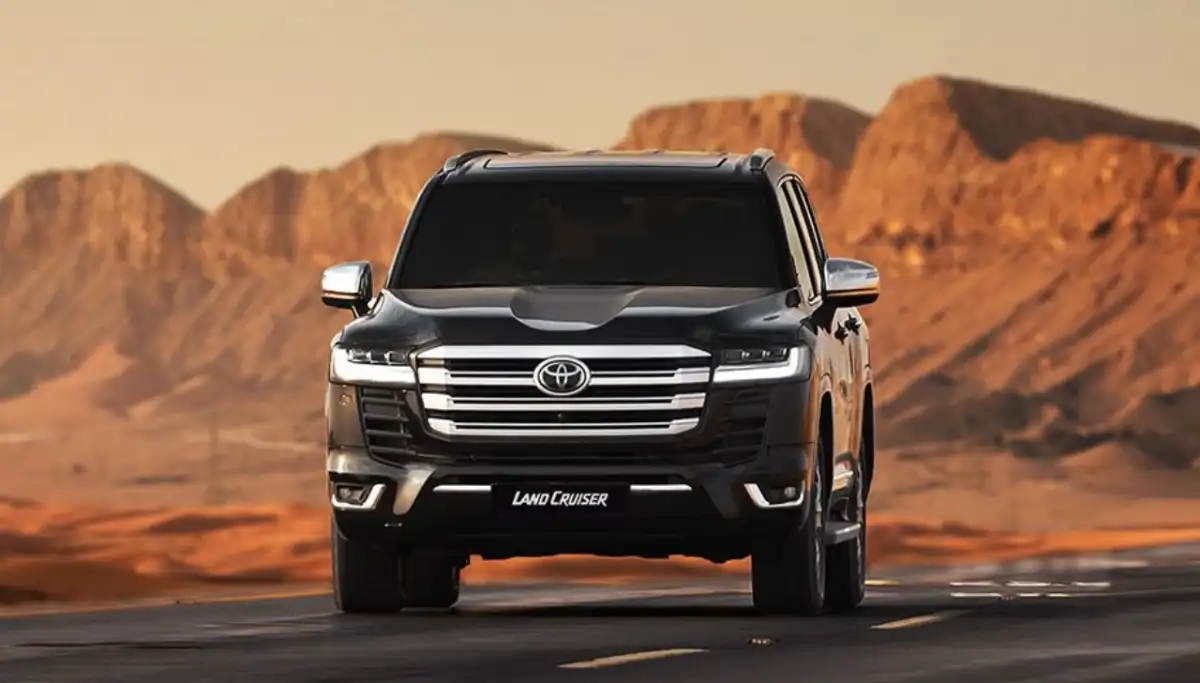
Rather than relying solely on advanced digital systems, Toyota has adopted a multi-layered anti-theft strategy, blending modern technology with proven mechanical deterrents. This article explores how Toyota is protecting the Land Cruiser from theft, why older solutions are making a comeback, and what this means for owners and the wider automotive market.
Why the Toyota Land Cruiser Is a Prime Target
The Land Cruiser’s desirability makes it especially attractive to organized theft rings.
Key Reasons Behind High Theft Rates
Strong global resale value
High demand in export markets
Durable platform suitable for harsh environments
Established black-market parts ecosystem
In many cases, stolen Land Cruisers are not kept locally but shipped abroad within days, making recovery extremely difficult.
The Changing Nature of Vehicle Theft
Modern vehicle theft is no longer limited to forced entry or hot-wiring. Today’s criminals often use:
Key signal relay attacks
CAN-bus manipulation
Electronic key cloning
Software exploitation
These methods allow thieves to bypass digital systems in minutes—sometimes without triggering alarms. This shift forced Toyota to reassess its security philosophy.
Toyota’s New Anti-Theft Philosophy: Layered Defense
Toyota’s 2026 approach is built on a simple principle:
No single security system is enough on its own.
Instead, Toyota focuses on layered protection, combining digital, electronic, and physical barriers.
Advanced Engine Immobilizer Systems
At the core of Toyota’s security system is a refined engine immobilizer.
How It Works
The engine will not start without a properly authenticated key
Encrypted communication prevents unauthorized ignition
Electronic control units reject altered or cloned signals
This system significantly reduces traditional ignition-based theft.
Smart Key Encryption and Digital Protection
Modern Toyota vehicles use encrypted smart key technology designed to:
Prevent signal interception
Reduce the risk of key cloning
Detect abnormal authentication attempts
While highly effective, Toyota acknowledges that digital systems alone are not invulnerable, especially against organized criminal groups.
The Return of Mechanical Steering Wheel Locks
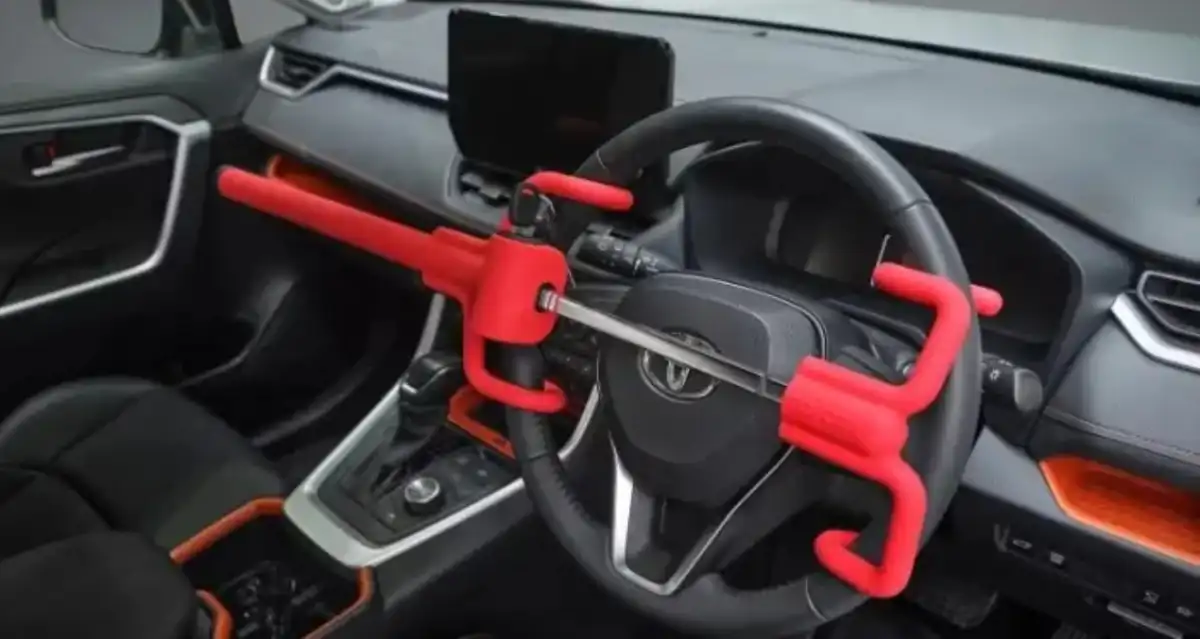
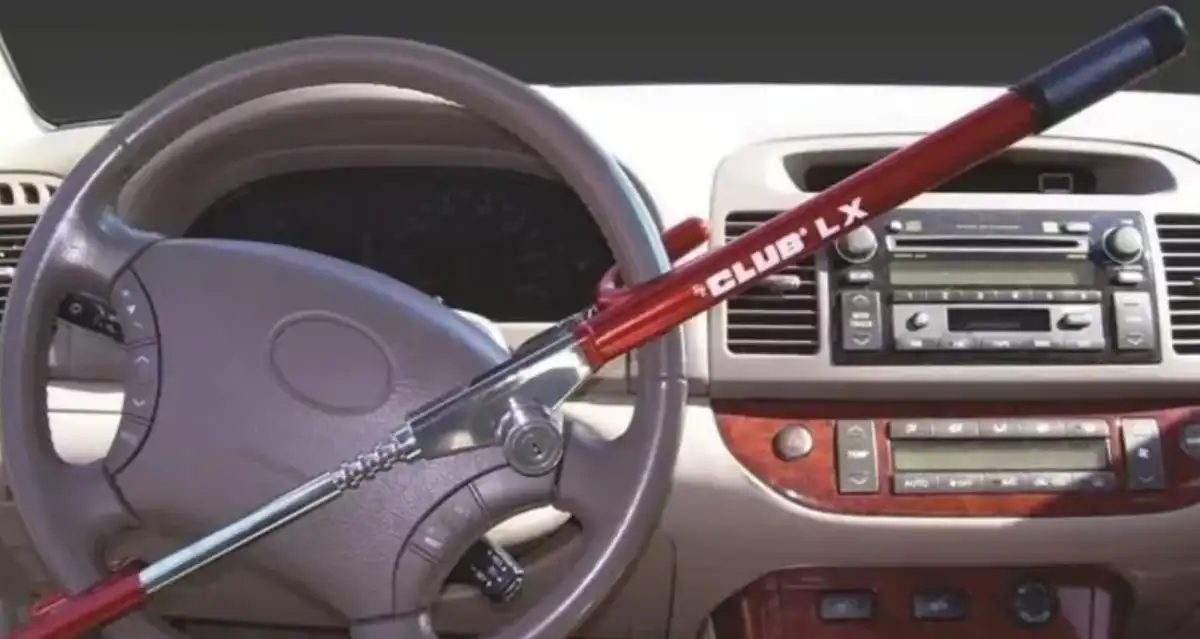
One of the most notable changes in 2026 is Toyota’s renewed endorsement of mechanical steering wheel locks.
Why Toyota Supports Mechanical Locks Again
They are highly visible deterrents
They increase theft time and effort
They discourage opportunistic and semi-professional criminals
They remain effective even if digital systems are bypassed
A locked steering wheel turns a quick theft into a high-risk operation—often enough to make thieves abandon the attempt.
Visual Deterrence as a Security Tool
Visibility plays a major role in modern vehicle protection.
Mechanical locks and physical barriers send a clear message:
The vehicle is protected
Theft will take time
Attention will be drawn
Professional thieves typically seek the easiest target, not the best one.
Owner-Activated Security Practices
Toyota emphasizes that security is a shared responsibility.
Recommended Owner Actions
Use steering wheel locks consistently
Store smart keys in signal-blocking pouches
Enable factory alarm systems
Install GPS tracking devices
Park in secure or monitored locations
When combined, these steps significantly reduce theft risk.
Land Cruiser Anti-Theft Measures
Security Layer | Function | Effectiveness |
|---|---|---|
Engine immobilizer | Prevents unauthorized engine start | High |
Smart key encryption | Blocks digital cloning | Medium–High |
Steering wheel lock | Physically disables steering | High deterrence |
Alarm system | Alerts to intrusion | Medium |
GPS tracking | Aids recovery | Medium–High |
Impact on Land Cruiser Owners
Positive Effects
Increased peace of mind
Higher long-term resale confidence
Stronger insurance negotiation position
Challenges
Additional accessory costs
Need for consistent user discipline
Theft risk still exists, though reduced
Market Impact and Brand Strategy
Toyota’s approach reflects a broader industry trend.
For the Automotive Market
Growing demand for physical security accessories
Increased awareness of vehicle theft risks
Shift toward layered security solutions
For Toyota’s Brand Image
Reinforces commitment to owner protection
Demonstrates adaptability to real-world threats
Strengthens Land Cruiser’s reputation as a long-term investment
Why This Matters in the Middle East
In Gulf markets, the Land Cruiser holds exceptional status:
Popular for family, business, and off-road use
High demand in both new and used markets
Strong cultural and practical value
Improved security directly supports market stability and owner confidence in the region.
Future Directions in Vehicle Security
Toyota and the wider industry are exploring:
Biometric vehicle access
Cloud-based security monitoring
Software updates to counter new threats
Integrated vehicle-to-infrastructure protection
However, Toyota’s strategy makes one thing clear:
advanced technology works best when supported by simple, physical defenses.
Toyota’s 2026 theft-protection strategy for the Land Cruiser is not about choosing between old and new—it is about using both intelligently.
By combining:
Digital immobilization
Encrypted smart keys
Mechanical steering locks
Owner awareness
Toyota delivers a security model designed for real-world conditions, not just theoretical threats.
For Land Cruiser owners, the message is clear: modern protection is strongest when technology and practicality work together.