

- What Is Facial Recognition in Ride-Hailing Applications?
- The Five Core Objectives Behind Facial Recognition Adoption
- Impact on the Automotive and Transport Market
- Gulf Comparison: Saudi Arabia Takes the Lead
- Privacy Concerns: Are They Being Addressed?
Saudi Arabia’s smart mobility sector is undergoing a profound transformation. As ride-hailing applications expand rapidly across major cities, regulatory authorities are no longer focused solely on fleet availability or service coverage. Instead, attention has shifted toward identity verification, passenger safety, market discipline, and regulatory compliance.
The adoption of facial recognition technology for ride-hailing drivers marks a strategic move that reflects the Kingdom’s broader digital transformation agenda. While the decision is often framed as a security measure, its implications extend far beyond safety. It directly affects market structure, driver behavior, platform sustainability, automotive demand, and the future of smart transportation across Saudi Arabia and the Gulf region.
This article provides an in-depth analysis of the five key objectives behind implementing facial recognition, while examining its wider impact on policy, transport platforms, and the automotive ecosystem.
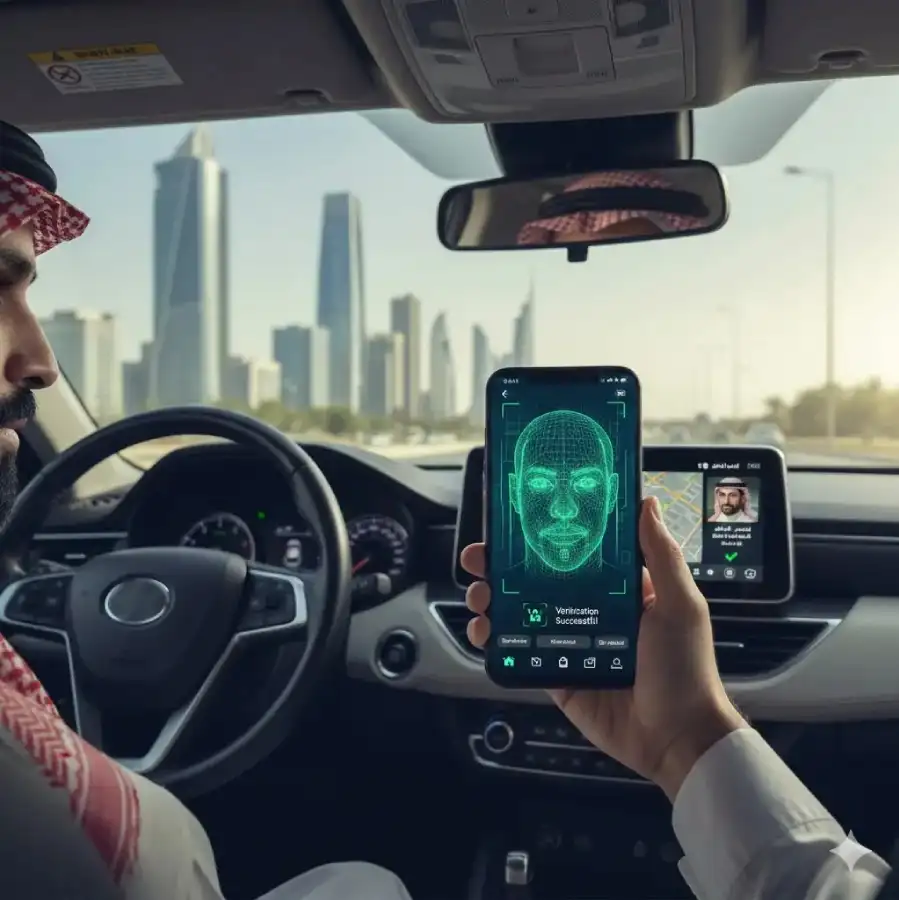
What Is Facial Recognition in Ride-Hailing Applications?
Facial recognition is a biometric identity verification technology that:
Analyzes unique facial features
Matches them against registered driver data
Confirms the identity of the person operating the account
How It Works Inside Ride-Hailing Apps
The app requests a real-time selfie from the driver
Artificial intelligence algorithms analyze facial features
The image is matched with stored biometric records
Access is granted or denied instantly based on verification results
The Five Core Objectives Behind Facial Recognition Adoption
Preventing Identity Fraud and Account Sharing
One of the most persistent challenges in ride-hailing platforms has been:
Account sharing between drivers
Unauthorized individuals operating vehicles
Use of registered accounts by unverified persons
Facial recognition effectively eliminates these practices by:
Binding accounts permanently to verified individuals
Preventing login access without biometric confirmation
Reducing operational violations across platforms
Enhancing Passenger Safety
Passenger safety remains the cornerstone of trust in ride-hailing services. Facial recognition contributes by:
Verifying the driver’s identity before trips begin
Reducing the risk of criminal or unauthorized behavior
Increasing confidence among:
Families
Female passengers
Elderly users
Market Outcome:
Higher safety perception leads to increased adoption of ride-hailing services over private vehicle use among key demographics.

Market Regulation and Compliance Control
From a regulatory standpoint, facial recognition enables authorities to:
Monitor driver compliance accurately
Prevent unlicensed or suspended drivers from operating
Ensure alignment with national transport regulations
Market Impact
Reduced informal or unregulated activity
Improved service quality
Fairer competition among ride-hailing platforms
Protecting the Digital Economy and Reducing Fraud
Fraud within ride-hailing platforms includes:
Incentive manipulation
Multiple account usage
Exploiting technical loopholes
Facial recognition:
Closes systemic vulnerabilities
Protects platform investments
Enhances long-term business sustainability
Preparing for the Future of Smart Mobility
Biometric verification is not a short-term solution—it is a foundation for:
Autonomous vehicle integration
Fully automated transport systems
Linking digital identity with driving behavior and mobility data
This aligns directly with:
Saudi Vision 2030
Smart city initiatives
Nationwide transport digitization strategies
Impact on the Automotive and Transport Market
First: Impact on Drivers
Positive Effects
Protection for compliant, registered drivers
Reduction in unfair competition
Potential income stability over time
Challenges
Increased accountability
Continuous monitoring
Market exit for non-compliant operators
Second: Impact on Ride-Hailing Platforms
Aspect | Impact |
|---|---|
Safety | Significant improvement |
Operating Costs | Higher technology investment |
Brand Trust | Increased consumer confidence |
Sustainability | More stable business models |
Third: Impact on the Automotive Market
Increased demand for vehicles meeting platform requirements
Greater emphasis on vehicle maintenance and compliance
Reduced use of non-qualified or poorly maintained cars
Gulf Comparison: Saudi Arabia Takes the Lead
Country | Biometric Verification Use | Regulatory Strength |
|---|---|---|
Saudi Arabia | Advanced | High |
UAE | Advanced | High |
Kuwait | Moderate | Developing |
Bahrain | Limited | Moderate |
Conclusion:
Saudi Arabia is positioning itself as a regional leader in smart mobility governance.
Privacy Concerns: Are They Being Addressed?
Yes. Regulatory frameworks focus on:
Data encryption
Restricted access to biometric information
Compliance with national data protection laws
These measures ensure that security advancements do not compromise individual privacy rights.
The adoption of facial recognition for ride-hailing drivers in Saudi Arabia represents more than a technical upgrade—it is a strategic market transformation. The policy reshapes:
Transport regulation
Driver accountability
Platform credibility
Consumer trust
The future of smart mobility
By balancing security, regulation, and innovation, Saudi Arabia is setting a benchmark for ride-hailing governance across the Middle East.
As transport ecosystems continue to evolve, biometric verification will play a defining role in shaping how people, vehicles, and digital platforms interact.