

Middle East April 2026 Chinese Car Sales: Brands Capture 21.9% Share as Jetour Leads
In April 2026, the Middle East new car market recorded 94,806 total sales, a decline of -30.9% year-on-year. Against this challenging backdrop, Chinese automotive brands demonstrated remarkable resilience, capturing 21.9% of the total market. Jetour, MG, and Haval led the charge, with several Chinese brands posting positive growth even as the overall market contracted sharply.
94,806 TOTAL MARKET VOLUME
21.9% CHINESE BRANDS MARKET SHARE
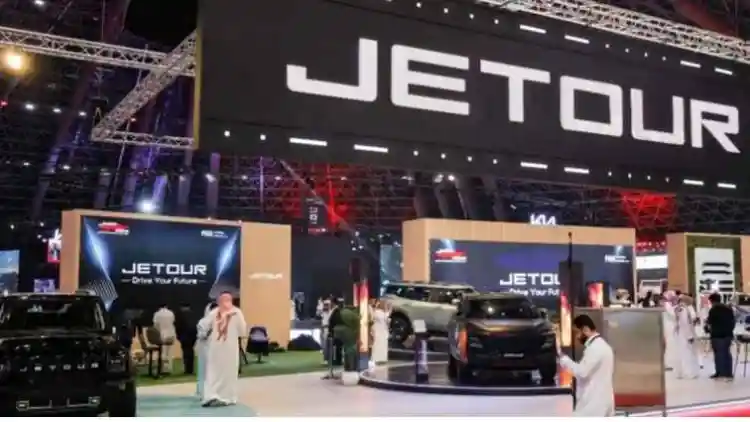
5,914 JETOUR UNITS — TOP CHINESE BRAND (+14.4% YoY)
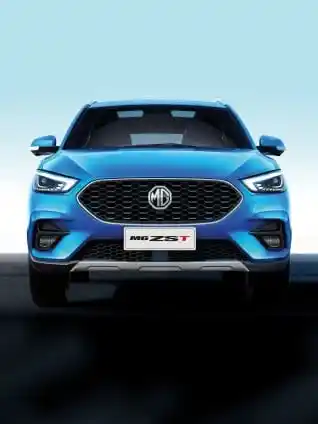
2,083 MG ZS UNITS — TOP CHINESE MODEL
The headline story of April 2026 is the continued ascent of Chinese brands in a declining market. While Toyota and Hyundai saw sales drop by -34.7% and -26.5% respectively, Jetour grew +14.4%, Haval surged +36.7%, and Changan eked out +4.3% growth. Chinese brands now account for more than one in five new cars sold across the Middle East, a share that would have seemed improbable just three years ago.
Top Chinese Brands in Middle East — April 2026
| Rank | Brand | April 2026 Units | Market Share | YoY Growth |
|---|---|---|---|---|
| 1 | Jetour | 5,914 | 6.2% | +14.4% |
| 2 | MG | 4,282 | 4.5% | -20.4% |
| 3 | Haval | 2,998 | 3.2% | +36.7% |
| 4 | Changan | 2,891 | 3.0% | +4.3% |
| 5 | BYD | 1,903 | 2.0% | New |
| 6 | Geely | 901 | 1.0% | -60.0% |
| 7 | Hongqi | 541 | 0.6% | New |
| 8 | Great Wall | 354 | 0.4% | +61.6% |
| 9 | Tank | 1 | 0.0% | +100.0% |
Chinese Brand Market Share Breakdown
Within the Chinese brand segment, Jetour leads with 28.0% of all Chinese brand sales, followed by MG at 26.0% and Haval at 14.4%. Changan holds 11.0%, while BYD accounts for 9.0%. The remaining 11.3% is distributed among smaller Chinese brands including Tank, Great Wall, and Hongqi, highlighting the increasing diversity of Chinese automotive offerings in the region.
Jetour: The Undisputed Chinese Leader
Jetour ranked as the 4th best-selling brand overall in the Middle East with 5,914 units, an impressive +14.4% year-on-year growth in a market that shrank by nearly a third. The brand's success is driven by a diversified SUV lineup including the T2 (2,057 units), Dashing (1,000 units, +133.2%), and X70 (829 units). Jetour's strategy of offering rugged, feature-packed SUVs at competitive prices, backed by a 5-year/150,000 km warranty, has resonated strongly with Middle Eastern buyers across the UAE, Saudi Arabia, Kuwait, and Oman.
Haval and Changan: Growth in a Downturn
Haval posted the strongest growth among major Chinese brands at +36.7% YoY, with 2,998 units sold. The Haval H6 continues to be the brand's volume leader, appealing to families seeking a well-equipped SUV at a mid-range price point. Changan grew +4.3% to 2,891 units, driven by the CS75 Plus (923 units, +72.1%) and the CS5 (1,251 units, +86.2%). Both brands are benefiting from expanded dealer networks and improved brand perception.
BYD: New Energy Pioneer
BYD entered the Middle East market with 1,903 units, led by the Song Pro DM-i (633 units). As the region's leading Chinese new energy vehicle manufacturer, BYD's Blade Battery technology and plug-in hybrid powertrains are attracting environmentally conscious buyers and early adopters. The brand's growth trajectory suggests it will become a much larger player in the coming months.
MG ZS: Best-Selling Chinese Model
The MG ZS was the top-selling Chinese model in the Middle East with 2,083 units in April 2026. Despite a -23.9% decline in a shrinking market, the ZS remains a popular choice for buyers seeking an affordable, well-equipped compact SUV. With its 1.5L engine, 8-inch touchscreen, Apple CarPlay, and 5-year/unlimited km warranty, the ZS continues to offer compelling value against Japanese and Korean competitors.
Conclusion
April 2026 confirms that Chinese brands are not merely weathering the Middle East market downturn — they are gaining ground. With a combined 21.9% market share, up from approximately 15% a year ago, Chinese manufacturers have firmly established themselves as the primary growth engine in the region's automotive landscape. For buyers, this means more choice, better technology, and aggressive pricing. For legacy brands, the message is clear: the competitive landscape has fundamentally shifted.

.png?x-oss-process=image/format,webp/interlace,1/quality,q_70/resize,w_750)