

- From “city of the future” to a living mobility lab
- NEOM’s mobility philosophy: the end of private‑car dominance?
- Shared rather than individual mobility
- A zero‑emission mobility ecosystem
- Driverless shuttles: the backbone of daily movement
- What do driverless shuttles mean in NEOM’s context?
- Expected characteristics of NEOM’s driverless shuttles
- Flying taxis: adding a new layer to the network
- What are flying taxis in NEOM’s model?
- The role of global partners
- A typical user journey
- Logistics and goods movement in the same ecosystem
- Autonomous movement of goods
- Smart logistics hubs
- Regulatory and technical challenges
- New rules for autonomy and urban airspace
- User trust and cultural acceptance
- Dependence on digital infrastructure
- Impact on the traditional automotive sector
- Redefining “car ownership”
- New opportunities for manufacturers
- Influence beyond NEOM
- NEOM as a platform for rethinking mobility
From “city of the future” to a living mobility lab
NEOM is not being presented to the world as just another new city in Saudi Arabia, but as an open‑air laboratory to redefine how people live, work, and move in a post‑oil era.
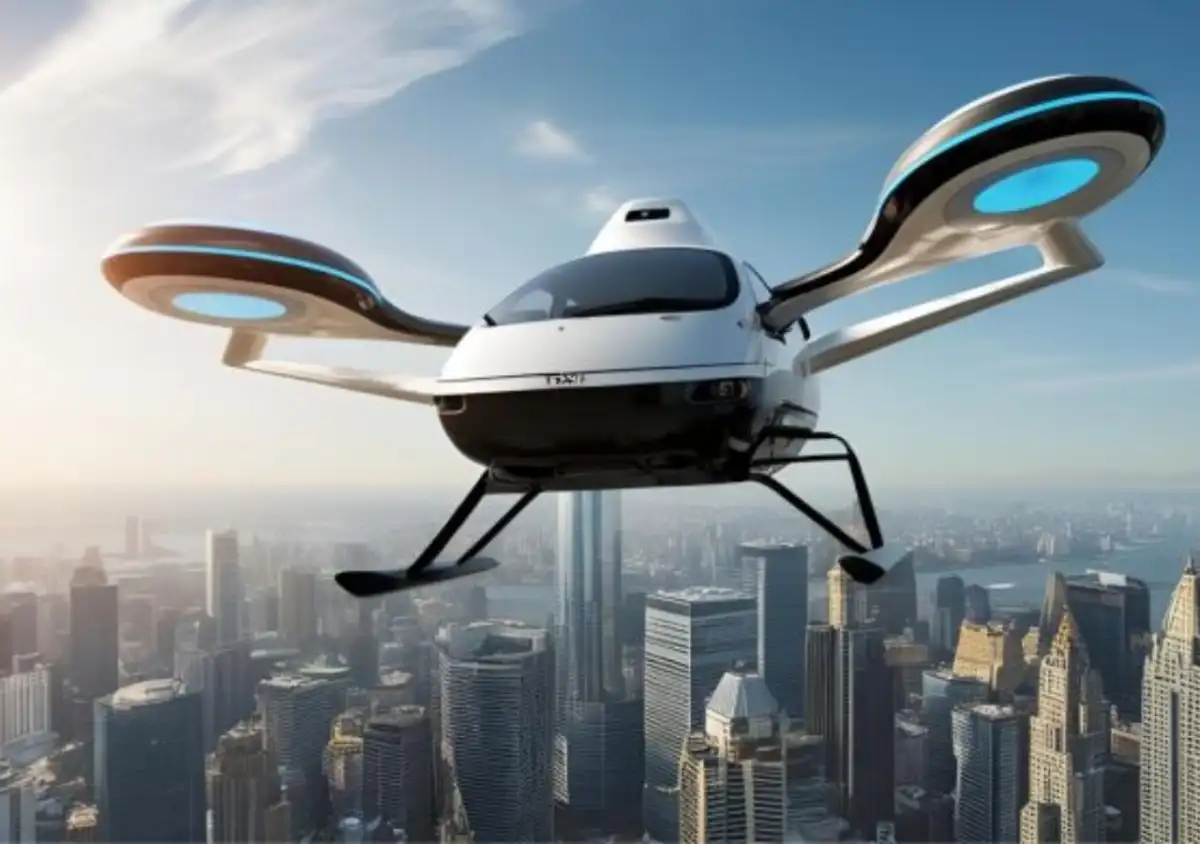
Within this vision, mobility plays a central role: instead of relying on traditional private cars and congested roads, NEOM is betting on driverless electric shuttles and fully electric flying taxis operating in a multimodal network designed to make moving people and goods cleaner, smoother, and more tightly integrated.
NEOM’s mobility philosophy: the end of private‑car dominance?
Shared rather than individual mobility
The core idea is to replace mass dependence on privately owned vehicles with a fleet of shared solutions: autonomous shuttles, robotaxis, flying taxis, e‑bikes and other micromobility modes.
This approach supports the goal of leaving most of NEOM’s land undeveloped and free of asphalt and classic highways, while creating dense, mixed‑use urban corridors that reduce the need for long car journeys.
A zero‑emission mobility ecosystem
All planned mobility in NEOM is based on electric or hydrogen power coming from renewable sources, supporting the broader ambition of near‑zero operational carbon emissions.
In this context, driverless shuttles and flying taxis are not just tech experiments; they form part of a fully integrated energy and transport system built around renewables.
Driverless shuttles: the backbone of daily movement
What do driverless shuttles mean in NEOM’s context?
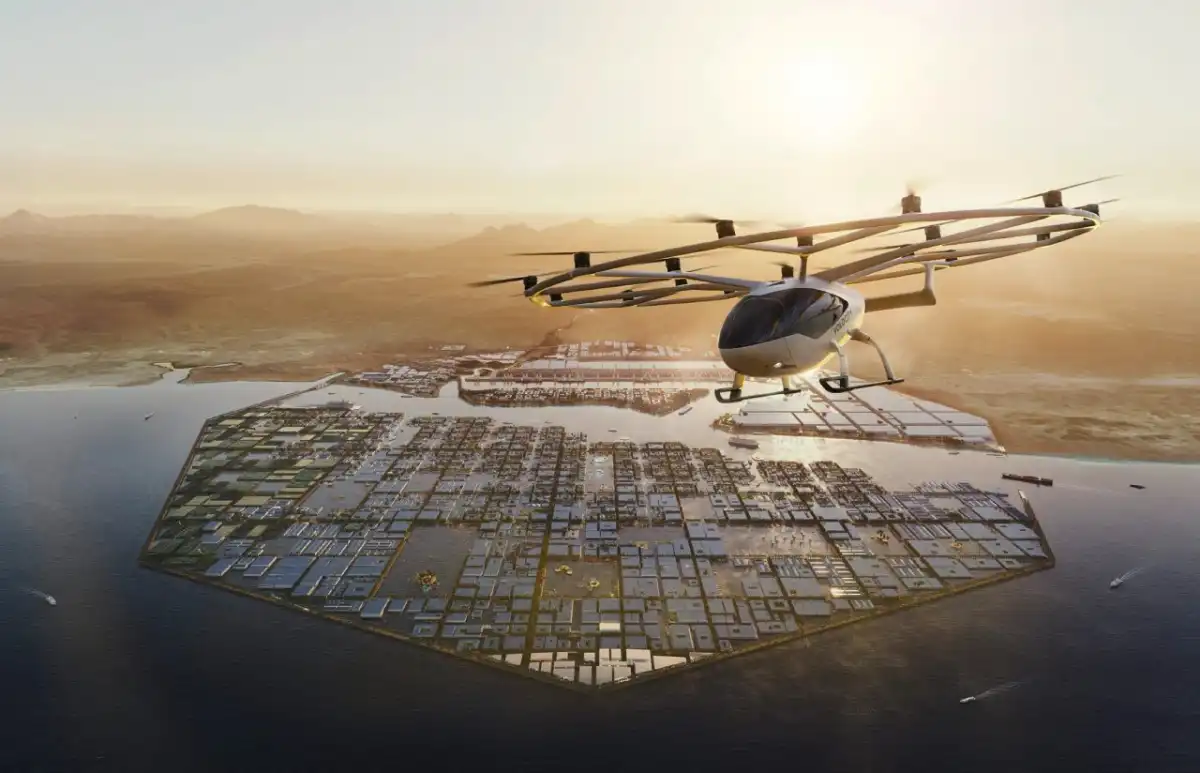
Think of compact, electric shuttle‑style vehicles rather than large conventional buses, running along fixed or semi‑flexible routes within areas such as THE LINE and OXAGON.
These vehicles rely on a suite of sensors (radar, lidar, cameras) combined with AI‑driven software to perceive their surroundings and make driving decisions without direct human input, backed by central control and monitoring centres.
Expected characteristics of NEOM’s driverless shuttles
On‑demand operations:
Instead of rigid timetables, shuttles can be summoned through an app, working more like shared taxis that combine passengers travelling in similar directions to boost efficiency.
Seamless integration with other modes:
The shuttle is one link in the chain: it takes passengers from homes and workplaces to main mobility hubs, where they can transfer to flying taxis, high‑speed trains, or other services.
Safety prioritised by design:
Operating speeds, dedicated or semi‑dedicated lanes, and continuous environmental sensing are meant to create a safety envelope beyond what typical private‑car traffic can offer, especially around pedestrians and cyclists.
Flying taxis: adding a new layer to the network
What are flying taxis in NEOM’s model?
These are small, fully electric vertical take‑off and landing (eVTOL) aircraft acting as “air taxis” to move passengers quickly between key nodes within NEOM and to nearby regions.
They are designed to produce zero local emissions, generate less noise than conventional helicopters and operate from compact rooftop or ground‑level vertiports integrated into major hubs.
The role of global partners
NEOM’s flying‑taxi plans hinge on collaboration with specialist urban‑air‑mobility manufacturers and operators to supply aircraft, build vertiport infrastructure and deploy traffic‑management systems suited to low‑altitude urban airspace.
The goal is to create one of the first end‑to‑end electric air‑mobility systems designed into a new city from scratch, positioning NEOM as an international reference for urban air transport.
A typical user journey
A resident might leave their home in THE LINE, summon a driverless shuttle via an app, ride to a central hub, then board a flying taxi to another business or leisure district in NEOM.
Booking, payment, trip timing and even service class (standard or premium) would be managed digitally, with the system optimising routes and connections in the background.
Logistics and goods movement in the same ecosystem

Autonomous movement of goods
NEOM’s mobility blueprint is not limited to passengers; it also envisions autonomous road vehicles and possibly electric cargo drones to handle packages and freight.
This reduces heavy‑truck pressure on streets and enables quieter, faster deliveries directly to neighbourhood‑level hubs or even building‑integrated drop‑off points.
Smart logistics hubs
Strategically located logistics centres would connect to both ground and air networks, shifting freight movements to off‑peak times and coordinating flows to minimise congestion and energy use.
Regulatory and technical challenges
New rules for autonomy and urban airspace
Running driverless shuttles and flying taxis at scale requires updated regulatory frameworks, including:
Certification standards for autonomous vehicles.
Clear rules for low‑altitude airspace over urban areas.
Strict protocols for safety, data protection and cyber‑security.
NEOM effectively becomes a testing ground for such regulations, with any successful models likely to influence future rules elsewhere in Saudi Arabia and beyond.
User trust and cultural acceptance
Moving from self‑driven cars to fully autonomous ground and air systems requires a major cultural shift and sustained trust‑building.
Gradual rollout, strong transparency about how systems work, clear emergency procedures and visible safety performance will be crucial to winning over residents and visitors.
Dependence on digital infrastructure
A mobility system of this kind relies on ultra‑reliable connectivity (5G and beyond) and high‑capacity data platforms capable of processing real‑time traffic, sensor and control data.
Robust backup strategies are necessary so that any network or system outage does not paralyse daily movement or compromise safety.
Impact on the traditional automotive sector
Redefining “car ownership”
In a model like NEOM’s, owning a private car becomes optional or even unnecessary for many people, with most trips served by subscription‑ or pay‑per‑use mobility services.
This shifts the market focus from selling individual vehicles to operating and maintaining fleets of shared autonomous units.
New opportunities for manufacturers
Carmakers that evolve into providers of electric, autonomous platforms and mobility services could find in NEOM a proving ground for selling entire fleets, not just retail units.
Makers that remain tied to conventional ownership models risk losing relevance wherever cities move towards “mobility as a service” paradigms inspired by NEOM.
Influence beyond NEOM
If NEOM’s approach proves successful in practice, it will increase pressure on existing cities in Saudi Arabia and the wider region to upgrade public‑transport systems, experiment with autonomous shuttles and adopt smart‑mobility solutions.
NEOM as a platform for rethinking mobility
Driverless shuttles and electric flying taxis in NEOM are more than futuristic concepts; they form the backbone of a deliberate attempt to build a city that is born ready for a world beyond traditional car dependence.
For the automotive and mobility industries, NEOM illustrates how radically the game changes when cities, roads, regulations and services are designed around shared, electric and autonomous transport from day one, signalling that the competition ahead will be not only between car models, but between entire urban philosophies.