

- What’s Happening? Overview of the Recall
- What Exactly Is the Fault?
- How BMW Is Fixing It
- Why This Matters: The Safety Angle
- Timeline of the Problem
- Which X3 Vehicles Are Affected?
- What Should Owners Do Now?
- Why This Recall Gets Extra Attention
- Steering Recall Snapshot
The BMW X3 is one of the German brand’s best-selling SUVs worldwide, praised for its balance of performance, luxury, and everyday usability — but a recent safety recall has placed this popular model back in the spotlight for all the wrong reasons. BMW has announced a major recall affecting thousands of 2025–2026 X3 units due to a software glitch in the steering system that can cause unintended steering wheel movement when the vehicle is stationary.
This article breaks down everything owners and potential buyers should know — from the nature of the defect to how BMW is fixing it, why it matters, and what steps you should take if your X3 is impacted.
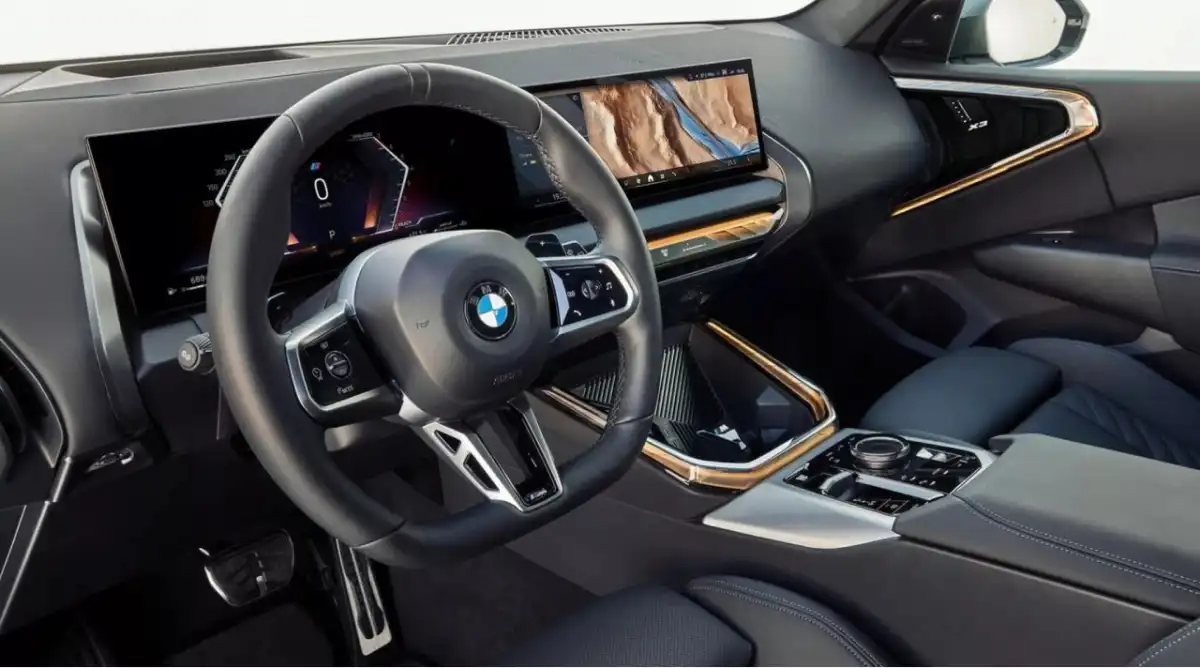
What’s Happening? Overview of the Recall
BMW announced a voluntary safety recall covering certain 2025 and 2026 model-year X3 SUVs, including the X3 30 xDrive and X3 M50 xDrive variants. In total, 36,922 vehicles are included in the campaign.
Key Information at a Glance
What Exactly Is the Fault?
The issue stems from a software weakness in the steering control system — specifically involving the steering torque sensor, which monitors input from the steering wheel.
Here’s how the problem occurs:
The steering torque sensor has two internal channels designed to validate steering inputs.
If one channel malfunctions while the vehicle is stationary (at startup or stopped with the transmission in drive), the software may misread the data.
This can cause the steering wheel to move on its own — even with no driver input.
Although this may sound isolated or rare, any unintended steering movement is a serious safety concern, especially if a driver is unprepared.
How BMW Is Fixing It
BMW is addressing the defect with a software update designed to make the steering system more robust and capable of correctly detecting torque sensor malfunctions.
Two Methods for the Fix
1. Over-the-Air (OTA) Update
Owners with compatible vehicles will receive the software patch remotely, much like a phone update.
2. Dealer Installation
If the over-the-air method isn’t available or preferred, owners can schedule a free service appointment at any BMW dealership to have the update installed.
Both methods impose no cost to the vehicle owner, and the updated calibration should prevent unintended wheel movement.

Why This Matters: The Safety Angle
The National Highway Traffic Safety Administration (NHTSA) warned that:
Unexpected steering movement — even when the vehicle isn’t moving — could increase the risk of a crash or injury if it startles the driver or occurs at an unexpected time.
While BMW reports no known accidents or injuries related to this defect so far, the company decided to issue the recall as a precautionary safety measure.
Timeline of the Problem
According to internal documents and field reports:
First incident detected during vehicle startup at a plant in August 2025.
Engineering investigation began September 1, 2025.
Multiple field cases recorded through autumn.
BMW decided to initiate the voluntary recall by December 4, 2025.
Owner notifications will begin in early February 2026, with recall letters mailed out shortly after.
This timeline reflects a cautious but thorough response once the issue was identified.
Which X3 Vehicles Are Affected?
Most affected BMW X3s were built between August 14, 2024 and October 20, 2025.
Included variants:
BMW X3 30 xDrive
BMW X3 M50 xDrive
If you own an X3 from these model years, there’s a high chance your vehicle is part of the recall — particularly if it matches the production dates above.
What Should Owners Do Now?
Here’s a practical checklist for X3 owners:
Check Your VIN
Starting February 2, 2026, visit the NHTSA recall page and enter your vehicle identification number (VIN) to confirm eligibility.
Monitor for Software Updates
If your X3 supports OTA updates, the fix may install automatically.
Otherwise, contact your local BMW dealer to schedule the calibration update.
Stay Alert
Be mindful of any unusual steering behavior while starting the engine or when stopped.
Report any concerns to BMW immediately.
Keep Documentation
Save all recall notices and proof of the software update for your records.
These steps ensure both compliance and peace of mind.
Why This Recall Gets Extra Attention
Unusual Symptom — Most recalls involve hardware components (brakes, airbags, etc.). A recall due to a steering software malfunction is still relatively uncommon — especially when physical motion can occur without driver input.
Large Scope — Nearly 37,000 vehicles is a significant number, showing that even highly advanced systems are not immune to edge-case software bugs.
Brand Impact — BMW’s reputation for engineering excellence means a recall — even proactive — draws attention from owners and automotive media alike.
Steering Recall Snapshot
The 2025–2026 BMW X3 recall highlights how deeply integrated software is in modern cars — not just for convenience features but for fundamental safety systems like steering. Even though the issue appears most prominent when the vehicle is stationary, any unintended movement of the steering wheel has the potential to distract or surprise a driver.
Owners should take the recall seriously, verify their vehicle’s status, and ensure the software update is applied as soon as possible.
In an era where vehicles are becoming more connected and software-dependent, this recall serves as an important reminder: software reliability is just as critical as mechanical reliability for vehicle safety.