
- From tech “extras” to core safety
- What AI-enhanced safety really means
- Smart perception of the road
- Beyond fixed thresholds
- Key AI safety systems highlighted at the show
- Automatic emergency braking with computer vision
- Lane-keeping and steering assist
- Inside the cabin: AI watching over the driver
- Driver attention monitoring
- Voice and gesture control to cut distraction
- Protecting pedestrians and vulnerable road users
- Smarter detection around the car
- Real-world scenarios
- Integration with Saudi smart infrastructure
- Cars talking to the city
- A platform for collaboration
- Why these technologies matter specifically in Saudi Arabia
- Matching local roads and habits
- Supporting national safety goals
- Challenges in adopting AI safety tech
- Winning driver trust
- Infrastructure and calibration
- How everyday drivers can actually benefit
- Practical advice
- Riyadh 2025 as a window into safer roads
AI-powered safety technologies at Riyadh Motor Show 2025 are not just futuristic concepts; they are already reshaping how cars detect danger, support drivers, and prevent accidents on Saudi roads.
From tech “extras” to core safety
In recent years, advanced driver assistance systems have moved from being optional extras in spec sheets to becoming central pillars of modern safety engineering. At Riyadh Motor Show 2025, the focus is clearly on artificial intelligence as the brain of these systems, enabling cars to see, interpret, and react to complex situations in fractions of a second.
Global and regional brands are showcasing solutions that can reduce accidents and injuries across Saudi and Gulf roads by cutting human error out of many critical moments.
What AI-enhanced safety really means
Smart perception of the road
AI-enhanced safety systems combine cameras, radar, and sometimes lidar with machine‑learning algorithms that continuously analyse the scene around the vehicle.
They don’t just detect objects; they try to understand context:
Is that pedestrian about to cross?
Is the car drifting unintentionally out of its lane?
Is a collision likely from the front, side, or rear?
Beyond fixed thresholds
Traditional systems rely on fixed thresholds (certain speeds or distances); AI-based systems:
Factor in driver behaviour.
Adapt to real traffic flows.
Handle unusual patterns, like sudden congestion or erratic drivers.
This makes them more capable of dealing with messy, real-world situations rather than idealised scenarios.
Key AI safety systems highlighted at the show
Automatic emergency braking with computer vision
Uses front and sometimes rear cameras alongside radar to detect:
Vehicles.
Motorbikes and bicycles.
Pedestrians and other vulnerable road users.
Can distinguish between:
A normally slowing car.
A sudden stationary obstacle.
A child running into the street.
If the driver ignores visual and audible warnings, the system can apply partial or full braking to mitigate or avoid impact.
Lane-keeping and steering assist
Front-facing cameras read lane markings and road edges.
AI helps the system tell the difference between:
Unintentional lane departure due to distraction or drowsiness.
A deliberate lane change using the indicator.
The car can:
Vibrate the steering wheel as a warning.
Gently steer back into the lane if the driver fails to react in time.
Inside the cabin: AI watching over the driver
Driver attention monitoring
Interior cameras track the driver’s face and eyes to detect:
Drowsiness (long blinks, frequent yawns).
Distraction (looking down at a phone or away from the road for too long).
When risk signs appear, the system:
Issues clear alerts.
In some cars, suggests a rest break or dials back aggressive drive modes.
Voice and gesture control to cut distraction
AI-powered voice recognition allows natural commands to handle:
Calls.
Navigation.
Media.
Some systems also support simple hand gestures for basic functions.
This reduces the need to look away from the road or poke at touchscreens, trimming one of the biggest modern safety risks.
Protecting pedestrians and vulnerable road users
Smarter detection around the car
Modern vision systems can differentiate between:
A moving car.
A bicycle.
A person walking or running.
This is particularly important in Saudi cities where the mix of pedestrians, scooters, and bikes is growing.
Real-world scenarios
A child stepping out from between parked cars:
The system can spot motion earlier than a human and prepare or apply braking.
A cyclist in a side lane:
Blind‑spot and cross‑traffic alerts help prevent collisions during lane changes or door opening.
Integration with Saudi smart infrastructure
Cars talking to the city
As smart‑city projects evolve in the Kingdom, AI safety systems can tap into:
Live updates on crashes or roadworks ahead.
Connected traffic lights that signal impending changes.
This allows the car to:
Adjust speed in advance.
Warn the driver earlier about high‑risk zones like school areas or construction sites.
A platform for collaboration
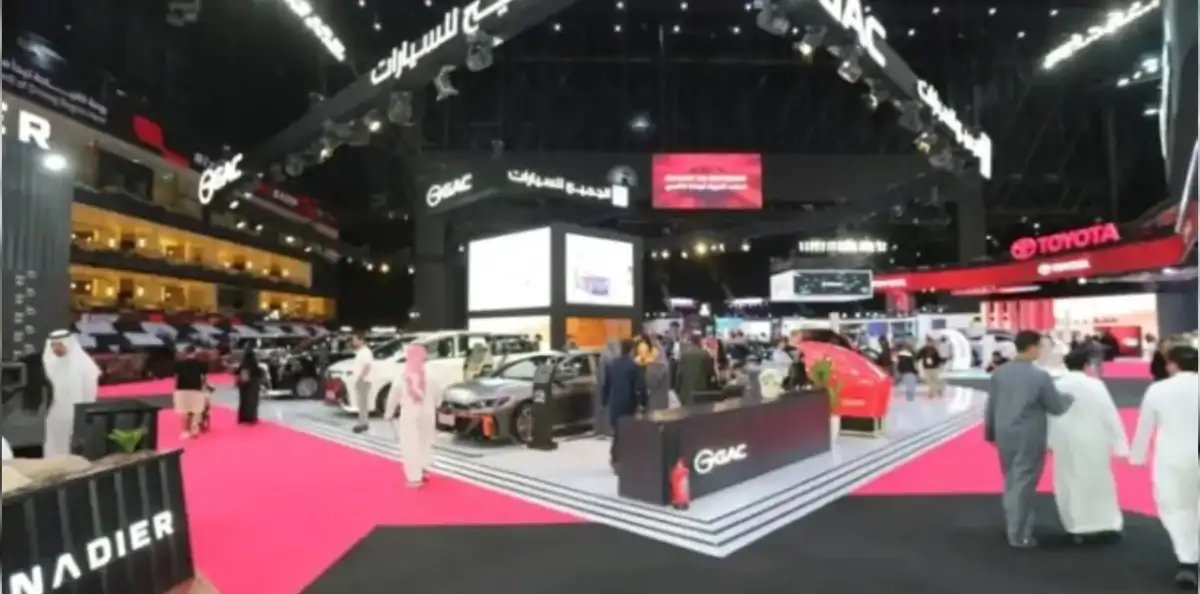
Riyadh Motor Show 2025 provides a stage where:
Carmakers.
Telecom and V2X (vehicle‑to‑everything) providers.
Government road‑safety agencies.
can demonstrate how their technologies plug together into a single safety ecosystem, not just isolated gadgets in each car.
Why these technologies matter specifically in Saudi Arabia
Matching local roads and habits
Saudi Arabia combines:
Long intercity highways where fatigue and high speed are major risks.
Busy urban networks in cities like Riyadh and Jeddah.
AI safety systems can help:
Cut rear‑end collisions in stop‑and‑go city traffic.
Reduce fatigue‑related accidents and lane departures on long desert stretches.
Supporting national safety goals
The Kingdom is investing heavily in programmes to lower traffic injuries and fatalities.
Equipping new vehicles with advanced safety tech supports these targets by:
Reducing human‑error incidents.
Encouraging a culture of assistive, not aggressive, driving.
Challenges in adopting AI safety tech
Winning driver trust
Some drivers feel uneasy about a car “interfering” with their control.
Manufacturers need to:
Communicate clearly that these systems assist rather than replace the driver.
Offer adjustable intervention levels so drivers can build trust gradually.
Infrastructure and calibration
Lane‑keeping and sign‑recognition performance depends on:
Clear road markings.
Well‑maintained signs and surfaces.
Continued investment in road infrastructure will directly improve how well these AI systems work day to day.
How everyday drivers can actually benefit
Practical advice
When choosing a new car, pay special attention to the safety tech package, especially:
Automatic emergency braking.
Lane‑keeping assist.
Blind‑spot and cross‑traffic alerts.
Driver attention monitoring.
Learn how each system behaves by:
Reading the owner’s manual.
Trying features in a safe, controlled setting.
Treat these systems not as an excuse to look at your phone, but as a safety net for the moments when even a careful driver can make a mistake.
Riyadh 2025 as a window into safer roads
The AI‑enhanced safety technologies showcased at Riyadh Motor Show 2025 make it clear that the future of automotive protection will rely not only on strong structures and airbags, but also on algorithms, sensors, and data that work together to shield us even when we slip up.
For drivers in Saudi Arabia and across the region, this shift is a chance to move from a world where we respond after a crash, to one where cars and infrastructure anticipate and avoid danger before it happens, turning artificial intelligence into a quiet yet decisive partner on every journey.