

- How Did the Saudi Flag Appear on the Williams FW07?
- Why the Partnership Was Important
- The Williams FW07: A Car That Redefined F1
- The FW07 in Numbers
- Impact of the Saudi Flag on Public Perception
- Why the Story Still Matters Today
- A Symbol That Survived the Decades
In Formula 1, every logo, color, and sticker on a car usually carries a financial purpose — a sponsor, a brand, or a marketing campaign.
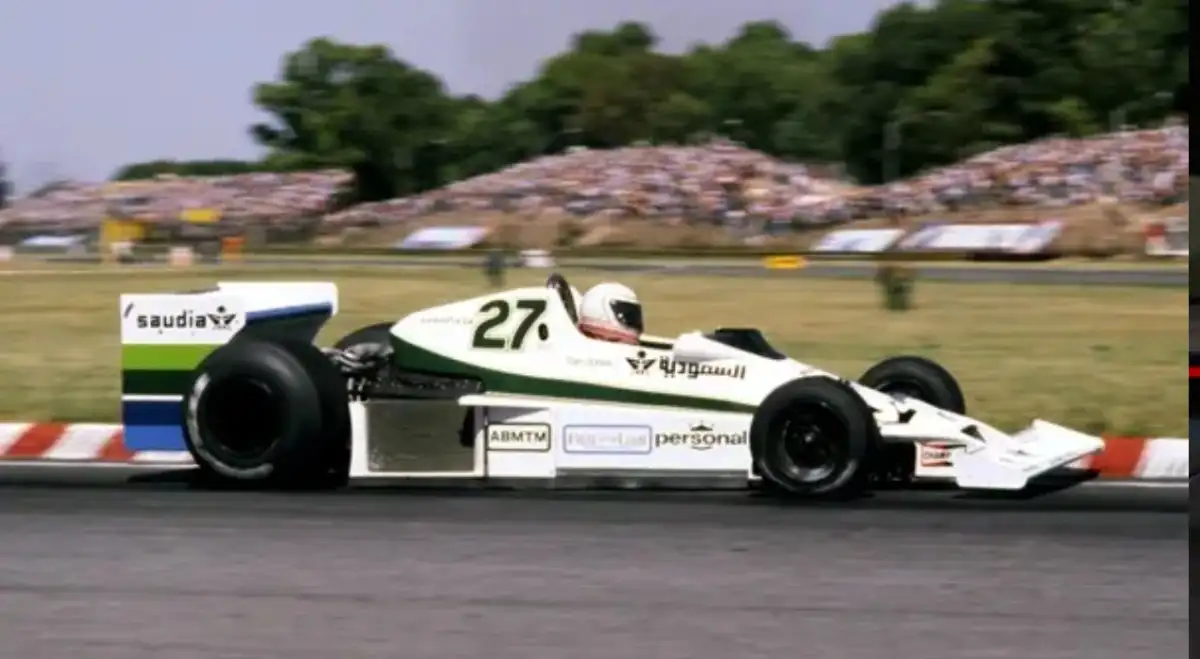
But in the late 1970s and early 1980s, something unusual appeared on one of the fastest cars of the era: a Saudi Arabian flag painted proudly on the nose of the legendary Williams FW07.
Why was the Saudi flag there? Who put it? What story hides behind this iconic detail?
In this report, we revisit a mysterious chapter from F1 history — a story where sports, politics, and speed intertwined to create one of the most intriguing moments in motorsport history.
How Did the Saudi Flag Appear on the Williams FW07?
In 1979, the Williams Formula 1 Team introduced one of the most successful cars ever built. With its ground-effect engineering and aerodynamic superiority, the FW07 dominated racing and won multiple championships.
During this period, Williams had a major sponsorship deal with Saudia, the national airline of Saudi Arabia.
This partnership placed the airline’s logo — and the Saudi flag — on the car as part of a broader Middle Eastern promotional campaign aimed at elevating Saudi Arabia’s global presence in sports.
But the appearance of the full Saudi national flag on the car remained unusual, as national symbols are rarely placed on racing vehicles unless linked to national representation or government support.

Why the Partnership Was Important
This collaboration marked the first major Saudi investment in Formula 1, long before the modern Saudi motorsport expansion we see today — including the Saudi Arabian Grand Prix in Jeddah.
The reasons behind the sponsorship included:
Promoting Saudi Arabia to an international audience
Strengthening diplomatic visibility in Western sports
Supporting technological innovation and global partnerships
Demonstrating Saudi participation in major global events
Enhancing the image of Saudia Airlines internationally
Because the FW07 began to win races, the Saudi flag started appearing on podiums, in photographs, and across global media.
The Williams FW07: A Car That Redefined F1
To understand the impact, here’s a quick breakdown of the car’s most important features.
Key Technical Features of the FW07
Ground-effect aerodynamics with side skirts
Lightweight aluminum monocoque chassis
Ford-Cosworth DFV V8 engine
Exceptional straight-line speed
Superior handling in high-speed corners

The FW07 in Numbers
Impact of the Saudi Flag on Public Perception
The presence of the Saudi flag helped achieve several milestones:
It helped introduce Saudi identity into the world of high-speed motorsport.
It connected Saudi Arabia with technological innovation and engineering excellence.
It contributed to building a positive international image at a time when global exposure was limited.
It became a historical marker linking Saudi Arabia to early F1 success stories.
The partnership lasted through the early 1980s and is still remembered as one of the most iconic sponsorships in motorsport history.

Why the Story Still Matters Today
Today, Saudi Arabia hosts one of the fastest Formula 1 tracks in the world — the Jeddah Corniche Circuit — and is deeply involved in motorsport through investments, events, and racing development.
This modern rise has made enthusiasts curious about earlier Saudi involvements — leading many to rediscover the Saudi flag printed on the FW07 almost half a century ago.
The story is a reminder that Saudi Arabia’s relationship with Formula 1 did not begin in the 2020s.
It began decades earlier, with a green flag flying on a white-and-green Williams machine cutting through the world’s most famous circuits.
A Symbol That Survived the Decades
The Saudi flag on the Williams FW07 is more than an artistic decoration.
It represents a partnership that left a mark on automotive history.
From championship victories to cultural influence, that small emblem carried a message far beyond the racetrack — a message of ambition, presence, and a vision for global engagement.
Today, as Saudi Arabia forms a major chapter in the future of motorsports, the FW07 stands as a timeless reminder of how early steps can shape powerful legacies.