

- Why Tint Even Became A Legal Issue
- Legal Tint Percentages: Front vs Side vs Rear
- Why 50% Became The Practical Limit
- When Does Tint Become A Clear Violation?
- Exceptions: When Stronger Tint Is Allowed
- Quality Of The Film: Not Just About The Number
- Do The Rules Differ Between Emirates?
- Practical Tips To Avoid Tint‑Related Fines
Why Tint Even Became A Legal Issue
In a climate like the UAE’s, window tint is not just a styling accessory; it is a practical tool to reduce heat, protect interiors and improve comfort for drivers and passengers. At the same time, overly dark or reflective tints can obstruct visibility, hinder law enforcement and reduce overall safety on the roads.
Because of this, UAE authorities have defined clear legal limits for car window tint, striking a balance between comfort, privacy and traffic safety. For anyone buying, modifying or reviewing cars in the region, understanding these rules is essential.
Legal Tint Percentages: Front vs Side vs Rear
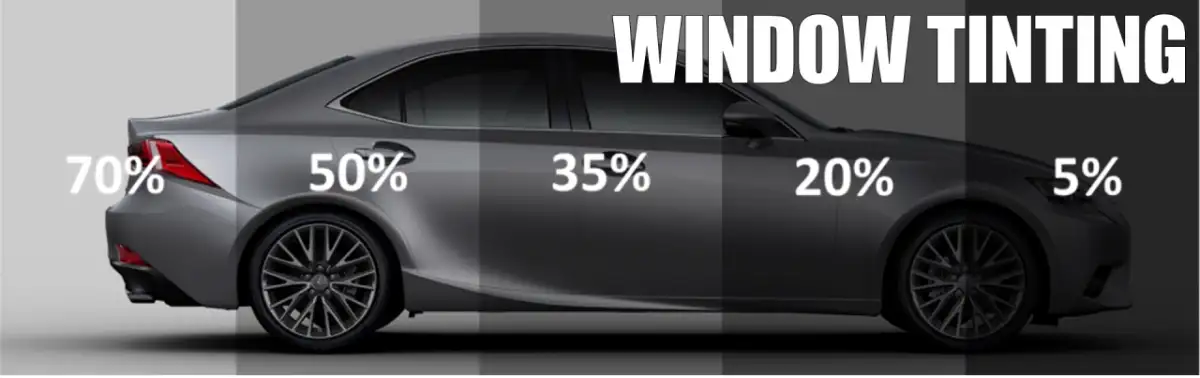
Tint rules in the UAE differentiate between the front windshield and the other glass areas of a car, with stricter requirements for forward visibility:
Front windshield
Must remain effectively clear and transparent.
A narrow sun strip along the top edge may be allowed in some emirates, but full‑screen tinting is not legal for normal private vehicles.
Front side windows (driver and front passenger)
Up to 50% tint is generally allowed.
This refers to visible light transmission (VLT)—about half the light can be blocked, half must still pass through.
Rear side windows and rear windshield
Up to 50% tint is also generally accepted on private passenger cars.
Darker or mirror‑finish films intended to obscure the cabin completely are not permitted.
These limits are applied on most private vehicles, with the assumption that the driver’s outward view and enforcement visibility must never be significantly compromised.
Why 50% Became The Practical Limit
The shift to allowing up to 50% tint on side and rear glass was not arbitrary. It reflects a compromise between thermal comfort and safety:
At 50% VLT, there is still enough light reaching the cabin to maintain clear daytime and nighttime visibility from inside out.
The same 50% reduction in light and solar energy significantly reduces cabin heat, helping the air‑conditioning system and improving daily comfort in extreme summer conditions.
This level also protects soft materials and plastic parts from rapid fading and cracking caused by constant sun exposure, without “blacking out” the car.
In practice, 50% has proven to be a workable threshold: dark enough to feel cooler and more private, yet light enough to stay safe and controllable for most drivers.
When Does Tint Become A Clear Violation?
Despite clear rules, many cars end up with illegal tint, whether due to miscalculation, using the wrong film or deliberately going darker. Typical cases that attract fines include:
Tint darker than 50% on side or rear windows of standard private cars, without a specific exemption.
Any aftermarket film applied across the main area of the front windshield, beyond a narrow legal sun strip where that is permitted.
Use of highly reflective “mirror” films or unusual colours that cause glare or visual disturbance to other road users.
Penalties can include substantial fines and, in repeated or extreme cases, vehicle impoundment for a defined period. Insurance complications can also arise if an illegally‑tinted car is involved in an accident.
Exceptions: When Stronger Tint Is Allowed
The law does allow for special cases where darker tint may be permitted above the usual 50% ceiling, but always under controlled conditions, for example:
Documented medical conditions requiring reduced exposure to sunlight and UV radiation, supported by medical reports and official approvals.
Specific official, diplomatic or security‑related vehicles, where enhanced privacy or security is necessary by regulation.
Certain cash‑in‑transit or sensitive cargo vehicles, where cargo security is prioritized.
In all such cases, it is not enough simply to install darker film and claim an excuse. Owners must apply through the proper authority, obtain written authorization defining the allowed tint, and keep that documentation with the vehicle.
Quality Of The Film: Not Just About The Number
Focusing purely on “how dark” the tint is can be misleading; the film’s technology and quality matter as much as the percentage:
High‑quality ceramic or nano‑ceramic films can reject a significant amount of heat and UV while still allowing more visible light through, making them safer at night.
Cheap dyed films might technically sit at 50% but reduce clarity and increase distortion, especially in low‑light driving conditions.
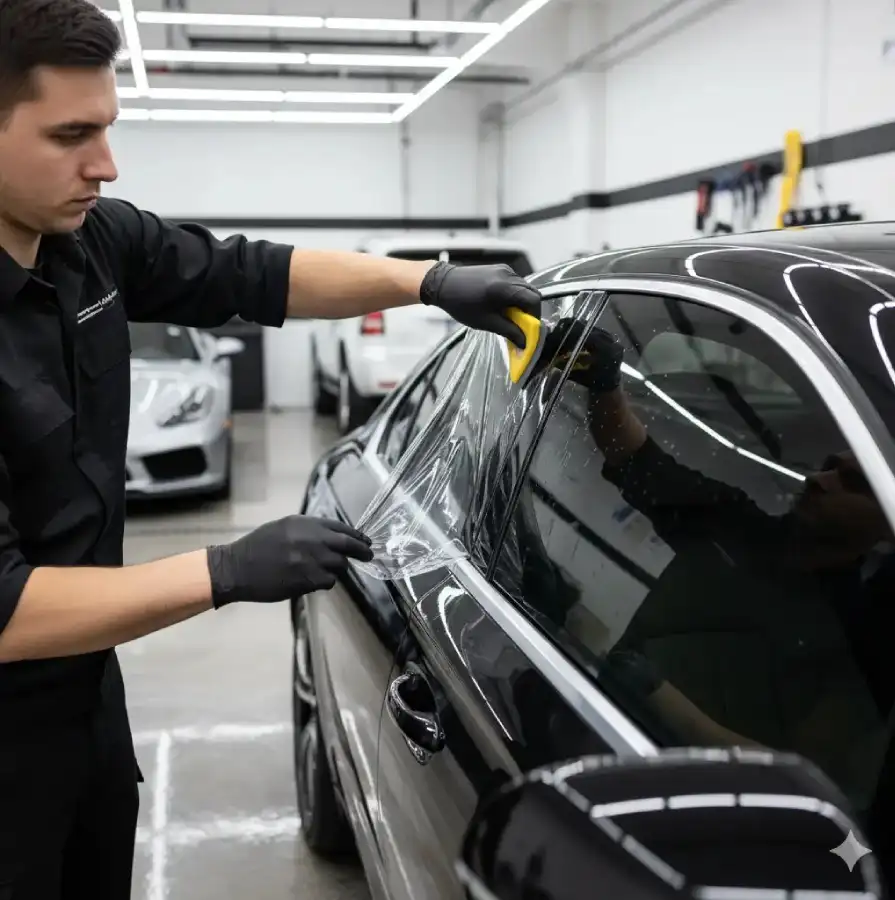
Professional installers use calibrated meters to confirm the final VLT after installation and can provide written confirmation of the measured percentage.
For an automotive publication, this is an important editorial angle: two films with the same nominal percentage can produce very different real‑world driving experiences.
Do The Rules Differ Between Emirates?
Across the UAE, the headline rule is broadly consistent: up to 50% tint on side and rear windows for most private vehicles, with a clear front windshield. Minor differences can exist in implementation details, such as:
The exact height and treatment allowed for a top sun strip on the front windshield.
How strictly certain types of decorative or reflective films are treated in inspections.
The practical process for applying and approving medical or special‑use exemptions.
For this reason, motorists—and automotive writers—should always reference the latest circulars or official statements from the traffic authorities in the emirate where the vehicle is registered.
Practical Tips To Avoid Tint‑Related Fines
For readers considering new tint or adjusting existing film, several simple guidelines can reduce the risk of running into trouble:
Stay at or under 50% VLT on all side and rear windows unless you have a formal exemption.
Keep the main area of the front windshield free of aftermarket tint; if a top strip is allowed, keep it within the specified height.
Avoid mirrored or heavily coloured films even if the VLT percentage is legal.
Use reputable installers who measure the actual VLT after fitment and give you written documentation.
If you buy a used car, have the existing tint checked—the previous owner may have installed illegal film without disclosing it.
These points are particularly useful as “service journalism” for your readers, turning a legal topic into practical advice.
The legal window tint limit in the UAE has been shaped by real climatic needs and safety priorities. Allowing up to 50% tint on side and rear glass gives drivers meaningful relief from heat and glare, while ensuring that visibility and law enforcement requirements are not compromised.
For professionals in the automotive media, it is not enough to repeat the 50% figure; explaining where tint can be applied, when it becomes a violation, how exemptions work and why film quality matters will help readers make informed, compliant choices. Properly chosen and installed, legal tint should make driving in the UAE’s summers more bearable—not more complicated.