
Welcome to Cartea Test Ranking. Today, we are evaluating the Land Rover DefenderBahrain Land Rover DefenderEgypt Land Rover DefenderKSA Land Rover DefenderKuwait Land Rover DefenderOman Land Rover DefenderQatar Land Rover DefenderUAE Land Rover Defender 90 with a 5.0T V8 engine. Under the Land RoverUAE Land RoverKSA Land RoverKuwait Land RoverQatar Land RoverOman Land RoverBahrain Land RoverEgypt Land Rover brand, the Defender is positioned as an off-road product.
The Land Rover Defender combines modern technology with traditional design, boasting strong off-road capabilities, and it is extremely popular in the Middle East. Additionally, the 5.0T version is a rare supercharged model. I am very much looking forward to its performance in our test.
Land rover Defender 90 Overview
Land Rover defender 90 Exterior: Retro elements combined with modern design
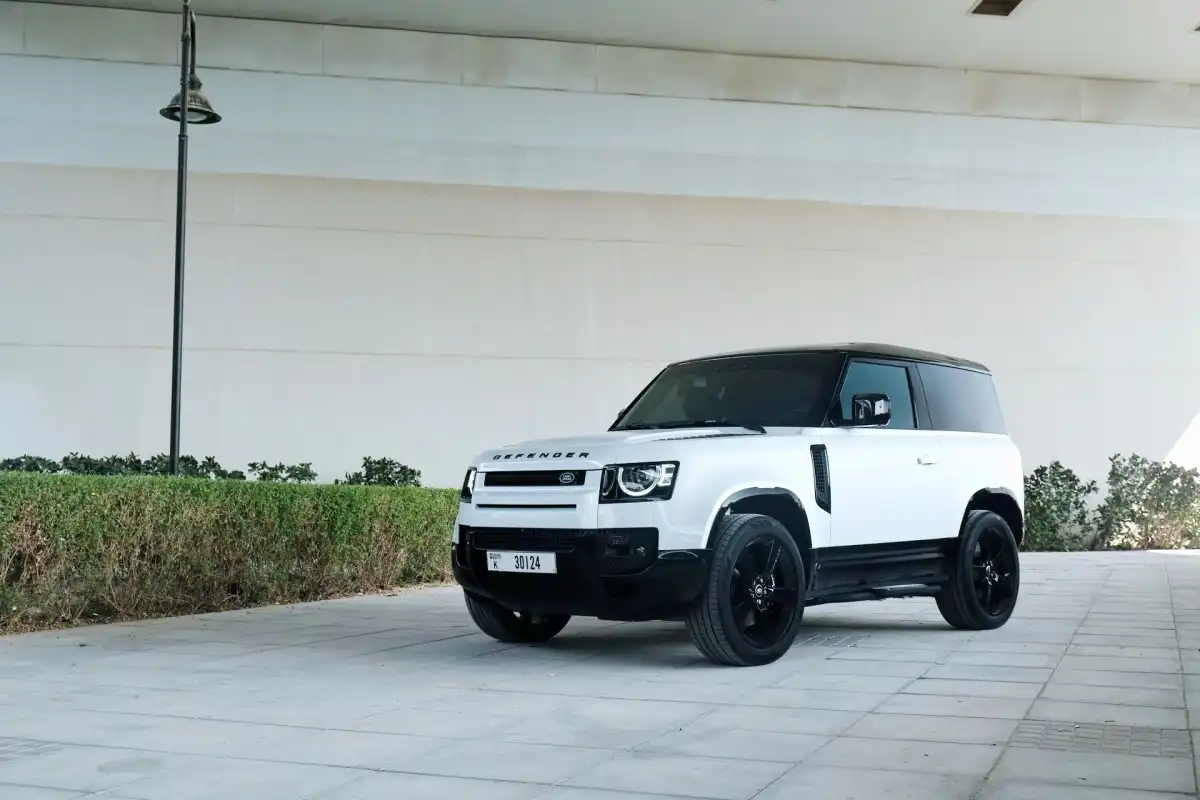 Land Rover designers have incorporated the traditional elements of the Land Rover Defender into the design using modern design techniques. Since its debut at the 2019 Frankfurt Motor Show, many subsequent models from other brands have adopted a similar design approach—integrating modern elements into SUVs with a boxy silhouette.
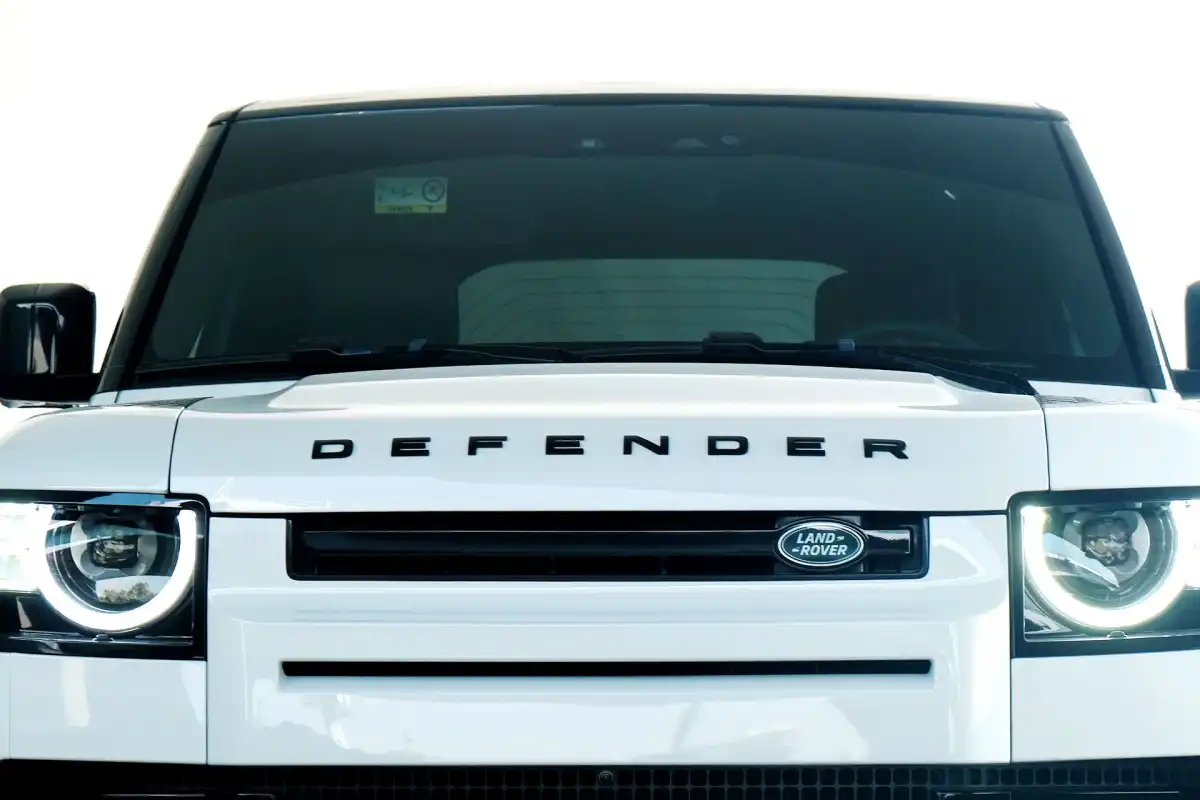 The front of the Land Rover Defender is very sleek, with no large air intakes, resembling an electric vehicle. The round headlights and raised hood design well inherit the Defender's consistent design elements. The raised hood allows the engine to be mounted higher, which in turn increases the vehicle's ground clearance.
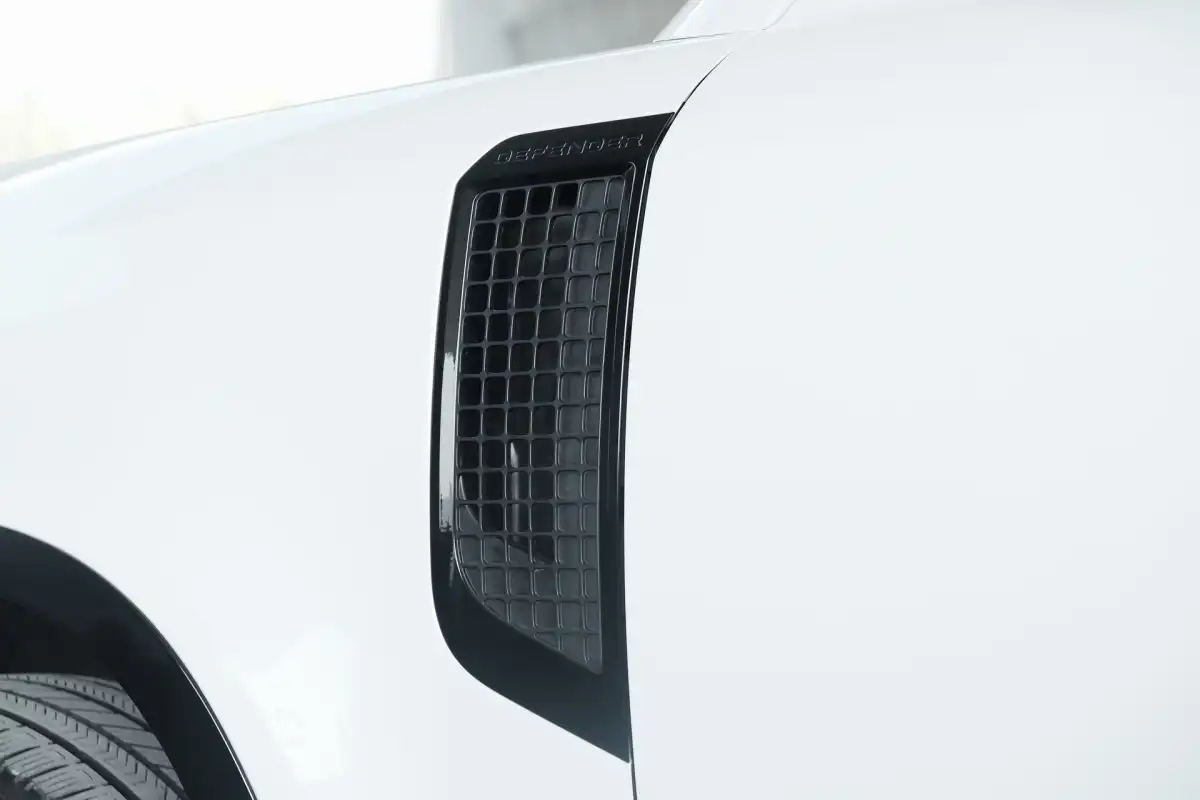
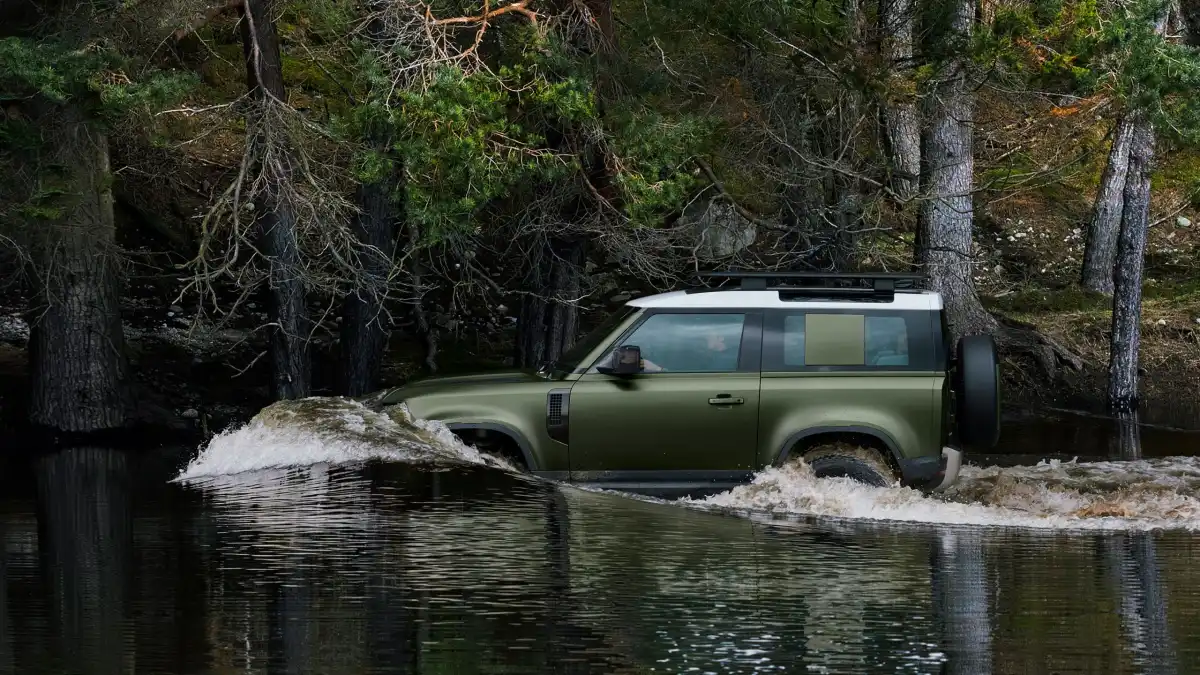 The air intake of the Land Rover Defender is located on the left side of the vehicle. When wading through water, the front of the vehicle pushes the water surface, which slightly raises the water level. As a result, the original maximum wading depth of 900mm may be reduced to approximately 850mm. Positioning the air intake on the side helps minimize this impact.
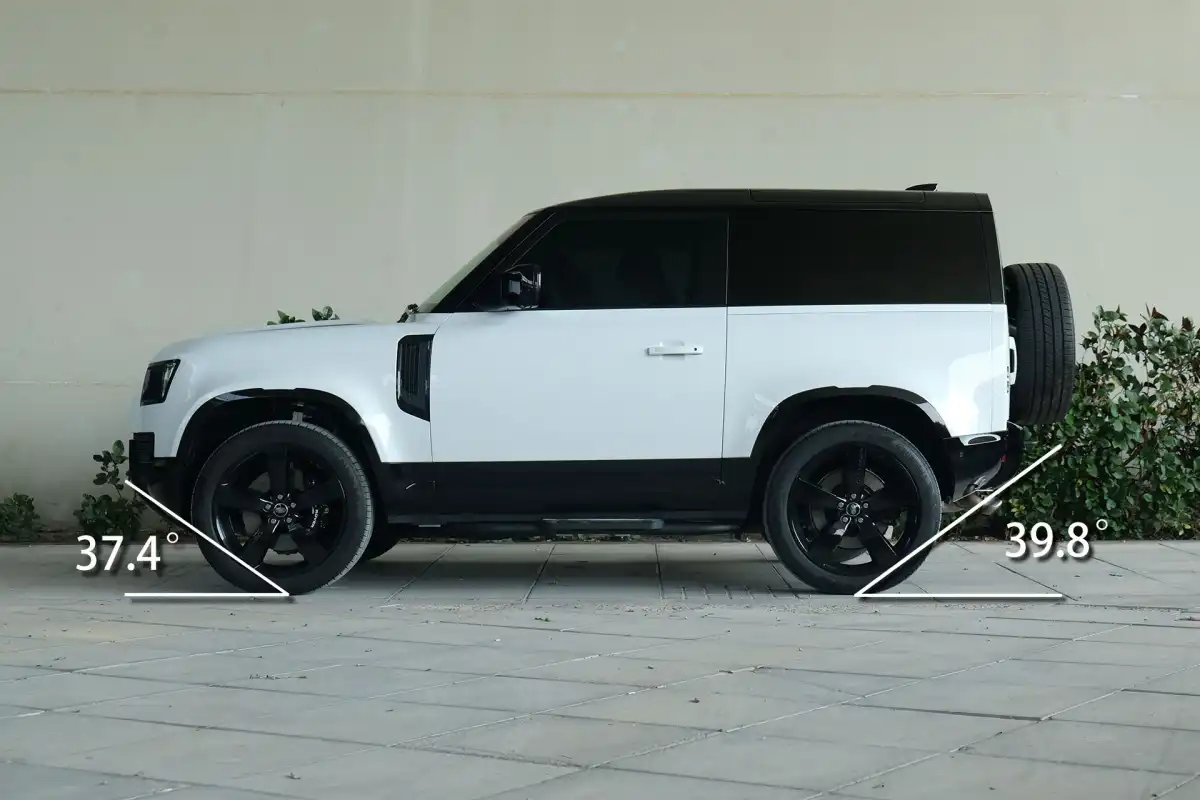
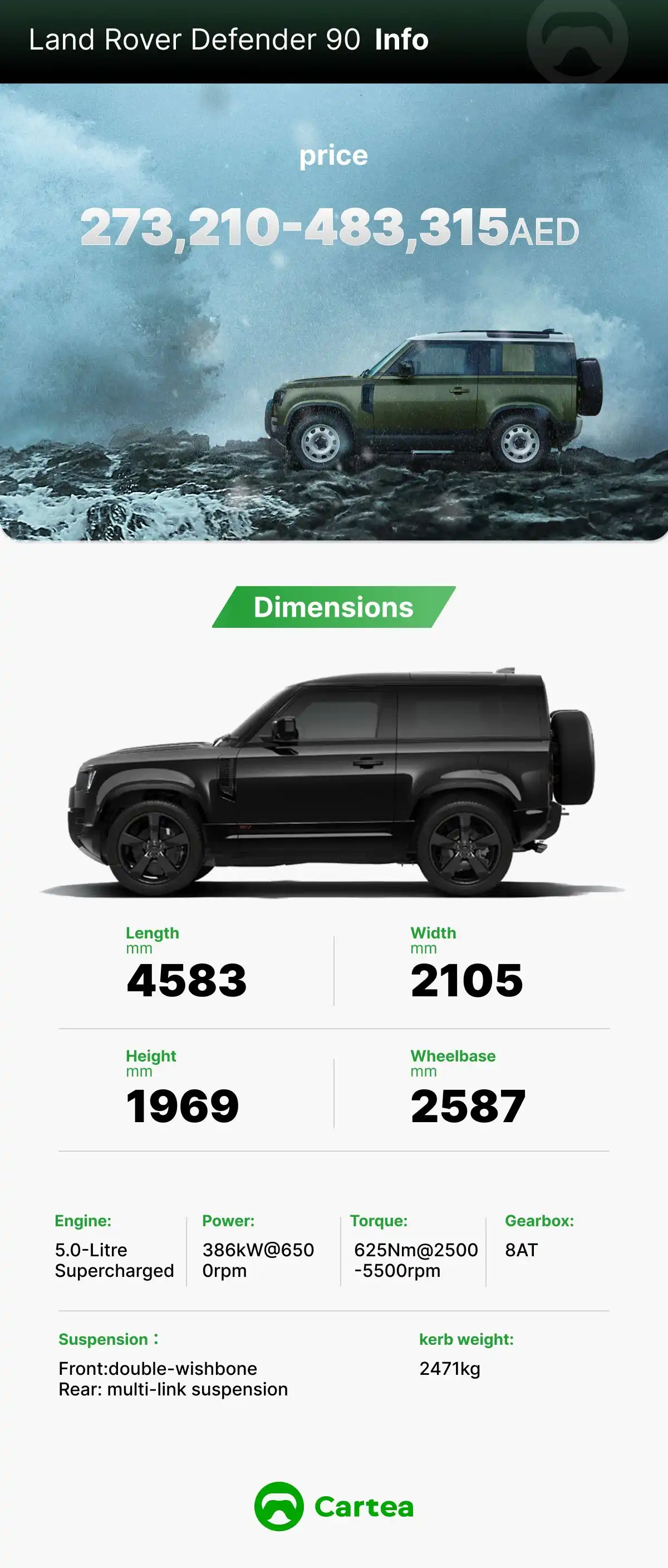
The Defender is available in three variants: 90, 110, and 130, each corresponding to different dimensions. The Defender 90 has a length, width, and height of 4583/2105/1969mm, with a wheelbase of 2587mm. Its approach angle is 37.4°, departure angle is 39.8° (in Off-Road mode), and breakover angle is 30.7° (in Off-Road mode), while the minimum ground clearance can reach 295mm.
Judging solely from the body data, the Defender 90 has the best off-road capability among all versions.
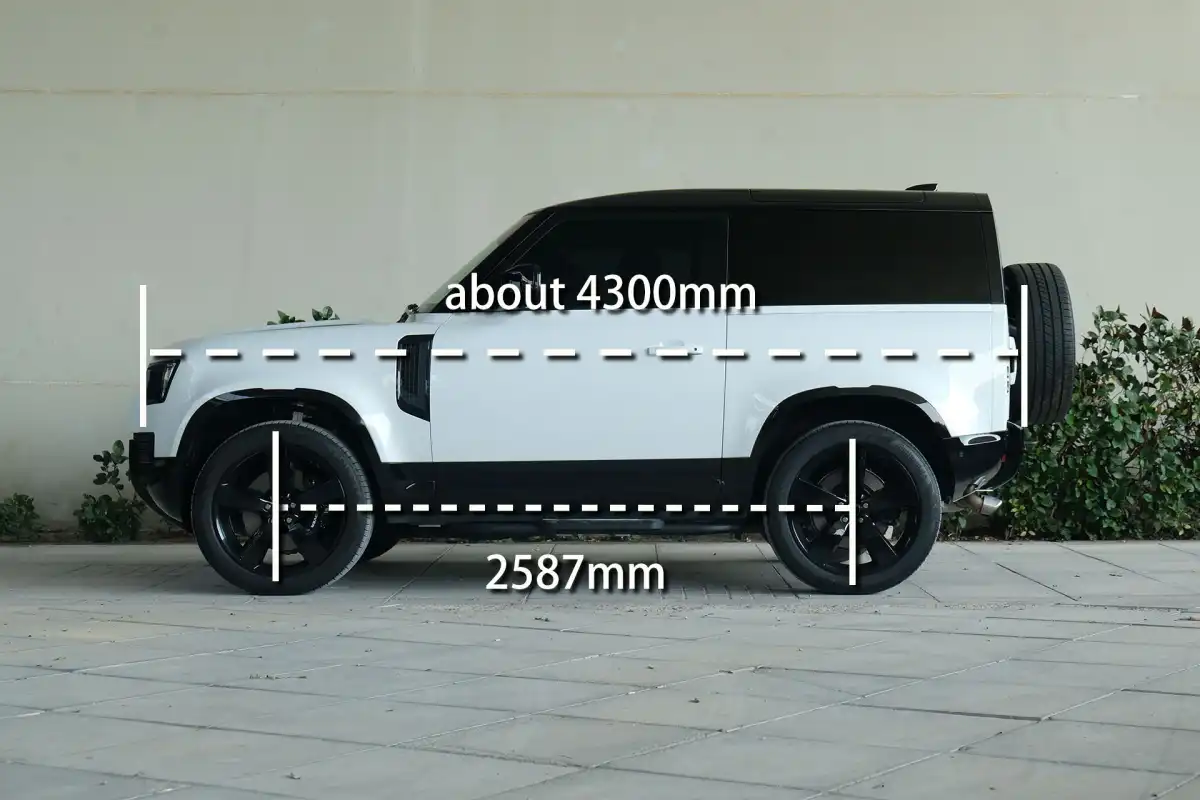 From the side view, you can see why the Defender 90 has such large approach and departure angles. If the spare tire is not included, the length of the Defender 90 is approximately 4.3 meters, and its wheelbase-to-length ratio reaches 0.6. For the Patrol we tested earlier, this ratio is 0.57. This means the Defender's wheels are closer to the front and rear bumpers of the vehicle, resulting in larger approach and departure angles. Moreover, the Defender 90 is the closest in design to the Series I—the ancestor of the Defender. Therefore, the Defender 90 is the inheritor of the Defender lineage.
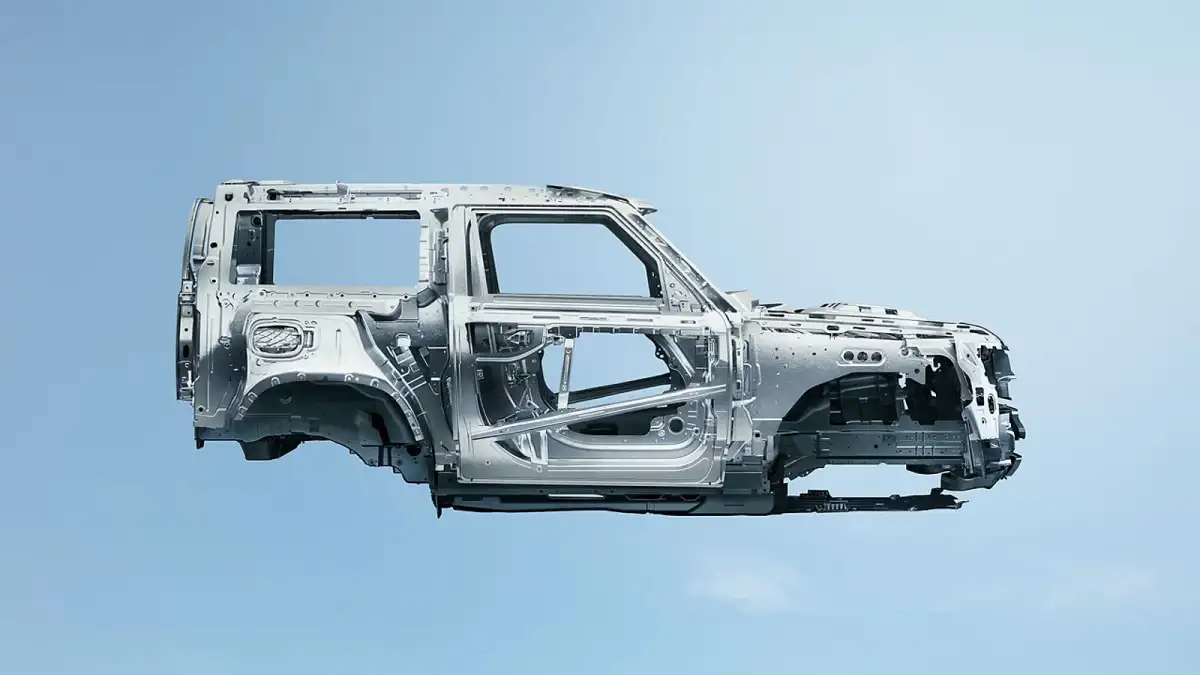 This generation of the Defender adopts a unibody construction—marking the first time the Defender has ever used a unibody design. When it was first introduced, this sparked discussions among the public regarding the off-road capability of this generation of Land Rover Defender. However, from today's perspective, as long as the body strength is sufficiently high, whether it is a unibody or body-on-frame construction matters little. The Land Rover D7x aluminum alloy body used in the Defender has a torsional rigidity of 30,000 N·m/degree. A body with high torsional rigidity can reduce body deformation during off-roading, making the vehicle feel less loose when driving and minimizing abnormal noises.
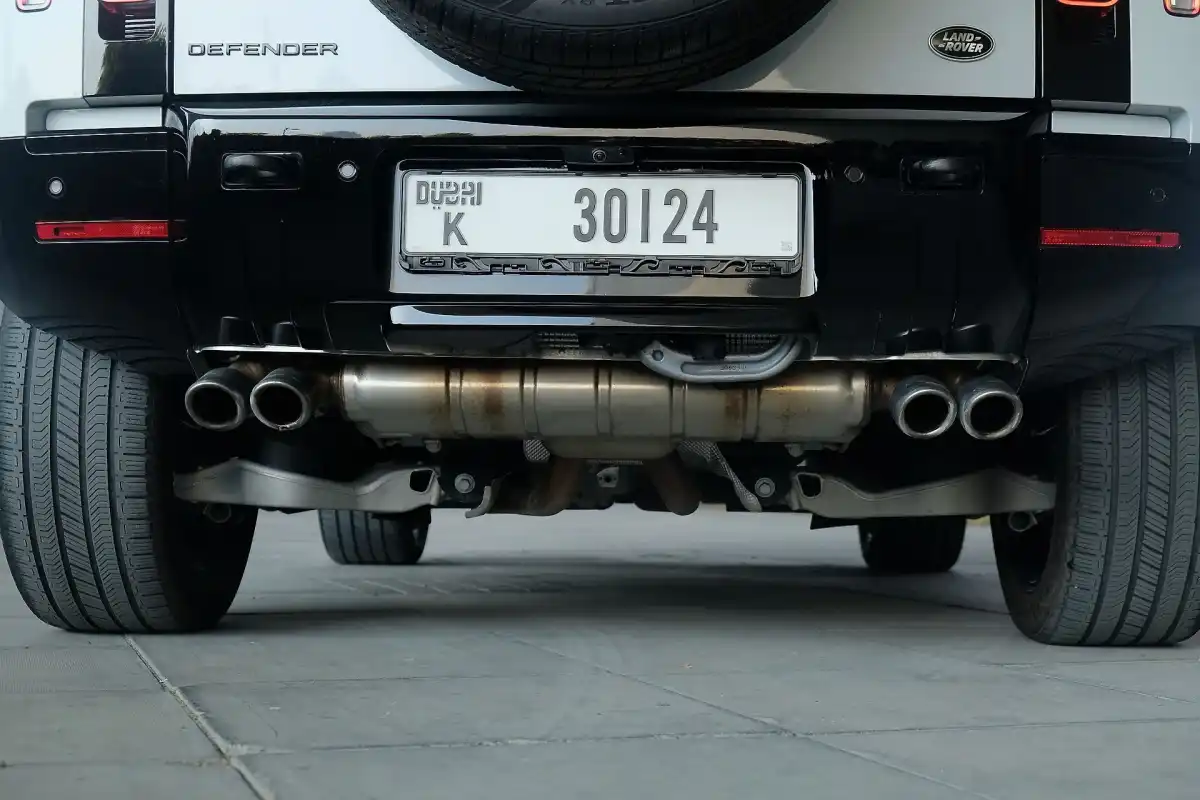 If you see this 4-exit exhaust at the rear, it means the vehicle is equipped with a V8 engine—either the 5.0T V8 or the OCTA.
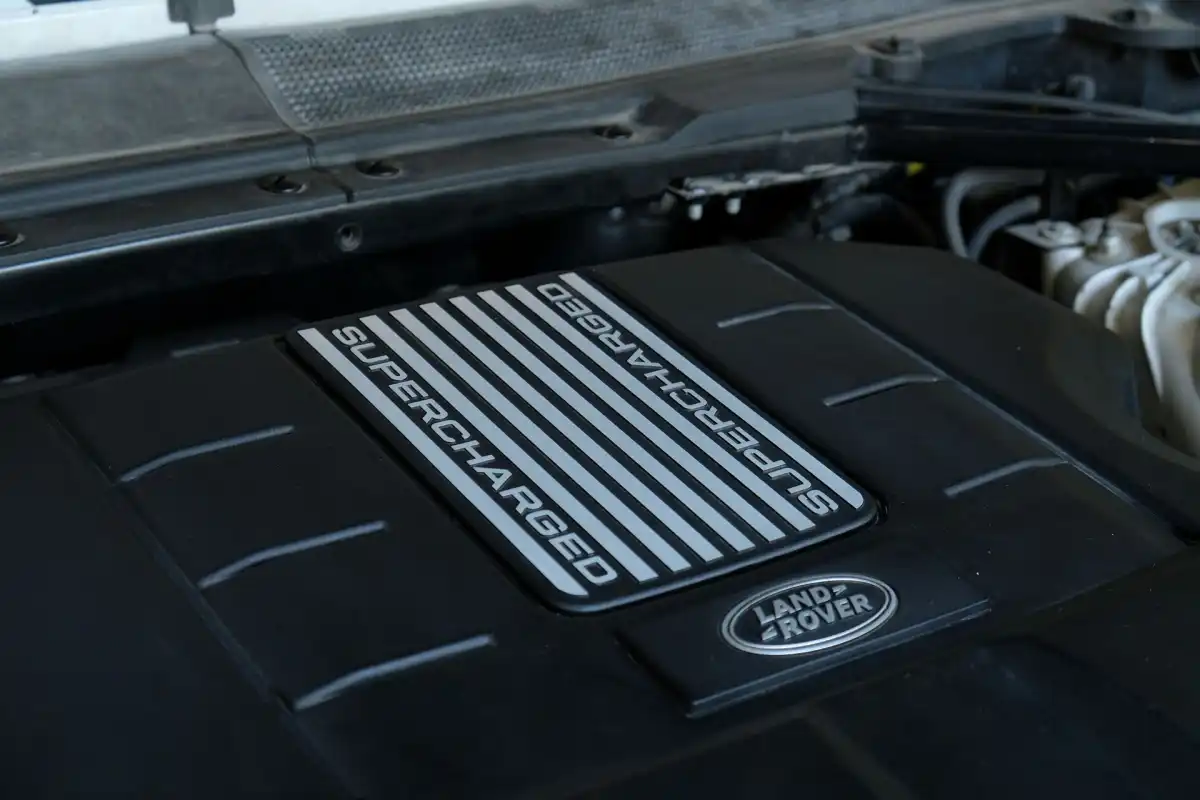 The 5.0T V8 engine equipped in this Land Rover Defender 90 is supercharged, which is a rare supercharged product still being updated on the market today. Its maximum power is 525 horsepower, which is actually 110 horsepower less than that of the 4.4T V8 engine equipped in the OCTA. Supercharging was once favored by some manufacturers for its reliability and linear power delivery. However, later turbocharging solved issues such as reliability and turbo lag; coupled with the advantage of a higher pressure limit, turbocharging has pushed supercharging into a niche category.
Land Rover Defender 90 Interior: Rugged and Bold Design
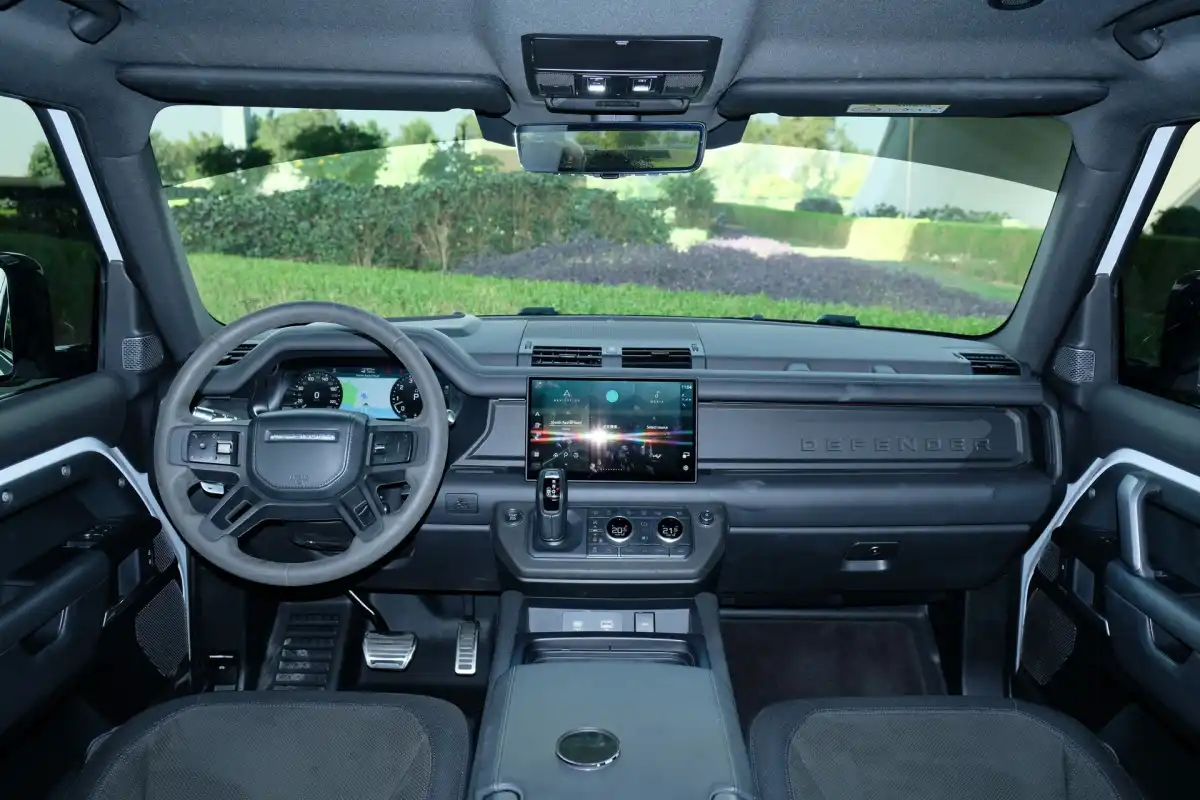 The Defender features an overall tough, rugged and practical design style, while also boasting a sense of technology. There is a large platform on the front passenger side, which can hold mobile phones and is equipped with a USB charging port.
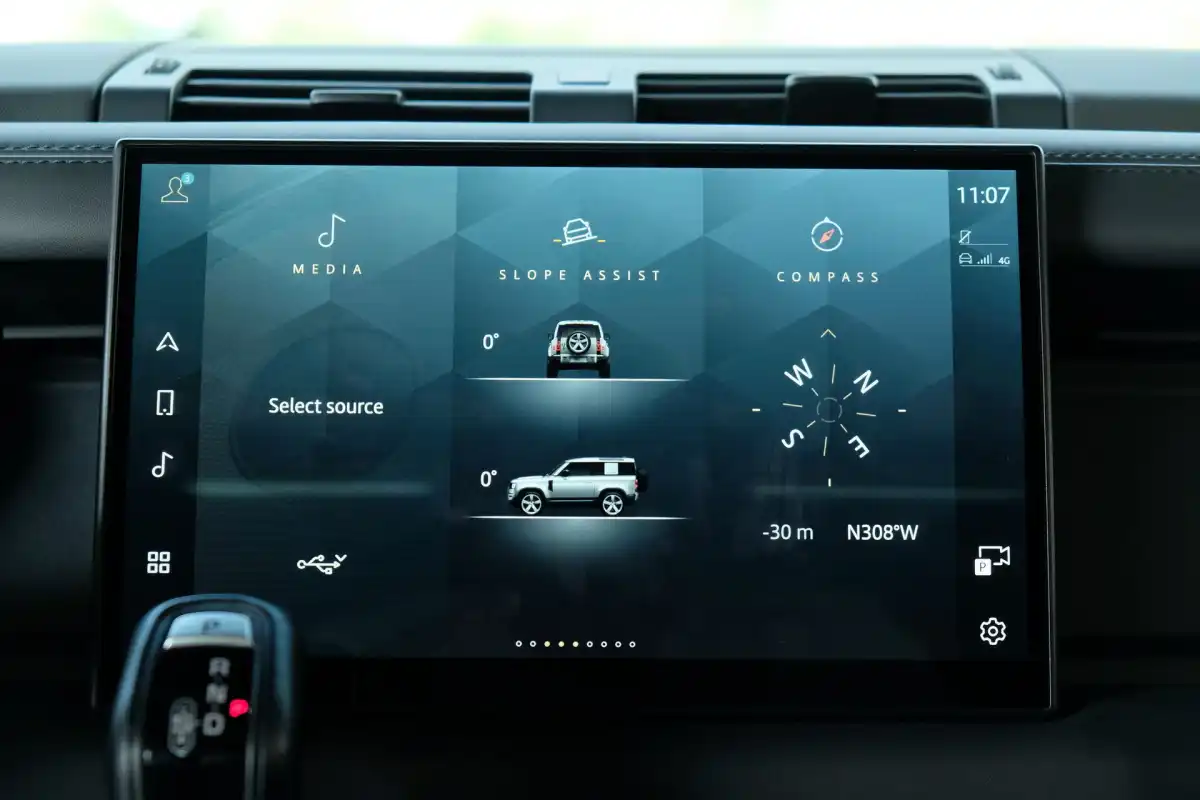 The central control screen is 11.4 inches in size and comes with CarPlay, wading sensing, and locking display functions. Each left or right swipe on the central control screen only moves one third of the screen. For consumers who are accustomed to using smartphones nowadays, the efficiency of this operation is relatively low.
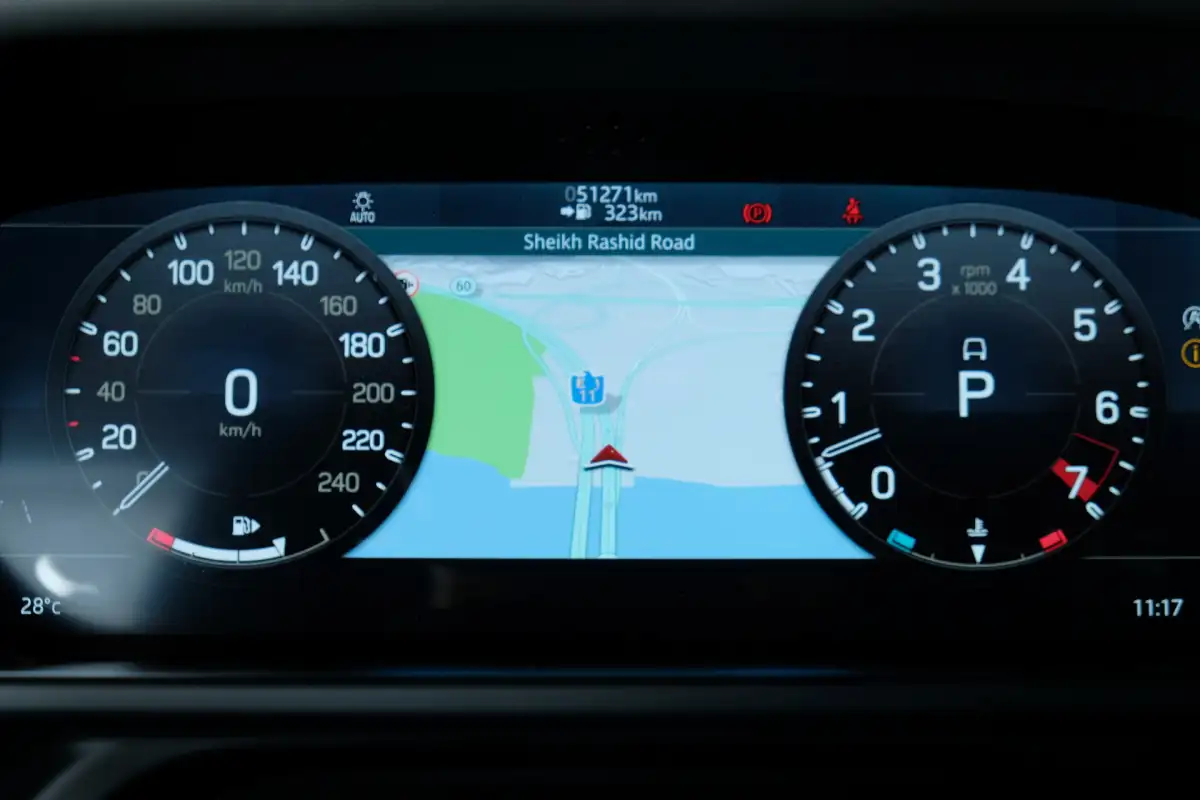 The navigation system is quite a pleasant surprise. First, its directions are very clear; second, even when not in navigation mode, it still alerts the driver to cameras ahead on the road.
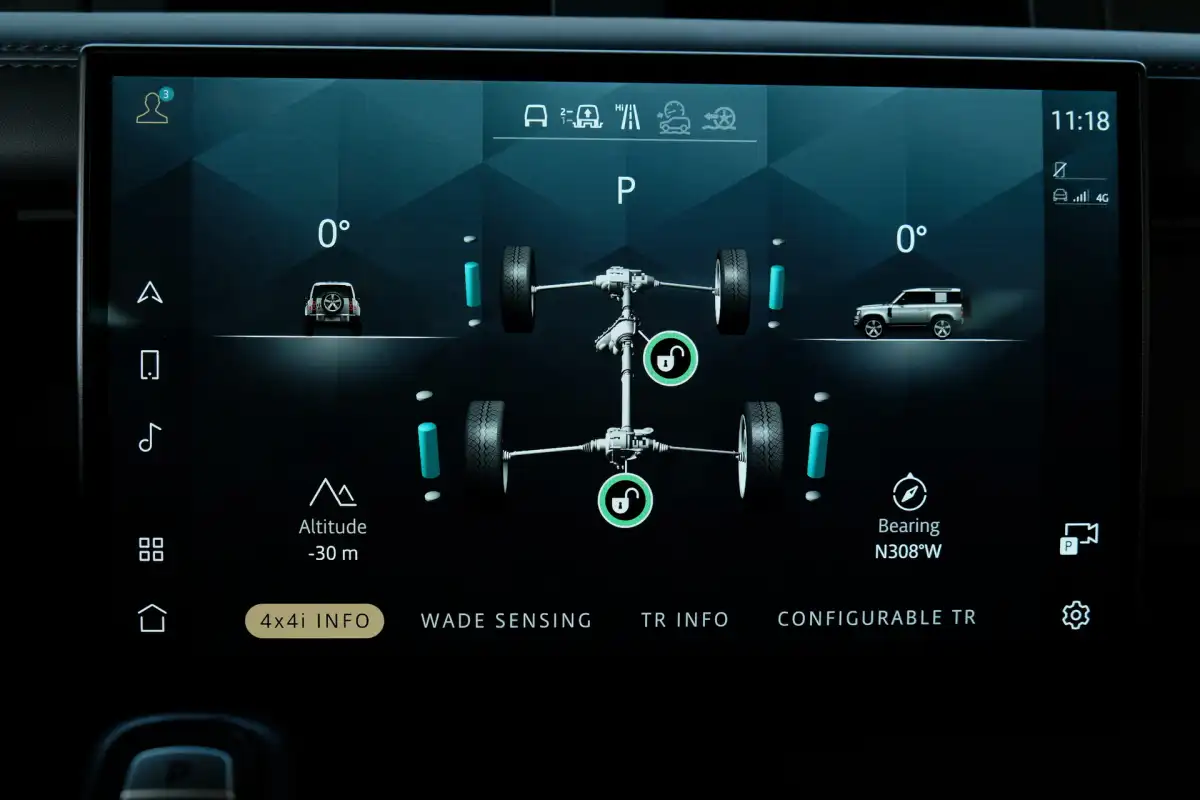
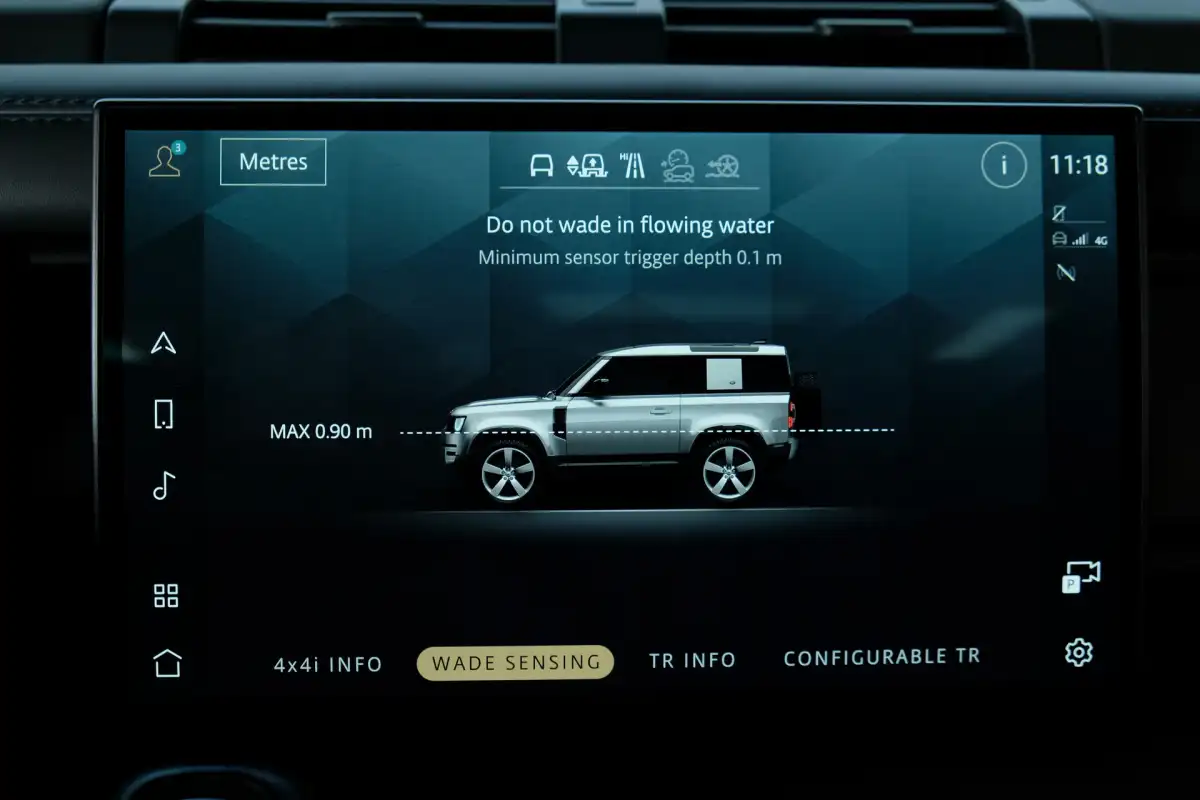 When you turn on the off-road display mode, you can view the status of the four-wheel drive lock, angles, wading, and air suspension. On the central control screen, you can check the approach angle, departure angle, and wading depth in both the lowest and highest suspension states, which gives you more confidence when off-roading.
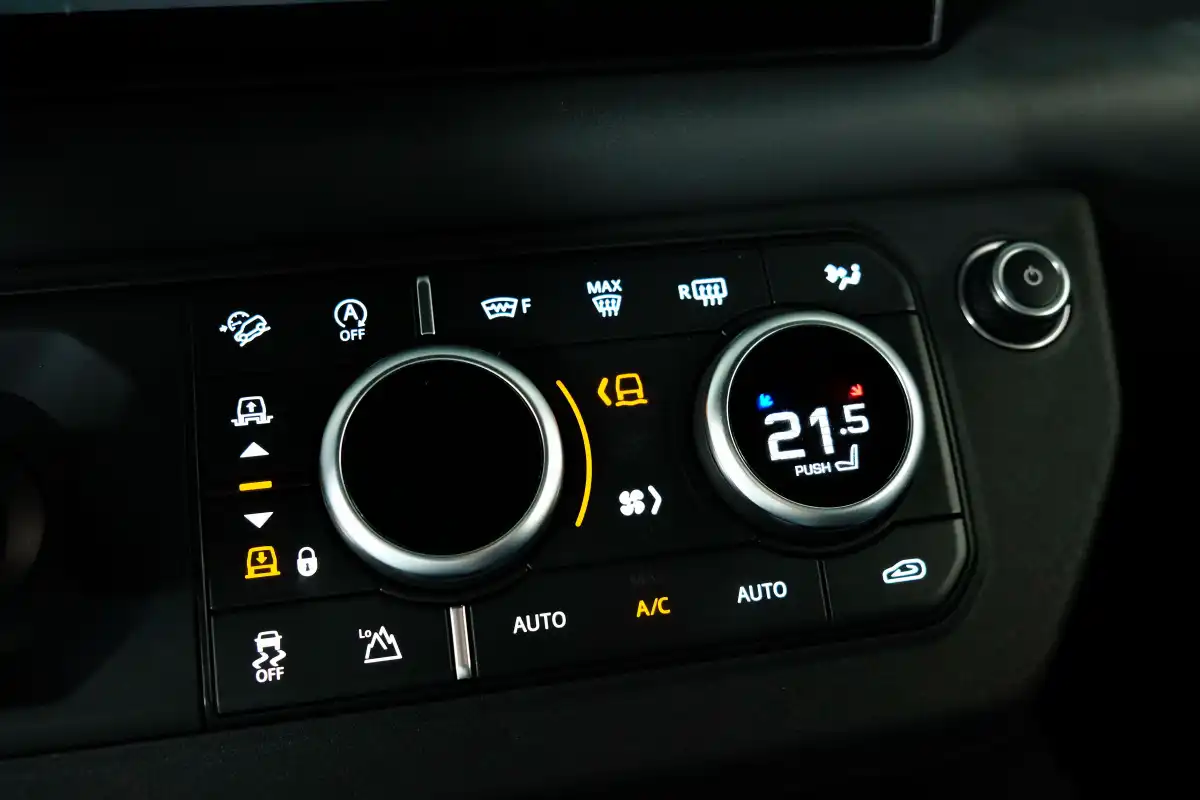 It’s unclear if the designers forgot to add a couple more knobs due to the excessive number of functions. To adjust the air conditioning fan speed or select the driving mode, you first need to press their respective buttons, then turn the knobs to make adjustments.
Daily Driving: A Faultless Powertrain
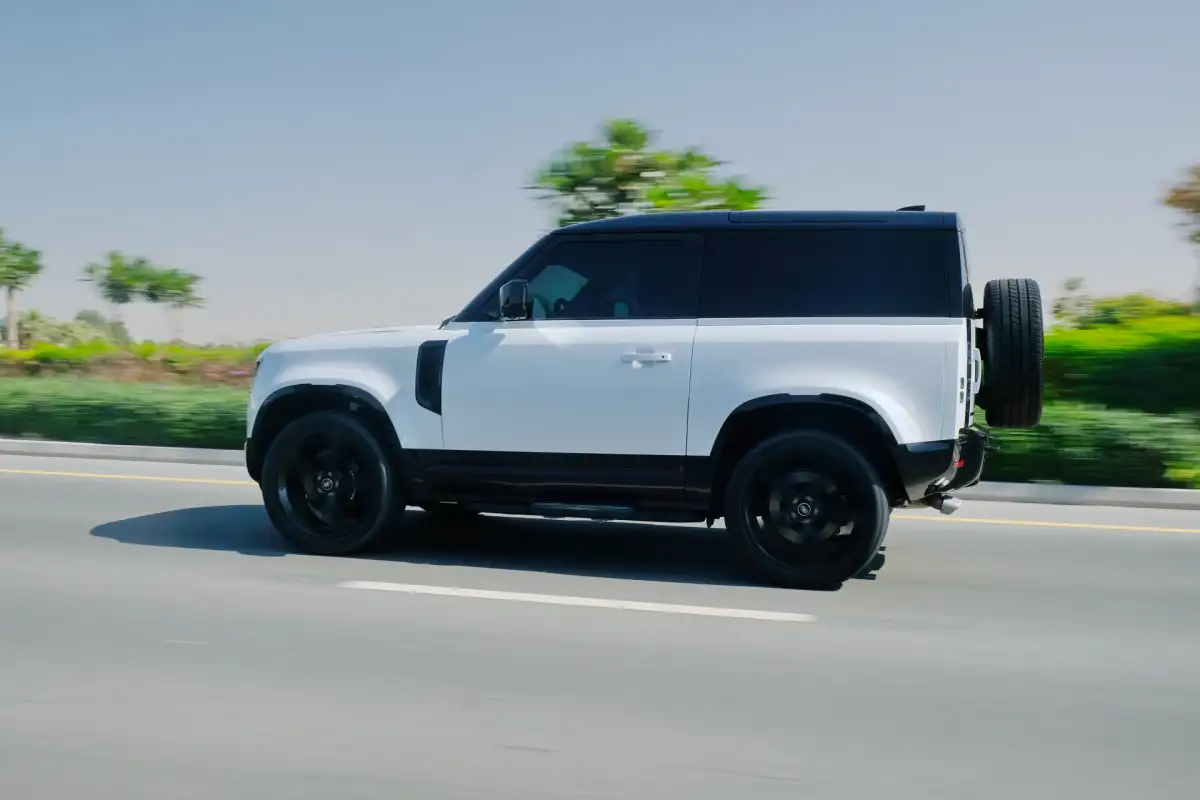 The moment you drive the Defender 90, you’ll understand the appeal of a large-displacement supercharged engine. Its power delivery is extremely linear, and the engine pairs exceptionally well with the transmission. A light tap on the accelerator results in a very smooth power output; you might need to press the accelerator to about a third of its travel before the Defender 90 downshifts. If you floor the accelerator at 100 km/h, it can downshift by four gears in a row. In short, it truly delivers power proportionally to how hard you press the accelerator—just like an electric vehicle.
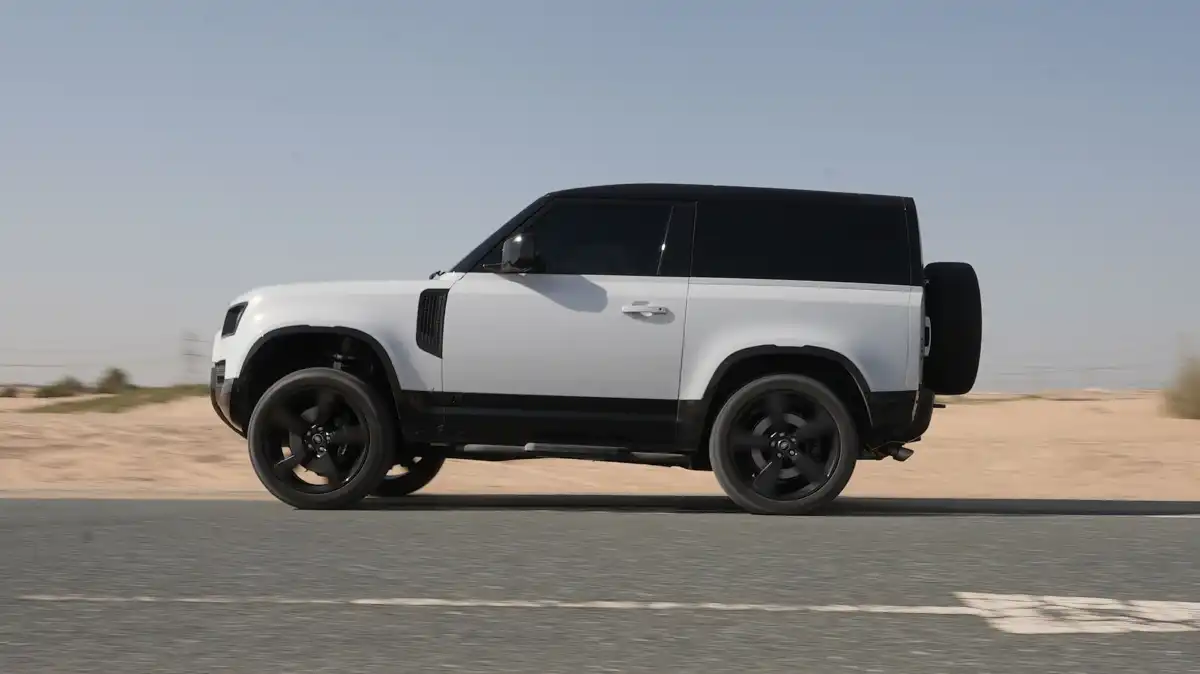 The chassis of the Defender 90 fully lives up to my stereotype of an off-road vehicle—driving it feels like floating on clouds. When going over small potholes, the Defender 90 is comfortable, but there is excessive body sway. Combined with its relatively high seating position, this feeling is amplified. Additionally, the nose dive and lift during full acceleration and hard braking are quite noticeable.
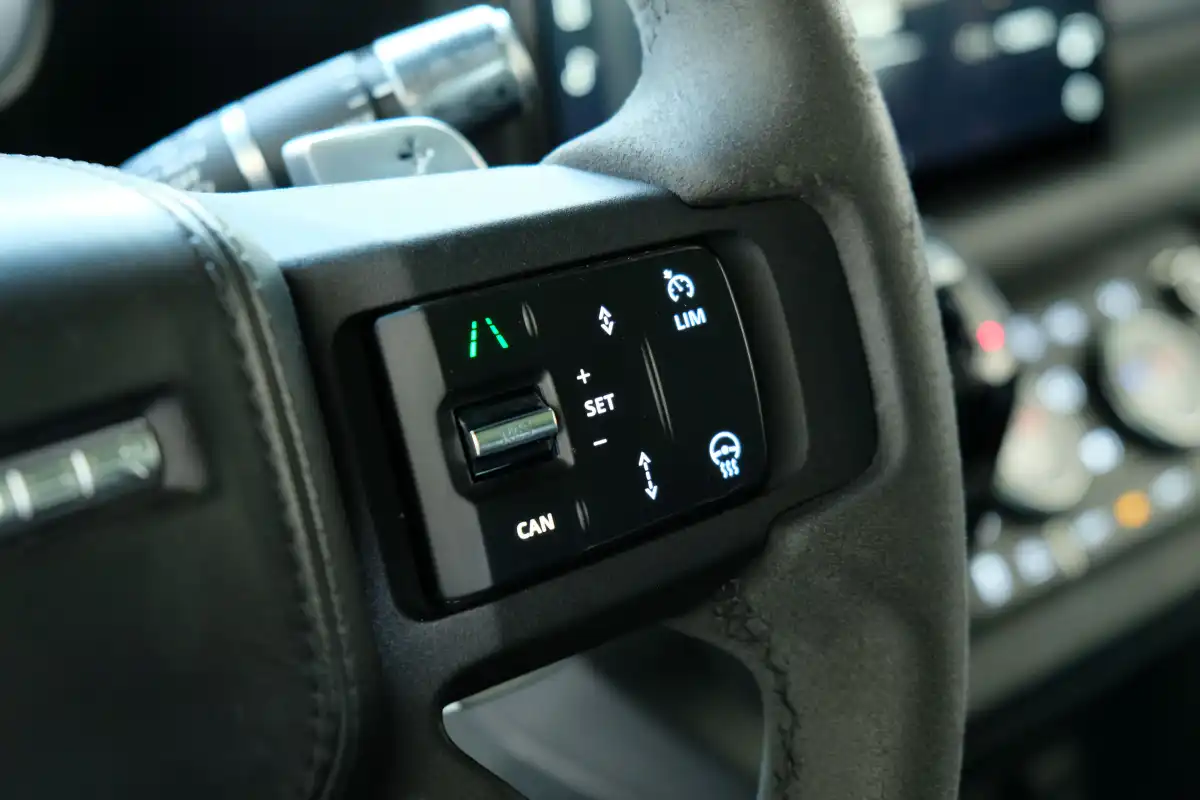 The Defender 90 comes equipped with Lane Keep Assist and Adaptive Cruise Control. Its Lane Keep Assist system only helps correct the steering wheel after the vehicle crosses the lane line, rather than keeping it centered. Additionally, the activation timing is relatively late—it only makes automatic corrections when the vehicle is about to cross into another lane. Sometimes, it also fails to make corrections when the curve radius is large. It is advisable not to overly rely on this function.
Land Rover Defender 90 acceleration test : 7pts / 5.14s
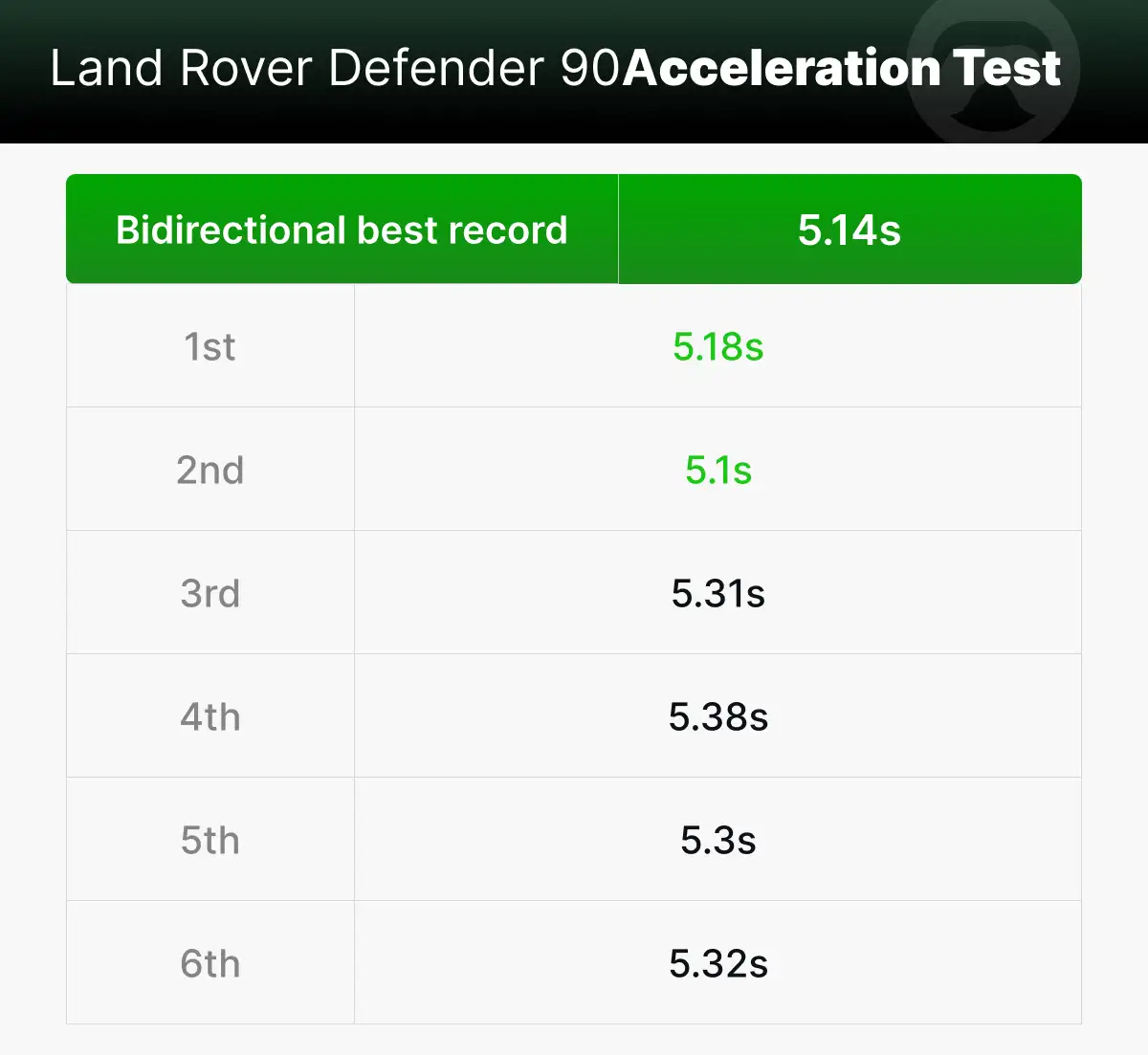 After our tests, the Defender 90 achieved a fastest 0-100km/h acceleration time of 5.14 seconds (in both directions). It received a 7/10 score for power performance. This 5.0T supercharged engine is truly extremely powerful, and there are no flaws to pick out during daily driving—no wonder Land Rover still uses this engine.
Land Rover Defender 90 braking test : 6pts / 38.93m
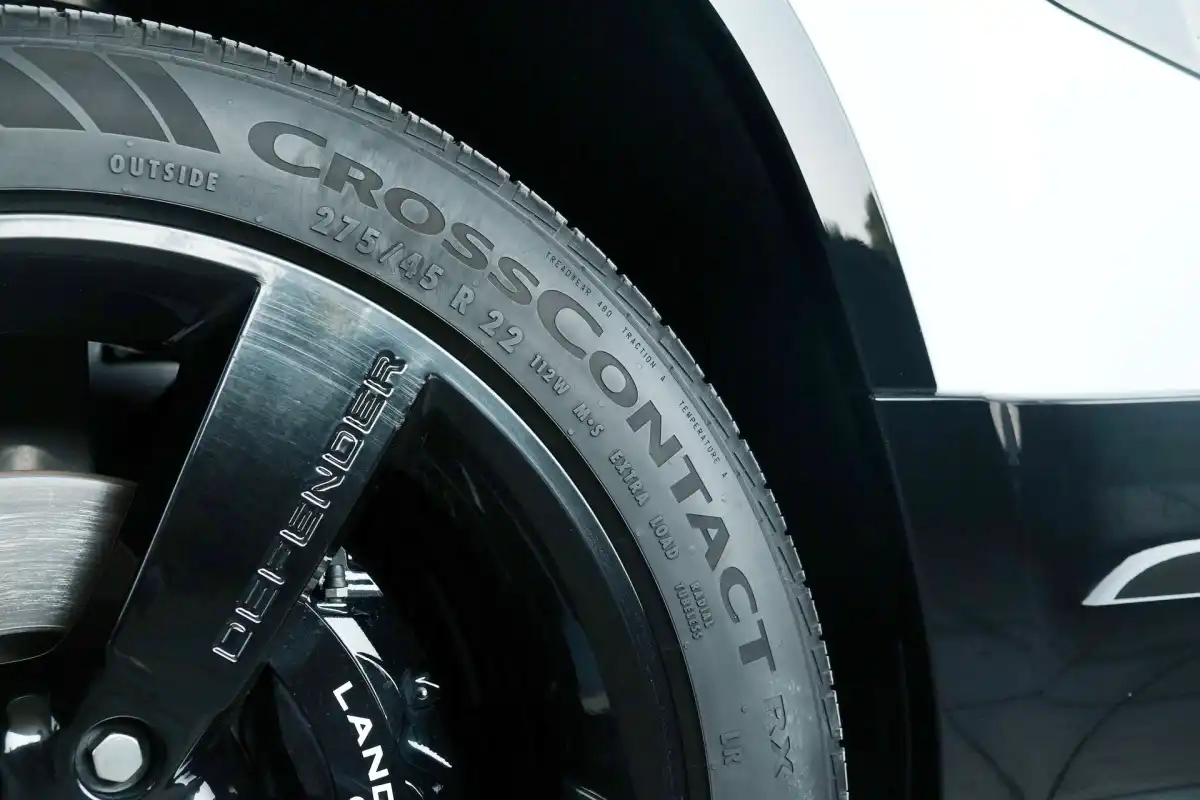 The Defender 90 is equipped with Continental CrossContact tires in size 275/45 R22. Judging from the tire selection, Land Rover clearly intends this model to be used more in urban areas and less for off-roading.
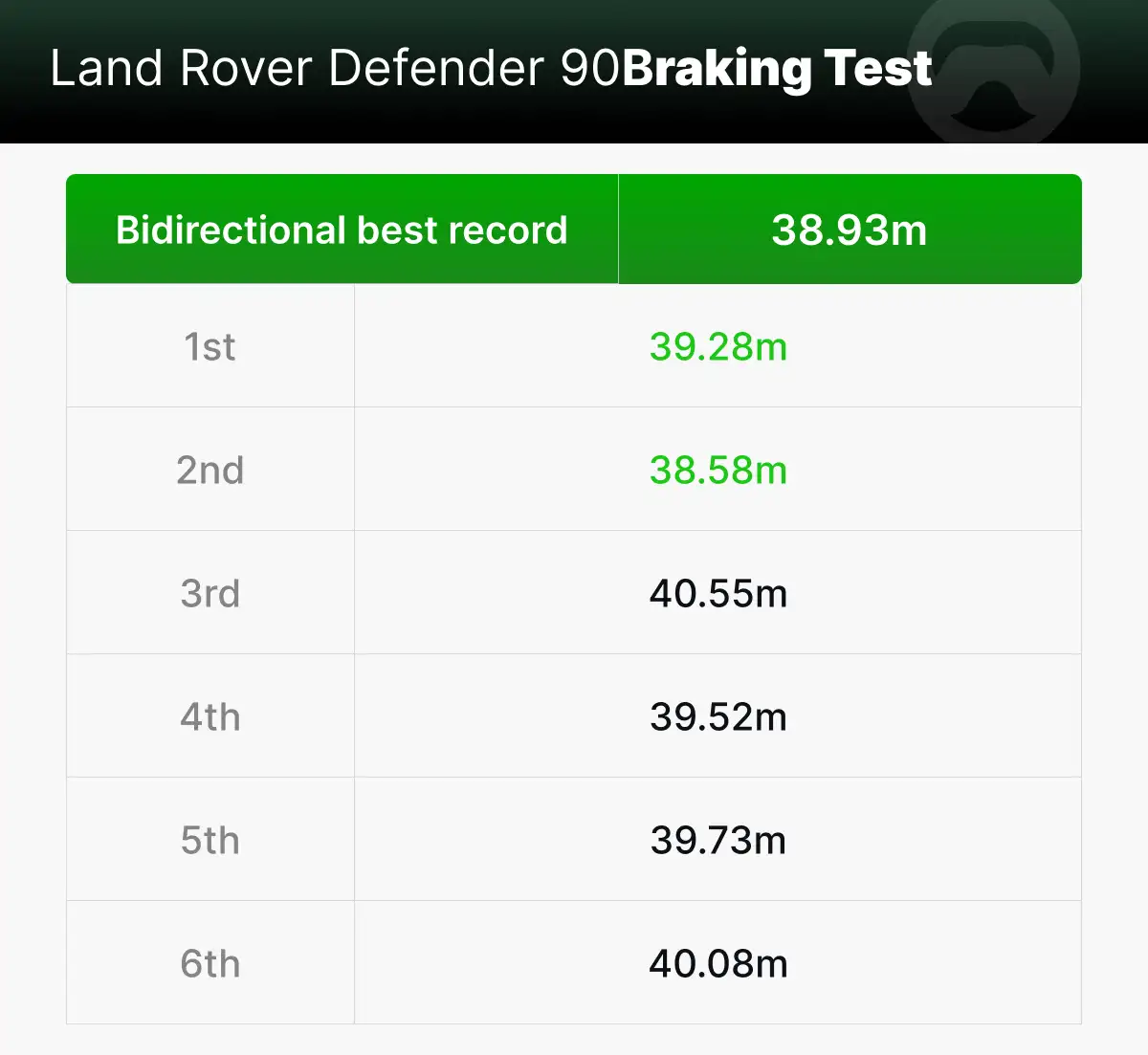 The two-way shortest braking distance of the Defender 90 is 38.93 meters. In terms of braking performance, the Defender 90 scores 6 points.
Land Rover Defender 90 NVH Test : 3pts
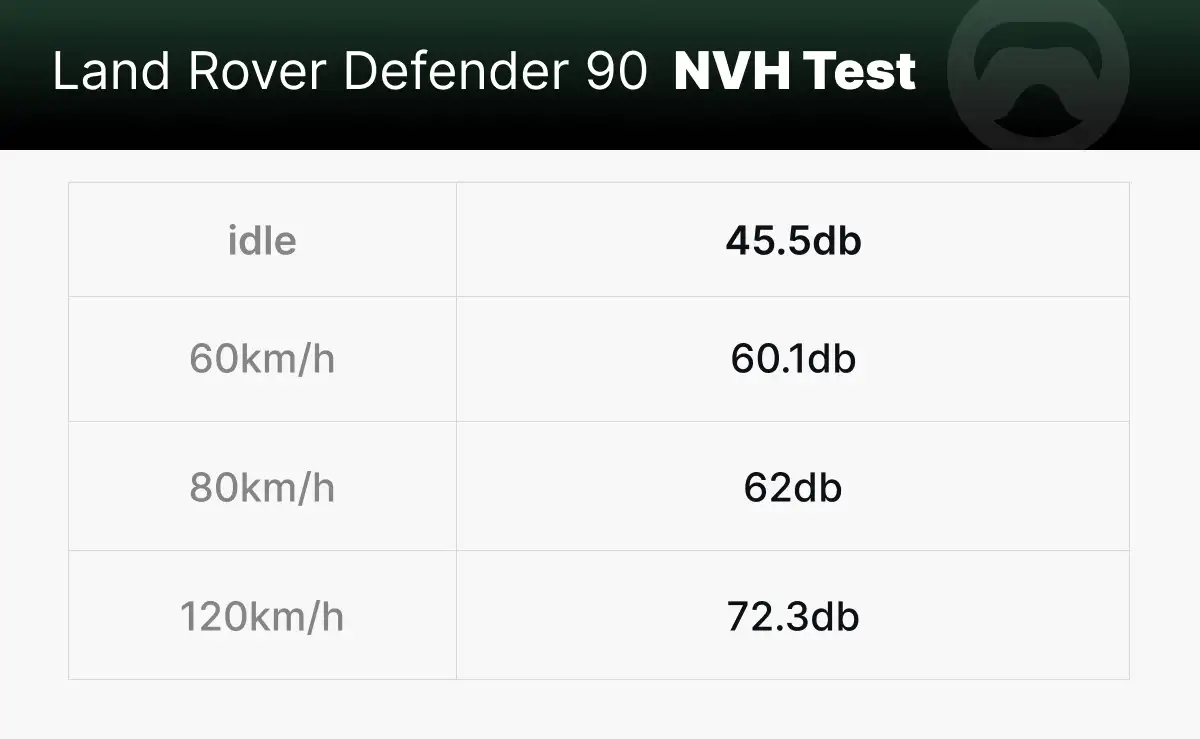 According to our actual tests, the noise level of the Defender 90 is 45.5 dB at idle, 60.1 dB at 60 km/h, 62 dB at 80 km/h, and 72.3 dB at 120 km/h. In this test category, the Defender 90 scores 3 points. The Defender 90 is not particularly quiet: at medium and low speeds, the engine noise is relatively noticeable, while at high speeds, wind noise becomes more prominent.
Land Rover Defender 90 Space test: 6.5pts Better Than Expected
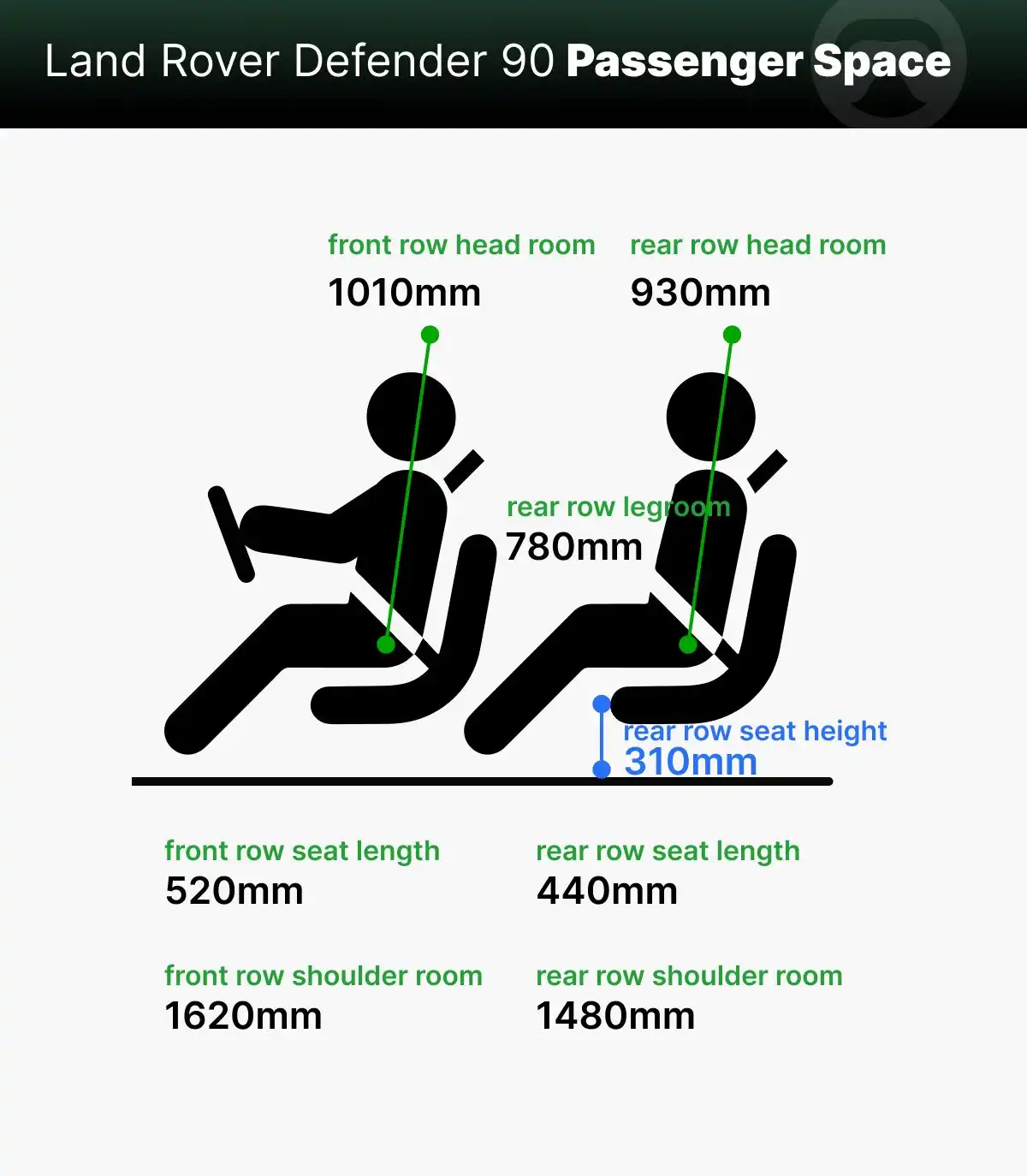 The Defender 90 is a 2-door, 5-seat model with a length of only 4.5 meters, leading us to assume its passenger space would be relatively small. According to our measurements, the front row offers a vertical space of 1010mm and a width of 1620mm, with the front seat cushion length being 520mm. The Defender 90’s front row is extremely spacious both in terms of headroom and lateral space—this is attributed to its body dimensions of 2 meters in width and 1.9 meters in height.
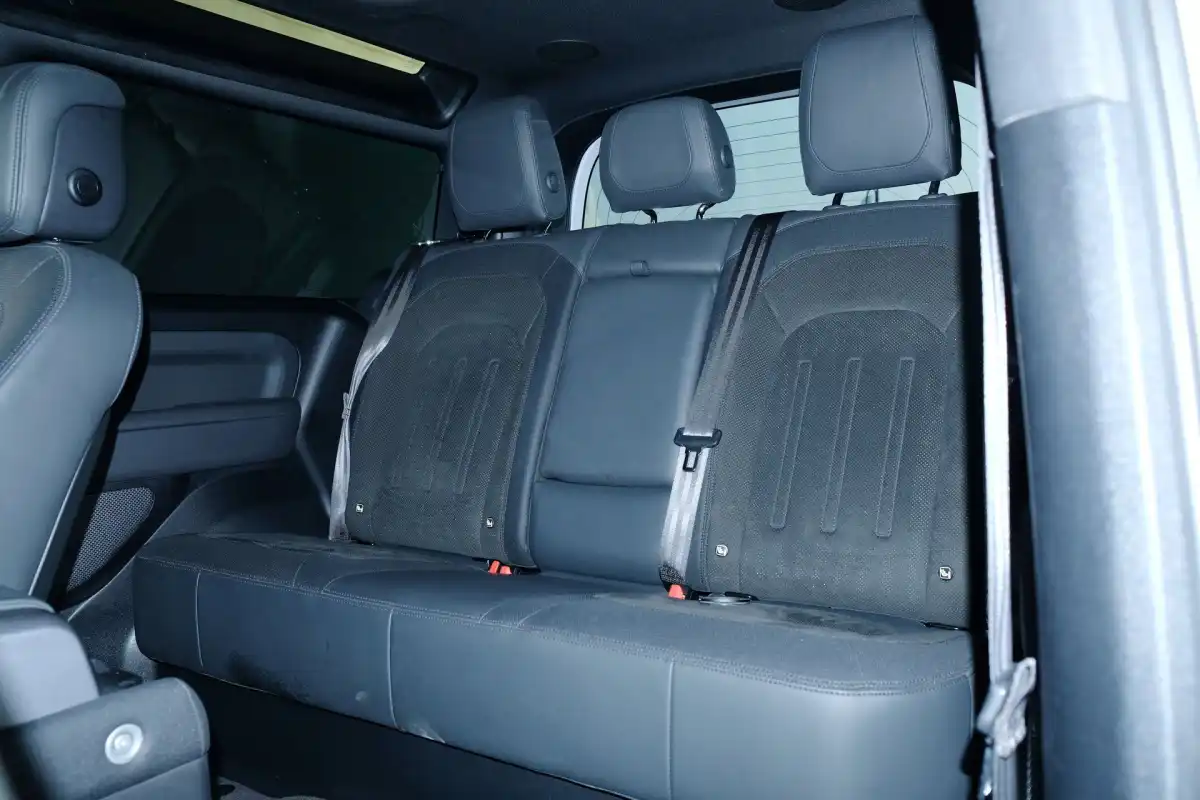 The vertical space of the second row reaches 930mm, with a width of 1480mm and a standard legroom of 780mm. The rear seat cushion is relatively short at 440mm, providing insufficient support for adults' thighs. The rear space of the Defender 90 is relatively inferior: in addition to the short rear seat cushions, the hip point of the second row is higher than that of the first row, which reduces the rear headroom. Only the legroom is decent—it is not as small as expected.
According to the passenger test standards of cartea, the Defender 90 scores 6.5 in passenger space. For a vehicle of its size, this score is quite good.
Land Rover Defender 90 trunk Space Test : 7 pts. Conventional capacity: 468L / Maximum capacity: 2349L.
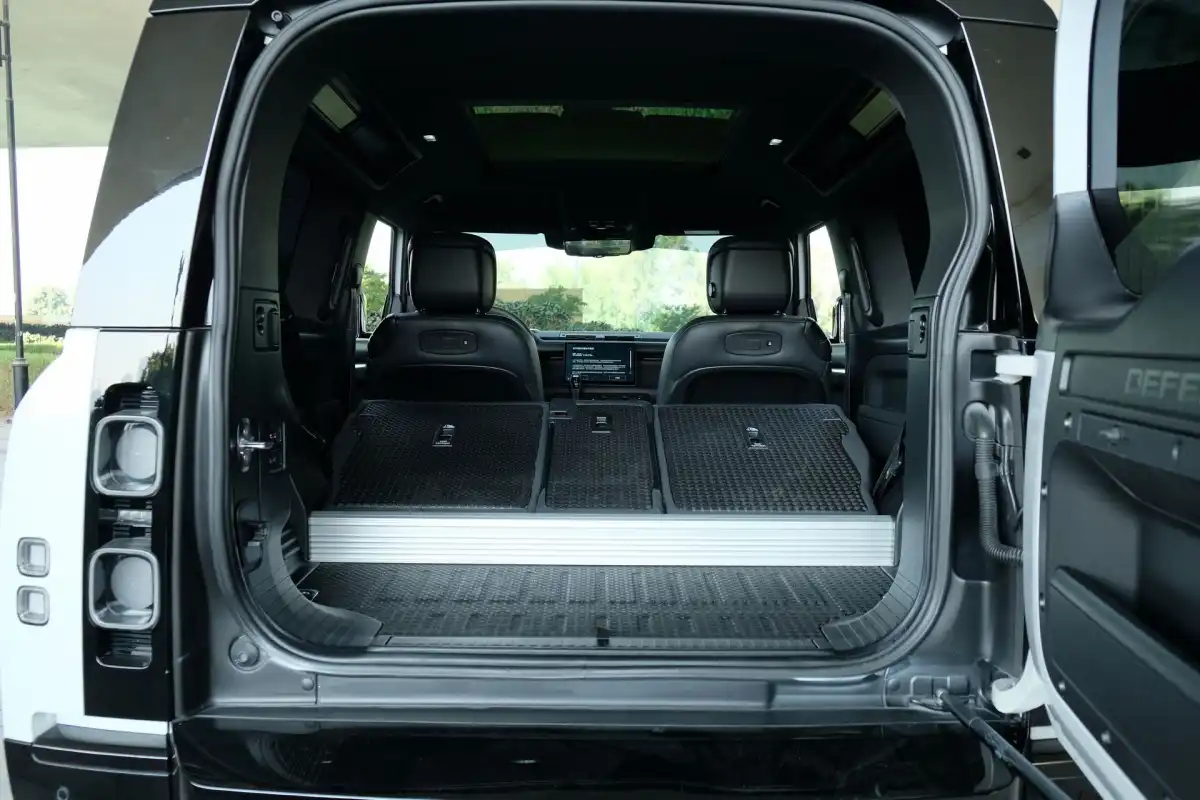 The trunk of the Defender features a plastic surface, which allows for easy cleaning with water directly after off-roading.
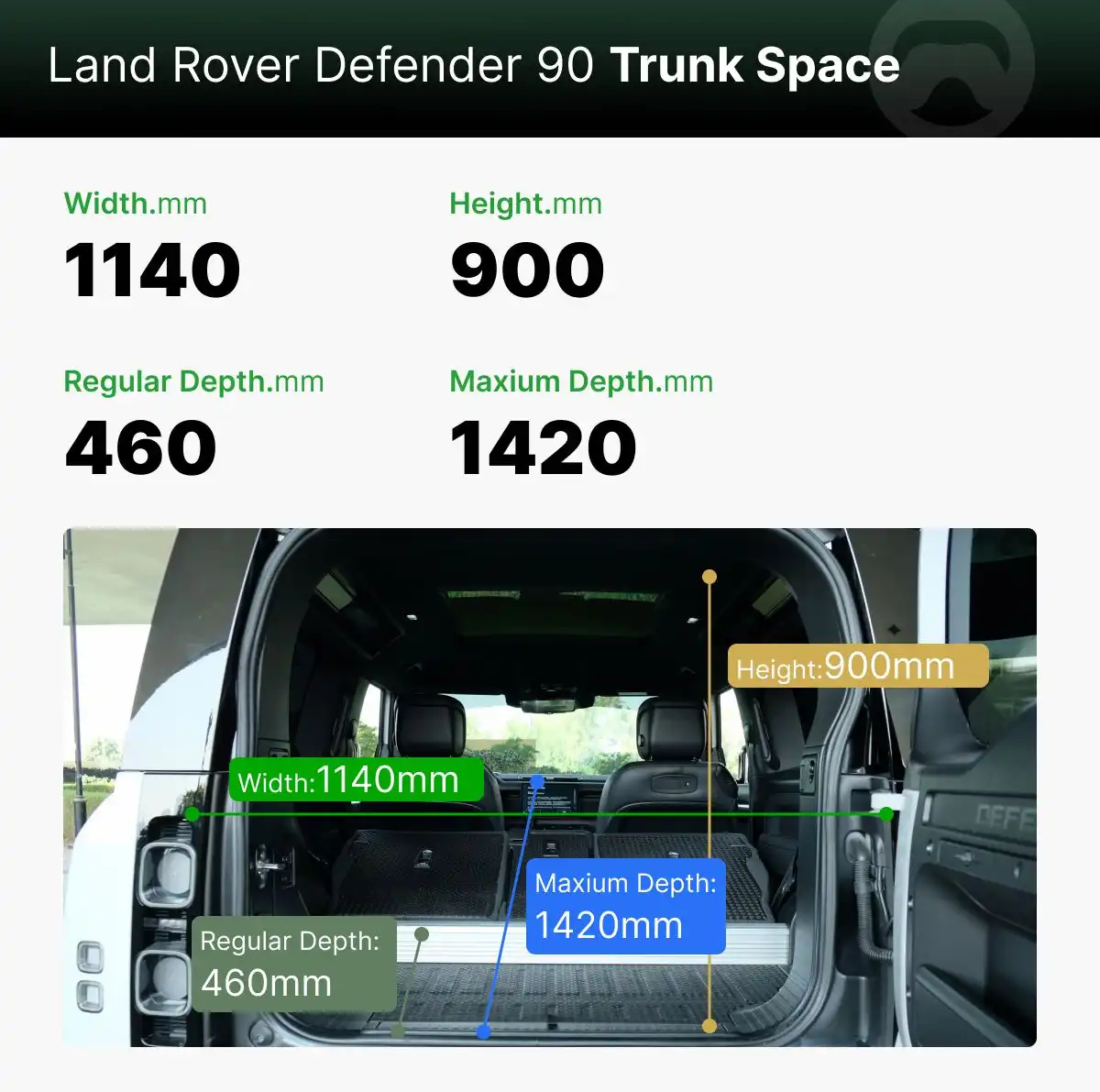 The Defender 90's trunk has a height of 900mm, a width of 1140mm, a depth of 460mm, and a volume of 472 liters in its normal state. Due to the relatively small depth in the regular configuration, the trunk space is quite limited, but this design allows for a decent amount of legroom for rear-seat passengers.
When both the second and third rows of seats are folded down, the depth of the Defender 90's trunk expands to 1460mm, and the volume reaches 1457 liters.
In the trunk evaluation category, the Defender 90 scores 5.5 points.
Land Rover Defender 90 A/C cooling test : 14.1°C Temperature Drop in 15 Minutes
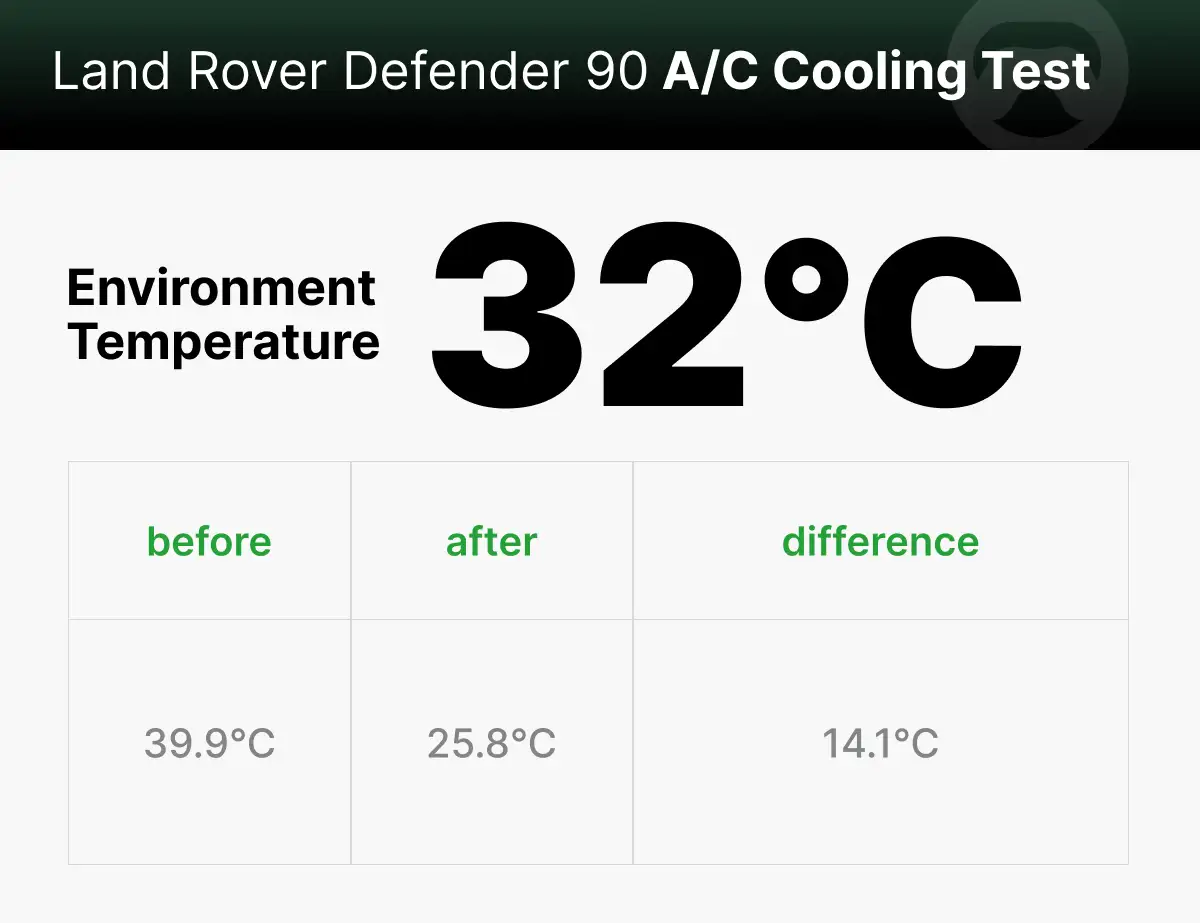 Next, we tested the air conditioning cooling performance of the Defender 90. The outdoor temperature was 30°C, and after being exposed to the sun for more than 30 minutes, the internal temperature of the vehicle reached 39.9°C. Fifteen minutes after turning on the air conditioning, the temperature dropped to 25.8°C, with a cooling range of 14.1°C.
Land Rover Defender 90 Overall scores : 5.6pts
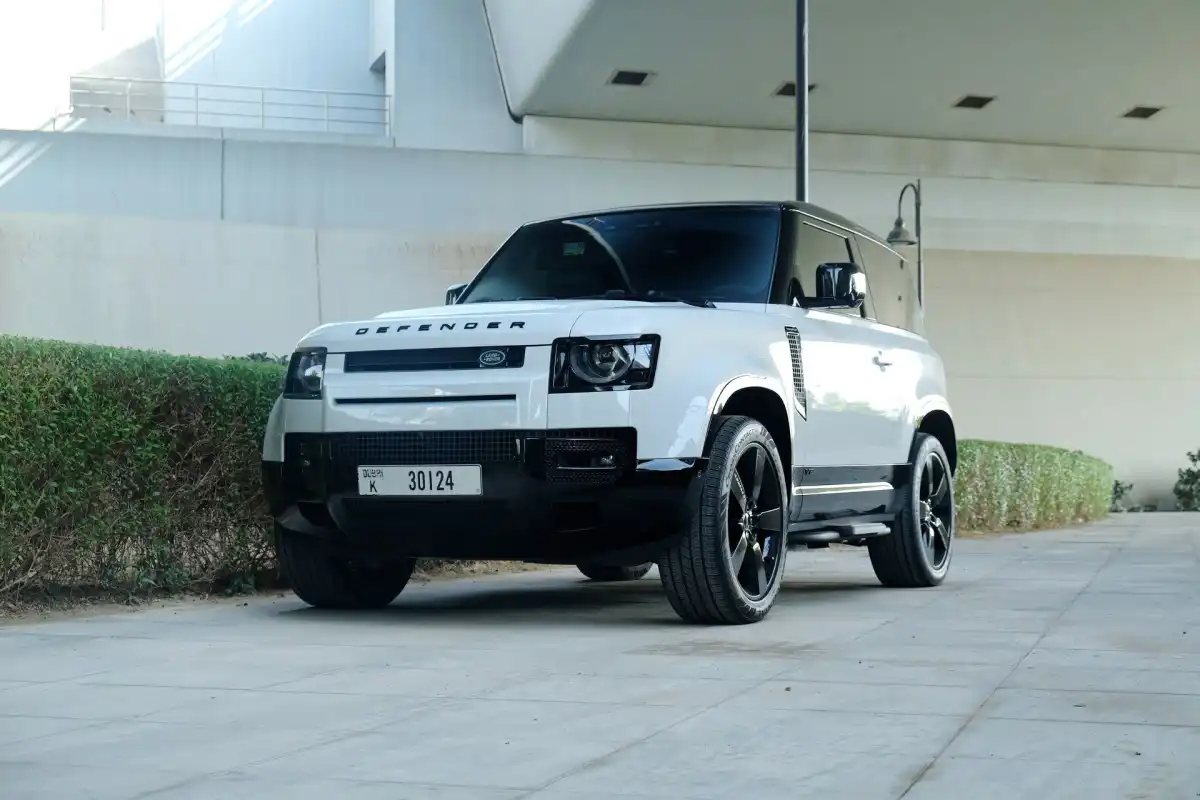 According to our actual tests, the Land Rover Defender 90 scores 5.6 points. The sound insulation of the Land Rover Defender 90 is a significant letdown, which is somewhat disappointing given its price tag of nearly 500,000 AED. Its performance in other aspects is relatively good, especially the passenger space, which is quite a pleasant surprise.
The Land Rover Defender 90 is inherently an off-road-focused SUV, delivering the most impressive off-road-oriented dimensional specifications in the entire Defender range. It truly excels as a weekend off-roading companion — perfect for gathering friends for desert adventures and casual competitions. When it comes to family use, however, the Defender 90’s interior space falls short of practicality. This is underscored by the prevalence of the Defender 110 on the roads, a clear indication that consumers lean toward this variant. After all, the Defender 110 offers superior space and broader versatility to suit diverse usage scenarios.
2 / 100