

- From Car Passion to Road Tragedy
- What Is Illegal Drifting? And Why Is It Different From Motorsports?
- Why Does Illegal Drifting Persist Despite the Risks?
- When the Law Intervenes: Penalties as a Line of Defense
- Why Such Strict Measures?
- True Car Culture: Where Did Things Go Wrong?
- Are Penalties Alone Enough?
- Who Bears Responsibility?
- The Road Is Not a Testing Ground
From Car Passion to Road Tragedy
In every society, there are moments when passion becomes entangled with risk, and a hobby turns into a social burden. In the automotive world, illegal drifting on public roads stands as one of the clearest examples of this transformation. What begins for some as a search for adrenaline or public attention often ends in fatal accidents, human loss, and families paying the price for a single reckless moment.
The label given to this phenomenon — “a hobby that takes lives” — is not an exaggeration, but a realistic conclusion drawn from repeated behavior that has proven to be among the most dangerous threats to public safety on streets and open roads.
What Is Illegal Drifting? And Why Is It Different From Motorsports?
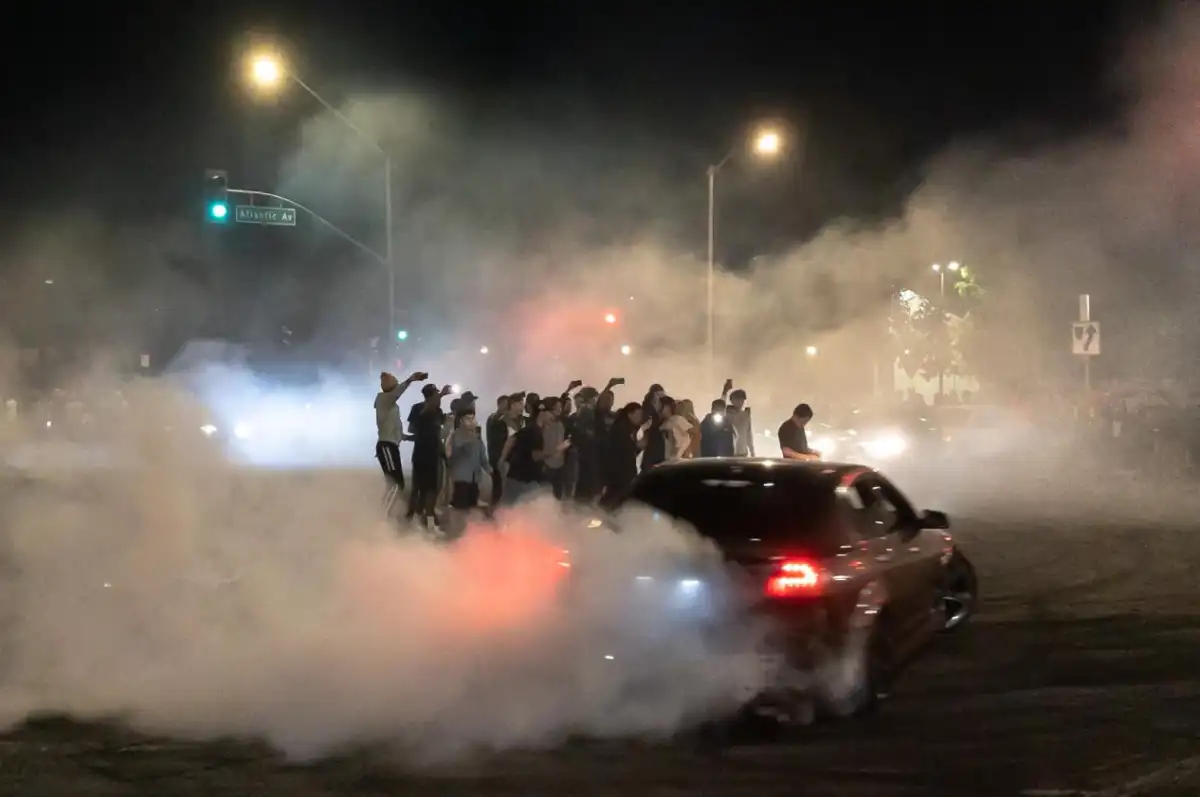
In its common context, illegal drifting means intentionally sliding a vehicle at unsafe speeds on public roads, usually without safety equipment or supervision. This behavior is fundamentally different from organized motorsports.
Fundamental Differences
Aspect | Illegal Drifting | Organized Sporting Drift |
|---|---|---|
Location | Public roads | Closed circuits |
Supervision | None | Official regulation |
Safety | Almost nonexistent | Full safety measures |
Risk to others | Extremely high | Minimal |
Objective | Reckless showmanship | Competitive sport |
Confusing the two concepts is one of the most dangerous justifications for illegal drifting, despite the reality that public roads are not racing arenas.
Why Does Illegal Drifting Persist Despite the Risks?
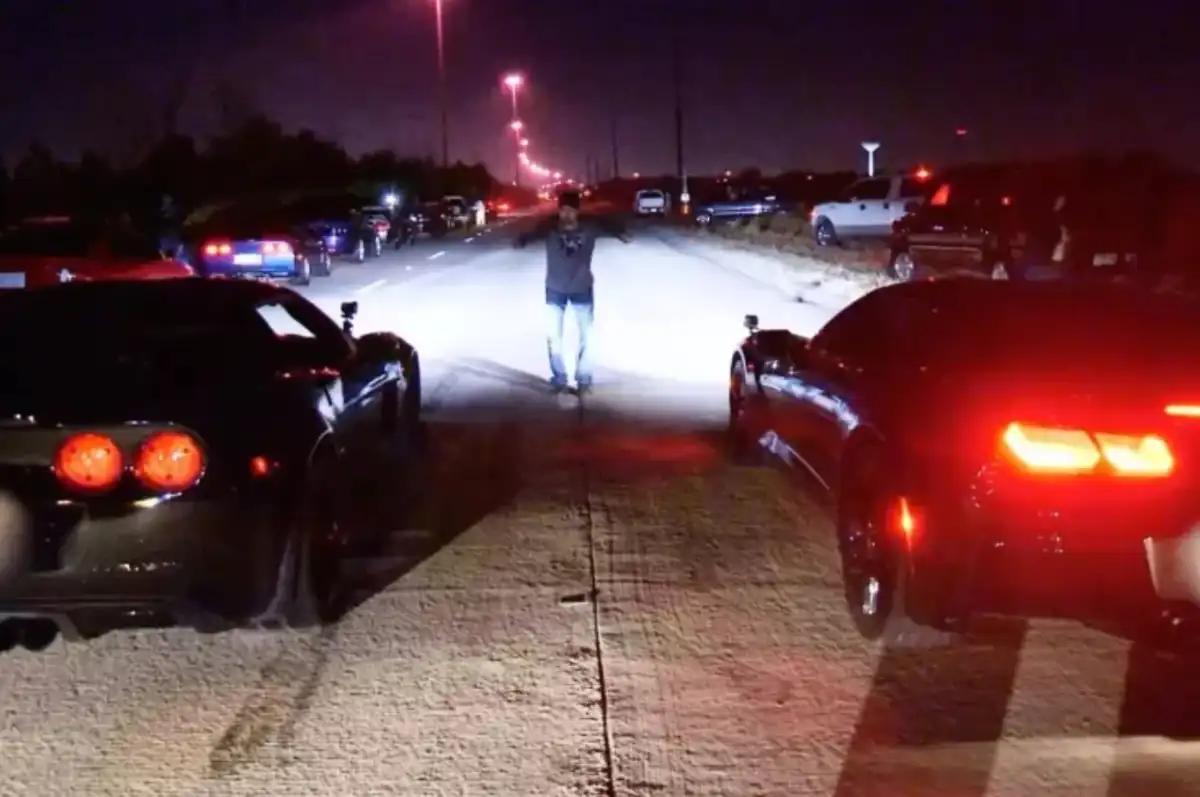
To understand the phenomenon, a deeper look at the psychological and social drivers is required. Illegal drifting does not occur in a vacuum; it is fueled by several factors:
The search for social recognition
Idleness and lack of organized alternatives
Influence of digital content and stunt videos
Misunderstanding of true car culture
A false sense of control and driving skill
The problem is that these motivations do not stop with the driver alone; their consequences extend to pedestrians, other motorists, and emergency responders.
When the Law Intervenes: Penalties as a Line of Defense
In response to this behavior, authorities in Saudi Arabia have intensified enforcement measures, recognizing that legal deterrence is a critical element in protecting lives.
Penalty Structure
Offense Count | Fine | Action Taken |
|---|---|---|
First offense | SAR 20,000 | Vehicle impounded for 15 days |
Second offense | SAR 40,000 | Vehicle impounded for one month |
Third offense | SAR 60,000 | Referral to court, potentially including imprisonment or vehicle confiscation |
These penalties are not designed for revenge, but to break the cycle of repetition and prevent illegal drifting from becoming habitual behavior.
Why Such Strict Measures?
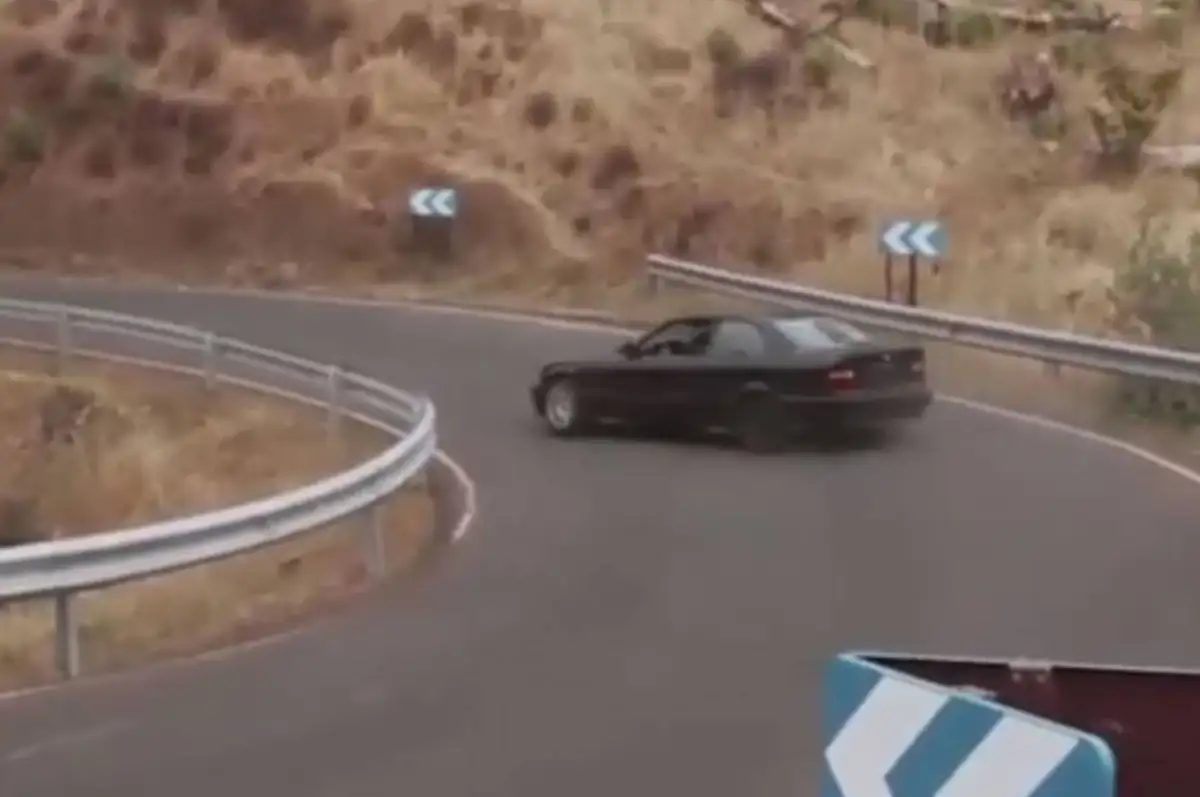
This strictness is not merely an administrative decision; it reflects harsh realities:
A significant portion of fatal accidents is linked to reckless driving behavior
Illegal drifting does not endanger the driver alone
A single moment can alter the fate of dozens of people
From this perspective, intervention by Saudi Traffic Authorities comes within a broader vision aimed at reducing fatalities and reinforcing a culture of road safety.
True Car Culture: Where Did Things Go Wrong?
Real car enthusiasts understand that:
Power comes with responsibility
Speed requires a controlled environment
Skill is proven on tracks, not sidewalks
However, with the spread of short-form content portraying illegal drifting as an achievement, a dangerous distortion of car culture has emerged. Authentic car culture is built on:
Engineering knowledge
Proper tuning
Discipline
Mutual respect on the road
Are Penalties Alone Enough?
Despite their importance, penalties alone are not sufficient. A sustainable solution requires:
Organized motorsport venues for youth
Support for official drifting championships
Intelligent, non-preachy awareness campaigns
Active roles for families, schools, and media
When alternatives exist, the pull toward danger weakens.
Who Bears Responsibility?
Responsibility here is shared:
The driver who chooses recklessness
A society that applauds dangerous stunts
Platforms that promote content without context
Institutions, if they fail to provide alternatives
Yet the starting point always remains individual awareness.
The Road Is Not a Testing Ground
Illegal drifting on public roads is not courage, skill, or a hobby. It is an unfair gamble with lives that have no connection to the decision. Between passion for cars and respect for the road, the distinction is clear:
True enjoyment never costs human lives.