

- Second: the four main stages
- The 5‑Step Test: is your child really ready to ditch the booster?
- Laws and guidance in the GCC
- When is your child’s seat “too old” and due for replacement?
- Quick tips for parents
A child is not “too old” for a car seat until the vehicle’s seat belt alone fits their body correctly, which usually happens somewhere between 8 and 12 years of age and around 145 cm in height, not at a fixed age. In the Gulf region, the golden rule remains to keep children in the rear seats, using an appropriate child seat or booster, until they are big enough for the belt to fit safely.

Why age alone is not enough
Expert recommendations:
International bodies such as NHTSA and the AAP advise looking first at a child’s height, weight, and sitting posture, and only then at age as a rough guide.
You might have a 5‑year‑old who is taller than average, or an 8‑year‑old who is still quite small, so the decision must not be based on age alone.
What to focus on instead:
The child’s weight and height compared with the limits printed on the car seat label.
The child’s ability to sit upright in the rear seat with the belt in the correct position for the entire trip.
First: manufacturer limits are your primary reference
The safety label on the seat:
Every child seat carries a mandatory label showing the minimum and maximum allowed weight and height, plus any usage restrictions; medical centers such as Vanderbilt University emphasize checking this label regularly to be sure the seat is still appropriate for your child.
Notice that these instructions focus on height and weight, and do not treat age as the main condition, because children grow at very different rates.
AAP recommendations:
The American Academy of Pediatrics follows a “stage‑based” approach rather than strict ages: infants, toddlers, school‑age children, and so on, with clear emphasis on keeping children in each type of restraint “as long as possible until they reach the maximum height or weight allowed by the manufacturer.”
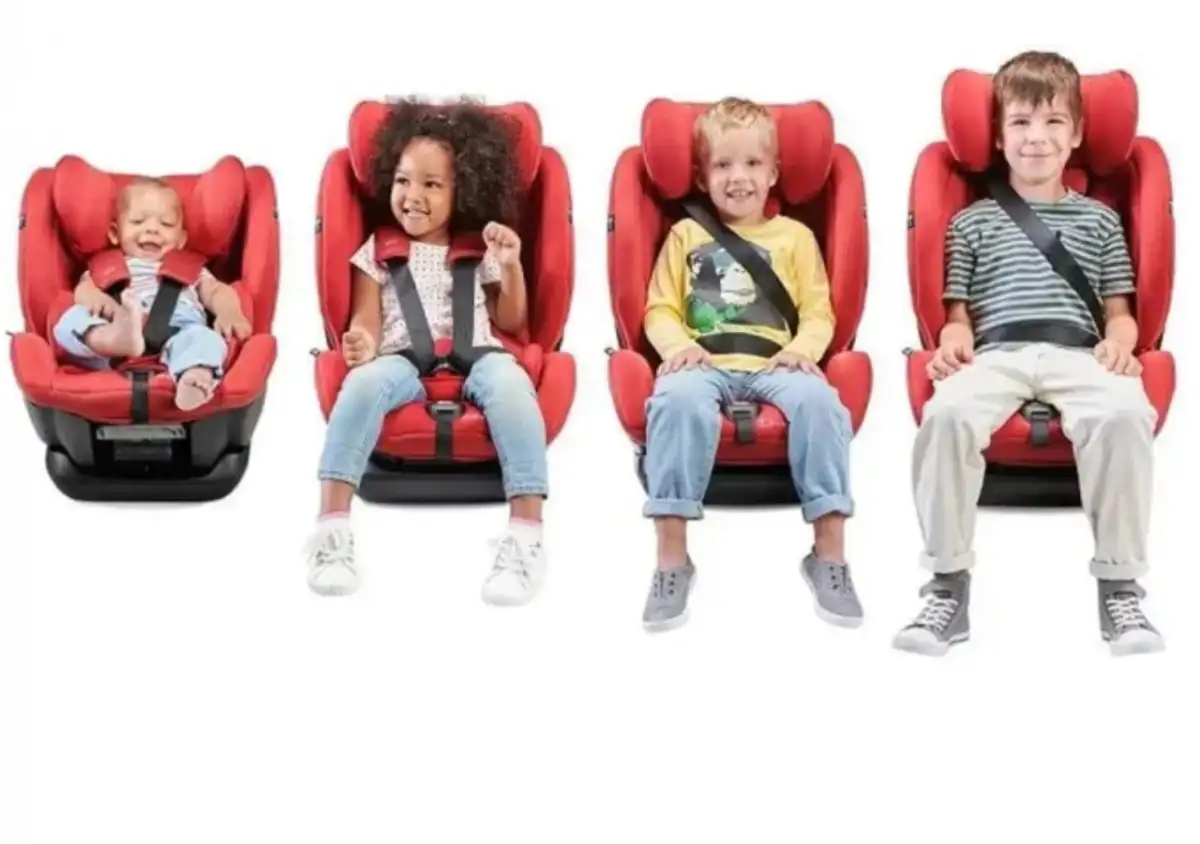
Second: the four main stages
Rear‑facing seat
From birth until the seat’s rear‑facing limit:
NHTSA and AAP advise that children remain rear‑facing as long as possible because this position offers the best protection for the head, neck, and spine in a crash.
Many infant seats in Group 0+ allow up to about 13 kg, and some convertible seats go higher, so a child can often stay rear‑facing beyond age 2 if they remain within height/weight limits.
Forward‑facing seat with a 5‑point harness
After outgrowing the rear‑facing limit:
The child moves to a forward‑facing seat with a 5‑point harness and should remain in it “as long as possible” until they reach the top height or weight listed for that seat.
AAP typically recommends that children stay in a forward‑facing harness at least until age 4, and often longer depending on size.
Booster seat
When the forward‑facing seat no longer fits:
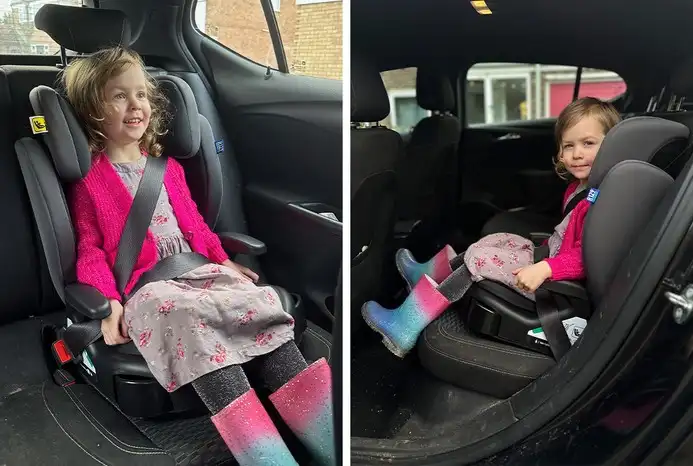
Once the child exceeds the forward‑facing seat’s limits, AAP considers it time for a belt‑positioning booster that raises the child so the seat belt lies correctly.
Boosters are usually used from about 4–5 years old through roughly 8–12 years, depending on growth.
Seat belt alone
The “big kid” stage:
Using only the vehicle’s seat belt is not recommended until the child is tall enough (about 145 cm or more) and passes the well‑known 5‑step readiness test.
Most children, according to medical references, will not be ready before 8–12 years of age, and some will need the booster for a bit longer.
The 5‑Step Test: is your child really ready to ditch the booster?
Hospitals and safety programs (such as those referencing UC Davis materials) use a simple 5‑step test to decide if a child can safely use the belt alone:
The child sits with their back flat against the seat back.
Knees bend naturally at the edge of the seat without the body sliding forward.
The lap belt lies low across the upper thighs, not riding up onto the stomach.
The shoulder belt crosses the middle of the shoulder and chest, not touching the neck or face.
The child can stay in this position comfortably for the entire trip without slouching or scooting forward.
If any step fails, the booster is still the safer option.
Laws and guidance in the GCC
Saudi Arabia:
Guidance from the Ministry of Health and technical regulators states that child restraints should be chosen according to weight groups, for example: rear‑facing seats up to around 13 kg, forward‑facing seats roughly 9–18 kg, and boosters roughly 15–36 kg for older children.
Practical recommendations encourage keeping children under 12 years old, and shorter than around 135 cm, in the rear seats using a suitable child seat or booster rather than the seat belt alone.
United Arab Emirates:
Updated traffic rules require children under 4 years to be in an approved child seat, and any child under 10 years old and below about 145 cm is not allowed to sit in the front seat.
Fines can be issued if a child is unrestrained or seated in front contrary to the rules.
Practical Gulf‑wide summary:
Despite differences in detail, the core principle is the same:
Young children belong only in the back seat, in an appropriate child seat or booster.
Front‑seat use should be postponed as long as possible until the child reaches roughly 145 cm in height, even if local law permits an earlier age.
Parents should always check the latest guidance from traffic authorities or road‑safety campaigns in their country, since specific age/height numbers can change over time.
When is your child’s seat “too old” and due for replacement?
Service life of the seat:
Safety references indicate that most child car seats have an expiry period of about 7–10 years from the date of manufacture, after which families are advised to replace them due to material fatigue and evolving test standards.
Key points to watch:
Never reuse a seat that has been through a serious crash.
Avoid second‑hand seats with unknown history, especially if the manufacture date or manual is missing.
Make sure any seat you use complies with the technical regulations in your country, such as SASO rules in Saudi Arabia or UAE‑specific approval standards.
Quick tips for parents
Always start with two questions:
Does this seat fit my child’s current height and weight?
Does the belt sit in the correct position on their body?
Keep your child in the rear seat until around 12–13 years old whenever possible; this is what most global medical safety policies recommend.
Make use of child‑safety clinics or inspection events where available; many offer free checks of installation and help you choose the most appropriate seat.