

- Why microfiber towels are a double‑edged sword
- What really happens when a microfiber towel hits the ground
- Why simply washing the towel is not enough
- The golden rule: if it hits the ground, it’s retired from paint duty
- How to manage your microfiber towels safely and smartly
- Other habits that quietly destroy paint
- For owners of luxury cars and dark paint
Microfiber towels may look harmless at first glance, but they can easily become the most dangerous tool you use on your car’s paint if they fall to the ground and then go back into service as if nothing happened. In the professional world of car detailing, there is one non‑negotiable rule: any microfiber towel that touches the ground must never go back onto the paint. Ignoring this simple rule is the hidden reason behind many of the swirl marks and fine scratches that spoil a car’s finish, even after careful washing and polishing.
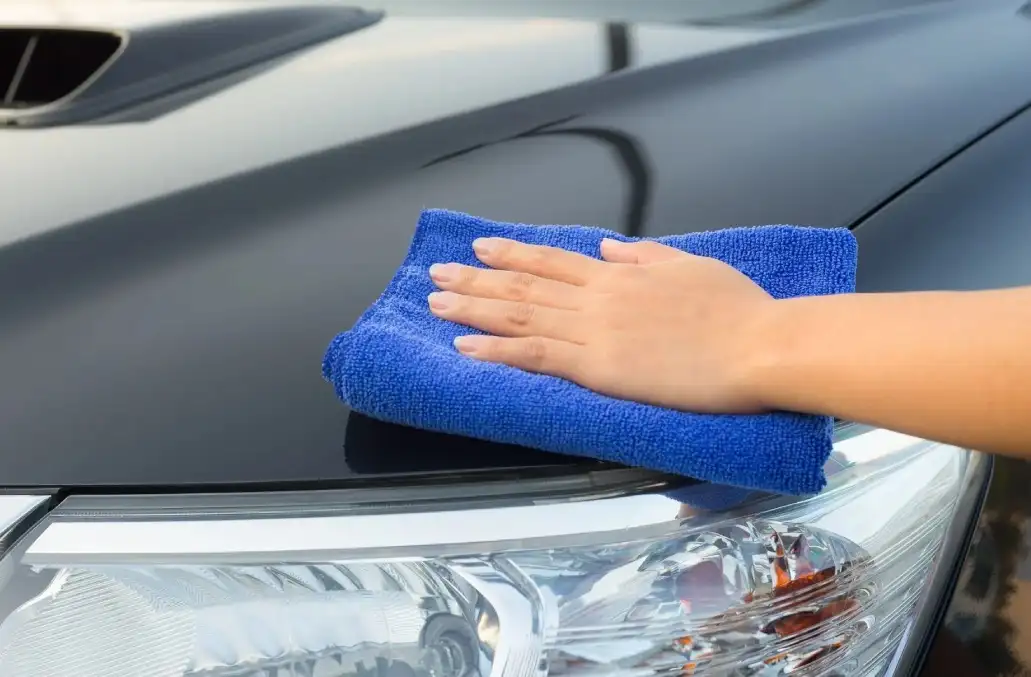
Why microfiber towels are a double‑edged sword
Microfiber towels are originally designed to protect paint, not damage it. Their ultra‑fine synthetic fibers can:
Pick up light dust, shampoo residue, and polish safely from the surface.
Spread polishes and waxes evenly without leaving visible streaks or marks.
But the same strength has a dangerous side; those fine fibers act as a very effective magnet for everything they touch, especially:
Tiny sand particles.
Small bits of gravel.
Coarser dust and solid debris.
When the towel touches the ground or garage floor, it immediately picks up this debris and traps it inside the weave. The moment you return that towel to the car’s paint, you have effectively turned it into fine sandpaper, moving it by hand over the clear coat while thinking you’re “caring for” the finish. The result is a network of micro‑scratches and swirl marks that only reveal themselves under strong sunlight or sharp indoor lighting.
What really happens when a microfiber towel hits the ground
A dropped towel is not just “a bit dirty”; it sets off a chain of events that slowly damages the paint:
Instant pickup of hard particles:
As soon as it hits the ground, the fibers grab:Fine sand.
Heavy dust mixed with asphalt or cement particles.
Tiny gravel pieces that may be invisible to the eye.
Strong bond between fibers and contaminants:
Microfiber fibers are dense and slightly electrostatic, which helps them hold onto whatever they pick up. Those particles don’t just fall out when you shake or snap the towel.Reusing it on the paint:
When the same towel is used again on the surface:The embedded particles move with your hand strokes.
They scratch the clear coat in straight or circular paths, depending on how you wipe.
The effect builds up with every wash, and swirl marks and lines become more obvious over time.
Removing this damage usually requires a proper polishing session with cutting and finishing compounds and a machine polisher – an expense you could have avoided entirely.
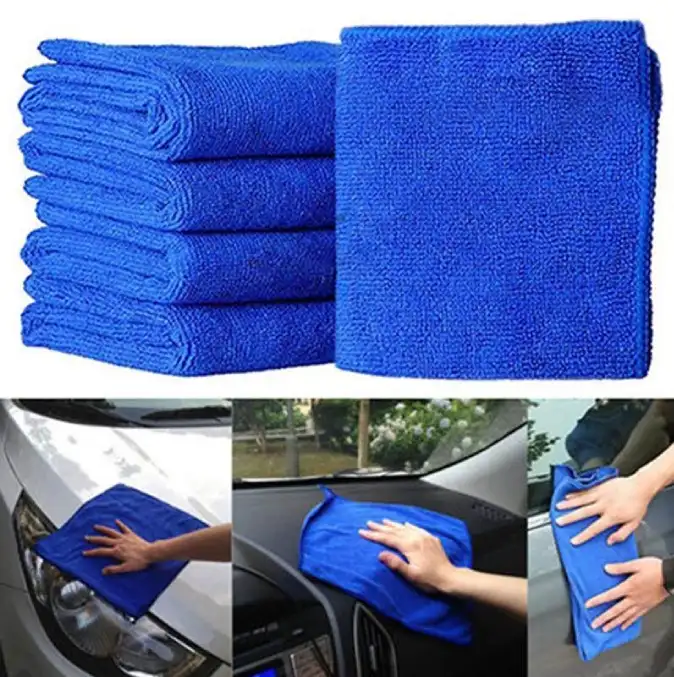
Why simply washing the towel is not enough
In theory, washing the towel should restore it. In practice, several points make relying on washing alone a risky bet:
You cannot guarantee every particle is gone:
Even after a thorough hot‑water wash with detergent, tiny particles can remain wedged deep between the fibers. That small amount is more than enough to scratch the clear coat.Mixing paint towels with “dirty area” towels:
Many people wash all towels together:Towels used on wheels and tires, loaded with brake dust and metallic debris.
Towels reserved for paint.
This cross‑contamination transfers the worst particles from the dirtiest areas straight into your most delicate paint towels.
The cost comparison is not in your favor:
A pack of new microfiber towels is relatively inexpensive, especially compared to:The cost of a full paint correction to remove swirls and scratches.
The time and effort needed to restore the finish.
From a cost–benefit perspective, sacrificing a suspect towel or downgrading it to less‑sensitive tasks is far smarter than gambling with your paint.
The golden rule: if it hits the ground, it’s retired from paint duty
For this reason, most professional detailers follow one strict rule:
Any microfiber towel that touches the ground is never used again on the car’s paint or any highly glossy surface.
That does not mean it must go straight in the trash. It can be reassigned to other jobs:
Cleaning wheels and tires.
Wiping door jambs, lower bumpers, and rough areas where fine scratches won’t be noticeable.
Household tasks: floors, kitchen counters, or non‑sensitive metal surfaces.
The key is to keep it completely separate from paint‑only towels and never let it sneak back into the “clean paint towel” pile.
How to manage your microfiber towels safely and smartly
To reduce the chances of mistakes, use a simple, clear system for your towels:
Color‑coding:
One color reserved only for paint.
Another for dirty outside areas like wheels and sills.
A third for interior surfaces and dashboard.
Separate storage:
Keep clean paint towels in a dedicated bag or box with a lid, away from dust.
Store “demoted” or dropped towels in another container for heavy‑duty work.
Use multiple towels per wash:
Don’t expect a single towel to wash and dry an entire car safely.
As soon as a towel loads up with dirt or starts to drag, switch to a fresh one.
Wash towels correctly:
Use a suitable detergent and avoid fabric softener, which coats fibers and reduces their cleaning ability.
Wash paint towels separately from towels used on wheels, engine bay, or very dirty areas.
Other habits that quietly destroy paint
The microfiber issue is just one of several common habits that quietly ruin paint over time. Others include:
Leaving bird droppings on the paint:
The acids in droppings react with the clear coat and can leave etching or stains that may become permanent if not removed quickly.Smart solution: keep car‑safe wipes or a quick‑detailer spray in the vehicle and remove droppings as soon as you see them.
Ignoring stone chips on the front end:
Highway gravel knocks tiny chunks of paint off the front bumper and hood, exposing bare metal and inviting rust.Smart solution: periodically inspect the front of the car and touch up chips with matching paint before rust spreads.
Using random household cloths:
Old cotton rags or rough towels may have hard threads or embedded dirt that scratch easily, especially on darker paints.Smart solution: reserve proper car‑care materials for the vehicle and keep household textiles away from the paint.
Washing the car in direct, strong sun:
Water and shampoo dry too fast, leaving mineral spots and streaks that are difficult to remove and can dull the upper paint layer.Smart solution: wash in the shade, early morning, or late afternoon, and always dry the car immediately after rinsing.
For owners of luxury cars and dark paint
Dark colors – black, navy, dark grey – show swirls and fine scratches far more than light colors. For owners of:
Luxury sedans and SUVs.
Sports cars and special editions.
Recently polished or ceramic‑coated vehicles.
discipline in how you use microfiber becomes part of protecting your investment. One dropped towel, then reused on the paint, can undo a noticeable portion of the results of a full paint correction that cost you time and money.
Caring for paint isn’t just about water, shampoo, and a quick wipe; it’s a complete mindset and routine that begins with choosing the right tools and extends to how you handle and store them. Among all the details, one simple rule stands out as a powerful defense for your car’s finish:
If a microfiber towel hits the ground, its service life on paint is over.
The price of a new towel is tiny compared with the cost of polishing or repainting panels. Your choice today between “saving a towel” and “saving your paint” will become very visible under the sun after a few months of use. When you see your car’s surface clean, glossy, and free of swirls and fine scratches, you will realize that respecting this small rule was one of the smartest decisions you made in caring for your vehicle.