
- First: What Is White Exhaust Smoke – and When Is It Normal?
- Second: The Head Gasket – A Small Component Protecting an Entire System
- Third: How to Distinguish Between “Normal” White Vapor and a Real Warning
- Fourth: Additional Symptoms That Accompany Head‑Gasket Failure
- Fifth: Why Ignoring White Exhaust Smoke Is Always Expensive
- Sixth: What Can the Driver Check Before Going to the Workshop?
- Seventh: Repair Methods – Temporary Fixes vs Proper Repair
- Eighth: Smart Prevention – How to Reduce the Risk of White Smoke in the First Place
In the automotive world, many failures arrive without warning, but some of the most serious problems announce themselves clearly before turning into full‑blown mechanical disasters. White exhaust smoke is one of the clearest – and most dangerous – of these signals because it is often linked to cooling‑system issues and, in particular, to a failing head gasket.
What may look like harmless “white puffs” from the tailpipe can actually be the first chapter in an expensive story that ends with a complete engine rebuild or even an engine replacement. At this point, the driver’s awareness makes all the difference; the sooner you recognize the early signs and understand what they mean, the higher your chances of saving the engine and keeping repair costs under control.
This article offers a clear, professional explanation of white exhaust smoke, the relationship between this symptom and head‑gasket damage, and a practical roadmap that shows how to react from the very first moment the problem appears – along with preventive advice to reduce the risk of it happening again.
First: What Is White Exhaust Smoke – and When Is It Normal?
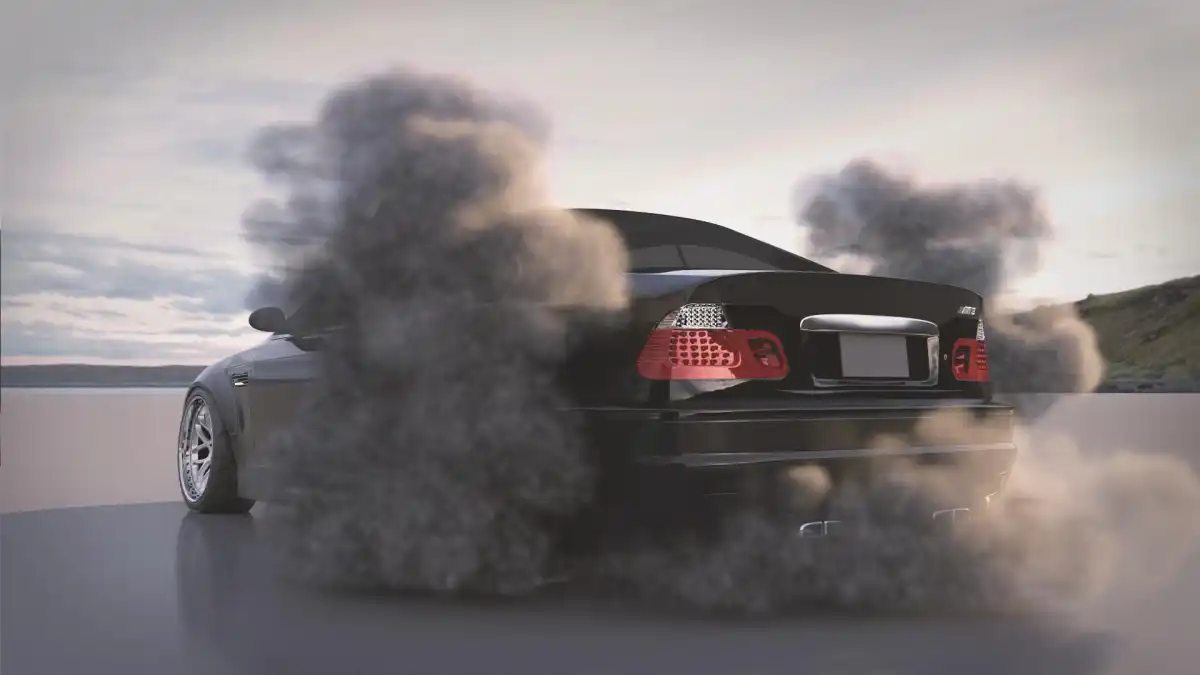
Seeing a light white mist from the tailpipe when you start the car in the morning, especially in cold weather, does not automatically mean something is wrong. In many cases, this is simply water vapor, caused by condensation inside the exhaust system. It usually disappears after a few minutes, once the engine reaches its normal operating temperature.
The problem begins when this light vapor turns into thick, persistent white smoke with a distinctive sweet odor similar to engine coolant. At that point, the issue is no longer about ambient temperature; instead, it becomes highly likely that coolant is entering the combustion chambers, which is often linked to a compromised head gasket.
Second: The Head Gasket – A Small Component Protecting an Entire System
The head gasket is one of the most critical sealing components in any internal‑combustion engine. Its primary job is to provide a tight seal between:
The combustion chambers at the top of the cylinders.
The coolant passages.
The engine‑oil passages in the block and cylinder head.
When this seal is compromised – due to overheating, improper installation, or simple wear and age – it allows unwanted interaction between those systems. Coolant can leak into the cylinders, combustion gases can enter the cooling system, and in severe cases, oil and coolant can mix.
When coolant leaks into the combustion chamber, it burns along with the air‑fuel mixture and turns into dense white steam, which exits the exhaust as white smoke. At the same time, the coolant level starts to drop even though there are no obvious external leaks.
Third: How to Distinguish Between “Normal” White Vapor and a Real Warning
Even without being a technical expert, a driver can distinguish between harmless condensation and a real fault by paying attention to a few simple observations:
How long the smoke lasts:
Normal: a few minutes after a cold start only.
Concerning: continues even after the engine is fully warm and the car has been driven for a while.
Density and appearance:
Normal: light, almost transparent vapor that dissipates quickly.
Concerning: thick, milky white smoke that lingers.
Smell:
Normal: almost odorless.
Concerning: a sweet smell, characteristic of antifreeze/coolant.
When these three factors line up, suspicion of internal coolant leakage becomes strong, and a failing head gasket or cracked cylinder head/block must be considered.
Fourth: Additional Symptoms That Accompany Head‑Gasket Failure
White exhaust smoke rarely appears alone. It is usually accompanied by several other signs that help confirm the diagnosis, such as:
Repeated engine overheating:
The temperature gauge climbs above the normal range, sometimes triggering a warning light or an “engine overheating” message on the cluster.Unexplained coolant loss:
You find yourself topping up the coolant regularly, yet there are no visible leaks from the radiator, hoses, or water pump. This strongly suggests an internal leak.Change in engine‑oil appearance:
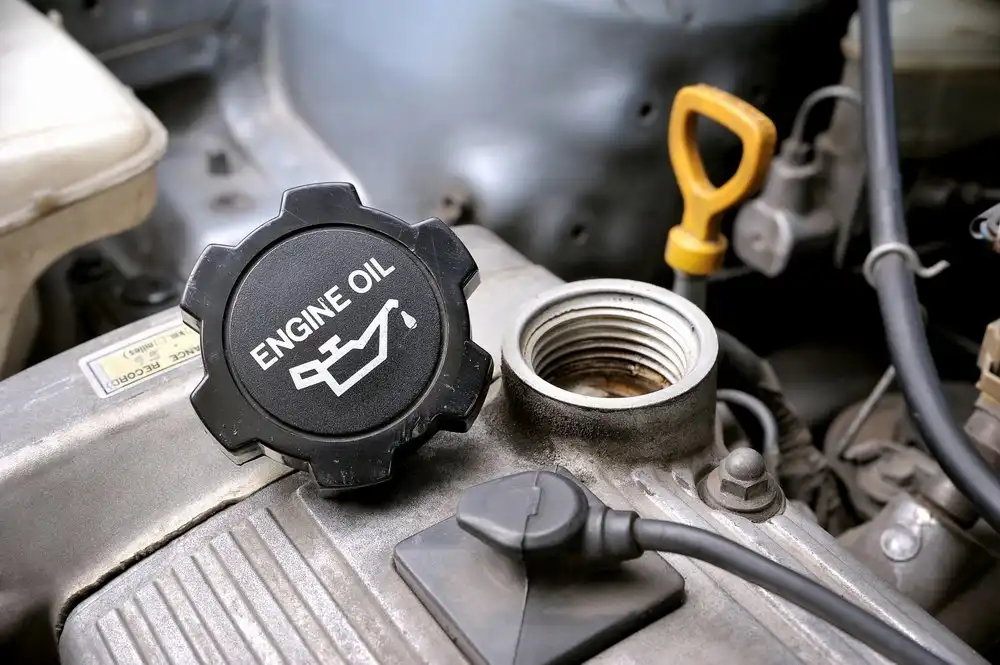
A milky or frothy color on the dipstick or under the oil filler cap is a classic indication that coolant is mixing with oil inside the engine.Unusual pressure in the cooling system:
Continuous bubbling in the expansion tank or coolant reservoir, or noticeable pressure and vapor when opening the cap (always when the engine is cool), points to combustion gases entering the cooling system.Changes in engine performance:
Rough running, noticeable vibrations, loss of power, or the engine effectively running on fewer cylinders due to a drop in compression in one or more combustion chambers.
When two or more of these symptoms appear together with white exhaust smoke, the probability of a head‑gasket problem becomes very high, and continuing to drive the car becomes a major risk.
Fifth: Why Ignoring White Exhaust Smoke Is Always Expensive
Continuing to drive with coolant leaking into the cylinders has serious consequences, which can be summarized as follows:
Excessive overheating:
Each time the coolant level drops and the engine continues to operate, the cooling system loses its ability to control temperature, putting sensitive components like the cylinder head and block at risk.Warping or cracking of metal components:
Severe overheating can warp the mating surfaces or even crack the head or block, pushing repair costs significantly higher than a simple gasket replacement.Coolant–oil contamination:
Once coolant enters the oil circuit, the lubricant loses its protective properties. This leads to rapid wear of bearings, cylinder walls, and moving parts, dragging the engine toward a full rebuild.
In many real‑world cases, the difference between a manageable repair bill and a repair that approaches the value of the vehicle itself is decided by what the driver does in the first days of seeing persistent white smoke: act immediately, or postpone.
Sixth: What Can the Driver Check Before Going to the Workshop?
While final diagnosis should always be left to a qualified technician, the driver can perform several intelligent preliminary checks:
Watch how the smoke behaves at different times (cold start, after driving, in hot and cold weather).
Check coolant level when the engine is completely cold and note any drop over several days.
Inspect engine oil color for any unusual milky or foamy appearance.
Monitor the temperature gauge carefully in traffic and at highway speeds.
The ideal response when multiple worrying signs appear together is to take the car out of regular use and have it transported to a trusted workshop on a flatbed, rather than continuing to drive it just because “it still runs.”
Seventh: Repair Methods – Temporary Fixes vs Proper Repair
The market is full of products marketed as “head‑gasket fix” or “internal leak sealer.” In reality, these may offer a short‑term improvement in very mild cases, but they do not change the fact that a damaged gasket is a mechanical part that ultimately needs physical replacement once it has failed.
A professional head‑gasket repair usually includes:
Removing the cylinder head from the block.
Checking the flatness of both head and block surfaces and machining them if necessary.
Thoroughly cleaning all passages and installing a new, quality gasket.
In many engines, fitting new head bolts and tightening them in the correct sequence and torque specified by the manufacturer.
This process may seem complex and costly, but it is, in reality, an investment in the engine’s remaining life, especially if the internal components are still in good condition and have not suffered severe damage from prolonged overheating or contamination.
Eighth: Smart Prevention – How to Reduce the Risk of White Smoke in the First Place
Owners can significantly extend the life of the head gasket and the cooling system as a whole by following a few simple preventive steps:
Adhere to recommended coolant change intervals, and avoid using plain water alone.
Inspect the radiator, hoses, and water pump regularly, and repair any leaks immediately, no matter how small they seem.
Avoid overloading the vehicle or towing heavy trailers in extreme heat without proper preparation.
Use the engine oil grade and specification recommended by the manufacturer and respect oil‑change intervals, as good oil contributes to internal cooling as well as lubrication.
Treat the temperature gauge as an early‑warning instrument, not a decoration; any unexplained rise must be taken seriously.
These measures do not guarantee that a head gasket will never fail, but they substantially reduce the probability and give you more time to react if a problem does begin to develop.
White exhaust smoke is not a minor cosmetic annoyance; it is a clear warning language your engine uses to communicate with you. Treating it as a trivial issue or assuming it will “go away on its own” is often the fastest route to a major repair that could have been avoided with timely action.
In practical terms, the equation is straightforward: drivers who observe their cars closely, listen to what the engine is “saying,” and respond early will keep their powertrain healthier for longer and shield their budgets from avoidable shocks. Those who ignore early warning signs – especially persistent white smoke – are effectively leaving the fate of the engine to chance and to a repair scenario that may end up being reconstruction after collapse rather than smart preventive maintenance.
In a time when modern engines are more complex and more expensive than ever, it is no longer acceptable to simply top up coolant or reset a warning and carry on. Learning to read what white exhaust smoke really means can be the difference between a car that continues to serve you reliably and one that suddenly turns into a long, costly workshop project.