

- Advanced Technology, Different Winter Behavior
- How EVs Differ From ICE Cars in Winter
- Regenerative Braking Explained
- Why RWD EVs Are More Sensitive on Ice
- Why AWD EVs Perform Better
- Is This Dangerous?
- Practical Driver Solutions
- Drivetrain Comparison
Advanced Technology, Different Winter Behavior
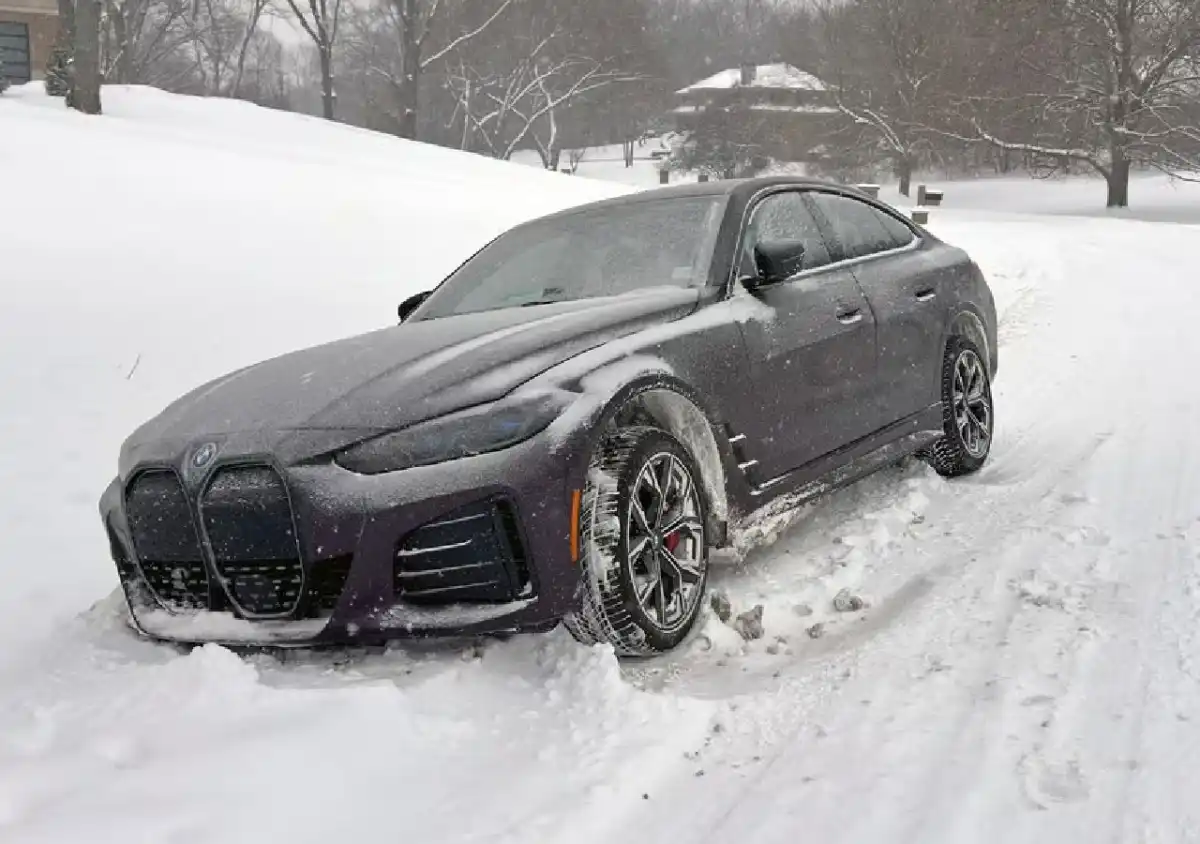
Many drivers assume electric vehicles are safer in winter due to their heavy batteries and low center of gravity. This is partly true. However, winter testing has revealed a key nuance: some rear-wheel-drive (RWD) electric vehicles can feel less stable on icy surfaces compared to front-wheel-drive or all-wheel-drive EVs.
The reason is not weight or balance alone, but the interaction between regenerative braking, torque delivery, and traction control.
How EVs Differ From ICE Cars in Winter
Electric vehicles differ fundamentally because:
Regenerative braking slows the car using the motor
Lifting off the accelerator immediately applies deceleration
Deceleration often occurs at the driven axle
Electric torque response is nearly instantaneous
On dry roads, this is efficient. On ice, it can be problematic.
Regenerative Braking Explained
Regenerative braking converts kinetic energy into electrical energy when you lift off the accelerator. This creates resistance at the motor, slowing the wheels without touching the brake pedal.
In many EVs, regen strength is strong enough for one-pedal driving.
Why RWD EVs Are More Sensitive on Ice
In RWD EVs:
The motor sits on the rear axle
Regen braking acts directly on rear wheels
On ice:
Rear traction is already limited
Sudden deceleration can exceed available grip
Rear wheels may slide
Oversteer can occur before stability systems intervene
Why AWD EVs Perform Better
Dual-motor and AWD EVs:
Distribute regen across both axles
Use torque vectoring to stabilize the vehicle
Provide smoother deceleration
This leads to more predictable winter behavior.
Is This Dangerous?
Not inherently. The issue typically appears when:
Driving on ice or packed snow
Regen is set to maximum
Non-winter tires are fitted
On cold but dry roads, many drivers never notice it.
Practical Driver Solutions
Reduce or disable regen braking in winter
Use proper winter tires
Drive smoothly and anticipate stops
Learn your vehicle’s settings
Drivetrain Comparison
| Winter Stability | Notes |
|---|---|---|
RWD EV | Moderate | Depends on regen tuning |
FWD EV | Better | Regen acts on front wheels |
AWD EV | Best | Balanced torque and regen |
ICE RWD | Predictable | No regen braking |
 Vehicle Type
Rear-wheel-drive EVs are not unsafe, but they require driver awareness and proper setup in winter. Understanding regen behavior, adjusting settings, and fitting winter tires can dramatically improve safety and confidence on ice.