
- What Exactly Are Beadlock Wheels?
- How Beadlock Wheels Work – Step by Step
- Types of Beadlock Systems
- Advantages of Beadlock Wheels in Off‑Roading
- Potential Drawbacks and Considerations
- Beadlocks vs. Regular Wheels – The Key Differences
- When Do You Actually Need Beadlocks?
- Tips for Safe Operation and Maintenance
- Beadlocks in Saudi and GCC Off‑Road Culture
In the world of serious off‑roading, drivers often talk about engine torque, suspension travel, and tire grip. But hidden in plain sight is one of the most crucial components of any off‑road vehicle — the wheel beadlock system. You may have seen those rugged wheels with bolts around the rim and wondered what they do. The truth is, beadlocks aren’t just about aesthetics; they are an essential mechanical safeguard that can be the difference between conquering a rocky mountain trail and being stranded halfway up it.
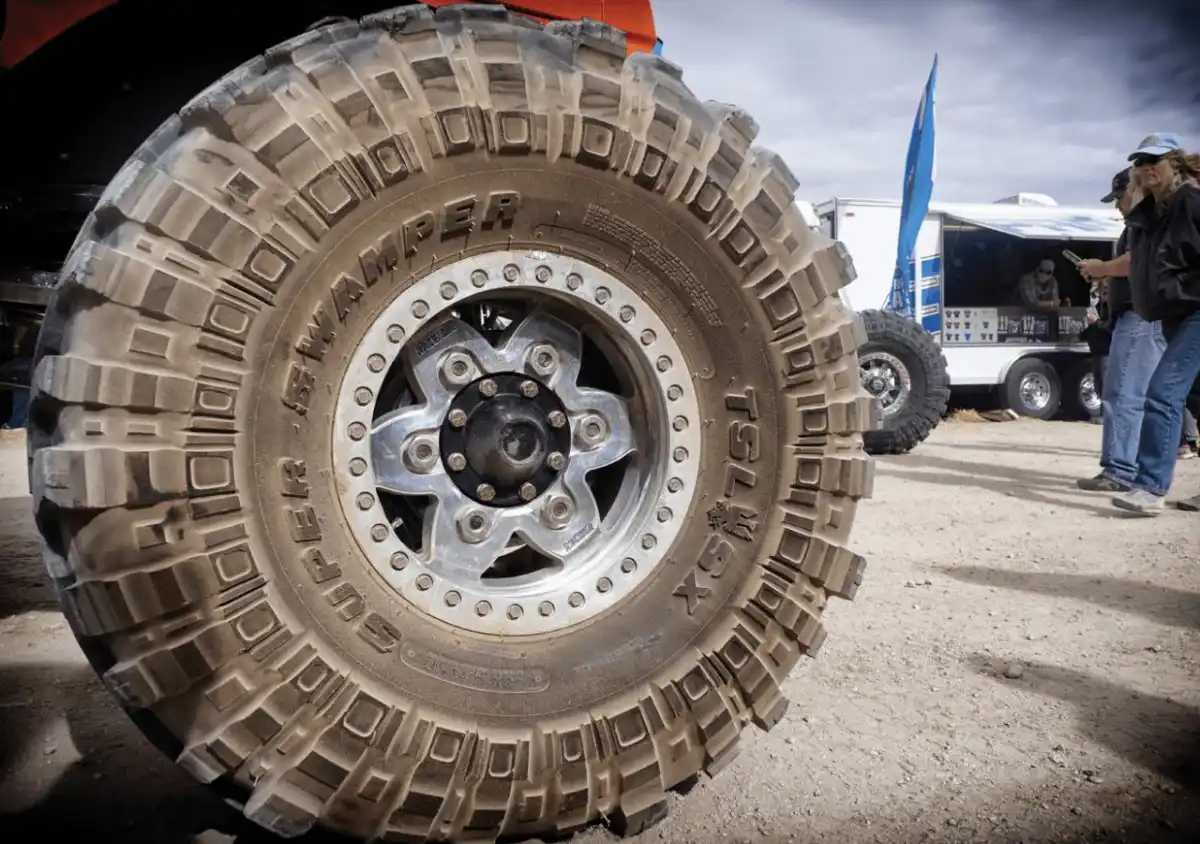
As off‑roading in Saudi Arabia and across the Middle East gains popularity — from the dunes of the Empty Quarter to the rocky trails of AlUla — beadlock wheels are becoming a widely discussed upgrade. This article dives deep into what beadlock wheels are, how they work, their advantages, drawbacks, and whether you really need them for your kind of adventure.
What Exactly Are Beadlock Wheels?
To understand beadlocks, let’s first recall how a standard wheel and tire work. A typical setup relies on air pressure inside the tire to press the tire bead — the thickened edge of the tire — tightly against the rim of the wheel. This pressure keeps the tire seated, preventing air leaks or slippage during normal driving.
However, off‑roaders frequently reduce tire pressure (sometimes down to 10‑12 psi) to increase the contact patch and achieve better traction on sand, rocks, or mud. Here’s the problem: lowering pressure reduces the force holding the bead to the rim, meaning that in extreme conditions, the tire can slip or completely unseat from the wheel.
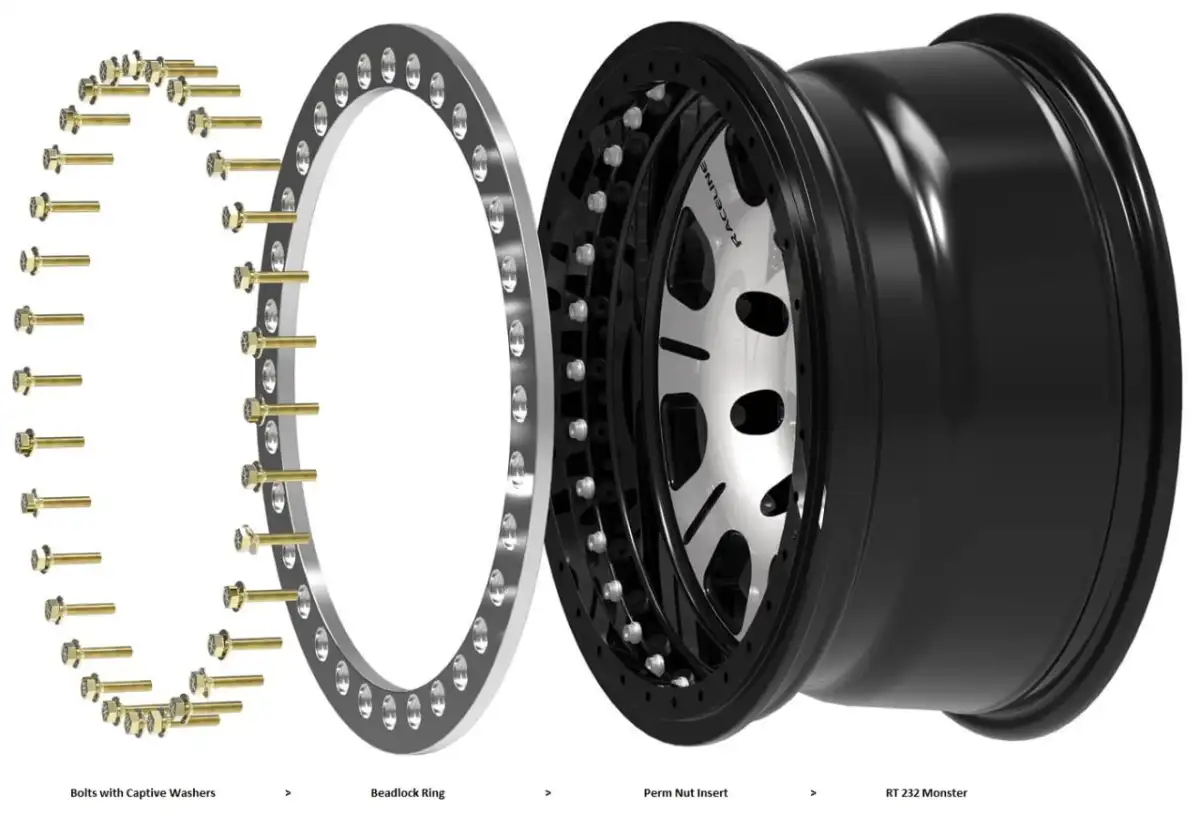
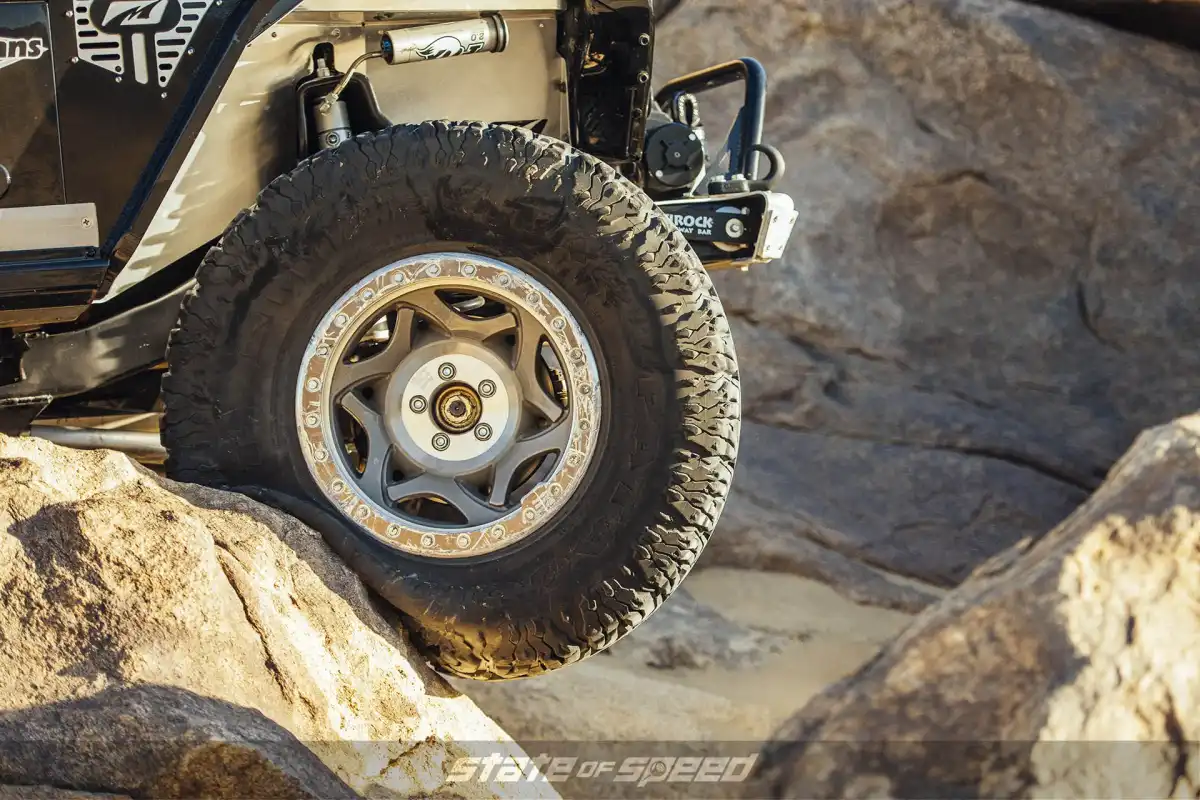
That’s where beadlock wheels come in. A beadlock wheel mechanically clamps the tire bead in place using a specialized outer ring with bolts that physically “lock” the bead to the rim, preventing it from separating even at extremely low pressures.
How Beadlock Wheels Work – Step by Step
The wheel features a two‑piece design: the main rim and a separate beadlock ring.
The tire is positioned so that its outer bead sits between the wheel’s outer edge and the beadlock ring.
A series of grade‑8 bolts (usually between 16 and 32) secure the ring to the wheel, clamping the bead tightly.
Even at pressures as low as 5 psi, the tire remains mounted, preventing loss of traction or a complete “de‑bead” failure.
This mechanical lock makes beadlocks ideal for situations where maximum traction and ultra‑low tire pressures are needed, such as rock crawling or dune climbing.
Types of Beadlock Systems
There are several beadlock designs — each with different strengths depending on the off‑road scenario and budget.
For desert enthusiasts, single external beadlocks often strike the best balance between function and practicality, while professional rock crawlers tend toward dual systems.
Advantages of Beadlock Wheels in Off‑Roading
1. Ultimate Tire Retention at Low PSI
Allows you to safely drop tire pressure for improved surface area contact on sand, gravel, or rocky terrain.
Maintains traction without risking tire separation or air leaks.
2. Enhanced Grip and Floatation
With lower tire pressure, tire treads wrap around rocks and bumps for superior crawling capability.
In sandy deserts, the wider footprint helps your vehicle “float” over dunes instead of digging in.
3. Greater Confidence During Extreme Angles
When climbing sharp inclines or side slopes, beadlocks give peace of mind that your tires won’t roll off the rims.
4. Strength and Durability
Most beadlock wheels are forged or heavy‑duty cast aluminum, designed for severe punishment and long life in harsh conditions.
5. Customization Appeal
The ring bolts and color options add a rugged, functional, and visually distinctive look to any 4x4, making it instantly recognizable as a serious off‑roader.
Potential Drawbacks and Considerations
While beadlocks offer serious advantages, they come with trade‑offs that drivers must consider.
Weight: Beadlock systems are heavier due to the additional ring and bolts, which can slightly reduce acceleration and fuel efficiency.
Balancing Difficulties: The multiple bolts can make wheel balancing complicated, requiring professional equipment.
Maintenance: Bolts must be checked and torqued regularly to ensure no loosening after intense off‑road use.
Legal Limitations: In some countries, beadlocks are not street‑legal unless certified for road use, as they can fail safety inspections if assembled improperly.
Cost: The precision machining and extra hardware mean beadlocks are more expensive than typical off‑road rims.
Despite these drawbacks, most off‑road enthusiasts view beadlocks as a worthwhile trade‑off once they experience their benefits firsthand.
Beadlocks vs. Regular Wheels – The Key Differences
When Do You Actually Need Beadlocks?
Beadlocks are not for everyone. Drivers should assess their typical terrain and usage carefully before investing.
Recommended for:
Hard‑core rock crawlers who routinely lower tire pressure to extreme levels.
Desert dune enthusiasts who drive in deep sand at low PSI.
Overlanders tackling trails where traction loss can leave you stranded.
Not necessary for:
Daily city driving or light off‑road use where tire pressure remains high (over 25 PSI).
Vehicles primarily used for towing, commuting, or road travel.
In essence, if your adventure regularly pushes your tires to the limits of traction and pressure, beadlocks become more than an accessory — they become essential insurance.
Tips for Safe Operation and Maintenance
Torque check: Always tighten beadlock bolts incrementally and in a crisscross pattern to avoid uneven clamping.
Re‑torque schedule: After the first 100 km of off‑road use, recheck all bolts — they may loosen slightly as the tire settles.
Clean thoroughly: Sand and mud under the ring can affect sealing; clean before reassembly.
Inspect for cracks or corrosion: Due to the high stress around bolt holes, regular visual checks are vital.
Use professional assembly: Always install beadlocks at a qualified 4x4 shop familiar with torque specs and sealant procedures.
Beadlocks in Saudi and GCC Off‑Road Culture
The Middle East, particularly Saudi Arabia and the UAE, has one of the world’s most active off‑road communities. From Liwa’s massive dunes to the volcanic fields of Harrat Khaybar, the need for ultra‑low PSI performance is well‑established.
Desert racers favor aluminum beadlocks for lightness and reduced risk of de‑beading.
Rock crawlers in Tabuk or Taif choose steel or forged dual beadlocks for unmatched durability.
Local workshops are now offering certified beadlock conversions that meet Saudi Traffic regulations, allowing for safer daily use.
As the market grows, brands like Method Race Wheels, Fuel Off‑Road, and ICON Alloys are seeing rising demand for beadlock designs compatible with regional vehicles such as the Toyota Land Cruiser, Nissan Patrol, Jeep Wrangler, and Ford Bronco.
Beadlock wheels are a hallmark of serious off‑road engineering. They allow drivers to explore beyond the limits of ordinary traction, operating safely at tire pressures that would destroy conventional wheels. While they require care, cost, and commitment, the advantages for anyone who drives in soft dunes, slick mud, or sharp rocks are undeniable.
For daily drivers, beadlocks may be overkill. But for those who see the desert not as an obstacle but as an open playground, beadlock wheels aren’t just important — they are the unseen guardians of your journey, turning obstacles into opportunities, and adventures into stories worth telling.