

- 1. The License Plate — The Vehicle’s Legal “Birth Certificate”
- 2. Common Methods of Plate Tampering
- 3. The Security Risks of Tampering with Car Plates
- 4. Legal Penalties under Saudi Traffic Law (2025 Update)
- 5. Smart Technology Makes Tampering Useless
- 6. Real‑World Cases and Consequences
- 7. How to Avoid Accidental Violations
- 8. Responsible Drivers: The First Line of Defense
As Saudi Arabia’s traffic technology becomes smarter and more precise, tampering with vehicle license plates is no longer a simple or careless mistake — it is now considered a serious security offense.
The Saudi General Traffic Department recently reaffirmed its zero‑tolerance stance, imposing fines of up to SAR 10,000, with possible vehicle confiscation or even imprisonment for anyone who damages, alters, hides, or replaces vehicle plates — whether to evade speed cameras, conceal identity during offenses, or use fake plates.
But what are the legal and security implications of such an act? Why is a car plate considered a part of national protection, not just a metal tag? And how can ordinary drivers stay safe from penalties — even when tampering happens by accident?
This feature examines five key security and legal risks of tampering with vehicle license plates in Saudi Arabia and explains why this act is far more serious than it may appear.
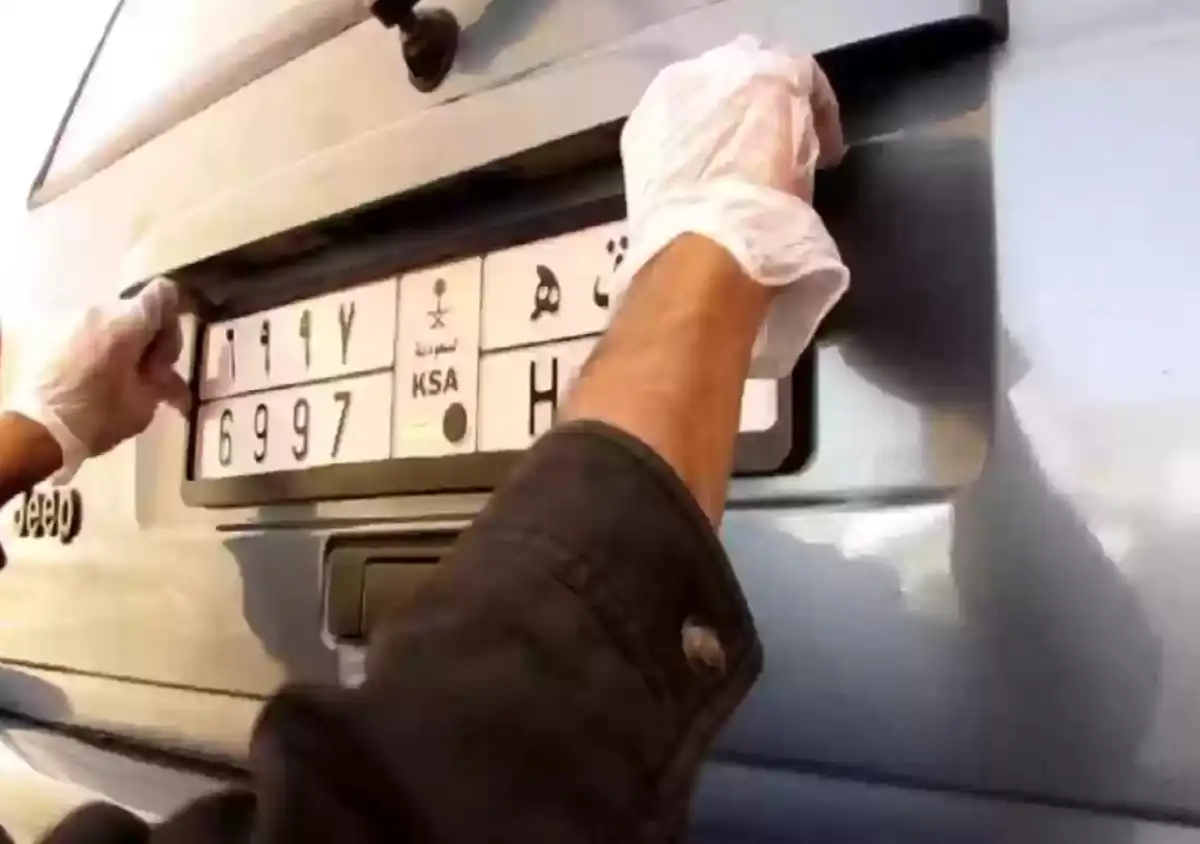
1. The License Plate — The Vehicle’s Legal “Birth Certificate”
A license plate is more than just a number at the front and back of a car; it’s the vehicle’s digital identity. It links the physical car to an official database holding all ownership details, inspection records, and traffic history.
Law‑enforcement and traffic authorities use the plate as a primary identifier for:
Recording traffic violations through automated systems like Saher cameras.
Detecting stolen or wanted vehicles in real time.
Managing insurance, periodic inspection, and registration authenticity.
Thus, tampering with or altering the plate essentially means changing the car’s legal birth certificate, which carries full criminal accountability for the owner or driver.
2. Common Methods of Plate Tampering
Authorities have documented multiple methods used by offenders trying to conceal or disguise their license numbers:
Smearing or covering digits with tape, mud, or stickers.
Installing stolen or duplicated plates.
Using reflective or tinted coating that distorts camera recognition.
Switching identical plates between similar models or colors.
Removing or modifying a single letter or number to create a false match.
While these may appear trivial to some motorists, they immediately trigger suspicion within automated AI systems — turning what seems a “simple ride” into a serious crime scene for investigators.

3. The Security Risks of Tampering with Car Plates
Altering, replacing, or obscuring a plate does not only endanger the violator — it threatens national road security as a whole.
Here are the five key security risks:
Obstructing criminal investigations:
Tampered or fake plates make it harder to trace vehicles involved in crimes or hit‑and‑run accidents.Facilitating illegal activities:
Untraceable cars can be used in smuggling, theft, or transporting restricted goods.Attempting to deceive traffic systems:
Some try to avoid speeding fines by covering numbers, but modern AI‑driven cameras can now detect such manipulation within seconds.Damaging innocent citizens:
If a stolen or copied plate is used on another car, the original owner may be wrongly charged or penalized.A lasting criminal record:
Plate tampering is treated as a criminal act, not just a traffic violation — it can appear in personal and employment background checks.
4. Legal Penalties under Saudi Traffic Law (2025 Update)
According to Saudi Arabia’s updated Traffic Law and Executive Regulations, the punishments for tampering are strict and multi‑layered:
Fines ranging from SAR 5,000 to SAR 10,000.
Vehicle impoundment until the situation is corrected.
Referral to the Public Prosecution in cases involving fraud or forgery.
Possible jail time of up to six months for aggravated cases.
Registration cancellation if the plate is linked to an illegal activity.
Repeat offenders or those combining this act with other violations (such as drifting or reckless speeding) face even heavier sentences.
5. Smart Technology Makes Tampering Useless
Many offenders still assume they can fool traffic cameras — but they are wrong. Saudi roads are now covered by a national network of AI‑powered surveillance systems that recognize both legitimate plates and deliberate manipulations.
Current technologies include:
High‑resolution cameras capable of reading plates from over 300 meters away.
Instant database comparison to detect duplicates or fake registrations.
Central alert notifications that dispatch patrols within seconds if irregularities are detected.
Simply put: in a fully digital traffic ecosystem, plate tampering is no longer clever — it’s only expensive and self‑incriminating.
6. Real‑World Cases and Consequences
Saudi media has reported multiple real cases in recent years. Drivers caught with transparent covers or reflective paint received immediate fines of SAR 10,000.
Other offenders used forged or copied plates on similar vehicle models to evade detection — only to be tracked by cross‑matching chassis numbers with registration data, leading to their arrest within hours.
The outcome in every case:
Attempted deception cost far more than the original traffic fines, with added charges of forgery, fraud, and misuse of government‑issued identification.
7. How to Avoid Accidental Violations
Not all drivers act intentionally; sometimes, a plate becomes unclear due to accidents or environmental wear. To stay compliant and avoid suspicion:
Always ensure both front and rear plates are readable and securely mounted.
Clean the plates regularly — avoid using reflective cleaners or tinted sprays.
Report any plate loss or damage immediately to authorities.
Never use decorative plates or colored backgrounds, even for aesthetic reasons.
Keep clear photographs and plate details ready to assist in any reporting process.
8. Responsible Drivers: The First Line of Defense
Traffic safety is a shared duty. While authorities provide technology and law enforcement, responsible drivers form the front line of prevention.
A visible, authentic, and untampered plate symbolizes transparency and civic responsibility. It helps protect everyone from potential misuse — ensuring that Saudi roads remain secure, organized, and technologically advanced.
Obeying plate regulations isn’t bureaucracy — it’s cooperation in a national safety network protecting every driver and passenger.
Tampering with a vehicle’s license plate is not a harmless trick — it is a direct breach of national security systems. Every digit on a plate is part of a comprehensive digital identity that keeps the entire road network safe.
In today’s era of smart traffic surveillance and artificial intelligence, hiding or altering your license plate is no longer a shortcut; it’s a swift path toward legal penalty and public disgrace.
True road responsibility begins with respecting your plate — a small metal sign that carries your name, record, and trust on Saudi Arabia’s modern highways.