

- The myth of soda and car batteries
- Why does corrosion form on battery terminals?
- Does corrosion mean the battery is failing?
- Why is using soda on battery terminals not recommended?
- The correct method: baking soda and water paste
- Other effective options: lemon juice, vinegar and dedicated cleaners
- Regular maintenance habits to protect your battery
The myth of soda and car batteries
For years, “DIY tips” have recommended using soft drinks like cola to remove corrosion from car battery terminals, claiming their acids can dissolve rust and deposits.
Even though these drinks can theoretically attack some corrosion, using them on your battery can create extra problems in the short and long term, so it is essential to know what is really happening under the hood and what the correct cleaning method is.
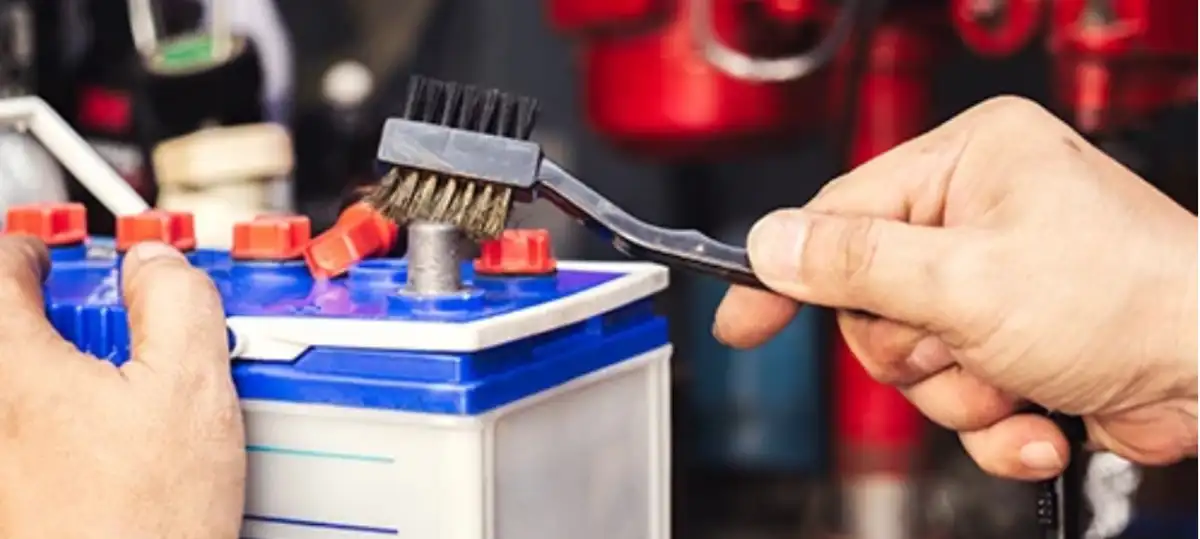
Why does corrosion form on battery terminals?
Traditional lead‑acid car batteries contain an electrolyte mixture of water and sulfuric acid inside their cells, and any cracks or small leaks in the case allow this solution to seep out, react with nearby metal and start the corrosion process.
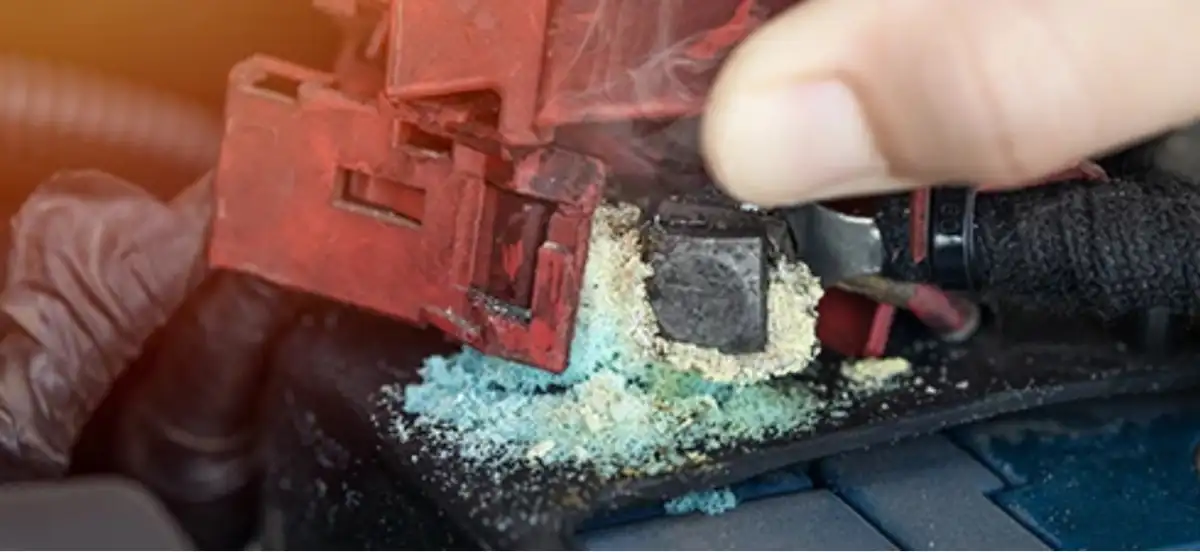
During charging and discharging, the water inside the battery breaks down into hydrogen and oxygen; some of the hydrogen is vented through a safety valve and then reacts with copper, lead or steel around the terminals, forming white, green or bluish buildup.
Green or bluish deposits are usually the result of hydrogen reacting with copper components such as wiring and clamps, while white corrosion indicates reactions with aluminium, lead or zinc, and heavy corrosion on the negative terminal can point to excessive stress in the starting circuit, such as starter issues.
Does corrosion mean the battery is failing?
The presence of corrosion on the posts or terminals does not automatically mean the battery is “dead”; more often it shows that the battery has been working hard with frequent charge and discharge cycles, especially with demanding use or additional electrical accessories.
Long drives with a slightly discharged battery or installing powerful audio systems and extra lighting force the charging system to work overtime, increasing hydrogen release and, with it, the likelihood of corrosion buildup.
Hot and humid climates make the battery and alternator operate under harsher conditions, which is why batteries tend to fail faster in hot regions, and a yearly load test after the first two years of service is recommended to avoid unexpected breakdowns.
Ignoring corrosion deposits can damage an otherwise healthy battery, because the buildup can restrict proper charging and make the engine harder to start even if the internal cells are still in usable condition.
Why is using soda on battery terminals not recommended?
Cola and similar soft drinks contain both acids and sugars, so by pouring them on the terminals you are adding extra acidity to a chemically sensitive area like the battery, increasing the chance of unwanted reactions and further corrosion around the connections.
After the drink dries, it leaves a sticky film of sugar and additives that traps dust, dirt and insects, and this residue can promote stray electrical paths or accelerate the return of corrosion.
If the liquid seeps into tiny cracks in the battery casing, it can disturb the delicate internal chemistry, and it may also harm nearby rubber or plastic parts over time, while completely rinsing off all the sticky residue from tight spaces around the battery is difficult in practice.
The correct method: baking soda and water paste
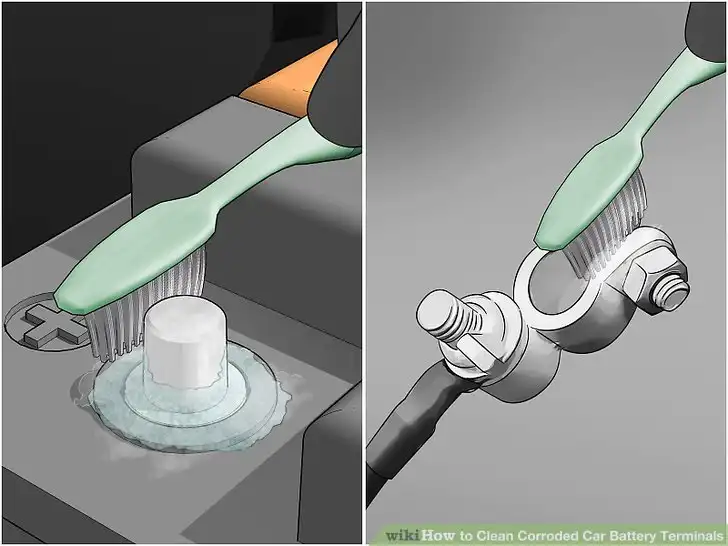
Baking soda is a mild alkaline substance that reacts with acids and neutralises them, and when mixed with water it forms a paste that helps break up corrosion and makes it easier to remove without damaging surrounding metal or plastic.
To begin cleaning safely, switch off the engine and wear gloves and safety glasses, then disconnect the negative (–) terminal first, followed by the positive (+) terminal, to reduce the risk of sparks while working on the connections.
Prepare a thick paste by mixing baking soda with a small amount of water, apply it directly to the corroded areas, and use an old toothbrush to gently scrub the deposits; you will see a mild fizzing as the baking soda reacts with the acid and loosens the buildup.
When the reaction has finished, lightly rinse the area with distilled water, avoiding excessive splashing in the engine bay, then dry everything carefully with a clean cloth, reconnect the terminals in reverse order (positive first, then negative), and optionally apply a thin layer of dielectric grease or a dedicated terminal protectant to slow future corrosion.
Other effective options: lemon juice, vinegar and dedicated cleaners
Lemon juice or white vinegar can also dissolve corrosion thanks to their natural acidity, but you should not pour them directly on the terminals; instead, dampen an old cloth with the liquid and wipe only the affected areas, then rinse thoroughly with distilled water and dry well to remove any remaining acid.
There are also commercially available battery cleaners in spray form that use a simple “spray on and rinse off” process, and these products are formulated specifically for battery terminals, often leaving a protective layer that helps prevent future buildup, even though they cost more than basic household solutions like baking soda or lemon juice.
Regular maintenance habits to protect your battery
Make it a habit to visually inspect the battery and terminals at least twice a year, checking for any buildup, cracks or leaks, because dealing with corrosion early is easier and has less impact on overall performance.
As a battery ages, it becomes more prone to corrosion and failure, so load testing at a qualified workshop is the only reliable way to know whether it is still strong enough for everyday driving.
Difficulty starting the engine, dim headlights or unstable electronic behaviour are early warning signs that the battery or charging system needs attention, and responding to these signals promptly is better than waiting for a complete failure in extreme heat or during a long trip.