
- Two American trucks with supercar thinking on a pickup body
- Dimensions and practicality: huge footprint with slight advantages for Ford
- Exterior design: intimidating presence with details that favour the Raptor
- Cabin and features: Ford is more generous with standard kit
- Engine and performance: Predator vs Hellcat – similar numbers, different feel
- Off‑road capability: millimetres that matter in the dunes
- Safety and driver assistance: Ford raises the bar
- Price and value: does the extra kit justify the extra cash?
- Which truck makes more sense in the Gulf and UAE?
Two American trucks with supercar thinking on a pickup body
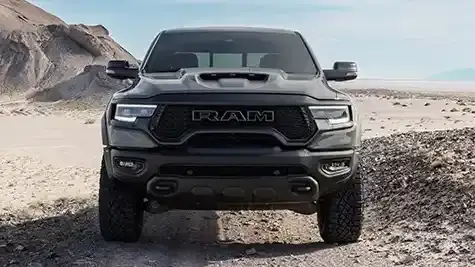
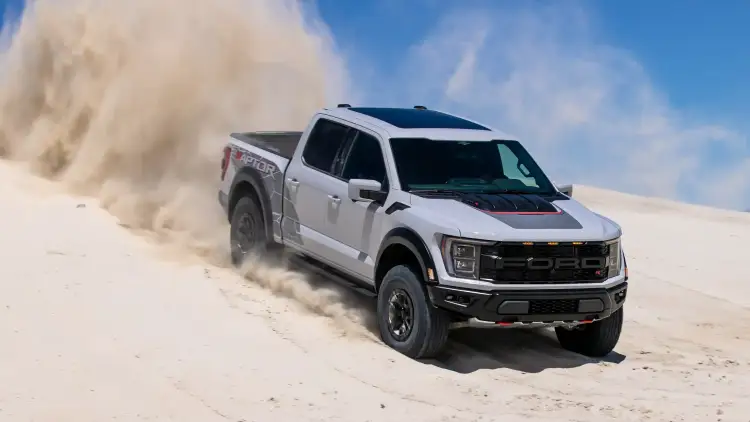
In recent years, pickup trucks have evolved from traditional work tools into high-performance recreational machines capable of combining cargo ability with wild dune‑bashing. The Ford F‑150 Raptor R and the Ram TRX sit at the very top of this American performance pickup hierarchy, with supercharged engines, advanced suspension systems and luxury equipment that make them feel like lifted supercars.
This article offers a detailed comparison between the Raptor R and the TRX in terms of size, design, interior, performance, off‑road capability, safety and price, ending with a clear verdict on which suits which type of buyer in markets like the UAE and the wider Gulf region.
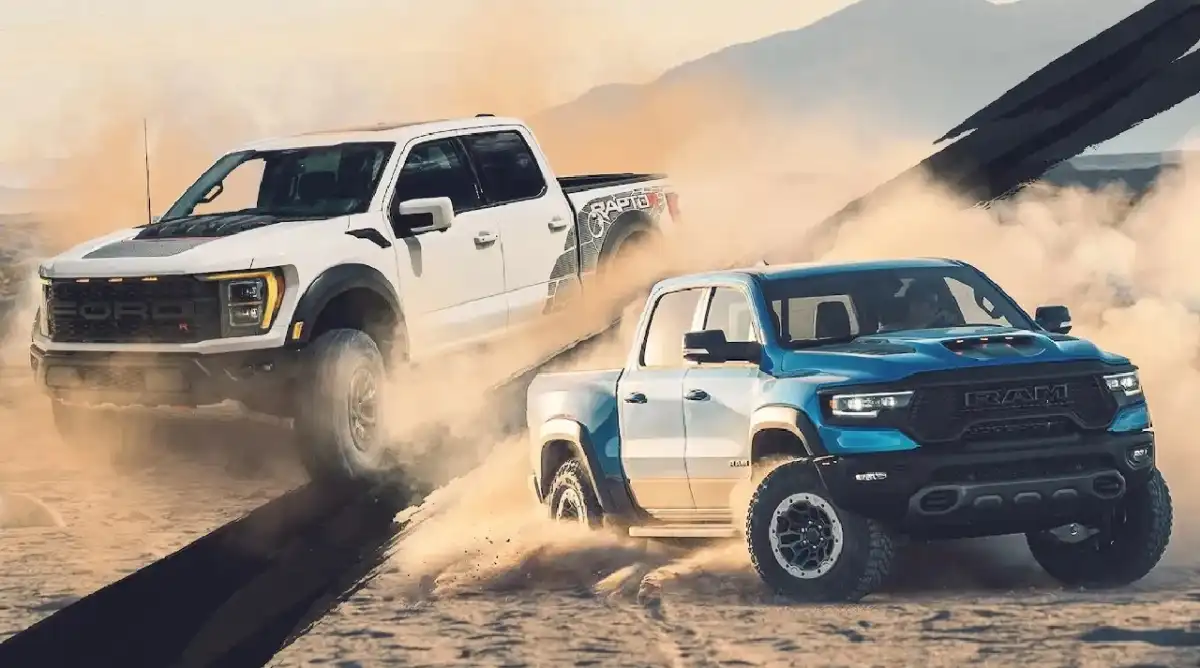
Dimensions and practicality: huge footprint with slight advantages for Ford
.jpg?x-oss-process=image/format,webp/interlace,1/quality,q_60/resize,w_1200)
Overall size
Length: Raptor R 5,908mm vs TRX 5,915mm – practically identical.
Width: Ford is wider at 2,438mm vs Ram’s 2,235mm, giving it a bit more presence on the road and a slightly roomier cabin.
Height: both stand over 2.04m tall, with only a few millimetres’ difference in favour of the TRX.
Bed, payload and towing
Bed length: 1,704mm on the Raptor R vs 1,712mm on the TRX – almost no real‑world difference.
Fuel tank: 136L for Ford vs 125L for Ram, giving the Raptor R a longer range between fills.
Towing capacity: 3,950kg for Ford vs 3,675kg for Ram; payload 635kg vs 615kg, meaning the Raptor R is a slightly better workhorse.
Dimension verdict: the two trucks are extremely close, but the Raptor R edges ahead in cabin space and in towing/payload, making it the stronger choice for heavy towing and long camping trips.
.jpeg?x-oss-process=image/format,webp/interlace,1/quality,q_60/resize,w_1200)
Exterior design: intimidating presence with details that favour the Raptor
Road presence and personality
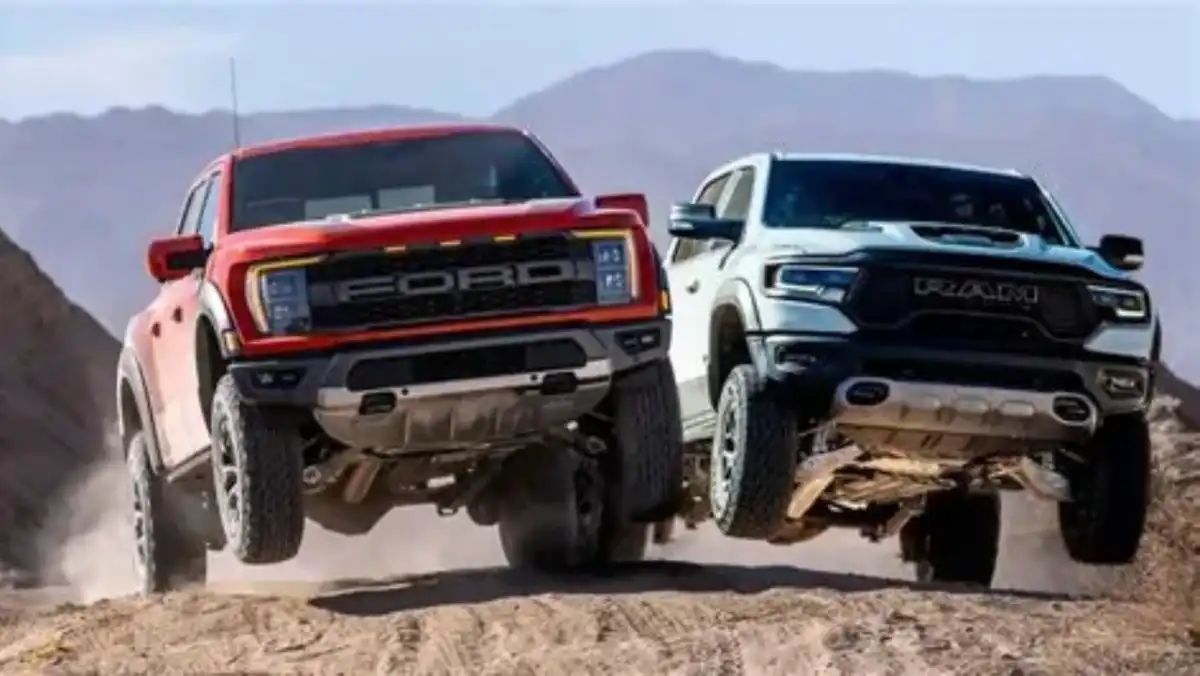
Both trucks have massive visual impact; when either appears in your rear‑view mirror, most cars instinctively move aside.
Aggressive front ends, side steps, thick cladding and high riding stance make both feel like “road monsters”.
Design details
Lighting: full LED headlights on both Raptor R and TRX.
Exclusive graphics: the Raptor R gets unique body graphics and “Raptor R” badging, making it stand out more from the regular F‑150 line.
Mirrors and cladding: both trucks feature off‑road mirrors, heavy body cladding, side steps and hood scoops.
Wheels: Raptor R rides on 17‑inch wheels, TRX on 18‑inch; the effect of this will show in the off‑road and comfort section.
Design verdict: in pure looks, the Raptor R has a slight edge thanks to its exclusive graphics and badging, while the TRX leans into a brutal, muscular style with larger wheels.
Cabin and features: Ford is more generous with standard kit
Screens and digital interfaces
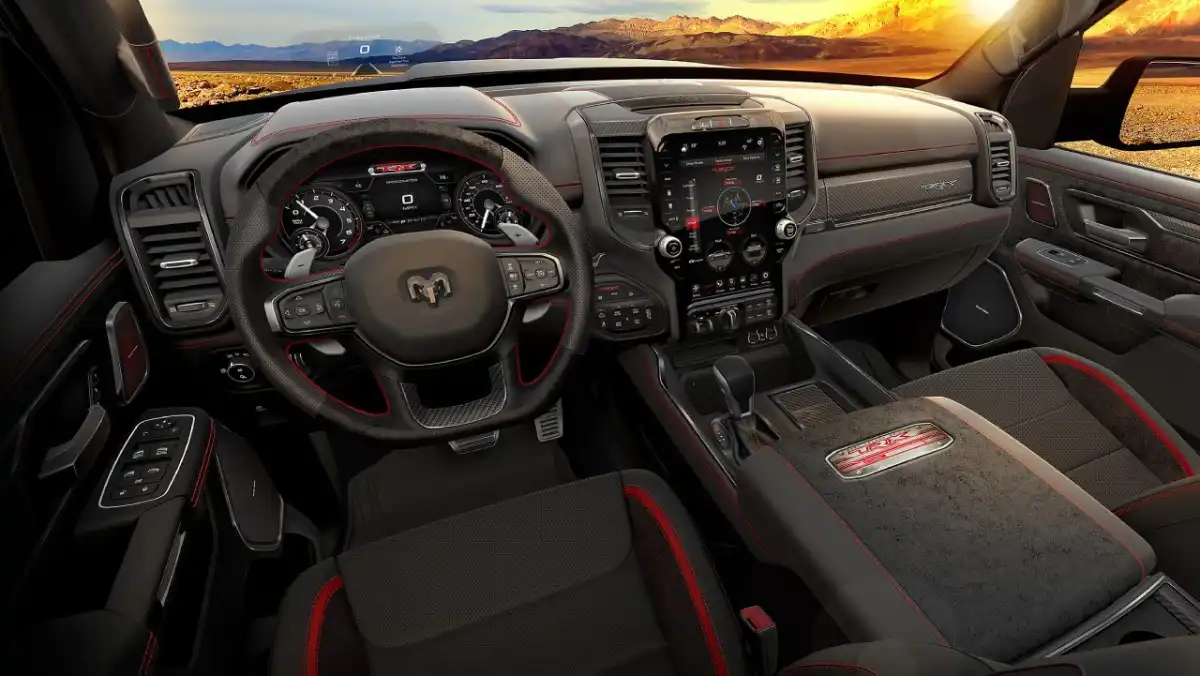
Both trucks come with a 12‑inch digital instrument cluster and a 12‑inch infotainment screen.
TRX has an advantage with a head‑up display, which the Raptor R lacks.
Connectivity and comfort
Android Auto and Apple CarPlay are available on both.
Wireless charging is standard on the Raptor R and optional on the TRX.
Dual‑zone climate control is fitted to both.
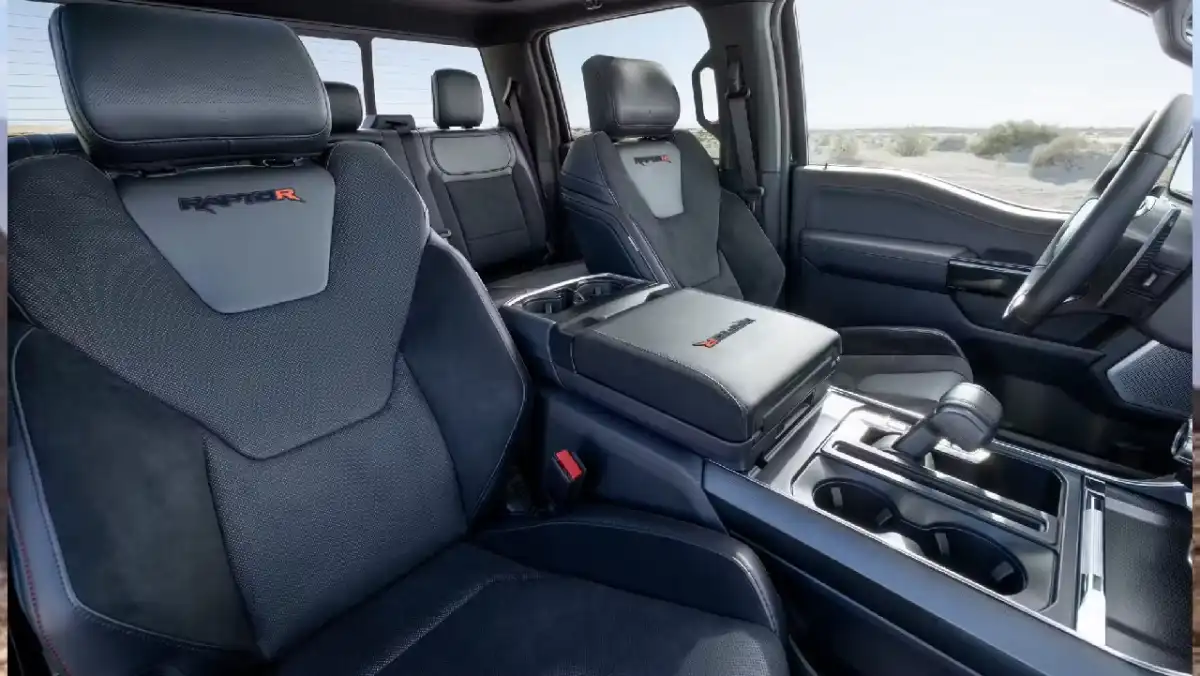
Heated and ventilated seats are standard on the Raptor R, optional on the TRX.
Audio and ambient lighting
The Raptor R gets an 18‑speaker audio system vs 10 speakers in the TRX.
Ambient interior lighting is available in both.
Cabin verdict: both are extremely well equipped, but the Raptor R offers more features as standard, especially in audio, comfort and wireless charging, while the TRX counters with a head‑up display. Overall, the balance tilts toward Ford in this category.
Engine and performance: Predator vs Hellcat – similar numbers, different feel
Engines
Ford F‑150 Raptor R:
5.2‑litre supercharged V8 (Predator).
700hp and 868Nm.
Ram TRX:
6.2‑litre supercharged V8 (Hellcat).
702hp and 881Nm.
Performance
0–96km/h:
Raptor R: 3.6 seconds.
TRX: 4.5 seconds.
Top speed:
Raptor R: 185km/h.
TRX: 190km/h.
Gearboxes:
Ford: 10‑speed automatic.
Ram: 8‑speed automatic.
Reading the figures:
On paper, the TRX has slightly more power and torque, plus a higher top speed, but the Raptor R is significantly quicker off the line thanks to its gearing, weight and calibration.
Both engines are supercharged, both deliver outrageous sound and drama, and both feel like they could spin the earth backwards.
Performance verdict: in terms of raw drama, the pair are very close, but if your priority is launch performance, the Raptor R has a clear advantage.
Off‑road capability: millimetres that matter in the dunes
Off‑road angles
Approach: Raptor R 33.1° vs TRX 30.4°.
Departure: 24.9° for Ford vs 25° for Ram (tiny advantage for Ram).
Breakover: 24.4° for Raptor R vs 25.2° for TRX.
Ground clearance and wading
Ground clearance: 332mm for the Raptor R vs 300mm for the TRX – a clear advantage for Ford.
Wading depth: 813mm on both.
Wheels and suspension
Raptor R: 17‑inch wheels with 37‑inch tyres.
TRX: 18‑inch wheels with 35‑inch tyres.
Suspension: Fox‑tuned setup on the Raptor R vs factory Bilsteins on the TRX, with very similar total travel (about 13 inches front, ~14 inches rear).
Both offer an electronic rear locking differential and advanced 4×4 systems with comprehensive terrain‑management modes.
Off‑road verdict:
The Raptor R’s higher ground clearance and taller tyres on smaller wheels give it a comfort and capability edge over rough terrain and dunes, with better bump absorption.
The TRX is no less capable off‑road, but its factory setup is stiffer, which can make it less comfortable over mid‑ and long‑wave bumps.
In real‑world desert and trail use, the Raptor R feels like the more balanced all‑round off‑roader.
Safety and driver assistance: Ford raises the bar
Airbags
Raptor R: 10 airbags.
TRX: 8 airbags.
Towing and assistance
Trailer assist: standard on the Raptor R, optional on the TRX.
ISOFIX child‑seat anchors: available on both.
360‑degree camera: fitted to both.
ADAS levels
Ford F‑150 Raptor R: driver‑assistance suite rated at Level 2+.
Ram TRX: Level 2 systems with slightly fewer features as standard.
Safety verdict: Ford loads the Raptor R with more standard safety and assistance tech, while the TRX remains well equipped but not as complete out of the box.
Price and value: does the extra kit justify the extra cash?
Ford F‑150 Raptor R
Priced at over AED 670,000 in the referenced market.
That high tag is justified by its richer standard equipment, stronger safety suite, quicker acceleration and better overall comfort.
Ram TRX
Starting from over AED 430,000, offering huge bang for the buck in raw performance.
Comes with a shorter standard equipment list than the Ford, but saves a substantial amount of money.
Value verdict:
If budget is less critical than maximum comfort, tech and safety, the Raptor R is the more convincing package.
If you want Hellcat power on a pickup chassis for as little money as possible at this performance level, the TRX is a very tempting deal.
Which truck makes more sense in the Gulf and UAE?
Choose the Raptor R if:
You want the highest possible spec straight from the factory with minimal need for aftermarket upgrades.
You care about comfort on long desert and highway trips as much as you care about jumping dunes.
You value advanced safety and driver‑assistance tech along with an off‑road‑proven badge.
Choose the TRX if:
You want maximum power, sound and aggression at a much lower entry price.
You don’t mind fewer standard features in exchange for serious savings.
You plan to customise the truck yourself (suspension, tyres, exhaust) to match your driving style.