
- What’s New In The 2025 Nissan Qashqai?
- Available Powertrains: Conventional Petrol Or Stand‑Out e‑Power
- 1.3‑Liter Turbo Petrol Engine
- The Unique e‑Power Hybrid System
- Fuel Economy: Strong Real‑World Numbers
- Driving Experience: EV‑Like… With A Few Caveats
- Regenerative Braking And e‑Pedal
- Interior: Limited Updates But Still Strong
- Design And Dashboard
- Infotainment And Interfaces
- Interior Equipment
- Ride Comfort And Handling
- Strengths And Weaknesses At A Glance
- Key Numbers: 2025 Nissan Qashqai Ti e‑Power
- Final Verdict: A Good Car In A Tough Crowd
The compact SUV and crossover segment in Australia – as in most global markets – has become one of the most crowded categories, with established names like the Toyota RAV4, Honda CR‑V, Kia Sportage and Hyundai Tucson, alongside a strong wave of new Chinese brands such as MG and Haval. In the middle of this crowd, the Nissan Qashqai is trying to maintain its long‑standing position as one of the world’s best‑known crossovers.
The current third generation of the Qashqai appeared in 2021 and brought a major leap in design and technology, especially with the e‑Power version tested in the review. That variant impressed the testing team with its driving feel and fuel economy before the model received the 2025 updates we see today.
What’s New In The 2025 Nissan Qashqai?
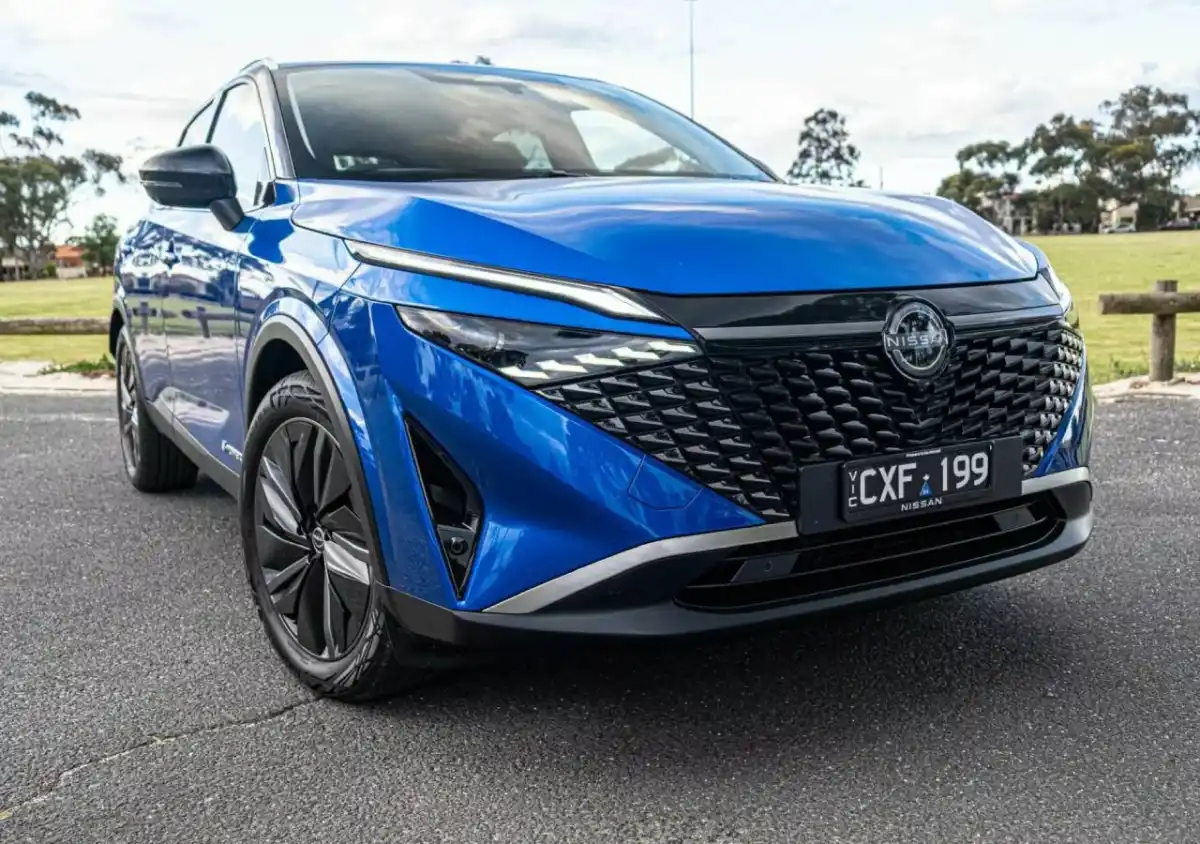
The updates made to the 2025 Qashqai are not revolutionary, but they are enough to refresh its presence in a segment packed with rivals:
A new front end with distinctive LED headlights and a reshaped grille that looks sharper and more modern than the previous model.
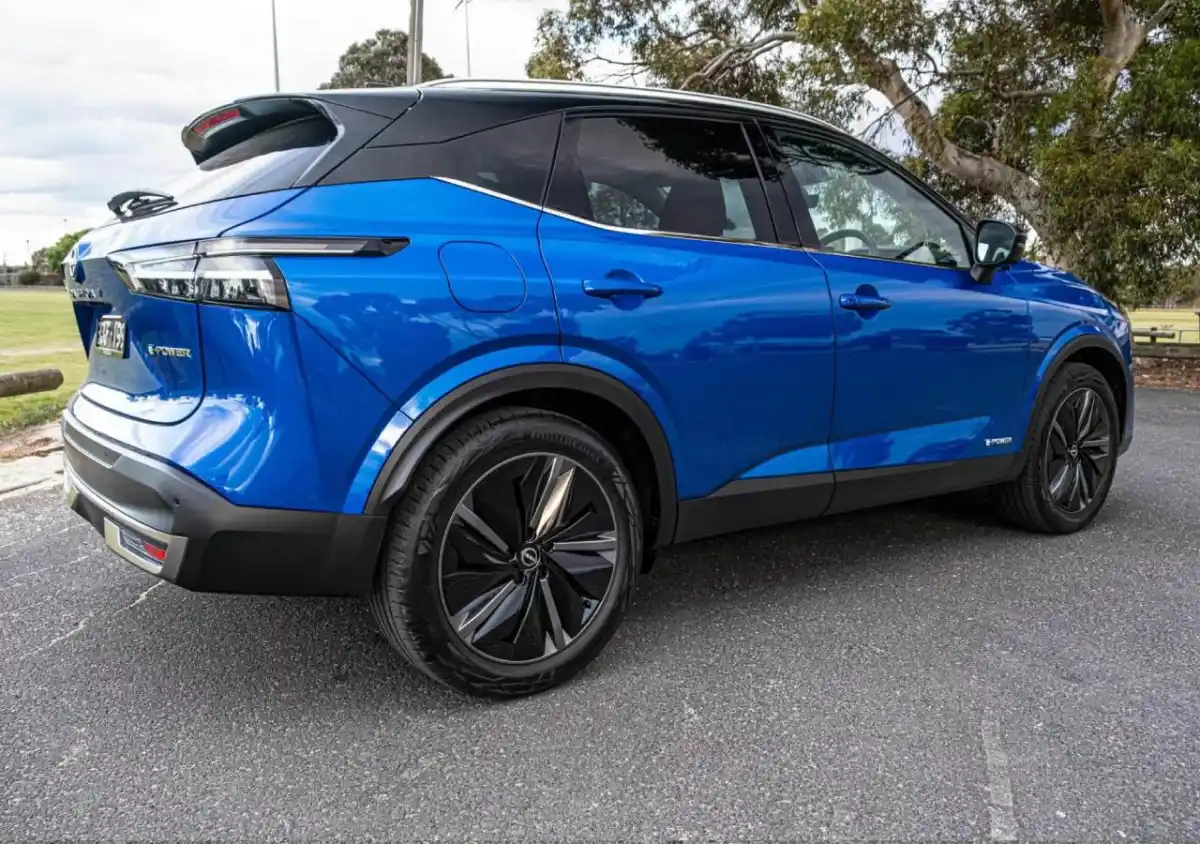
Changes at the rear including clear LED taillights with a revised design and a new rear bumper that adds a subtle sporty touch.
Continued use of the same powertrains as before, with no mechanical changes and two main engine options.
In terms of pricing in Australia, the 2025 range starts with the ST grade at around AU$39,037 and rises gradually through ST‑L, Ti and Ti‑L up to the flagship N‑Design. Each grade can be had either with the 1.3‑liter turbo petrol engine or with the e‑Power system, depending on the variant.
Available Powertrains: Conventional Petrol Or Stand‑Out e‑Power
1.3‑Liter Turbo Petrol Engine
Four‑cylinder 1.3‑liter turbo unit.
Output of 110 kW (148 hp) and 250 Nm of torque.
Paired exclusively with a CVT, available on ST, ST‑L, Ti and Ti‑L grades.
The Unique e‑Power Hybrid System
The version under test is the Ti e‑Power, which uses a hybrid setup that differs from most competitors:
A 1.5‑liter turbocharged three‑cylinder petrol engine producing 115 kW (154 hp) that works only as a generator and is not mechanically connected to the wheels.
A relatively small 2.1 kWh battery pack for energy storage.
An electric motor delivering 140 kW (188 hp) and 330 Nm of torque, which is solely responsible for driving the wheels.
0–100 km/h in around 8 seconds, which is more than adequate for a family vehicle in this class.
With this design, the car effectively drives like a pure EV, while the petrol engine works in the background to supply energy whenever needed, without any external charging.
Fuel Economy: Strong Real‑World Numbers
Nissan claims that the Qashqai Ti e‑Power can achieve around 4.8 l/100 km in mixed driving, which is an excellent figure for a compact SUV. In the real‑world test described in the review, average consumption came out at 5.3 l/100 km, which is still very strong, especially compared with the previous model that recorded around 5.8 l/100 km in a similar test that included more highway driving.
Although the system is not a plug‑in hybrid (PHEV), the high efficiency and the engine’s role as a generator make the Qashqai an attractive choice for drivers who want an EV‑like driving experience without worrying about home chargers or public charging networks.
Driving Experience: EV‑Like… With A Few Caveats
From behind the wheel, the Qashqai e‑Power delivers a driving experience that is very close to that of an electric car:
Setting off from a standstill is almost completely silent because the car moves on electric power alone.
When the petrol engine does start up, its sound remains subdued and unobtrusive in most everyday driving situations.
Acceleration is smooth thanks to the instant torque of the electric motor, making highway overtaking easy.
However, there are a few notes to consider:
When you press hard on the accelerator and the engine revs climb, the three‑cylinder petrol engine doesn’t sound particularly pleasant, which may irritate noise‑sensitive drivers.
In terms of total output, the system is weaker than some rivals, such as the Hyundai Tucson Hybrid that offers about 172 kW and 367 Nm, giving it a slight performance edge.
Even so, in real‑world daily family use, the Qashqai e‑Power doesn’t feel underpowered; it actually comes across as balanced and comfortable.
Regenerative Braking And e‑Pedal
Nissan keeps an effective regenerative braking setup in the 2025 Qashqai:
When you lift off the accelerator, the system recovers part of the kinetic energy and converts it into electricity to recharge the battery.
The e‑Pedal function can handle deceleration and braking in most situations when you ease off the throttle, but it does not quite reach full one‑pedal driving like some EVs.
This system makes city driving easier and reduces reliance on the brake pedal, especially in stop‑start traffic.
Interior: Limited Updates But Still Strong
Design And Dashboard
Nissan hasn’t changed much inside the 2025 Qashqai, and there’s arguably no urgent need to:
In Europe, the car received a new Android‑based infotainment system with Google Maps and Google Assistant, but these updates have not reached the Australian version.
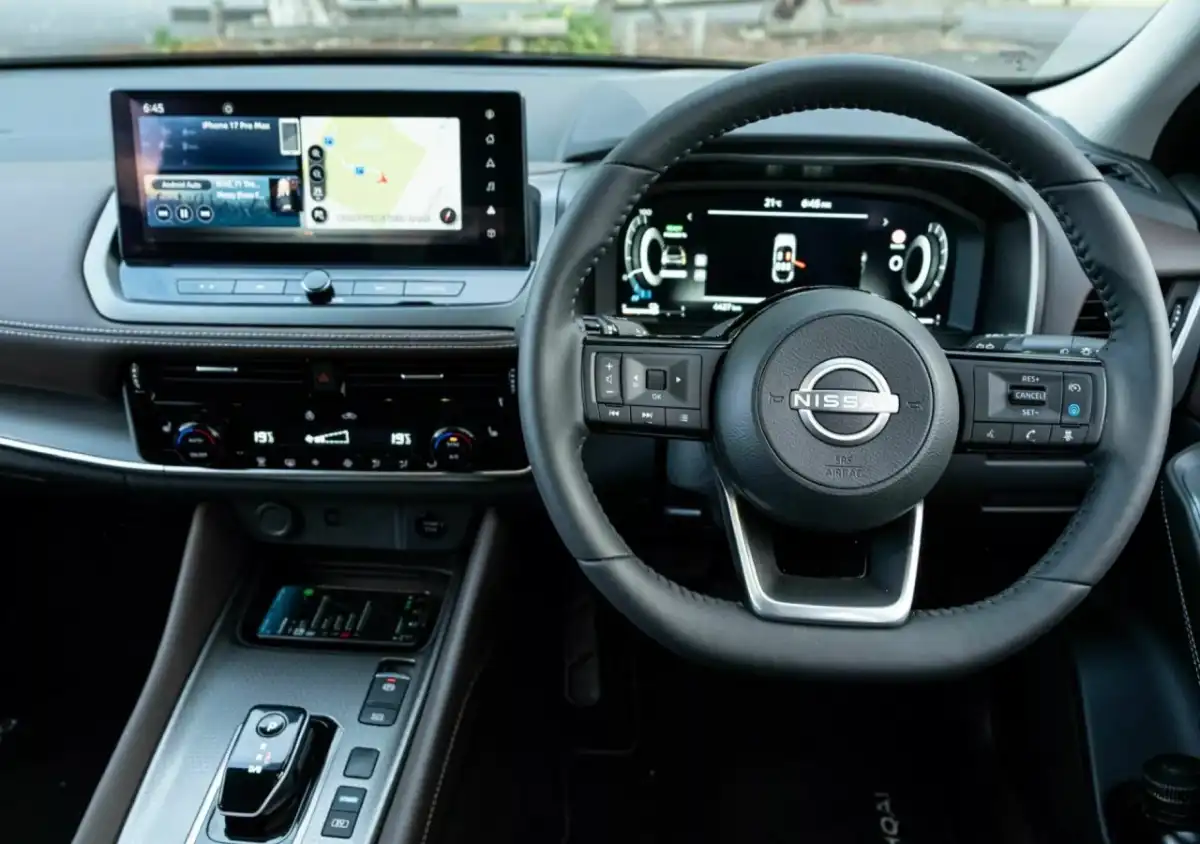
The 12.3‑inch central touchscreen carries over from the pre‑facelift model and still supports wireless Apple CarPlay and Android Auto.
A 12.3‑inch digital instrument cluster is available only on the higher Ti, Ti‑L and N‑Design grades.
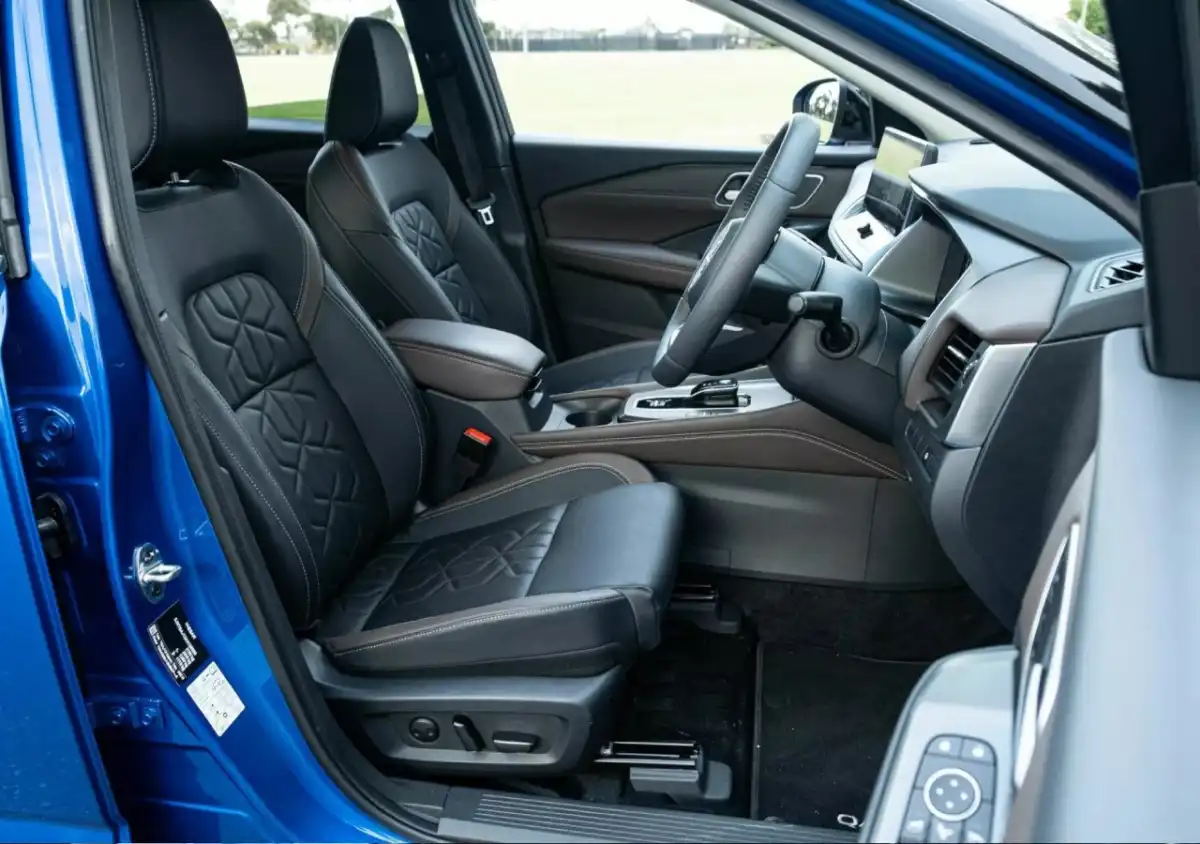
Build quality and materials are good for the price point, with the test car featuring a mix of black and brown leather with contrasting white stitching, while the Ti‑L grade adds Alcantara trimming on the dashboard to enhance the premium feel.
Infotainment And Interfaces
The system is responsive enough, but it doesn’t reach the level of the best setups from Hyundai and Kia.
The retention of physical shortcut buttons and a volume knob beneath the screen is a usability plus.
The main drawback is the use of glossy piano‑black plastic in the center console area, which easily shows dust, fingerprints and scratches.
The digital instrument cluster receives particular praise, offering multiple display modes and a wide range of configurable settings to suit the driver’s preferences.
Interior Equipment
Some notable features on the Ti e‑Power include:
Configurable ambient lighting.
An 8‑way power‑adjustable driver’s seat.
A 6‑speaker audio system on Ti grades, upgraded to a 10‑speaker Bose system on Ti‑L for those who demand better sound quality.
In terms of space, the cabin is good but not class‑leading; Toyota, Hyundai and Kia still offer more rear‑seat room in some rivals. This won’t be an issue for couples or smaller families, but for those who need more space, the Nissan Rogue (called X‑Trail in Australia) remains a more suitable choice.
Ride Comfort And Handling
The Qashqai rides comfortably and remains well‑balanced in most conditions:
The steering is well‑tuned; while it lacks road feel like many modern cars, it is stable and responsive enough for everyday use.
The suspension strikes a good balance between comfort and body control, making the car suitable for both urban streets and highways.
This combination makes the Qashqai e‑Power more enjoyable to drive than its spec sheet might suggest, especially for drivers who appreciate the smooth, linear feel of electric propulsion.
Strengths And Weaknesses At A Glance
2025 Qashqai e‑Power strengths:
EV‑like driving feel without the need to plug in.
Excellent real‑world fuel economy.
A well‑finished cabin with attractive digital instruments and solid equipment levels on higher trims.
Effective driver‑assistance and regenerative‑braking systems that are easy to get used to.
Areas that could be improved or may reduce its appeal:
The three‑cylinder engine sound under hard acceleration is not the best in class.
Infotainment is less advanced than that of key Korean rivals.
Cabin space is not the largest compared with competitors like the Tucson and RAV4.
Rivals like the Hyundai Tucson Hybrid offer more power and, in some trims, very competitive pricing.
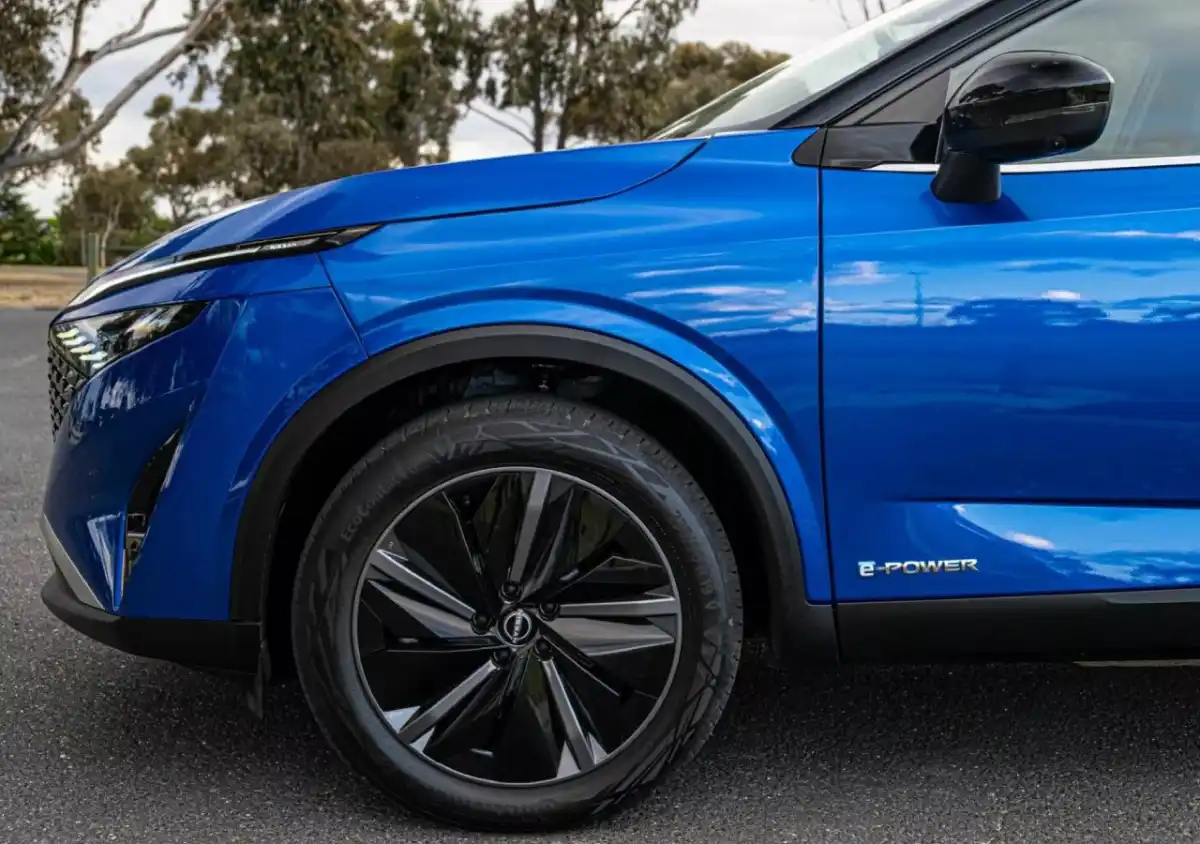
Key Numbers: 2025 Nissan Qashqai Ti e‑Power
Final Verdict: A Good Car In A Tough Crowd
In summary, the 2025 Nissan Qashqai e‑Power retains the key strengths that made the previous model appealing, while adding a sharper, more modern exterior and keeping the efficient e‑Power system.
It is not the most exciting or distinctive car in its class, but it offers a very well‑balanced package for anyone seeking a compact crossover with low fuel consumption and an EV‑like driving experience without stepping into the world of plugs and charging stations. However, the Hyundai Tucson Hybrid remains a very strong benchmark in this segment, with prices starting at around AU$47,664 and rising to AU$63,811, offering more power and competitive equipment. In the end, the decision comes down to each buyer’s priorities.