
Egypt BYDUAE BYDKSA BYDBahrain BYDKuwait BYDOman BYDQatar BYD Yuan PLUS Becomes a Focus of Discussion
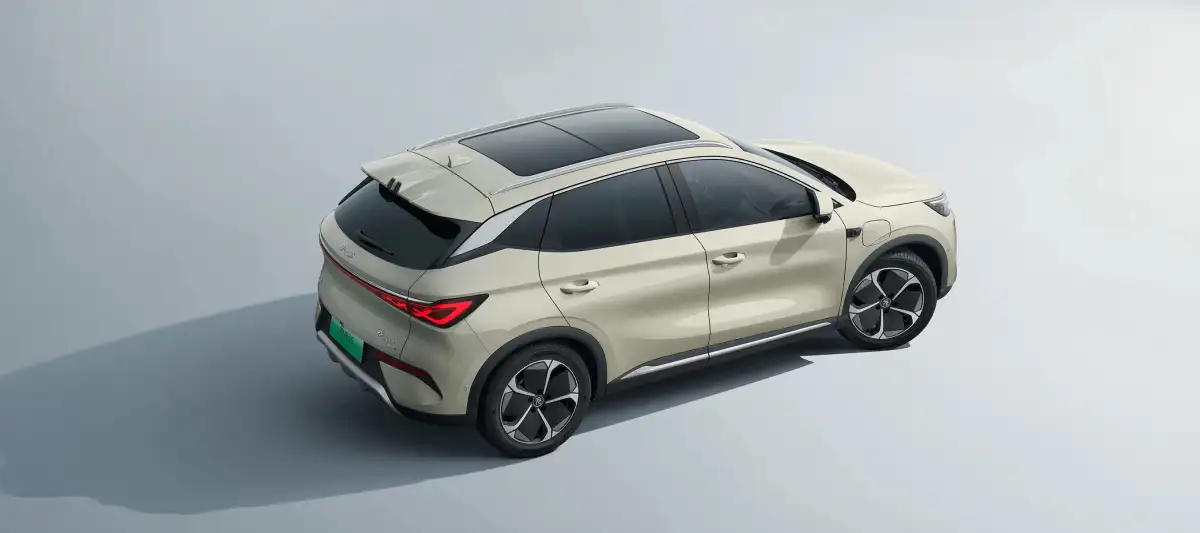
Against the backdrop of recent escalating conflicts and heightened tensions in the Middle East, an incident involving a BYD vehicle in a war zone has sparked widespread public discussion. According to available information, a BYD Yuan PLUS was subjected to a blast impact in a conflict environment. The integrity of the vehicle's structure and the implied protection of its occupants have become the focal points of this discussion.
In a war zone, blast waves, shrapnel, and complex terrain pose extreme challenges to any civilian vehicle. It is precisely under such extraordinary circumstances that a vehicle's structural safety, battery protection, and overall design capabilities are subjected to intense scrutiny.
⸻
The Ultimate Test: Vehicle Safety in a War Zone
In a conflict setting, shockwaves, flying debris, and high temperatures place immense pressure on a vehicle's safety systems. Public attention has centered on several key questions:
Does the body structure possess sufficient strength?
Does the battery system remain stable?
Does the passenger compartment effectively protect those inside?
As an all-electric SUV built on the e-Platform 3.0, the BYD Yuan PLUS features a body architecture with a high proportion of high-strength steel and is equipped with Blade Battery technology. These represent a systematic approach to structural safety and battery stability.
⸻
Technical Background of the Model
The BYD Yuan PLUS (known overseas as the ATTO 3) is a key strategic model in BYD's global lineup and has a growing presence in the Middle Eastern market. The core safety foundations of this vehicle include:
Blade Battery: Emphasizes thermal stability and structural strength.
Multi-Layer Battery Pack Protection: Enhances safety redundancy.
High-Strength Body with Energy-Absorbing Design: Strengthens passive safety performance.
Advanced Driver-Assistance Systems (ADAS): Enhances active safety capabilities.
While it is important to note that no civilian vehicle is designed for warfare, its real-world performance in an extreme conflict scenario has once again intensified the global discussion surrounding the structural safety of new energy vehicles.
⸻
The Real-World Significance of a Safety Philosophy
In peacetime, vehicle safety is primarily discussed in the context of traffic accidents. However, against the backdrop of war, the concept of safety takes on a much more profound and direct meaning.
BYD has long emphasized that "safety is the ultimate luxury." The recent discussion surrounding the Yuan PLUS serves, in essence, as a real-world examination of this philosophy under extreme conditions.
Looking ahead, in an era of increasing global uncertainty, a vehicle's structural strength, battery stability, and overall system safety capabilities will become even more critical dimensions of competition in the new energy vehicle market.
In a turbulent environment, the value of safety is particularly paramount.