
- Why Italian Police Use a Lamborghini for Medical Missions
- How the Lamborghini Organ-Transport System Works
- Real Missions: From Headlines to Operating Rooms
- Key technical and practical points:
- Why Not Just Use Helicopters?
- Impact on Public Perception and Car Culture
- Who Benefits Most From This Unusual Ambulance?
- Potential Future Developments
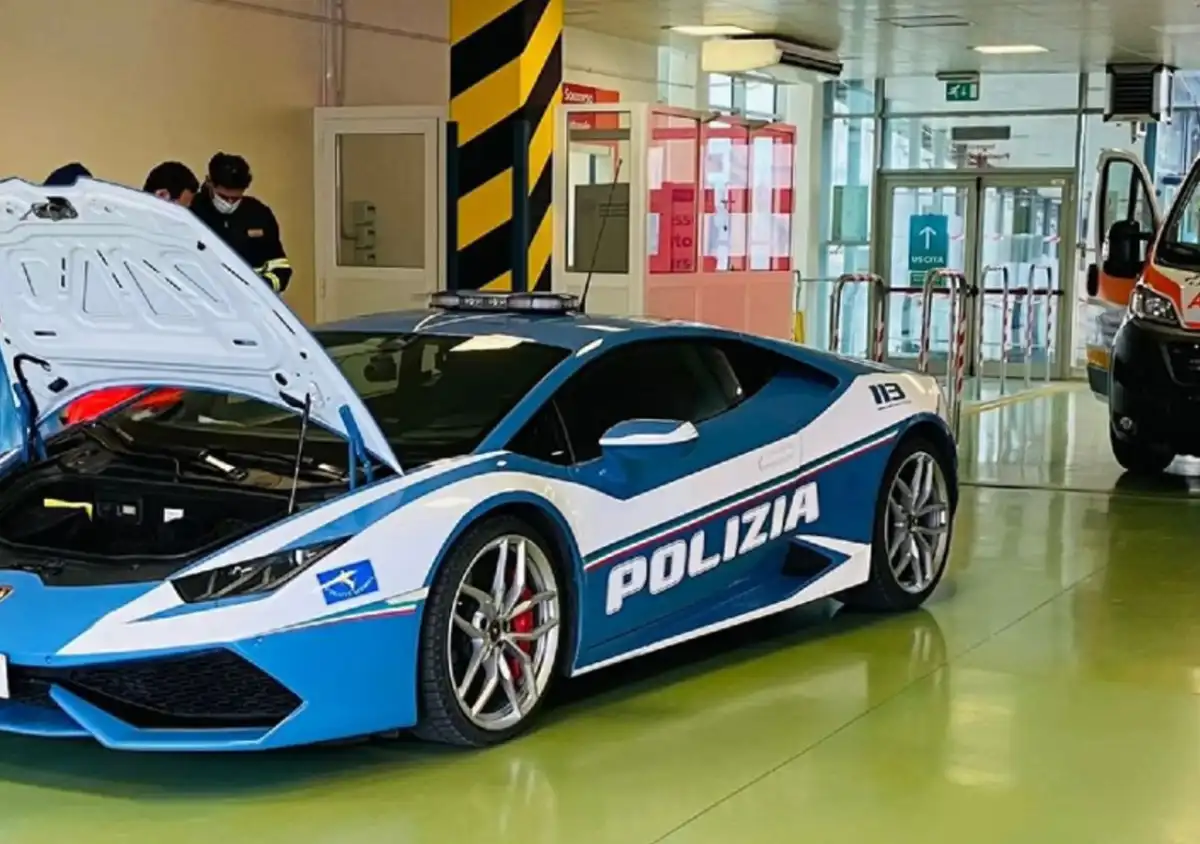
When Lamborghini designed the Huracán, the brief was clear: build a road‑legal supercar capable of blistering lap times and jaw‑dropping performance. Yet in Italy, one Huracán has spent much of its life doing something very different from track days and lifestyle shoots. Wearing the blue and white livery of the Italian State Police, equipped with a medical-grade refrigerator instead of a designer suitcase in its front trunk, it has become one of the world’s most unlikely ambulances—rushing life‑saving organs across hundreds of kilometers so transplant surgeons can beat the clock.
This is the story of how a V10 supercar found a second purpose: not just turning fuel into speed, but turning speed into time, and time into human lives.
Why Italian Police Use a Lamborghini for Medical Missions
At first glance, a Lamborghini in police colors looks like a PR stunt. In reality, the partnership between Lamborghini and the Italian State Police goes back about two decades, and the cars are integrated into serious national operations.
Key background points:
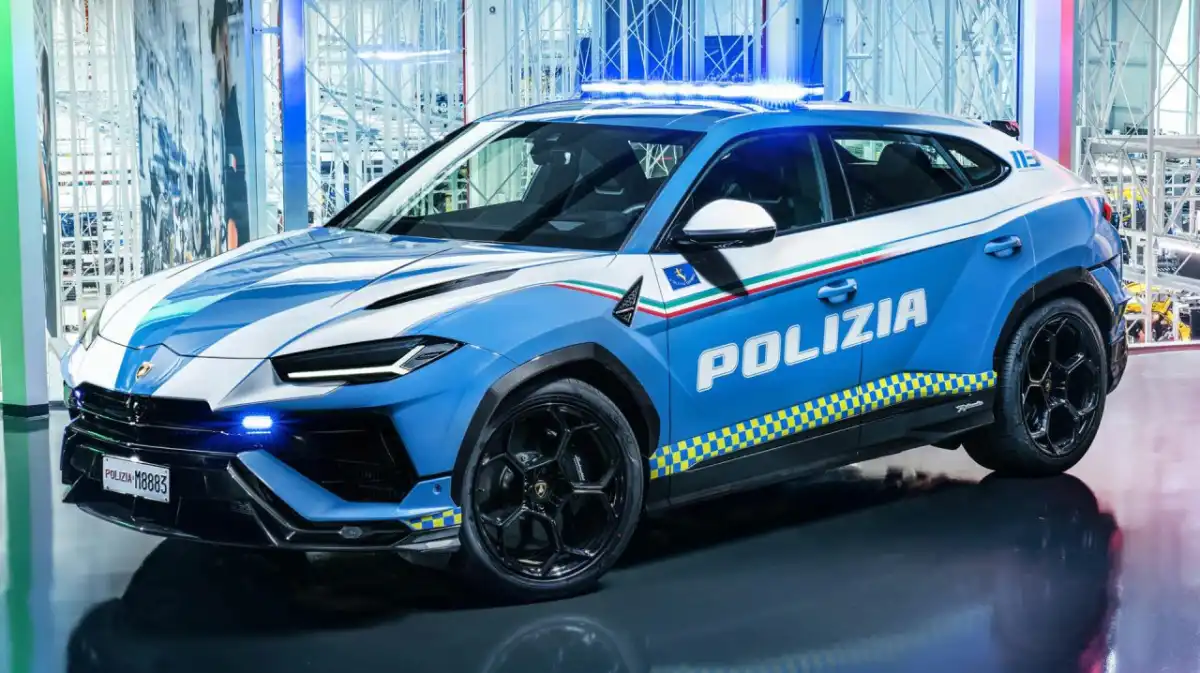
Lamborghini has supplied specially adapted supercars—first Gallardos, then Huracáns, now also an Urus performance SUV—to the highway patrol branch of the Italian State Police.
These cars serve two roles:
Regular highway patrol and enforcement when needed.
High‑priority medical logistics, especially organ, blood, and plasma transport on tight deadlines.
The vehicles are heavily modified compared to a customer Huracán:
Front luggage compartment converted to house a certified refrigerated box for organs and medical cargo.
Full set of police equipment: roof light bar, sirens, radios, onboard cameras, and law‑enforcement electronics.
The logic is simple: when a donor organ is available, and a matching patient is waiting in another city, every minute counts. Italian authorities realized that a fast, reliable, road‑based solution could fill a critical niche between standard ambulances and helicopters.
How the Lamborghini Organ-Transport System Works
When a transplant center gets word that a donor organ is available, there’s a well-defined chain that follows. The Lamborghini is just one link in that chain, but it’s the one that compresses distance and time.
Typical steps:
A donor organ (often a kidney, sometimes other organs) becomes available at Hospital A.
A recipient at Hospital B, sometimes hundreds of kilometers away, is identified as the best match.
The National Transplant Center and local health authorities coordinate with the highway patrol to schedule an urgent transport.
A specialized team or trained officers:
Pick up the organ in a medical transport container.
Secure it inside the Huracán’s cooled compartment in the front trunk.
The car then:
Joins the autostrada with police escorts and control room support.
Travels at very high, but managed, speeds—making use of the car’s stability, braking, and endurance.

Throughout the trip:
Traffic units ahead can adjust or control traffic in critical sections.
The organ’s temperature remains controlled inside the refrigerated box, just as it would be in a dedicated medical vehicle.
The objective is simple: arrive with enough time margin for surgeons to perform the transplantation while the organ is still viable.
Real Missions: From Headlines to Operating Rooms
Several missions involving the Lamborghini patrol car have attracted worldwide media attention because of their speed, distance, and human impact.
Representative cases:
A kidney delivery from Rome to a hospital in the north of Italy:
Distance: roughly 480–500 km.
Travel time: around two hours for the main highway section, an average well over typical motorway speeds.
Result: the kidney arrived within the critical window, allowing a transplant that would not have been possible with normal road transport.
A double kidney run involving stops in two cities:
Starting from a hospital in northern Italy with two donor kidneys.
One organ delivered to a center in a nearby region.
The second transported further south to a major hospital in Rome.
The mission ensured matched patients in two different regions received their transplants in time.
A long‑distance trip of around 700 km:
From a central Italian hospital to a specialized transplant unit in the northwest.
Completed in under five hours including necessary handover stages.
Surgeons highlighted that the arrival time, combined with proper cooling, made the difference between using the organ and discarding it.
Each of these cases highlights the same pattern: the Lamborghini’s capabilities—high cruising speeds, long‑distance stability, powerful brakes, advanced electronics—are used to secure precious minutes on the clock. Those minutes then become extra safety margin in the operating room.
What Makes the Huracán Suitable for This Role
It might seem counterintuitive to use a supercar, not a van, for medical cargo—but the Huracán has several characteristics that make it effective in this very specific role.
Key technical and practical points:
High-speed stability:
Engine and chassis designed to sustain very high speeds for long periods, not just short bursts.
Aerodynamic body and sports suspension tuned for fast motorway driving.
Braking and maneuverability:
High‑performance brakes capable of repeated heavy use without fade.
Direct steering and chassis control that help drivers deal with sudden obstacles or traffic changes.
Compact size:
Easier to thread through tight situations than a large ambulance or truck.
Still offers enough front storage space for a medical cooler.
Dedicated medical refrigeration:
Custom, integrated fridge in the front trunk.
Maintains organ temperature within strict limits across the entire journey.
Combined with specially trained police officers behind the wheel, the Huracán moves from “toy for the rich” to “precision delivery tool” when an organ must be moved fast.
Why Not Just Use Helicopters?
It’s natural to ask why helicopters aren’t always used instead of a supercar. The reality is more nuanced.
Advantages of road-based supercar transport in many scenarios:
Availability:
Helicopters are limited in number and often reserved for immediate trauma evacuations and accidents.
Weather, flight approvals, and air‑traffic constraints can delay helicopter missions.
Infrastructure:
Italy’s extensive autostrada network connects major cities and hospitals directly.
Police can leverage this infrastructure with a vehicle that is always on standby.
Cost and complexity:
Helicopter operations are significantly more expensive per flight hour.
Road transport with a fast car and trained officers is logistically simpler for planned urgent transfers.
The Lamborghini therefore occupies a sweet spot: far faster and more agile than a normal medical van, but more flexible and often more quickly deployable than a helicopter for certain routes.
Impact on Public Perception and Car Culture
For car enthusiasts and the general public, the image of a Lamborghini Huracán in police livery rushing a kidney across the country is powerful. It reshapes how people think about supercars and law‑enforcement fleets.
Notable effects:
Changing the narrative:
Supercars, often criticized as excess or vanity, are shown here as tools that can directly support public health.
Strengthening brand identity:
Lamborghini reinforces its image as a national icon that supports Italy beyond motorsport and luxury.
Raising awareness:
The high‑profile stories surrounding each organ mission draw attention to organ donation programs and the importance of saying “yes” to donation.
For many people who read these stories, the car is no longer just a poster on the wall—it’s part of a real-world chain that gives patients a second chance at life.
Who Benefits Most From This Unusual Ambulance?
The direct beneficiaries, of course, are the patients whose transplants depend on fast logistics, but there are broader groups that gain from the system too.
Stakeholders:
Transplant patients:
Receive organs that might otherwise be lost to time and distance.
Gain additional safety margin for complex surgeries.
Medical teams:
Can plan operations with more confidence when they know a high-speed ground option exists.
Healthcare system:
Reduces organ wastage.
Demonstrates efficient integration between health services and law enforcement.
Public and donors’ families:
See that every effort is made to honor organ donations and maximize their impact.
Behind every headline about a Lamborghini “flying down the highway” is a coordinated network of doctors, nurses, dispatchers, and police officers working together.
Potential Future Developments
As technology evolves, the “supercar ambulance” concept may itself change:
New police vehicles:
Lamborghini has already added an Urus SUV to the Italian police fleet, offering more cargo volume while still delivering high speed and stability.
Electrification and hybrids:
Future high-performance police vehicles may combine performance with electric drive for lower emissions, especially during urban segments.
Smarter logistics:
Integration with real‑time traffic data and AI‑driven routing could further optimize routes for organ transports.
What’s likely to remain constant is the underlying need: a fast, reliable way to move fragile, time‑sensitive medical cargo from donor to recipient.