

- When wheels become rare art pieces
- The strangest wheels: What makes Yamaco Courrèges ACB‑P special?
- Kyusha Shoes: “Old car shoes” in Japanese car culture
- André Courrèges’ signature: French fashion on Japanese wheels
- The ACB family: Multiple colors, one rarity
- Technical specs: Small dimensions, big visual impact
- Condition in the auction: Used but still attractive
- Suitable cars: The Honda City Turbo example
- A collector’s “story”: From online auction to dream project
- Why do these wheels deserve all this attention?
In the world of car customization, these tiny, strange wheels are a reminder that it is not all about huge rims or traditional sporty designs. There are also rare, small‑sized pieces that carry big historical and aesthetic value for collectors. The Yamaco Courrèges ACB‑P wheel set is a perfect example: extremely small Japanese wheels with a French design signature, currently being offered in a global auction and drawing more attention from enthusiasts than many fully loaded modern cars.
When wheels become rare art pieces
Most drivers associate wheels with large sizes, sporty looks, and shiny chrome, but there is a parallel world that cares about the odd and the rare, where wheels become art objects collected and displayed like paintings.
From this world comes the Yamaco Courrèges ACB‑P wheel set. Despite their very small size, they have become a hot topic among classic‑car fans and lovers of unusual design, especially after being listed in a no‑reserve auction on Bring a Trailer.
The strangest wheels: What makes Yamaco Courrèges ACB‑P special?
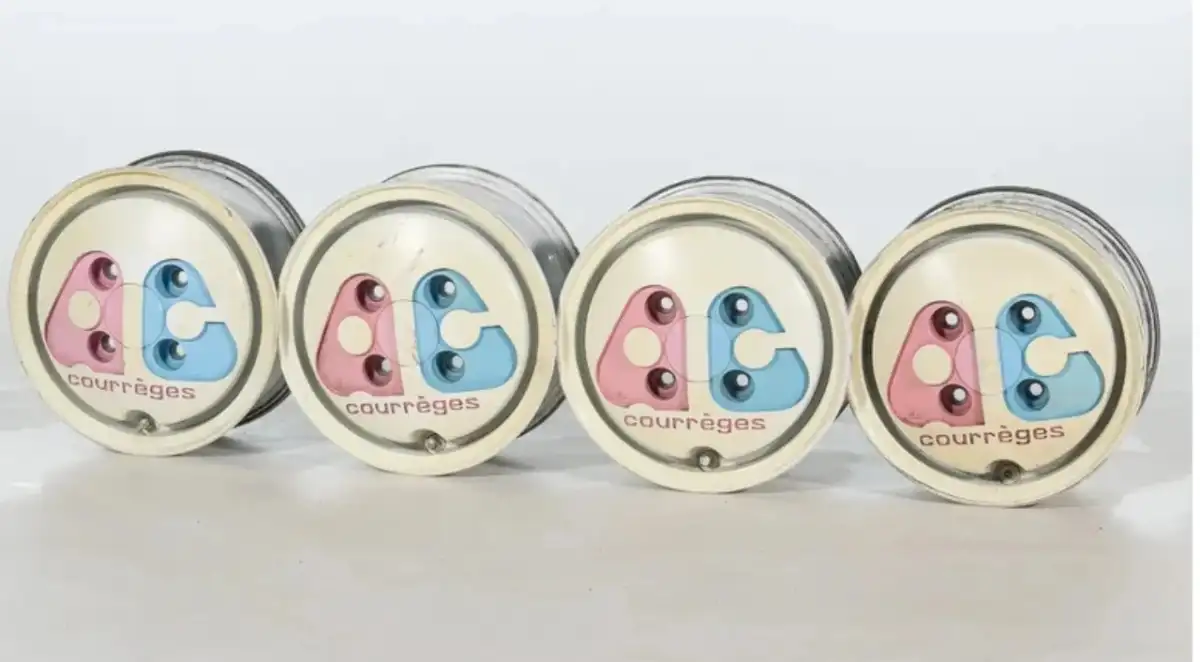
Wheels with a diameter of just 10 inches and a 4‑inch width, far smaller than the sizes used on most cars today.
A 4×114.3 bolt pattern that suits a very limited group of small classic Japanese cars.
A Japanese–French identity: manufactured by Yamaco Industries under the direction of French designer André Courrèges.
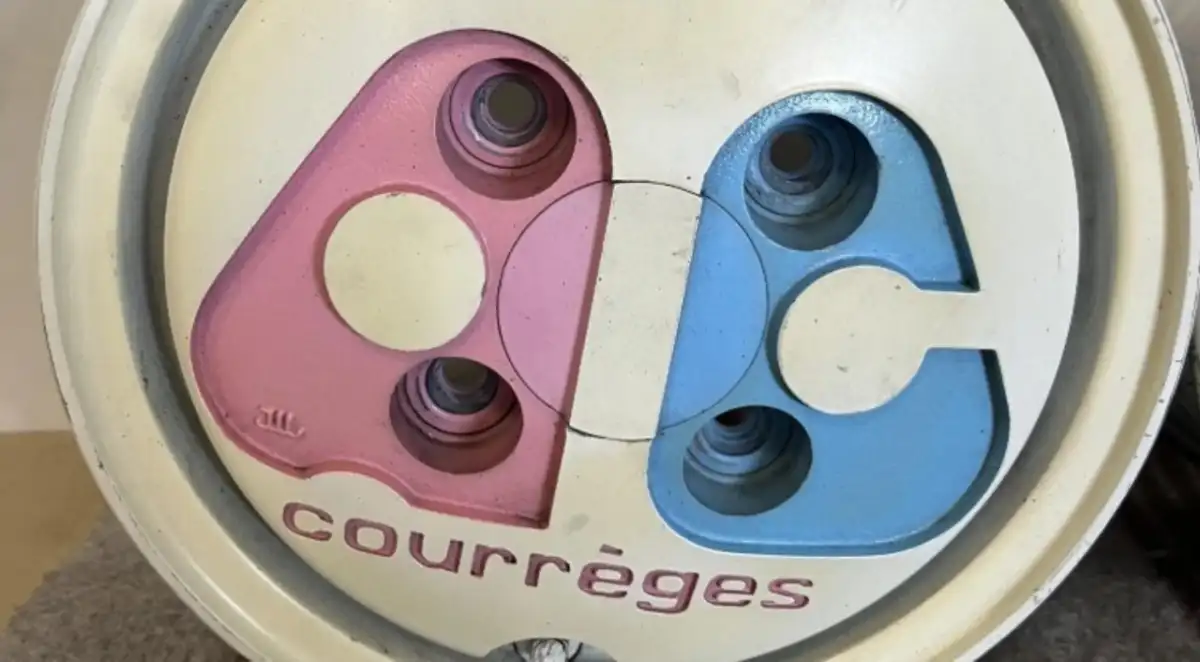
Cheerful pink‑and‑blue lettering on the ACB‑P design, along with other color variants within the same family.
All of this makes these wheels the opposite of “ordinary, practical wheels” and much closer to a “fashion accessory for cars” aimed at people who want to stand out.
Kyusha Shoes: “Old car shoes” in Japanese car culture
In Japan, this type of wheel is known as “Kyusha Shoes”, literally “old car shoes”, a name that perfectly summarizes the idea:
Very small wheels made specifically for classic Japanese cars with compact dimensions.
The target is not maximum performance, but giving the car a unique visual personality with a soft, slightly “toy‑like” touch.
They are typically used on old cars modified in a retro or neo‑classic style, blending the past with light modern touches.
In this concept, wheels become part of the car’s character, just like special shoes complete someone’s outfit.
André Courrèges’ signature: French fashion on Japanese wheels
The presence of the Courrèges name is not a minor detail. André Courrèges was a French fashion designer known for a youthful spirit, bright colors, and simple, future‑inspired lines.
When he collaborated with Yamaco on these wheels:
He wanted to reflect the “Mediterranean mood” with light colors and playful details.
He used smooth, soft shapes and letter placement instead of the sharp, aggressive lines usually seen on performance rims.
The result is a wheel design that looks almost like a toy or decorative object, yet is still functional and can be fitted to specific small cars.
This meeting point between fashion and automotive design gives the wheels an extra dimension that makes them interesting even to people who are not hardcore car nerds.
The ACB family: Multiple colors, one rarity
The ACB line is not a single color; it includes several versions:
ACB‑P: the version in focus here, with pink and blue letters, and the most famous among fans.
ACB‑R: a version with red and blue lettering for those who want a sharper, bolder look.
ACB‑G: the “legendary” variant with all‑gray lettering for fans of quiet, classic tones.
Even though ACB‑P is considered the most common within the lineup, it is still relatively rare on the market, which increases its value among collectors of unusual parts and classic JDM enthusiasts.
Technical specs: Small dimensions, big visual impact
From a technical point of view, the specs are anything but typical:
A 10‑inch diameter, a size now usually seen on tiny vehicles or special projects rather than the 15–20‑inch wheels common today.
A 4‑inch width, which means narrow tires and limits use to light, small cars rather than heavy or high‑performance vehicles.
A 4×114.3 bolt pattern, placing them in the realm of certain older Japanese models and very compact classics.
This makes the set better suited to:
Show cars that need a unique look for car meets and events.
Retro build projects on cars such as the Honda City Turbo and similar micro‑cars.
Condition in the auction: Used but still attractive
The wheels in the auction are not “factory fresh”, but they are far from junk:
Photos show some surface rust and light internal corrosion that can be addressed with cleaning and refinishing.
The exterior paint and colored letters still keep their personality, making restoration possible without losing the original character.
The listing does not clearly mention matching colored lug bolts, which likely means they are not included.
For restoration‑minded enthusiasts, this is not a drawback but rather a chance to give the wheels a new life while preserving their original spirit.
Suitable cars: The Honda City Turbo example
One of the most notable examples mentioned with these wheels is:
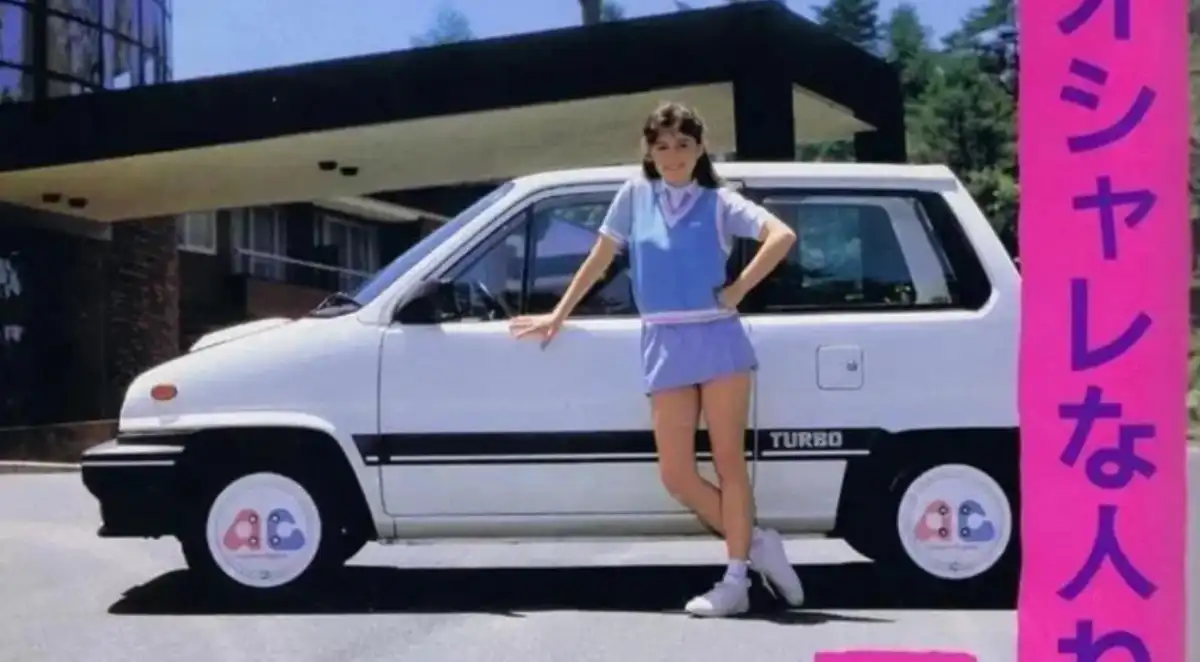
The classic Honda City Turbo, a tiny Japanese hatchback originally built with very compact dimensions, making it one of the few cars that can realistically wear 10×4‑inch wheels.
The original promotional image showing these wheels on a white City Turbo clearly demonstrates how such a small wheel set can completely transform a car’s appearance.
Now imagine another car today with the same spirit:
A tiny classic hatch, light‑colored paint, Yamaco Courrèges wheels, and a few retro accessories.
The result is a show project that steals the spotlight at any meet, even parked next to modern supercars.
A collector’s “story”: From online auction to dream project
To give the article a more narrative feel, you can picture a simple scenario:
A classic‑car fan in Japan or Europe has been searching for something truly different for his tiny vintage car.
While browsing auction sites, he stumbles upon a listing for a Yamaco Courrèges ACB‑P set in Belgium, with no reserve and still in decent condition.
The auction starts, a handful of enthusiasts bid against him, his heart rate rises with each increment, and finally he wins the set that turns his build from a “nice little project” into a true showpiece.
With this kind of story, the reader can imagine being in the enthusiast’s shoes and feel how a small detail like a wheel set can transform the whole experience of owning a car.
Why do these wheels deserve all this attention?
In an era where wheels are often judged by how big they are and how aggressively they fill the arches, the Yamaco Courrèges ACB‑P set comes in to remind everyone that uniqueness is not about size alone, but about story, history, and identity.
They are very small wheels carrying a big idea: that cars can be a platform for art, fashion, and culture, and that a circular piece of metal can tell a tale of collaboration between a French designer and a Japanese manufacturer—and of an online auction that brings enthusiasts from different continents together around the “strangest wheels” they have ever seen.