
- What does 4Motion means?
- How does 4Motion works?
- 4Motion vs. Older 4WD Systems
- Types of 4Motion Systems
- Volkswagen Models Featuring 4Motion
- Is 4Motion Right for You?
Ever wonder how your car keeps steady on tough roads? We demystify the VolkswagenUAE VolkswagenBahrain VolkswagenEgypt VolkswagenKSA VolkswagenKuwait VolkswagenOman VolkswagenQatar Volkswagen 4Motion system, a clever tech that gives you better grip and control when you need it most.
What does 4Motion means?
Volkswagen's 4Motion system represents a sophisticated approach to four-wheel drive, designed to improve vehicle stability, handling, and safety across a range of driving conditions. While traditional four-wheel-drive systems often rely on manual engagement and a more rigid setup, 4Motion operates with advanced technology to deliver power dynamically where it's needed most. This system ensures enhanced traction, making it a reliable choice for drivers facing challenging road surfaces or unpredictable weather.
How does 4Motion works?
At its core, the 4Motion system intelligently distributes engine power between the front and rear axles, reacting in real-time to changing road conditions. By sensing wheel slippage, it redirects torque to the wheels with the best grip, ensuring a smooth and controlled driving experience. This makes it particularly effective in environments where ice, snow, or uneven terrain might compromise safety.
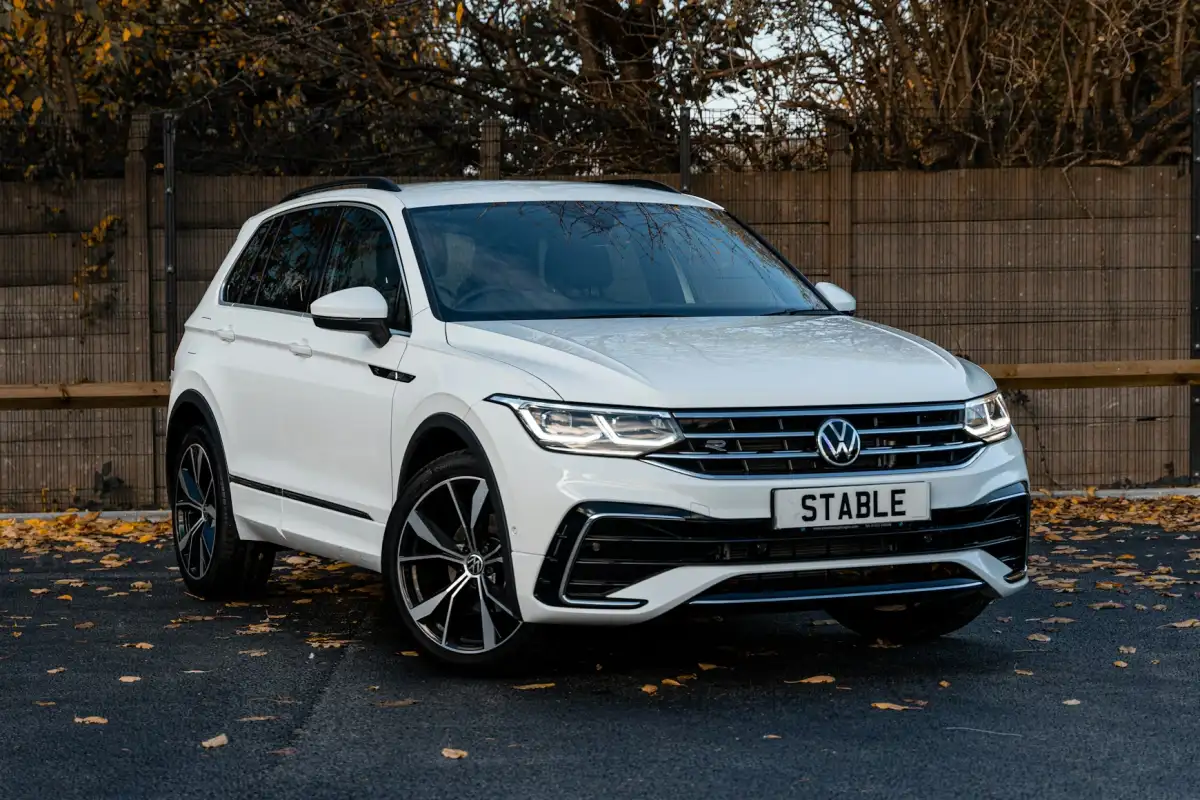
The 4Motion system in your Volkswagen TiguanUAE Volkswagen TiguanKSA Volkswagen TiguanEgypt Volkswagen TiguanOman Volkswagen TiguanKuwait Volkswagen TiguanQatar Volkswagen TiguanBahrain Volkswagen Tiguan is very clever in how it works, balancing power and efficiency.
On Dry Roads: Most of the time, especially on dry, smooth roads, your Tiguan mainly uses its front wheels for power. This is similar to a front-wheel-drive car. The 4Motion system stays in a "standby mode." This design is smart because it:
Helps save fuel. Your Tiguan uses less gas when the 4Motion system is not fully engaged.
Reduces wear on mechanical parts. Less work for the system means less wear over time.
Keeps things quiet and smooth. You won't even notice it's there. But even in this mode, the system is always ready. If you press the gas pedal hard or turn the steering wheel sharply, the 4Motion system can send some power to the rear wheels very quickly, almost before you even feel the need. This helps your car feel more stable right from the start.

In Rain, Snow, or Slippery Weather: This is where your Tiguan's 4Motion system truly shines. It reacts instantly to maintain control and traction. Here’s what happens:
Slip Detection: The wheel sensors immediately notice if the front wheels start to lose grip or spin. This could be on a wet road, snow, or even loose gravel.
Fast Reaction: The car's computer gets this warning. In less than 0.2 seconds, it sends a signal to the electro-hydraulic pump.
Clutch Engagement: The pump quickly activates the multi-plate clutch. This clutch then tightens, connecting the front and rear axles. Up to 50% of the engine's power can be sent to the rear wheels for much better grip.
Smart Power Distribution: If one rear wheel slips, the system doesn't stop there. An electronic limited-slip differential (sometimes called XDS on the Tiguan) can then move power from a slipping wheel to the wheel with more grip on the same axle. This ensures your Tiguan always finds the best possible traction.

Tip: This smart power sharing works hand-in-hand with your car's Electronic Stability Control (ESC) system. Together, they are powerful tools. They can stop your car from skidding, especially when driving on icy roads or taking turns on slippery surfaces. This adds a big layer of safety to your Volkswagen Tiguan.
4Motion vs. Older 4WD Systems
The 4Motion system offers many benefits compared to older, more traditional four-wheel-drive systems. It's built for today's driving needs.
Feature | Traditional Mechanical 4WD | 4Motion Smart System |
|---|---|---|
Response Time | About 1 second | Under 0.2 seconds |
Fuel Usage | Adds 8-15% | Adds 3-5% |
Mode Changes | Needs manual input | Fully automatic |
Added Weight | Quite heavy | Adds only 65 kg |
Let's look closer at these points:
Speed: The 4Motion system is incredibly fast. It reacts in under 0.2 seconds. Older systems might take a full second or more to engage. This quick reaction means you have better control almost instantly when conditions change.
Fuel Efficiency: Your Tiguan's 4Motion system is designed to save fuel. It adds only around 3-5% to your fuel consumption. Traditional 4WD systems, always spinning all four wheels, can add 8-15% more to your fuel bill. This difference can save you a lot of money on petrol over time, whether you're paying in AED or SAR.
Ease of Use: You don't need to push any buttons or twist any knobs. The 4Motion system is fully automatic. It constantly checks the road and vehicle conditions, deciding for itself when and how much power is needed at the rear wheels. This is much simpler than older systems that needed you to manually select 4WD modes.
Weight: The 4Motion system is quite light, adding only about 65 kilograms to your Tiguan's total weight. This low weight impacts fuel economy less and doesn't make the car feel heavy or sluggish. Older systems often added a lot more weight.
With the 4Motion system, your car's computer acts faster than a human brain. It quickly knows what the road needs. The newest Tiguan models come with the sixth generation of this system. It works even better in heavy traffic, making power delivery smoother when you stop and go often.
Types of 4Motion Systems
Volkswagen offers two primary variations of 4Motion technology, each tailored to specific driving needs:
1. Haldex Clutch System
The Haldex clutch system is an electronically controlled setup that collects data from various vehicle components, including the engine, transmission, and brakes. It uses this information to adjust power distribution between the front and rear axles. For instance, during normal driving, power is primarily sent to the front wheels, but as soon as wheel slippage is detected, the system transfers torque to the rear wheels to maintain optimal traction. This makes it ideal for compact models like the Volkswagen Tiguan.
2. Torsen Differential System
The Torsen differential system, on the other hand, is a mechanical solution that distributes torque between the axles based on rotational forces. While it typically maintains a balanced power split, it can dynamically adjust to optimize performance. This system is more commonly found in performance-oriented models such as the Golf R, where precise handling and stability are paramount.
Volkswagen Models Featuring 4Motion
The 4Motion system is not exclusive to SUVs. It is available across a variety of Volkswagen vehicles, catering to diverse driving preferences:
Performance-Oriented Models: The Volkswagen GolfUAE Volkswagen GolfEgypt Volkswagen GolfKSA Volkswagen GolfKuwait Volkswagen GolfBahrain Volkswagen GolfOman Volkswagen GolfQatar Volkswagen Golf R utilizes 4Motion for superior handling and power delivery, making it a favorite among enthusiasts.
Rugged All-Road Vehicles: The Golf Alltrack pairs 4Motion with off-road capabilities, offering a unique blend of adventure and practicality.
Luxury and Comfort: Higher trims of the Volkswagen ArteonUAE Volkswagen ArteonKSA Volkswagen ArteonBahrain Volkswagen Arteon include 4Motion for a more refined and confident driving experience.
SUVs: Both the Tiguan and Touareg showcase the capabilities of 4Motion, offering enhanced performance and safety for family-oriented drivers.
Is 4Motion Right for You?
Volkswagen’s 4Motion system is ideal for drivers who demand more from their vehicles, whether it’s for navigating challenging weather, hitting off-road trails, or enjoying a more engaging driving experience. However, for those who primarily drive in mild climates on paved roads, the added cost and fuel consumption may not be necessary. Ultimately, 4Motion shines in situations where grip, stability, and safety are paramount.
By combining innovative engineering with practical functionality, Volkswagen’s 4Motion system delivers a compelling solution for diverse driving needs. Whether you’re exploring the great outdoors or navigating the urban jungle, 4Motion ensures your journey is as smooth and secure as possible.
FAQ
Q: Is 4Motion a true all-wheel-drive system?
A: Technically, the 4Motion in your Tiguan is an intelligent, on-demand all-wheel-drive system. It primarily drives the front wheels most of the time. This design helps save fuel. It only sends power to the rear wheels when it senses a need for more grip. This smart setup perfectly balances having good traction and saving on fuel costs. It gives you the best of both worlds – safety and economy.
Q: Will 4Motion noticeably increase my fuel consumption?
A: Compared to a front-wheel-drive version of the Tiguan, you might see a slight increase in fuel usage. This is around 0.5 liters extra per 100 kilometers in city driving. The impact is minor for a few key reasons:
The 4Motion system is light. It adds only about 65 kilograms of weight.
It mostly runs in front-wheel-drive mode. This means the system only engages the rear wheels when it needs to. Because of this, its effect on your fuel bill (whether in AED or SAR) is far less than older, heavier 4WD systems.
Q: Does the 4Motion system need special maintenance?
A: The 4Motion system is designed to be low maintenance. You should check the fluid in the multi-plate clutch (Haldex coupling) every four years. Besides that, you don't need extra maintenance during your regular car services. It's smart to be careful with water, though. Make sure you don't drive through water deeper than what your Tiguan's manual suggests. This will help protect the electronic parts from damage.
Read More:
2026 Audi Q3: Bold Design and Futuristic Technology with a Stalk-Free Cabin
Toyota Land Cruiser 2025 Hybrid: A New Launch in the UAE, First Globally
The Top 4 European Car Brands of 2025: Leadership in Innovation and Luxury
2 / 13