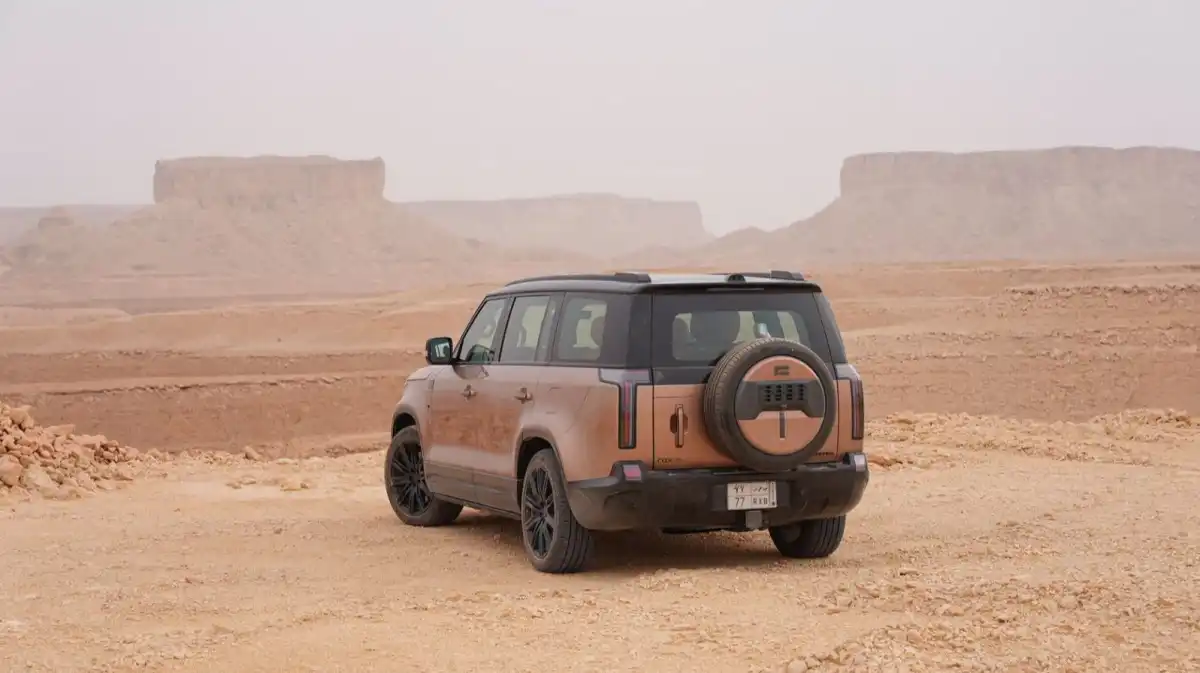

1.5T Challenging V6/V8? A Peak Duel Between Physical Laws and Technological Evolution
As January settles in, Saudi Arabia enters its ideal season for automotive testing. With temperatures hovering around a comfortable 25°C and cool sea breezes sweeping across the city, the Cartea testing team headed deep into the Red Dunes for a comparison that promises to ignite serious debate across the Middle East’s car community.
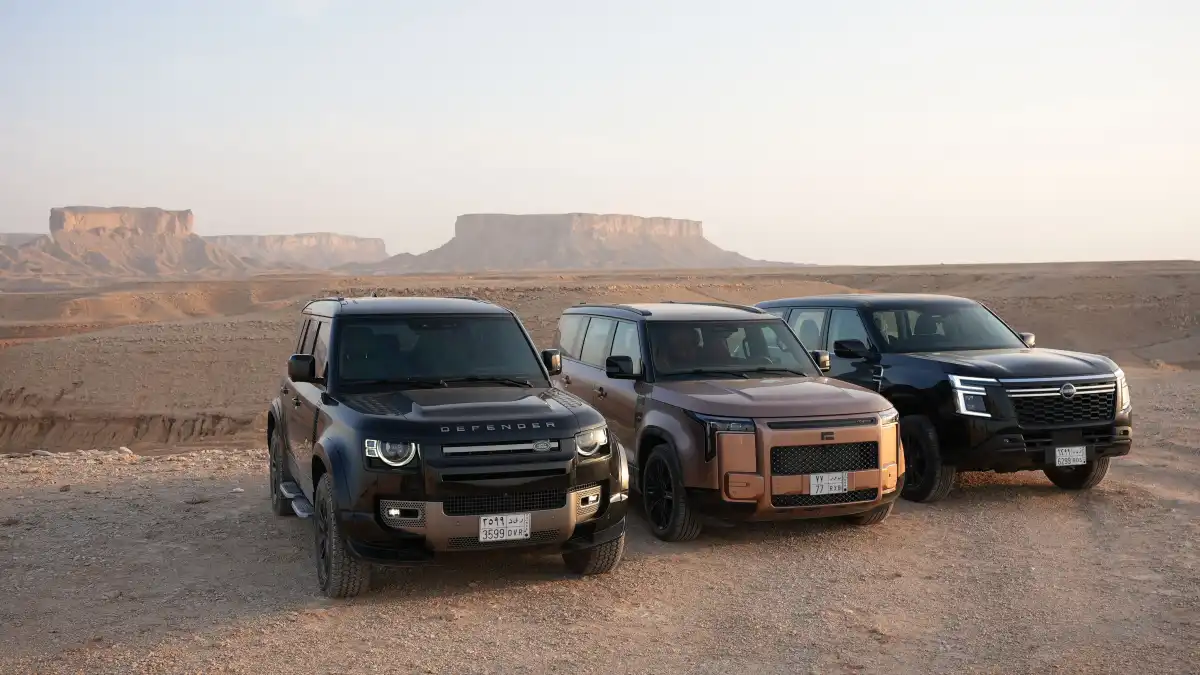
This was not a routine three-car shootout. It was a challenge to the very definition of a luxury SUV. On one side stood two long-standing GCC icons: the UAE Nissan PatrolBahrain Nissan PatrolEgypt Nissan PatrolKSA Nissan PatrolKuwait Nissan PatrolOman Nissan PatrolQatar Nissan Patrol and the Bahrain Land Rover DefenderEgypt Land Rover DefenderKSA Land Rover DefenderKuwait Land Rover DefenderOman Land Rover DefenderQatar Land Rover DefenderUAE Land Rover Defender 110, vehicles that have shaped the region’s roads and deserts for decades. Facing them was a newcomer with a radically different approach: the UAE RoxBahrain RoxEgypt RoxKSA RoxKuwait RoxOman RoxQatar Rox ADAMAS, positioning itself as a technology-driven alternative with range-extending electrification at its core.
Core Question: Rational Choice or Emotional Loyalty?
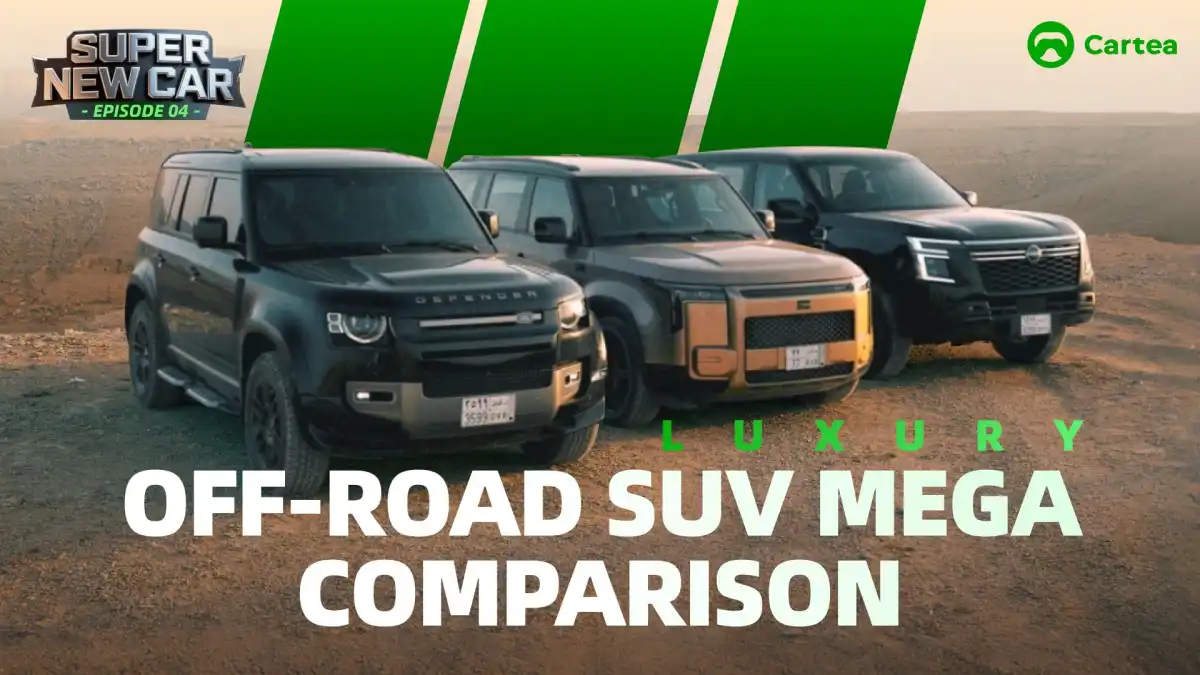
At the heart of this test was a simple but controversial idea: does a modern luxury SUV still need a large engine, or has technology changed the rules?
To answer that, we structured the comparison around three key themes.
Power vs. Efficiency
Is a 1.5-liter turbo engine truly unworthy of a luxury badge? With the ROX ADAMAS set to Sport Mode and battery charge above 80%, we conducted three consecutive 0–100 km/h and 0–400 m acceleration runs. This was followed by real-world fuel consumption testing during a 120 km/h highway convoy, simulating everyday long-distance driving.
Off-Road Capability
Next, we took all three into the desert, and kept going until on of them got stuck. The tests included front-axle lift, rear-axle lift, cross-axle articulation, and single-wheel recovery scenarios. The question: are traditional mechanical locking differentials still king, or can ROX’s intelligent all-electric four-wheel-drive system match — or even surpass — them?
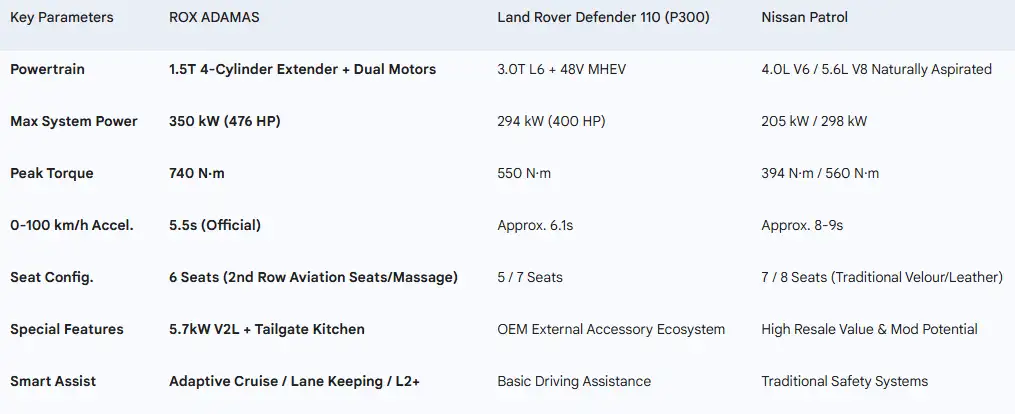
On-Paper Specs vs. Real-World Results
All vehicles were compared using real data gathered directly at our test locations, ensuring the numbers reflected actual performance rather than brochure claims.
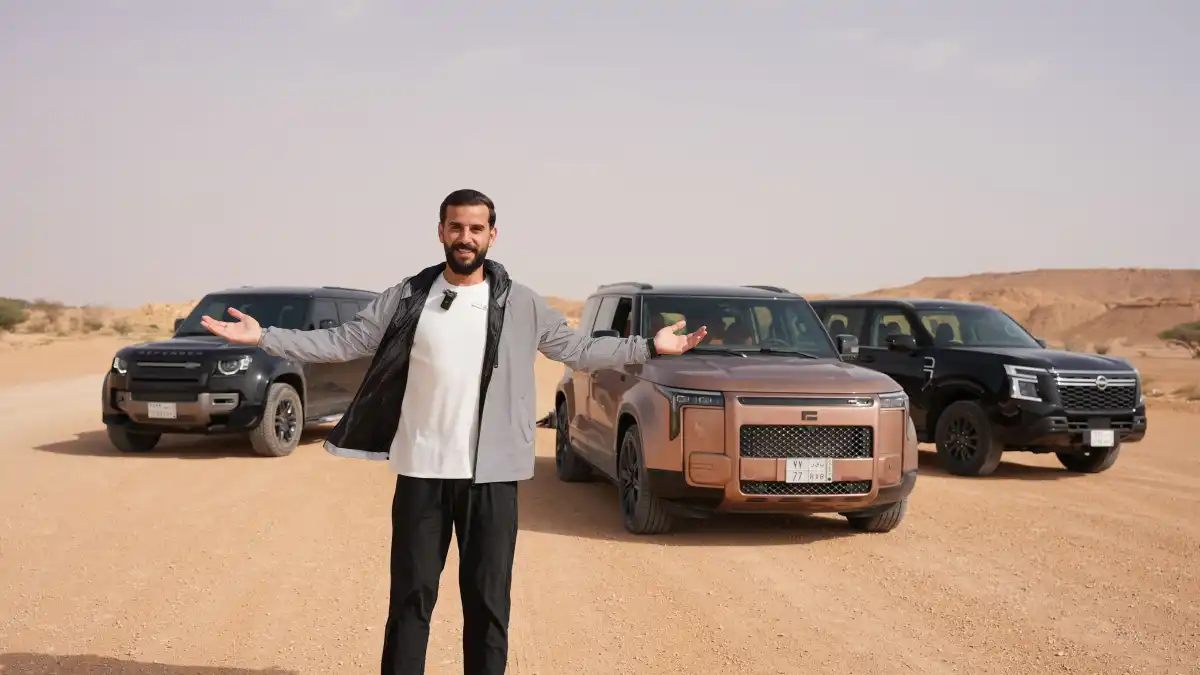
Our Testing Process: Data-Driven, Real-World Focused
From January 23 to 28, the Cartea team expanded the evaluation beyond speed and sand performance into daily usability.
Cabin Quietness (NVH)
Interior noise levels were measured at idle and at steady speeds of 60 km/h, 80 km/h, and 120 km/h, offering a clear picture of ride refinement and long-distance comfort.
Climbing Performance
We conducted both flat-start and hill-start climbing tests on hard-surface inclines to assess throttle response, traction management, and drivetrain control under load.
Outdoor Lifestyle Testing
January is peak camping season in Saudi Arabia, so we put lifestyle features to the test. The ROX ADAMAS’s “One-Key King-Size Bed Mode” and updated tailgate kitchen system were evaluated in real desert conditions to see how much they truly add to the outdoor experience.
What Comes Next?
This comparison goes beyond numbers. It challenges a long-held belief: can a luxury SUV without a big-displacement engine still deliver the prestige, capability, and confidence buyers expect?
Some drivers remain loyal to the sound and feel of a V8. Others are leaning toward what they see as the rational choice, investing in features they use every day rather than cubic centimeters they rarely exploit.
Will the Middle East’s long-standing SUV champions defend their territory, or will the Chinese challenger, complete with its built-in “kitchen” and “living room,” reshape expectations?
Cartea Global Premiere: The ultimate Middle East luxury SUV showdown video is coming soon.
The desert never lies. And the dunes are about to reveal the truth.