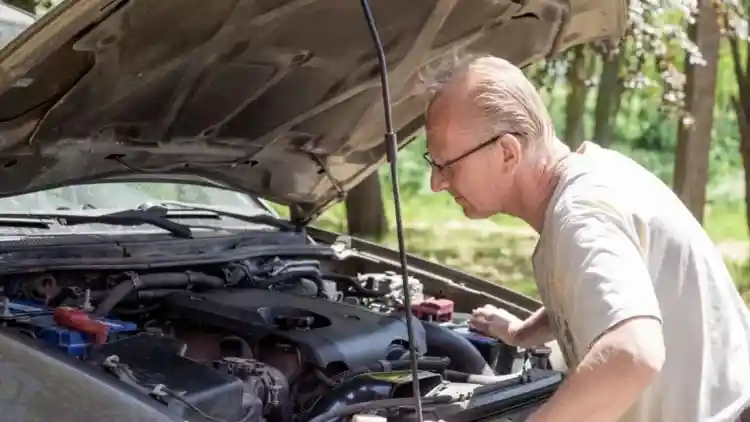

- First: Why is engine temperature a special challenge in Saudi Arabia?
- Second: The role of the cooling system… and common mistakes that cause overheating
- Third: Fan and thermostat issues… the “small details” that raise temperature
- Fourth: Driving load and driver behaviour and their impact on engine heat
- Fifth: The effect of oil and the lubrication system on engine temperature
- Sixth: Other factors that may cause engine overheating
- Seventh: How should the driver react to overheating in the moment?
- Eighth: Preventive tips for Saudi drivers to avoid overheating even in winter
Engine overheating in Saudi Arabia can still occur even during winter because of the climate, driving conditions, and faults in the cooling or lubrication system, not just air temperature. In a demanding environment like Saudi Arabia, a minor defect in the cooling circuit or neglected maintenance is enough to turn the temperature gauge into a constant source of concern for the driver.
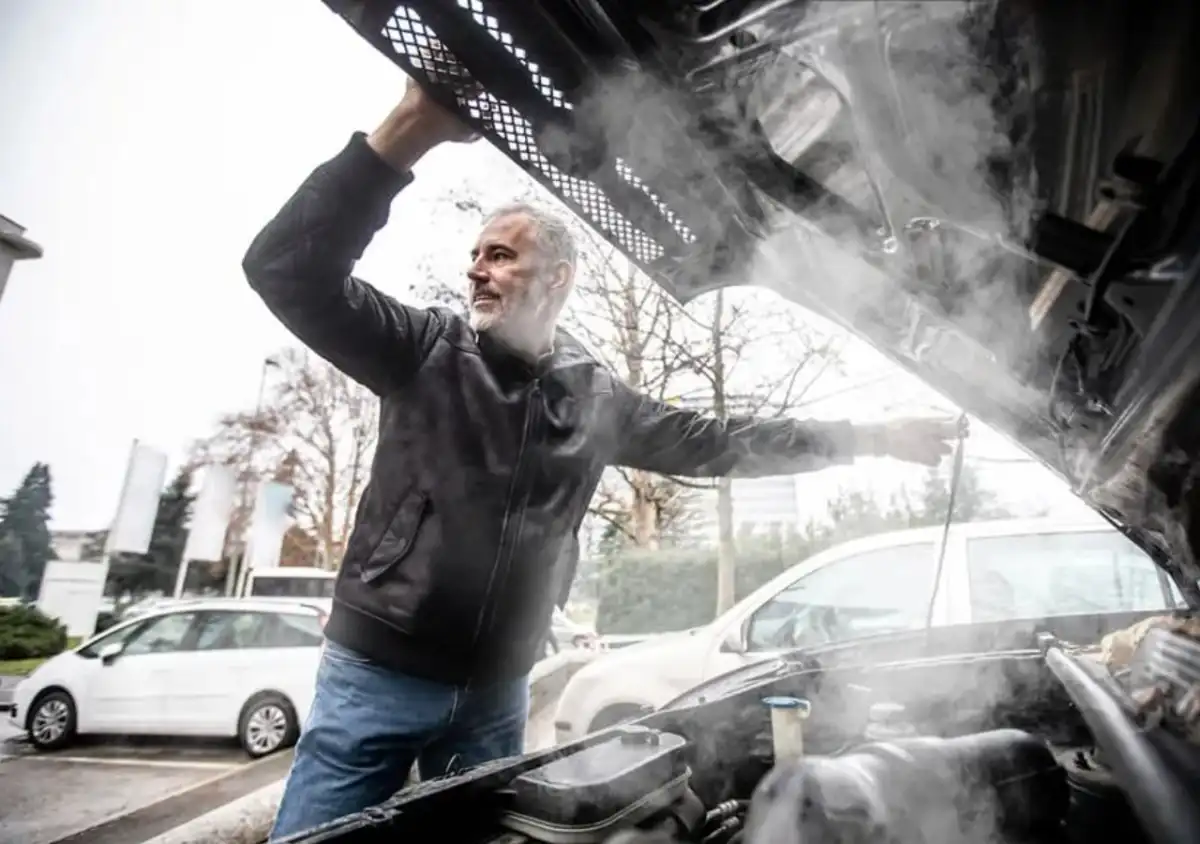
First: Why is engine temperature a special challenge in Saudi Arabia?
Even in “winter”, temperatures in most regions of Saudi Arabia are not low by global standards, yet many drivers notice the temperature gauge creeping up.
Nature of the climate:
Winter is short and tends to be mild rather than truly cold.
City traffic and long‑distance highway driving keep the engine under steady load regardless of the season.
Usage pattern:
The air‑conditioning system is used almost all year round, adding extra load on the engine.
Long distances on open roads or climbing gradients raise the engine’s thermal load even when the weather feels reasonable.
Second: The role of the cooling system… and common mistakes that cause overheating
The cooling system is the first line of defence against engine overheating, and any small fault quickly shows up on the temperature gauge.
Low coolant level in the radiator:
A minor leak from a hose, a loose radiator cap, or a seeping water pump leads to a constant drop in coolant level.
Low coolant reduces the system’s ability to absorb heat from the engine and dissipate it through the radiator.
Wrong coolant type or using plain water:
Relying only on plain water (especially hard water) causes rust and scale build‑up inside the radiator and passages.
Proper coolant contains anti‑corrosion additives and raises the boiling point, improving cooling efficiency.
Internal or external radiator blockage:
Dirt, insects, and dust on the radiator face reduce airflow.
Internal deposits in the radiator channels reduce heat‑exchange area and increase coolant temperature.

Third: Fan and thermostat issues… the “small details” that raise temperature
The two components that most affect coolant flow and radiator cooling in real‑world conditions are the fans and the thermostat.
Cooling fan failures:
Weak fan motor, blown fuse, or a faulty temperature sensor that fails to command fan operation.
You notice temperature rising in stop‑and‑go traffic and dropping somewhat when driving at speed where natural airflow helps the radiator.
Sticking thermostat:
If the thermostat sticks closed, it prevents coolant from flowing from engine to radiator, causing the gauge to rise quickly.
If it sticks open, the engine takes longer to reach optimal operating temperature, which can affect fuel economy and performance, but is usually less dangerous than a stuck‑closed condition.
Inaccurate temperature sensor or false readings:
Sometimes the problem lies in the sensor or cluster, not the actual engine temperature, but any rise must be taken seriously until proper checks confirm otherwise.
Fourth: Driving load and driver behaviour and their impact on engine heat
Driving style can turn a normal situation into a recurring overheating problem, even with a healthy cooling system.
Aggressive driving and frequent hard acceleration/braking:
Repeated hard acceleration and sustained high speeds multiply the thermal load on the engine.
Towing trailers or overloading the vehicle beyond its design limits increases fluid temperatures across the entire powertrain.
Extended city traffic driving:
Constant stop‑and‑go with the A/C running and low road speed means minimal natural airflow through the radiator.
In this case, cooling depends almost entirely on fan performance and coolant quality.
Climbing hills and mountain roads:
The engine operates at high load for extended periods, raising temperature even in relatively cool air.
Any weakness in the system becomes very obvious under these conditions.
Fifth: The effect of oil and the lubrication system on engine temperature
Engine oil does more than lubricate; it also helps cool certain internal engine components.
Using the wrong viscosity:
Oil that is too thick can increase drag and make the engine work harder.
Oil that is too thin for a hot climate can lose viscosity at high temperatures and reduce the protective film on metal surfaces.
Delayed oil and filter changes:
Degraded oil loaded with contaminants loses its ability to lubricate and help remove heat.
Increased internal friction translates directly into additional heat.
Oil leaks or low oil level:
Low oil means more direct metal‑to‑metal contact, raising both wear and temperature at the same time.
Sixth: Other factors that may cause engine overheating
There are additional reasons, less common but important when diagnosing a stubborn overheating problem.
Incorrect ignition timing or valve timing issue:
Leads to inefficient combustion in the cylinders and higher combustion‑chamber temperatures.
Exhaust system restriction:
Difficulty expelling hot exhaust gases increases temperature in the engine and cylinder head.
Radiator cap problems:
The cap maintains a specific pressure in the cooling system to raise the coolant’s boiling point.
A damaged or incorrect cap can cause early boiling and coolant loss into the overflow bottle.
Seventh: How should the driver react to overheating in the moment?
When you notice the temperature gauge rising while driving, your reaction can be the difference between a minor issue and major engine damage.
Warning signs to watch for:
The gauge moving toward the red zone.
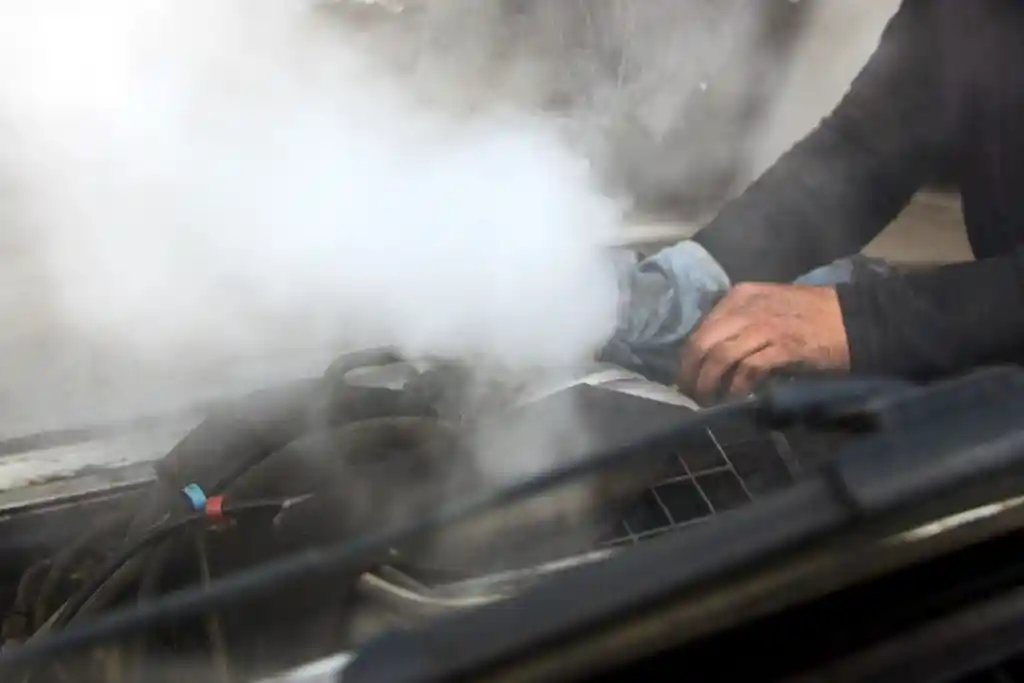
Loss of power, burning smells, or steam from under the bonnet.
Initial safe steps:
Pull over as soon as possible in a safe location away from traffic.
Switch off the engine and let it cool; do not open the radiator cap while it is still hot to avoid burns.
After it cools down somewhat, you can visually check coolant and other fluid levels, but avoid opening the cap if the system is still hot.
Never keep driving with high temperature:
Continuing to drive while the engine is overheating can damage the cylinder head, head gasket, or even cause complete engine seizure.
Eighth: Preventive tips for Saudi drivers to avoid overheating even in winter
Prevention is far cheaper and simpler than rebuilding an engine that has suffered from severe overheating, especially in a harsh climate like Saudi Arabia.
Stick to regular cooling‑system maintenance:
Replace coolant according to the manufacturer’s service schedule.
Periodically inspect hoses, connections, and the radiator cap.
Use fluids and oils suitable for the climate:
Choose engine oil grades and specifications recommended for hot‑weather operation.
Use quality coolant and avoid relying on plain water only.
Monitor gauges and never ignore warnings:
Any repeated rise in temperature, even if it drops again, requires professional inspection.
Noting when overheating occurs (traffic, climbs, A/C use) helps the technician diagnose the root cause faster.
Drive with moderation:
Avoid prolonged heavy load on the engine, especially on long trips or when fully loaded.
Engine overheating in Saudi winter is not a mystery; it is the result of an interaction between climate, cooling and lubrication systems, maintenance quality, and driving style. Understanding the most common causes—from low coolant, weak fans, and faulty thermostats, to heavy driving loads, unsuitable oil, and less obvious faults—allows the driver to address problems early and avoid expensive engine damage. Committing to preventive maintenance, choosing correct fluids, and watching the temperature gauge carefully are enough to make winter driving in Saudi Arabia safer and more reassuring for both driver and engine.