
- What Is the “Flying Minivan”?
- Technical Highlights of Ground and Air Modules
- Production Plans and Timeline
- Why This Matters: Beyond a Concept
- Use Cases and Potential Users
- XPeng Flying Minivan vs Other Concepts
- Challenges and Regulatory Considerations
- Market and Industry Impact
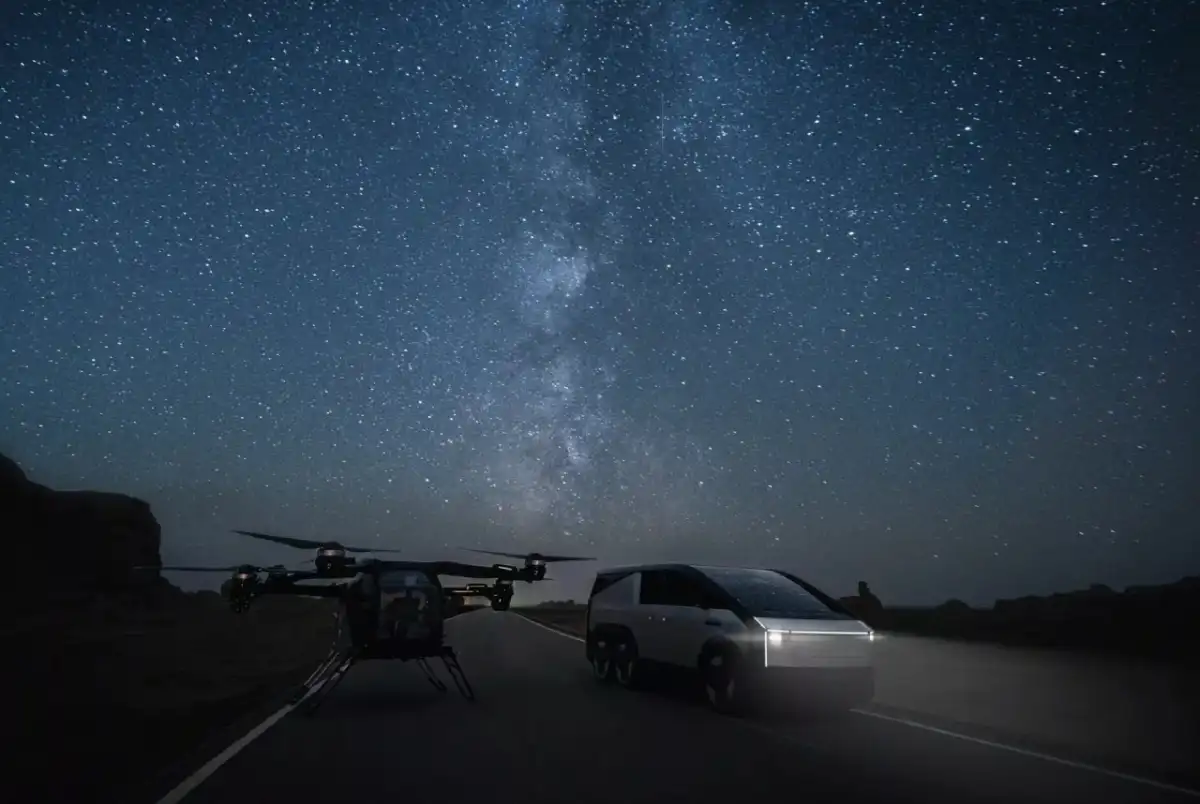
Chinese automotive and technology company XPeng is taking mobility to a radically new level with a modular “flying minivan” concept that integrates a road vehicle with a detachable electric vertical take-off and landing (eVTOL) aircraft. First previewed in concept form, the vehicle—officially branded as the “Land Aircraft Carrier”—is now moving toward mass production, with deliveries expected in 2026.
This bold project expands XPeng’s strategy beyond electric cars and autonomous driving systems into aerial mobility. It combines ground transportation with air capability, hinting at a future where personal mobility isn’t limited to roads alone.
What Is the “Flying Minivan”?
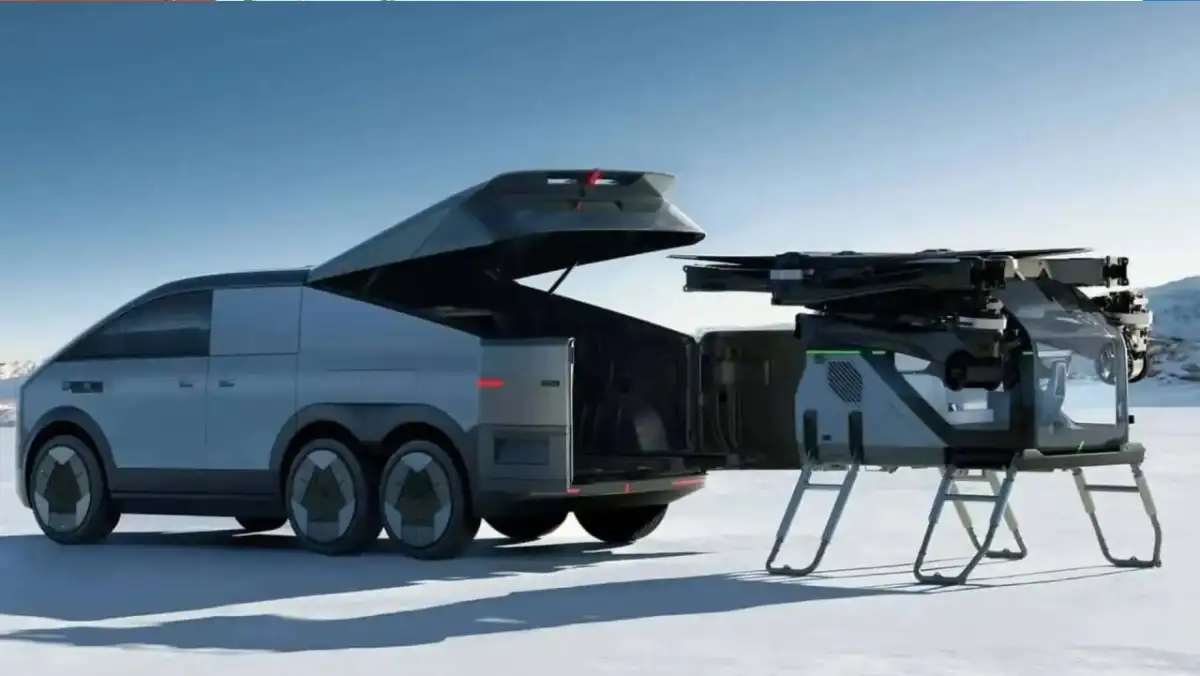
The heart of the concept is a large six-wheel van platform that functions as both:
A fully capable road-going vehicle, and
A mobile hangar for a removable electric aircraft.
Officially called the Land Aircraft Carrier, this ground vehicle appears from a distance like an oversized modified van. Its primary purpose, however, is to serve as a transport and deployment platform for the aircraft carried in its rear cargo bay.
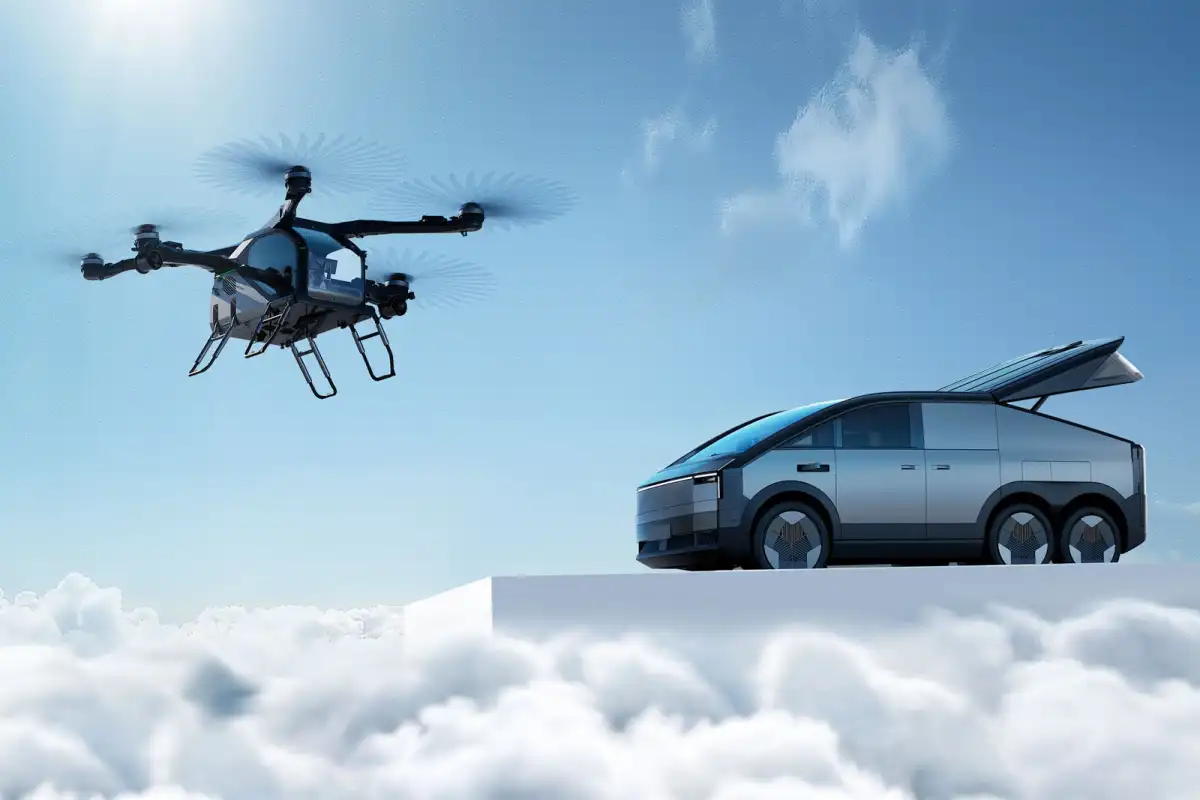
The aircraft itself is an eVTOL (electric vertical take-off and landing) design developed by XPeng’s aerospace division Abridge. This aerial module can detach from the van and fly independently, making short-haul flight possible in environments where traditional airports aren’t available.
Technical Highlights of Ground and Air Modules

Land Aircraft Carrier – Road Segment
Configuration: Six wheels with robust all-wheel drive
Platform: Built on XPeng’s high-voltage architecture
Function: Road travel and aircraft carriage
Paint Options: Limited palette (e.g., Stellar Silver, Moonrock Gray, Supernova White)
Production: Initial manufacturing in Guangzhou with plans to scale up to 10,000 units annually
eVTOL Aircraft – Air Segment
Two-seat passenger drone that folds into the van’s cargo space
Electric vertical take-off and landing capability
Designed for short regional flights or rapid positioning
Emphasis on lightweight materials and compact folding mechanisms
This combination creates a mobile travel system capable of both conventional land transit and aerial mobility, blurring the lines between cars and personal aircraft.
Production Plans and Timeline
XPeng has confirmed that production of the Land Aircraft Carrier and its flying module is already underway at a dedicated facility in Guangzhou. Initially, the company plans to manufacture about 5,000 units per year, with the goal of scaling to up to 10,000 vehicles annually.
Deliveries are expected to begin later in 2026, with the first customers receiving their vehicles as early as the end of that year. Pricing is projected in the high tens of thousands of dollars, with estimates around $280,000+ for the complete system.
Why This Matters: Beyond a Concept
While flying car ideas have surfaced periodically over the years, the XPeng Land Aircraft Carrier is notable for several reasons:
1. Practical Integration
Instead of a standalone flying car, XPeng’s system integrates air and ground mobility in one package, making the transition between modes potentially seamless.
2. Near-Term Production
Unlike many futuristic tech concepts, this system is not a distant prototype—XPeng is actively building vehicles now, with deliveries planned for 2026.
3. Expansion of Mobility Boundaries
The project points to a future where transportation is multi-modal by default—letting passengers both drive and fly without switching vehicles.
Use Cases and Potential Users
Potential applications for the flying minivan system include:
Urban tech adopters seeking novel personal mobility
Adventure and tourism markets that value flexibility
Emergency responders requiring rapid deployment options
Business travelers in regions with limited aviation infrastructure
XPeng and its aerospace division also envision the vehicle playing a role in leisure, short regional hops, and potentially remote area access.
XPeng Flying Minivan vs Other Concepts
Feature | XPeng Land Aircraft Carrier | Traditional Flying Car | Urban eVTOL Taxis |
|---|---|---|---|
Road Capability | Yes – full road vehicle | Limited / None | No |
Air Capability | Yes – detachable eVTOL | Yes – integrated | Yes – vertical take-off |
Passenger Capacity | Ground: 4+ - Air: 2 | Varies | 2–4 |
Production Readiness | High – planned 2026 | Low – prototype | Medium – tests ongoing |
Price Estimate | ~$280,000+ | High / Variable | ~$200,000+ |
Challenges and Regulatory Considerations
Despite its promise, the system faces several hurdles:
Air traffic regulations: eVTOL vehicles require clearance from aviation authorities
Pilot certification: Future owners may need training or licensing for airborne segments
Infrastructure: Landing and take-off zones must be designated in cities
Safety testing: Integrated safety standards for dual-mode vehicles are still evolving
Industry analysts caution that public adoption could remain limited in the short term due to regulatory and infrastructure constraints, even if production begins on schedule.
Market and Industry Impact
The XPeng Land Aircraft Carrier could signal a new phase in mobility, where personal transport isn’t confined to roads. If successful:
Automakers may increase focus on air-enabled mobility solutions
New ecosystems of charging, landing, and service infrastructure could emerge
Competition may develop among EV and aerospace startups globally
China in particular is positioning itself at the forefront of “low-altitude economy” innovation, where flying vehicles and drones become part of mainstream transportation and logistics.
The XPeng Land Aircraft Carrier represents one of the most ambitious mobility concepts yet to move toward real-world production. Bridging the gap between road and air travel, this flying minivan with its modular eVTOL aircraft may redefine personal mobility for niche markets and early adopters.
With 2026 set as the target production year, the venture gives a clear indication that what was once science fiction is rapidly becoming tangible — and signals a future where mobility encompasses both asphalt and sky.