
- From means of transport… to a smart partner that learns from you
- A voice assistant that understands natural phrases, not rigid commands
- Supercomputer‑grade compute power: Nvidia Orin at the heart of the cockpit
- From “wasted time in the car” to a real mobile office
- An AI “extension” for existing cockpits, not just brand‑new cars
- Comfort, intuition, and safety: three pillars of the experience
- What this means for the future of production‑car cockpits
The car in the very near future will not just execute the driver’s commands; it will understand casual phrases like “I’m cold” and act on its own to adjust the cabin climate, join a work meeting, and manage what’s happening inside without you touching a single button.
From means of transport… to a smart partner that learns from you
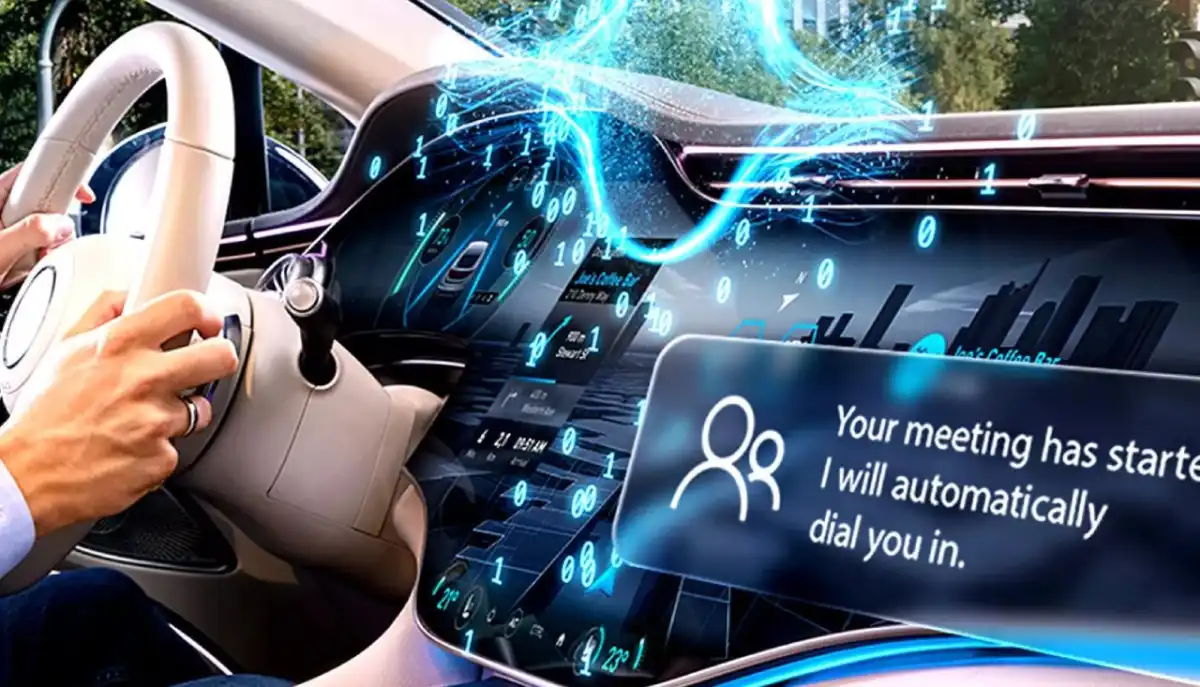
Bosch, the world’s largest automotive supplier, is preparing at CES 2026 to unveil a new AI platform that transforms the car from “just a means of transport” into a smart partner that learns your behaviour and habits over time.
The idea is not merely to add another voice assistant, but to build a fully integrated digital cockpit that understands context: weather, road type, your work schedule, and even your approximate mood from the way you speak.
A voice assistant that understands natural phrases, not rigid commands
The standout feature of the new system is how it interacts with the driver:
Understanding natural phrases:
Instead of saying “Set the A/C to 24 degrees,” it’s enough to say “I’m feeling cold” and the car will automatically warm the seat and raise the cabin temperature.
The same logic can apply to phrases like “I’m tired” or “I’m busy,” prompting the car to suggest activating driver‑assist systems or muting non‑essential notifications.
More human‑like conversations:
The system relies on advanced vision‑language models capable of linking what it hears with what the sensors see and what it already knows about your previous routines.
This makes your interactions with the car feel closer to talking to a personal assistant than issuing short, rigid voice commands.
Supercomputer‑grade compute power: Nvidia Orin at the heart of the cockpit
To handle this complexity, Bosch is using Nvidia’s Drive AGX Orin platform as the computational core inside the vehicle.
Up to 200 tera operations per second:
This processing power lets the system handle sensor data in real time, including cameras, radars, and in‑cabin microphones.
It is enough to run several AI models in parallel: speech recognition, context understanding, analysis of driver posture or facial cues, and more.
Integration with driver‑assistance systems:
The same chip can support features like adaptive cruise control, lane‑keeping, and traffic‑jam assist, so the “brain” of the cockpit and the “brain” of semi‑autonomous driving work together.
From “wasted time in the car” to a real mobile office
Bosch doesn’t see the car as just a waiting room between point A and point B, but as a true productivity space for work and meetings.
Microsoft 365 built into the car’s interface:
The system integrates the Microsoft 365 suite directly into the cockpit experience, meaning access to Outlook, Teams and more in a driving‑friendly format.
Joining Teams meetings by voice:
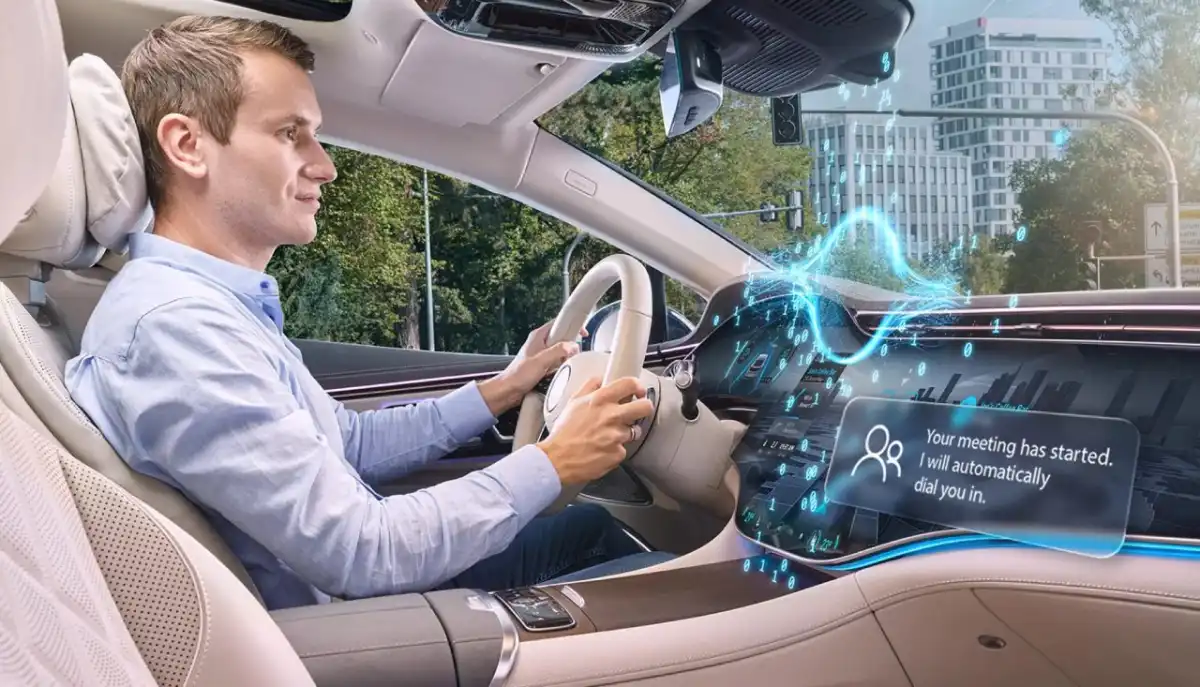
A driver could say “Join my next meeting” and the system would launch a Teams call, while the car automatically enables adaptive cruise control to reduce the workload of driving.
Foundry platform for custom in‑car AI apps:
Working with Microsoft, Bosch is using the Foundry platform to build, customise and manage AI applications and agents inside the vehicle, allowing OEMs or fleet operators to tailor solutions to their own needs.
An AI “extension” for existing cockpits, not just brand‑new cars
One of Bosch’s key promises is that this platform is not limited to an all‑new generation of vehicles; it can also extend existing cockpit systems.
AI extension for today’s infotainment setups:
Bosch describes the new solution as an “extension platform” that can upgrade current cockpit/infotainment systems with advanced AI functions.
This means automakers can reuse display hardware already in their cars and enhance it with a new intelligence layer instead of redesigning everything from scratch.
Benefits for OEMs and fleet operators:
Carmakers can accelerate their move into smart cockpits by partnering with Bosch, without having to build a complete AI stack in‑house.
Fleet providers (rental, ride‑hailing, logistics) can benefit from unified, smart interfaces to train drivers and boost productivity.
Comfort, intuition, and safety: three pillars of the experience
Markus Heyn, chairman of Bosch Mobility, summarises the platform’s goal as making driving “more comfortable, intuitive, and safer for all occupants.”
Comfort:
Automatically adjusting settings based on your daily patterns: favourite temperature, lighting, drive mode, and even music or audio content.
Intuitive:
Natural interaction with the system without having to learn complex menus or stiff voice commands—talk to it as you would to a person who understands you.
Safety:
Reducing distraction through voice control and smart display modes that minimise on‑screen clutter while driving.
Automatically activating driver‑assist functions when the system detects that you’re engaged in important calls or meetings.
What this means for the future of production‑car cockpits
From “big screens” to “screens that understand the driver”:
The first wave of digitalisation was about increasing screen size and count; the new wave is about making those screens think and adapt instead of just displaying information.
Competition over the software “brain”:
Major suppliers like Bosch are competing to become the main software intelligence partners for automakers, offering ready‑made systems based on Nvidia Orin and cloud platforms like Microsoft’s.
A new way to differentiate cars that share hardware:
In a world where many vehicles share platforms and drivetrains, the smart cockpit experience can become the real differentiator in the customer’s eyes.
Bosch’s new in‑car AI platform doesn’t just add “one more feature”; it fundamentally reshapes the relationship between driver and car—from pushing buttons to having a natural conversation, and from wasting time in traffic to running a fully connected mobile office. Built on Nvidia Orin and tightly integrated with Microsoft 365 and the Foundry AI platform, it is a comprehensive project that opens the door to a new generation of vehicles that anticipate what you want before you spell out the command. With its full unveiling set for CES, the question is no longer “Will your car become smart?” but “Which intelligence platform will your favourite car brand choose for its next‑gen cockpits?”