
- Why Exhaust Smoke Color Matters
- Blue Smoke
- Black Smoke
- White Smoke
- Gray Smoke
- FAQ
- Conclusion
Why Exhaust Smoke Color Matters
Exhaust smoke is one of the most visible indicators of engine health. The color reveals what is happening inside the combustion chamber. Learning to read these signals helps you catch problems early and avoid costly repairs.
Blue Smoke
What It Means
Blue smoke indicates burning oil. Oil is entering the combustion chamber through worn piston rings, valve seals, or a faulty turbocharger.
What to Do
Check oil consumption. If the engine is using more than one liter per 1,000 kilometers, internal repairs are likely needed. A compression test can identify worn rings. Ignoring blue smoke leads to catalytic converter damage.
Black Smoke
What It Means
Black smoke means the engine is burning too much fuel. Causes include a clogged air filter, faulty mass airflow sensor, leaking fuel injectors, or incorrect ignition timing.
What to Do
Replace the air filter, clean the MAF sensor, and have the fuel system inspected. Diesel engines may produce some black smoke under hard acceleration, but constant black smoke indicates a problem.
White Smoke
What It Means
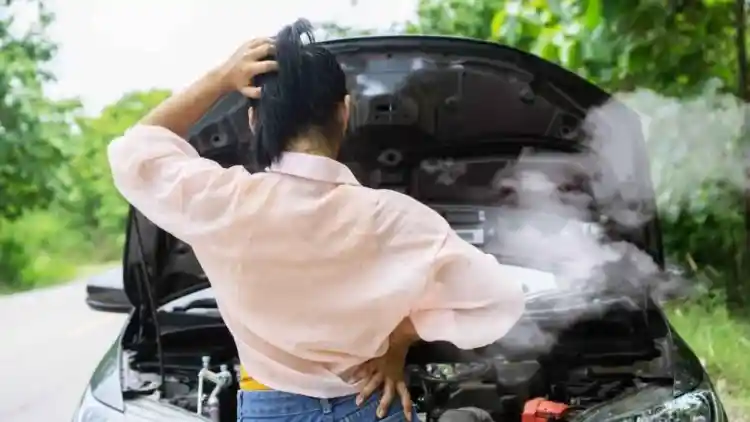
Thin white vapor on cold mornings is normal condensation. Thick, persistent white smoke indicates coolant entering the combustion chamber, usually from a blown head gasket or cracked cylinder head.
What to Do
Check coolant levels and oil condition. If the oil looks milky or coolant is disappearing without visible leaks, have the engine pressure-tested immediately.
Gray Smoke
Gray smoke can indicate a combination of oil and fuel burning, or a faulty positive crankcase ventilation system. A diagnostic scan is the best first step.
FAQ
Is a little smoke on startup normal?
Brief white vapor on cold starts is normal condensation. Any smoke that persists after warmup or occurs during driving needs investigation.
Can bad fuel cause colored smoke?
Contaminated or incorrect fuel can cause abnormal combustion and smoke, though this is less common than mechanical causes.
How much does it cost to fix blue smoke?
Valve seal replacement costs 1,500 to 4,000 AED. Piston ring or engine rebuild costs can exceed 10,000 AED.
Can I drive with colored exhaust smoke?
Briefly, to reach a repair shop. Prolonged driving with blue or white smoke causes catalytic converter and engine damage.
Conclusion
Exhaust smoke color is a direct window into your engine's condition. Learn the colors, act quickly when they appear, and schedule diagnostics before minor issues become major repairs.