

- How Many Volts is a Car Battery?
- Types of Car Batteries and Their Voltages
- How to Check Car Battery Voltage
- Factors Affecting Car Battery Voltage
- Signs of Low Battery Voltage
- Maintaining Optimal Voltage Levels
- Conclusion
- FAQ
A car battery plays a pivotal role in powering your vehicle's electrical systems and starting its engine. Understanding car battery voltage is essential for ensuring optimal performance and preventing unexpected breakdowns. This article dives into the fundamentals of car battery voltage, factors influencing it, and maintenance tips to extend its lifespan.

How Many Volts is a Car Battery?
The Standard 12-Volt Battery
Most cars use 12-volt DC batteries, which are the industry standard. A 12-volt battery is composed of six cells, each producing roughly 2.1 volts when fully charged. This results in a total voltage of approximately 12.6 volts. This voltage is sufficient to power the vehicle’s ignition system, headlights, and additional accessories.
Standard Voltage: 12 volts
Individual Cell Voltage: 2.1 volts
Total Cells: 6
Voltage Range for a Healthy Battery
To ensure your car battery operates efficiently, it’s essential to understand its voltage range. A healthy battery typically reads between 12.6 and 12.8 volts when fully charged. If the voltage falls below 12.4 volts, the battery may not be fully charged, and a reading below 11.8 volts could indicate critical voltage levels.
Fully Charged: 12.6 – 12.8 volts
Low Voltage: Below 12.4 volts
Critical Voltage: Below 11.8 volts
Car Battery Voltage While Running
When the engine is running, the alternator charges the battery, increasing its voltage. Under normal conditions, the voltage should range from 13.7 to 14.7 volts. This ensures that the electrical systems are powered efficiently while maintaining the battery’s charge.
Running Voltage: 13.7 – 14.7 volts
Alternator's Role: Maintains voltage during engine operation
Types of Car Batteries and Their Voltages
Not all car batteries are created equal. Here’s an overview of the most common types of car batteries and their typical voltage ranges:
Lead-Acid Batteries
Lead-acid batteries are the most widely used type of car battery. They operate at around 12 volts and are known for being cost-effective and reliable. They do require periodic maintenance, such as checking the electrolyte levels and cleaning the terminals.
Standard Voltage: 12 volts
Maintenance: Required for longevity
Lithium-Ion Batteries
Lithium-ion (Li-ion) batteries are increasingly used in modern vehicles, especially electric cars and hybrids. They offer a higher energy density and a longer lifespan compared to lead-acid batteries. Despite these advantages, they are more expensive.
Voltage Range: Around 12 volts
Advantages: Longer lifespan, higher efficiency
Applications: Common in electric and hybrid vehicles

Nickel-Cadmium (NiCd) and Nickel-Metal Hydride (NiMH) Batteries
NiCd and NiMH batteries are less common but are occasionally found in hybrid vehicles. These batteries have different voltage levels and require specific care for optimal performance.
NiCd Batteries: Used in older systems
NiMH Batteries: Found in some hybrids
How to Check Car Battery Voltage
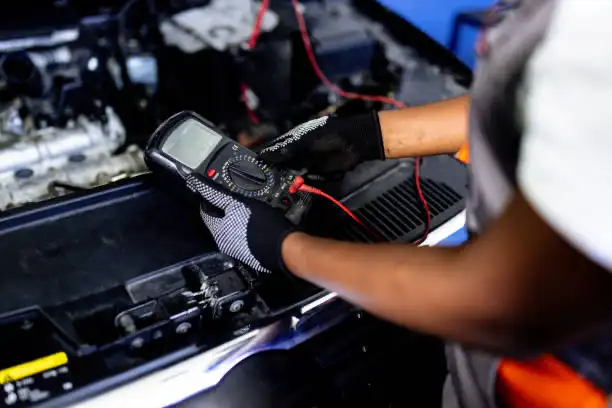
Checking your car battery voltage is straightforward and can be done using a multimeter or a battery tester. Follow these steps:
Prepare the Multimeter: Set the device to DC voltage mode.
Connect Leads: Attach the red lead to the battery’s positive terminal and the black lead to the negative terminal.
Read Voltage: A reading of 12.6 – 12.8 volts indicates a fully charged battery, while anything below 12.4 volts may require attention.
Factors Affecting Car Battery Voltage
Battery Age and Usage
Over time, car batteries naturally degrade, reducing their ability to hold a charge. Batteries that have been in use for several years may experience a decline in voltage due to wear and tear.
Natural Aging: Leads to voltage drop
Regular Maintenance: Prolongs battery life
Timely Replacement: Prevents unexpected failures
Environmental Conditions
Extreme temperatures, whether hot or cold, can significantly impact a car battery’s efficiency. Cold weather can reduce a battery's starting power, while hot weather can increase internal corrosion, both contributing to voltage drops.
Cold Weather: Reduces starting power
Hot Weather: Causes faster degradation
Optimal Storage: Protects against temperature effects

Electrical Load
The number of devices drawing power from the battery affects its voltage. For instance, running multiple electrical components like headlights, air conditioning, and infotainment systems at once can place a heavy load on the battery, causing its voltage to decrease.
High Electrical Demand: Increases voltage drop
Manage Accessories: Reduces strain on the battery
Contaminants and Corrosion
Dust, rust, and grime that accumulate on battery terminals can create resistance, leading to voltage drops. Cleaning the terminals regularly can help maintain optimal performance.
Dirty Terminals: Reduce voltage
Regular Cleaning: Ensures proper connectivity
Signs of Low Battery Voltage
Recognizing the symptoms of low battery voltage can help you avoid unexpected problems:
Slow engine cranking or difficulty starting the car.
Dim headlights or malfunctioning electrical systems.
Battery warning light illuminated on the dashboard.
If voltage readings consistently fall below 12.4 volts, it’s advisable to have the battery checked by a professional or consider replacing it.
Maintaining Optimal Voltage Levels
Proper maintenance ensures your car battery operates within the ideal voltage range, extending its lifespan and reliability. Here are some practical tips:
Regular Charging: Recharge the battery using a quality charger or by running your car's engine frequently.
Protect Against Weather: Extreme temperatures can harm your battery. Use insulation or store your vehicle in a temperate environment when possible.
Clean Terminals: Remove any dirt or corrosion from battery terminals to ensure efficient power flow.
Test Voltage Regularly: Use a multimeter to measure the voltage. A reading of 12.6 volts or higher indicates a fully charged battery.
Conclusion
Understanding car battery voltage is vital for ensuring your vehicle runs smoothly. Regular testing, proper maintenance, and timely replacement can help you avoid voltage-related issues. Whether you're dealing with extreme temperatures or heavy electrical loads, maintaining an optimal voltage level keeps your car battery reliable and efficient for years to come.
FAQ
How often should I check my car battery voltage?
Regular battery checks are essential to ensure your vehicle is always ready to perform. You should ideally perform a voltage check monthly, especially if you often encounter extreme weather conditions. A quick multimeter test will reveal whether your battery is maintaining the proper 12V level. Keeping an eye on voltage helps you spot potential issues before a breakdown occurs, giving you peace of mind during your daily drives.
What tools should I use for an accurate battery voltage check?
A reliable multimeter is your go-to tool for checking your car battery voltage. Set the multimeter correctly to DC voltage mode, and ensure that the probes are connected securely to the battery terminals. This test confirms whether the battery is in the healthy range of 12.6V to 12.8V. The multimeter is easy to use and helps you quickly diagnose any issues with your 12V system, making it an indispensable part of your vehicle maintenance kit.
How does ambient temperature affect my car battery voltage?
Ambient temperature plays a crucial role in the performance of your car battery. Extreme heat, which is common in Gulf regions, can reduce battery efficiency and lead to a lower voltage reading. Moreover, during hot days, the battery might show a temporary drop in performance due to increased internal resistance. It’s important to monitor your battery more frequently in such conditions and adjust your maintenance schedule accordingly to prevent unexpected failures.
This article is for reference only, please follow the latest local laws and regulations.
Read more:
Which Models Beat the Heat & Save Fuel?